
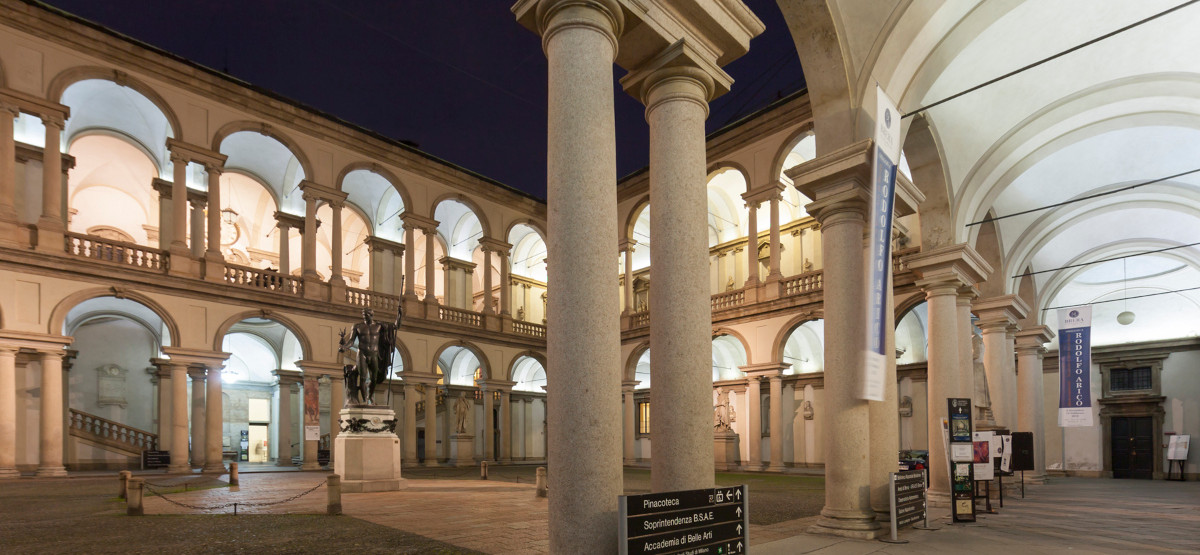
Art lovers have one unmissable stop in Milan: the Pinacoteca di Brera. It's the city's most important art collection, a museum with any number of masterpieces, among them the canvases of Piero della Francesca, Mantegna, Raphael and Tintoretto. We headed to Milan to enjoy one of our favourite museums in Italy, born in the image and likeness of the Uffizi Gallery in Florence.
Despite holding a good number of hugely significant artworks, one of the memories that stays with visitors to Brera isn't a canvas at all, but its beautiful colonnaded courtyard. The collection of this gallery is housed in the Palazzo Brera, a building whose roots go back to the Middle Ages.
At the end of the 12th century, a monastery was built on this land, run by the Humiliati, an order of Lombard origin that Pius V would ban at the end of the 16th century. That's when their possessions were expropriated, including the monastery and the church of Santa Maria di Brera. In the early 17th century, Francesco Maria Richini drew up the plans for the palace on top of the monastery.
When the Jesuits were dissolved at the end of the 18th century (the order that had replaced the Humiliati in control of Brera), the property passed into state hands, and it was the Empress Maria Theresa of Austria who began installing various cultural institutions in the palace: the origin of today's Pinacoteca di Brera. That's when Giuseppe Piermarini, also the designer of La Scala, renovated the palace and gave the courtyard that air of neoclassical purity that so strikes the visitor.
Although the painting collection at Brera began in this period, it was in the time of Napoleon (who granted Milan all kinds of favours after his conquest, including making it the country's capital) that it became the centre of Milanese picture collecting, taking in numerous artworks confiscated from churches and convents across Lombardy after the religious orders were dissolved. The museum opened on 15 August 1809, Napoleon's birthday. An allegorical statue of the emperor by Antonio Canova was placed in the middle of the courtyard, and it still dominates the Brera courtyard today.
The Brera collection and its masterpieces
Although the Pinacoteca di Brera is known for its collection of paintings from the 12th century to the Baroque, the museum also holds contemporary artworks, making it an interesting complement to other visits in the city such as the Museo del Novecento. In the rooms devoted to the 20th century you'll find canvases by great names of the Italian avant-garde such as Carlo Carrà, Umberto Boccioni, Mario Sironi, De Chirico and Modigliani.
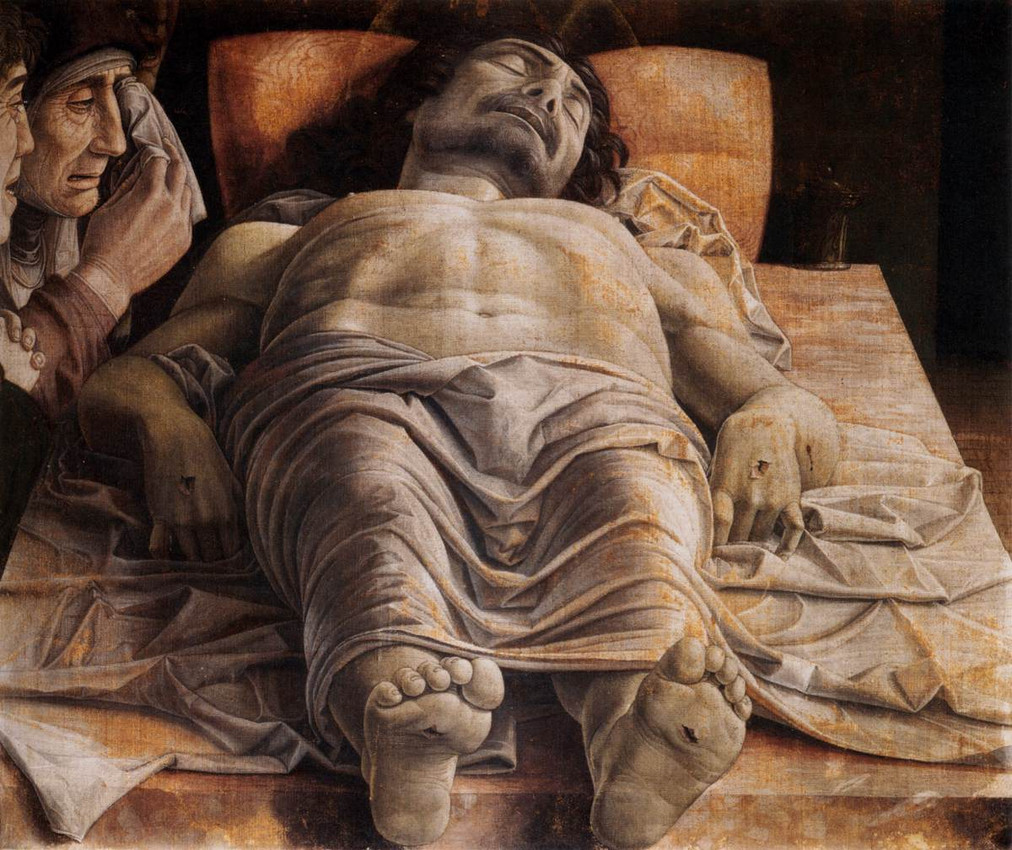
But most of Brera's masterpieces belong to the stretch running from the early Renaissance to the Baroque. Right here, in this gallery, we can enjoy one of the most famous foreshortenings in the history of art: the one Andrea Mantegna pulls off in his Cristo Muerto, dated to around 1475. This canvas is a prime example of the degree of obsession reached during the Renaissance with experimenting with the laws of perspective applied to painting. A picture that, even today, makes your head spin.
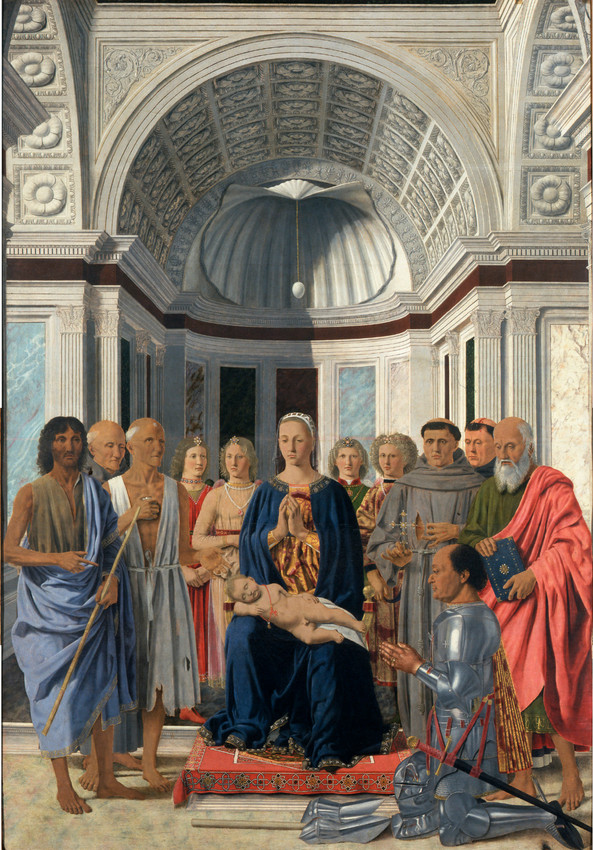
So does Sacra Conversación (also known as Pala Brera or the Virgen del Huevo), one of the best remembered paintings by the enigmatic Piero della Francesca. It's a canvas of complex symbolism marked by a very common Renaissance combination: biblical figures, such as the Virgin and Child themselves, appear in the same setting as the patrons, in this case Federico da Montefeltro, fusing past and present. But what stands out most in this picture, as in others by Piero, is its transcendent aura, framed by the inward looking expressions of its figures. And the enigma of the egg hanging from the shell of the dome, which still stirs up controversy today.
Los Desposorios de la Virgen by Raphael is a picture that takes us back to the gentler, silkier Renaissance, without losing sight of the lessons of the Quattrocento masters, as we see in the use of perspective and the placing of a classical temple in the middle distance where, incidentally, the artist signs his name. The painter from Urbino delivers here one of his first masterpieces, shortly before conquering Rome.
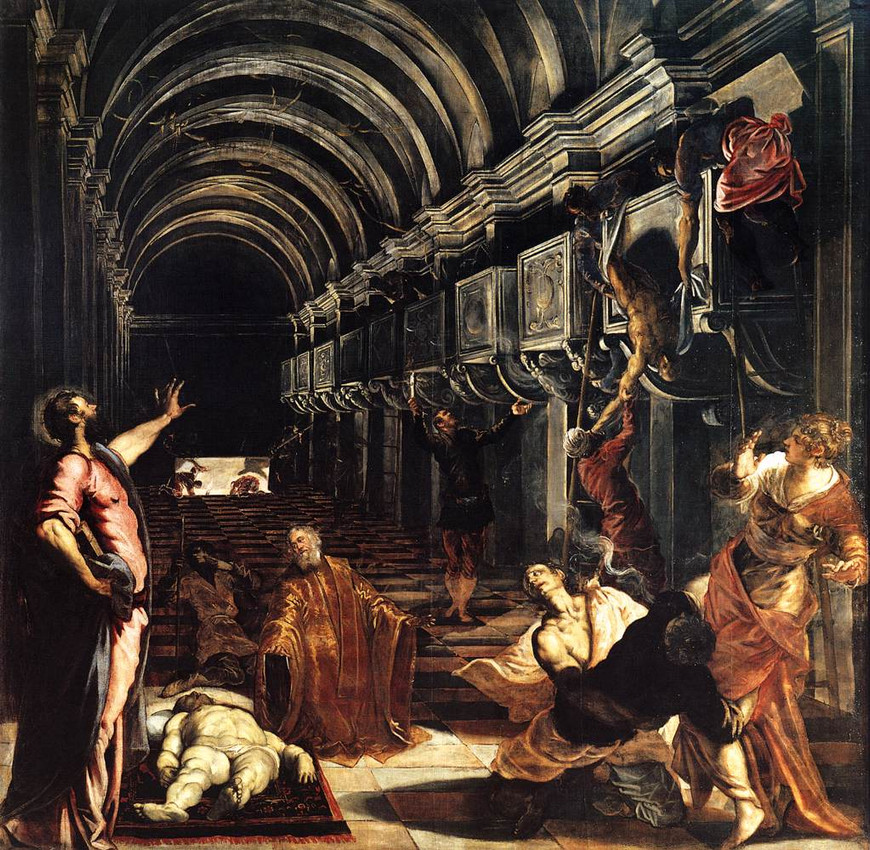
But perhaps our favourite picture in the Pinacoteca di Brera is Encuentro del cuerpo de San Marcos by Tintoretto, one of the most complex canvases by the Venetian artist, who shows here the different sides of Mannerism, marked by compositional dislocation, violent play of light and shadow, and foreshortening and instability taken to their limit, including an obvious homage to Mantegna's famous painting. This is the end of the Renaissance, of its stoic, serene art... Welcome to the heightened passion of the Baroque.

Comments (0)
Log in to leave your comment. Log in