
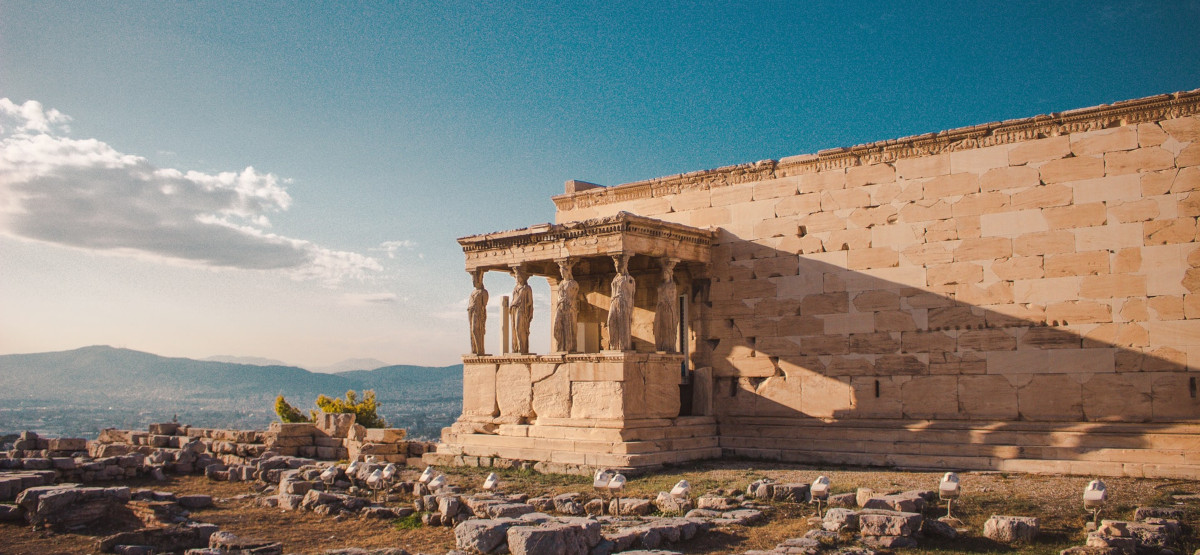
Nostalgia, horror, memory, fantasy, mystery... Ruins still hold the art world's interest because of their many sides, because they offer the artist a one of a kind inspiration. Because walking among ruins is still a mystical experience full of delicious questions from the past, poems in cracked stone that light up the future through their fissures.
From Ancient Greece to the Renaissance, from Piranesi to Friedrich, art has felt a great fascination with ruins, with the decaying testimony of a remote past inscribed in the stone of a building, in the fragment of a sculpture or in the remains of a lost city. But contemporary art hasn't escaped this obsession either, and artists all over the planet keep taking ruins as the basis of their work. We travel through the history of art to try to decipher the spell of the ruin.
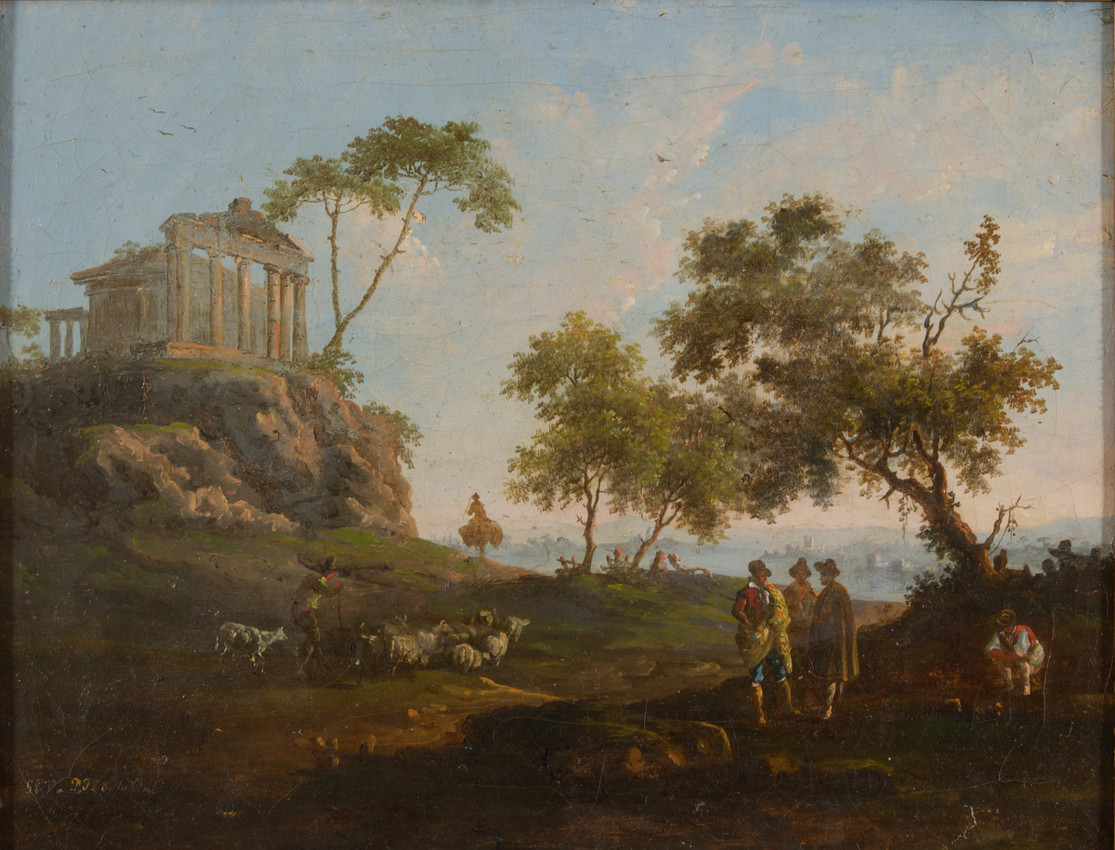
When the historian Xenophon, on his way back to Greece after a military campaign in Persia, crossed Mesopotamia, he came across the ruins of several cities belonging to the civilizations that had developed in that land between the Tigris and the Euphrates. Among them, the legendary Nineveh, which appears in the Bible and was part of the Assyrian Empire: “Nineveh is a great deserted fortification. The foundations of its walls are made of polished rock, 15 metres wide by 15 high”. Imagine what the Greek expedition must have felt crossing an immense abandoned city, a city wrapped in the mist of an enigmatic past.
What Xenophon didn't suspect was that his own civilization would be one of the next to fall into ruin and offer other travellers poetry in stone. If there is one culture that has stirred the artist's imagination, it is the Greco-Roman one. Ancient Greece and Ancient Rome are still the cradle of Western civilization, and their archaeological remains make that emotional connection with our origins possible.
It was in the Renaissance, with the revival of classical culture in full swing, that archaeology began to make its way into the visual arts. From the Trecento onwards, it became common to see classical buildings depicted in artworks with mythological as well as religious subjects: it was the way of paying tribute to the Greco-Latin cultural model.
The fascination with this culture led to the definitive explosion of scientific archaeology, with episodes as famous as the discovery of the Laocoön, in which even Michelangelo himself took part. Digging up an original Greek piece among the rubble was, for a 16th century Roman, like catching sight of El Dorado for a Spanish explorer in America.
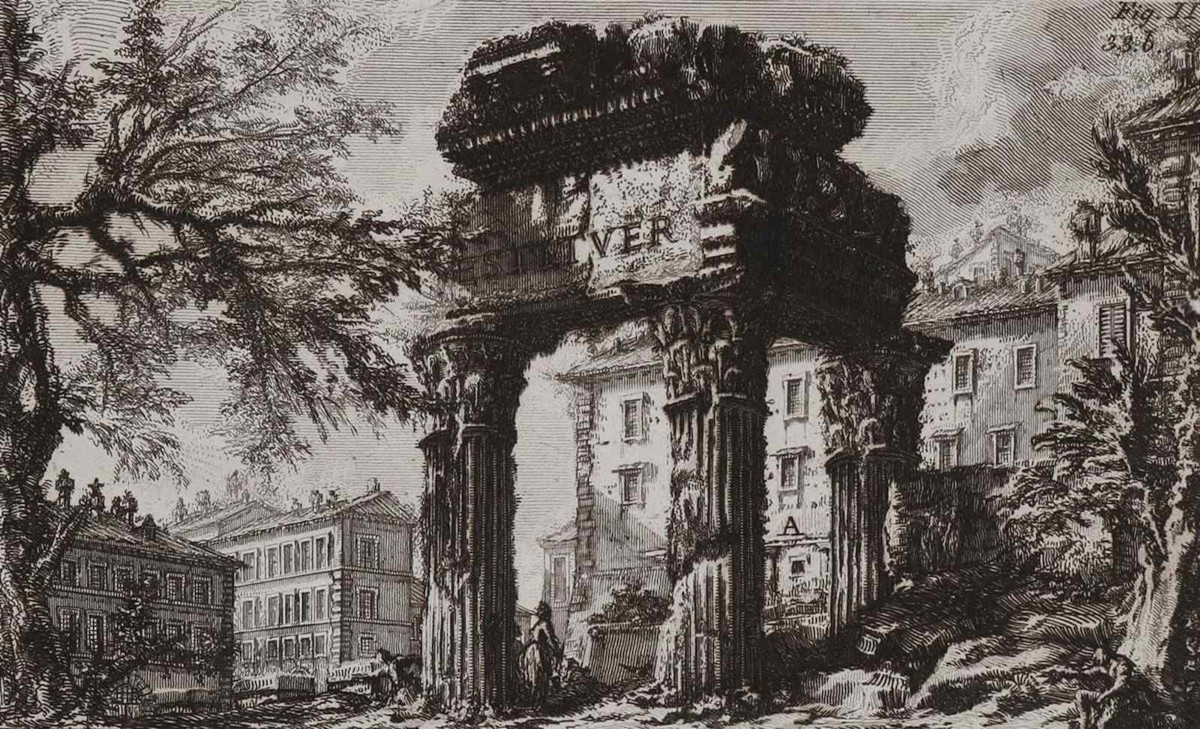
Centuries later, also in Italy, a key figure in the cult of the ruin appears: Giovanni Battista Piranesi became one of the most important engravers in history thanks to those etchings that “put on record” Ancient Rome and contributed to the progress of archaeology. Even though his engravings mixed description and fantasy, his work was crucial for the establishment of Neoclassicism, a cultural movement that took the cult of the Greco-Latin past to its highest expression.
In a way, Piranesi was one of the first artists to understand the aesthetic possibilities of the ruin: it wasn't about making a faithful depiction of an archaeological remain, but about taking the ruin as the foundation of a poetic fantasy. This would be the path taken by the cultural current that followed, which would place the ruin on an almost metaphysical pedestal.
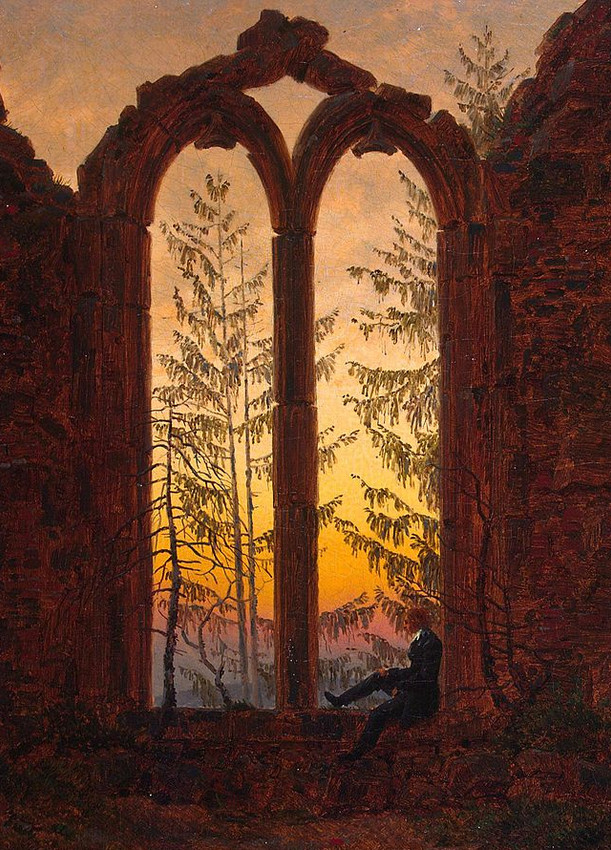
Indeed, Romanticism took it upon itself to give the ruin new aesthetic, philosophical and even political layers. Artists such as Fussli in England or Friedrich in Germany brought the ruin into their artworks as a form of reflection or vindication, as a talisman to connect emotionally with an idealized past.
In this context, we shouldn't forget the Grand Tour of many artists and/or travellers who visited the most important sites of Greco-Latin culture, ending, of course, in Rome. Artists were chasing the vision of those engravings that had reached their hands, looking for inspiration for their own artworks and digging into a remote, idealized past embodied by the ruin. Some felt Stendhal syndrome and froze before the sight of so much beauty. And others, like Goethe, were disappointed when they realized that those melancholy Piranesian visions were the product of an aesthetic fantasy.
By the 20th century, the ruin would take on another, less nostalgic shade. Now the ruin is horror: Hiroshima, Berlin, Auschwitz, Chernobyl... The ruin is no longer the testimony of a sublimated, mysterious past, but the mute witness of the worst side of the human being: cruelty, devastation, genocide.
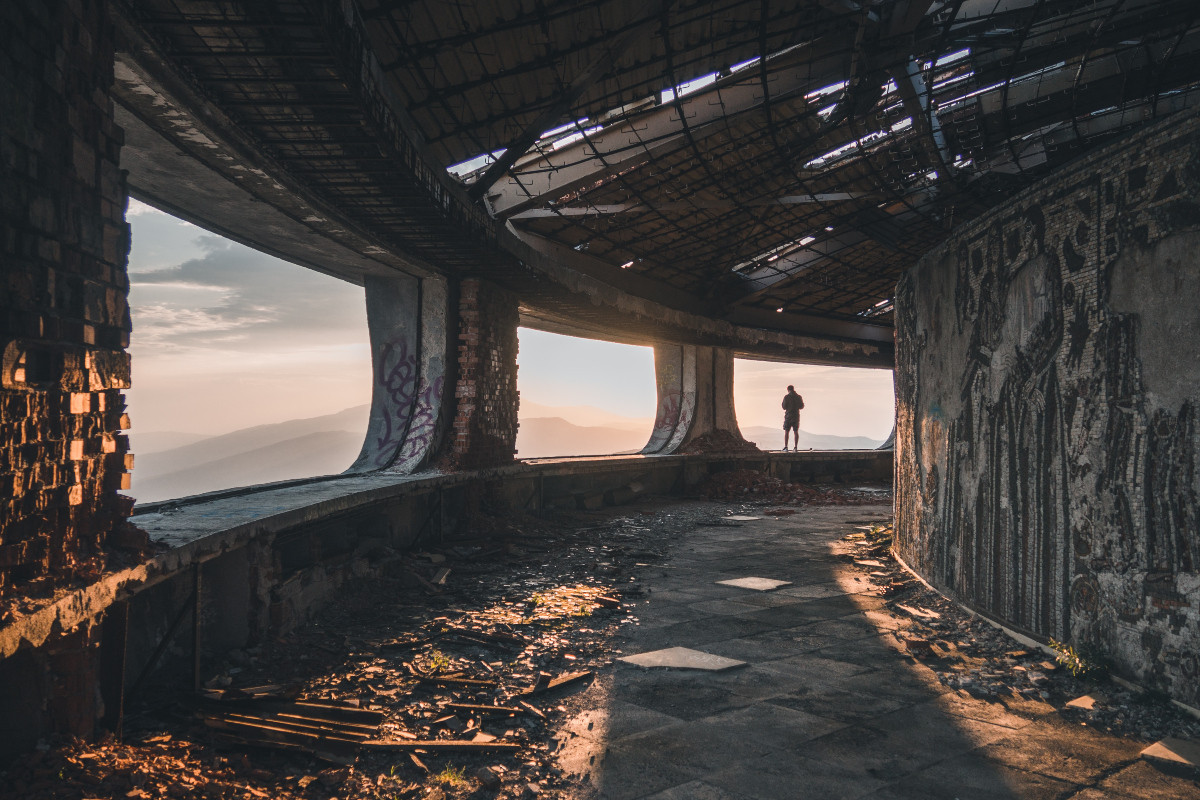
Well into the 21st century, ruins and abandoned places still fascinate contemporary artists. In this sense, the artworks of Bruce Dillon sum up the impact the ruin has had throughout the history of art. An exhibition at Tate Britain named after one of Dillon's artworks (Ruin Lust) tackled this lust for the ruin. In Spain, a few years ago, the Fundación Cerezales Antonino y Cinia also put on Declaración de Ruina, another artistic reflection on the relationship between contemporary art and the idea of the ruin.
Exploring ruined places (and photographing them) even has its millennial name and its place on Instagram: they're the urbex crowd... Because the ruin, no doubt, will outlive the human being. And when that moment comes, others will reflect on us through it.


Comments (0)
Log in to leave your comment. Log in