
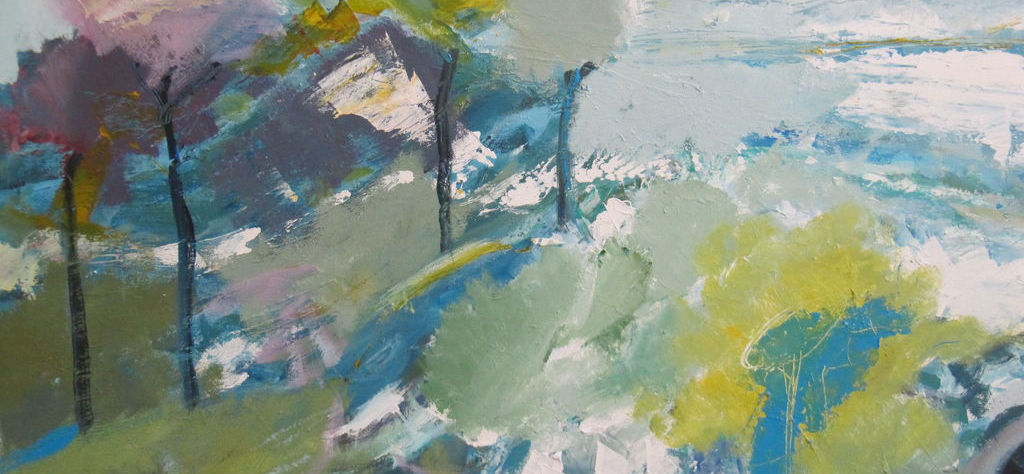
Painting the atmosphere, painting the wind and the light. Ever since the Impressionists, painting has tried to pin down movement, not as it actually happens, but as our eye catches it. And as our heart feels it. Because Jesús Cuenca is not only a hunter of atmospheres, he also looks into the effect those atmospheres have on our emotions. This meeting of artistic interests results in a lively, cheerful body of work, suggestive from a technical point of view and pulsing from an emotional one.
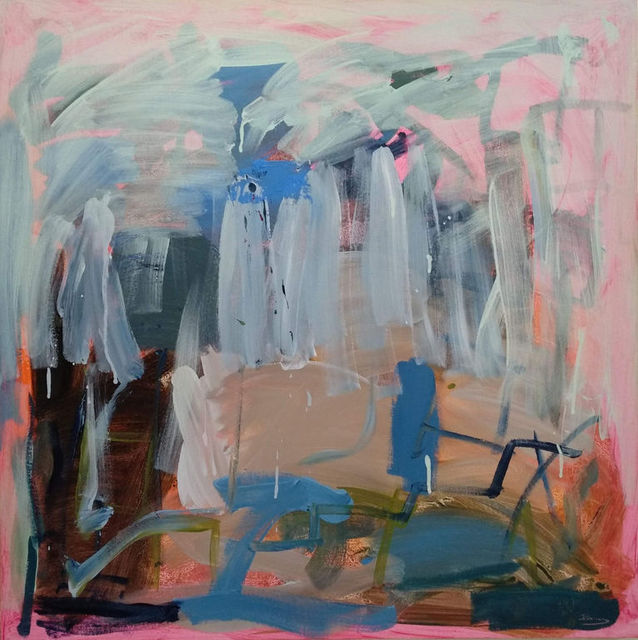
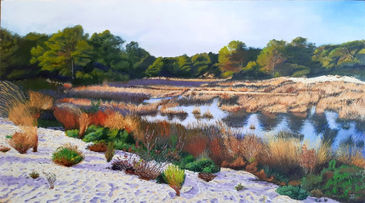
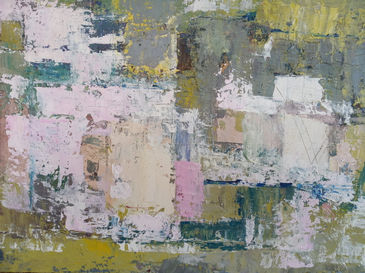
“Between the real and the abstract there is a line for the imaginary, and that is the line my paintings run along.” Jesús likes to repeat this phrase as a definition of his work. It is at that midpoint between what we believe to be real and what moves away from the figurative that we find his best artworks, those (almost) abstract landscapes where a few figurative anchors still hold out.
In his Paisaje Primordial series we still see trees and paths, but it is colour, cut loose from any mimicry of the real, that seeks to move the viewer. In Primordial 1, blues tinge the canvas with melancholy, and it comes alive with touches of green and red and calligraphic marks that recall Cy Twombly, one of his great references. In Tierra 3 the whole painting is a synonym for life, the chromatic vibration achieved by the green and the blue takes us back to that primordial landscape, “when nature was the centre of everything”.
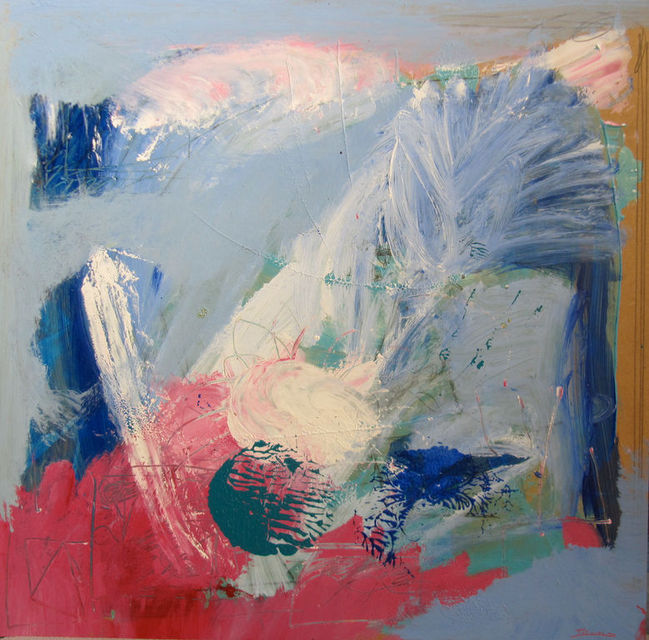
In the Enlaces, collection, meanwhile, Jesús Cuenca puts together an intuitive but recognisable landscape. Using wood as a support lets the painter experiment in another way, reaching great heights of expressiveness. For Jesús, wood “conveys the essence of nature”, the focal point of all his work.
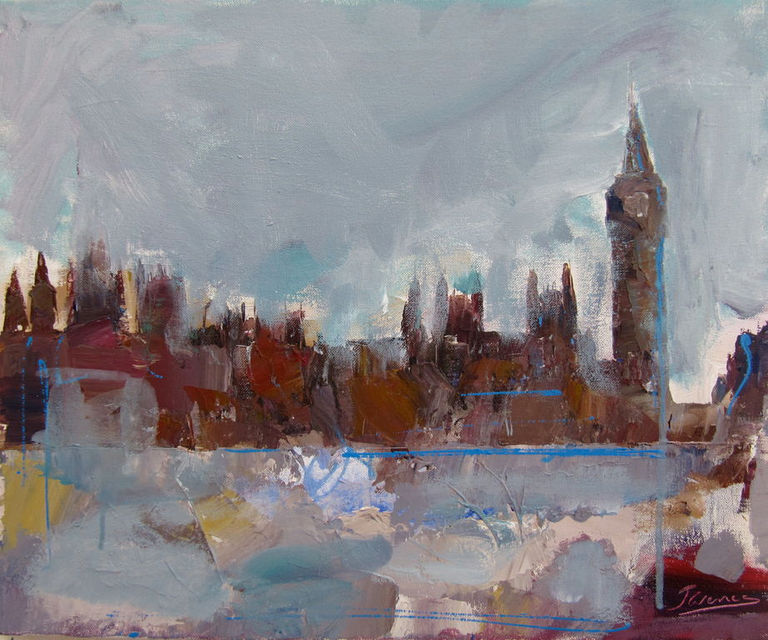
The fact is that the material a painter plays with is often too limited, and yet essential to reaching his artistic goals. Jesús Cuenca is one of those painters who enjoys the simple things, the brush, the palette knife, the hand and a surface. Piling up materials and techniques doesn't make a painting any more satisfying or any more avant-garde.
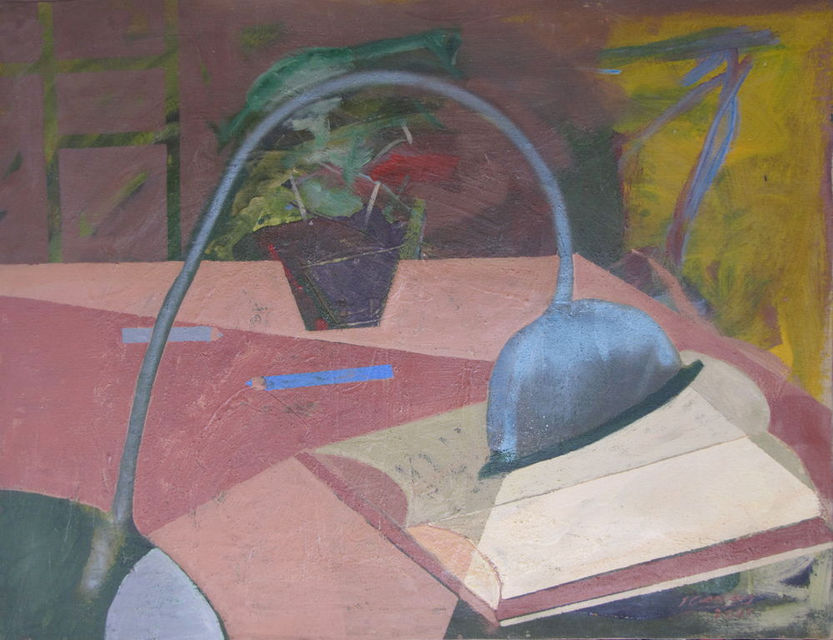
On his beloved wood we also find some of his latest contributions: the Siroco/Xaloc series, for instance. We were saying that atmosphere is essential to reading Jesús Cuenca's paintings: look at an artwork like Siroco/Xaloc 3 and you can feel that wind blowing, dragging along the fine red dust that comes up from the south.
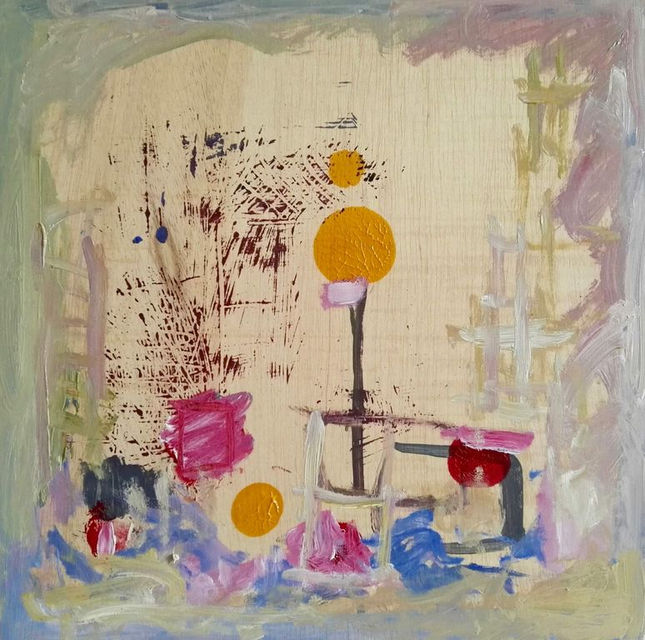
Also on panel, we should mention another suggestive series in which minimalism and the small format give us artworks as appealing as Copos 3, where a good part of the panel is left bare of paint, reinforcing that discreet, almost Oriental touch. But in Copos 5, Cuenca picks up his Mediterranean colourism again with a frame made of calligraphies, like a symbolic window the viewer leans out of to enjoy a swaying landscape.
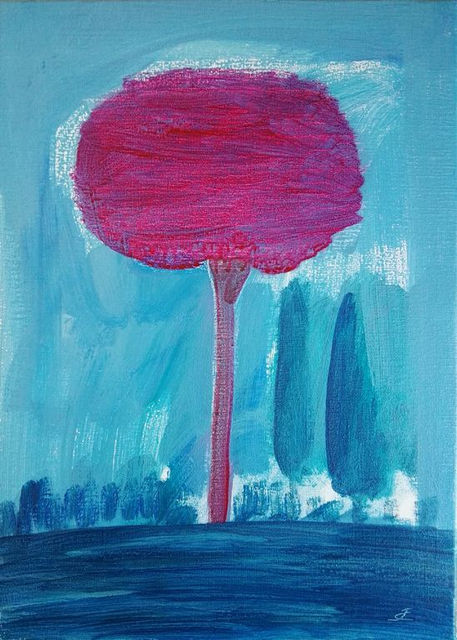
That minimalism, just emerging in some of the artworks in the Copos series, governs the origins of Horizontes. Jesús Cuenca sets abstraction aside and decides to approach nature from an expressive, symbolic angle. The tree is the motif, the pretext, but here the painter is more interested in the big layers of colour, in the transparencies they create and in the impression the use of colour can make on the viewer.
This scarcity of paint in Horizontes contrasts with other artworks such as Árbol amarillo y árbol verde. Once again the tree, “one of nature's most beautiful creations, forever changing colour or size”, this time loaded with more paint, rougher, waking up a different kind of tactile sensation.
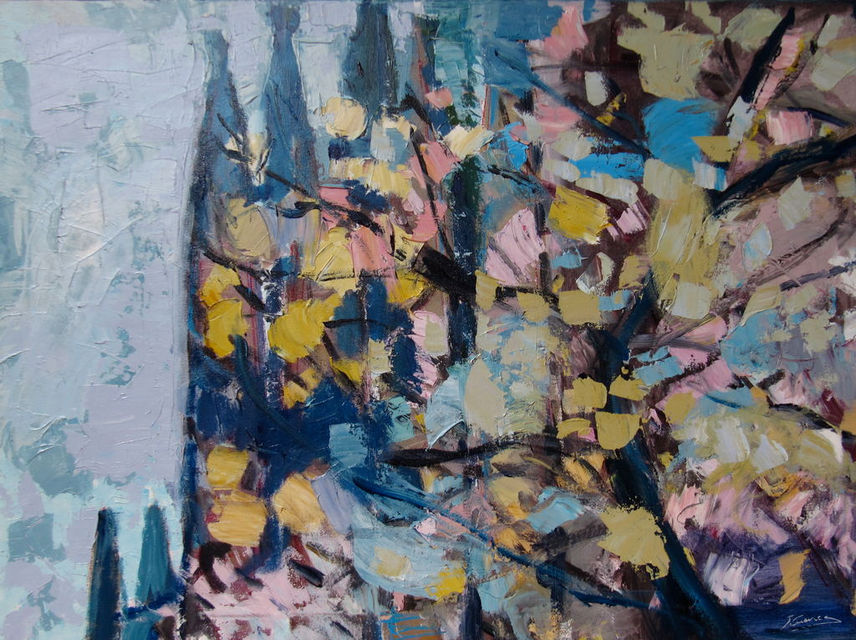
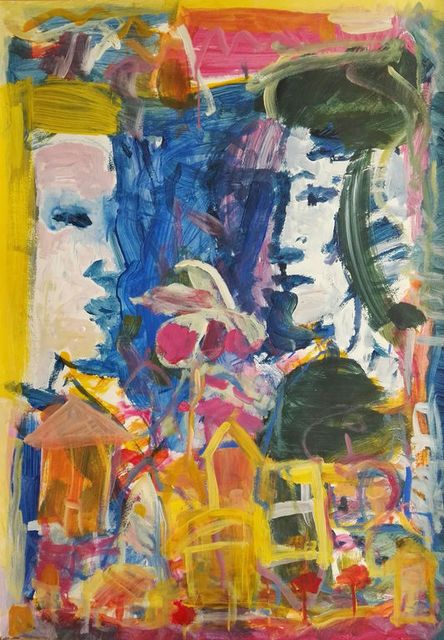
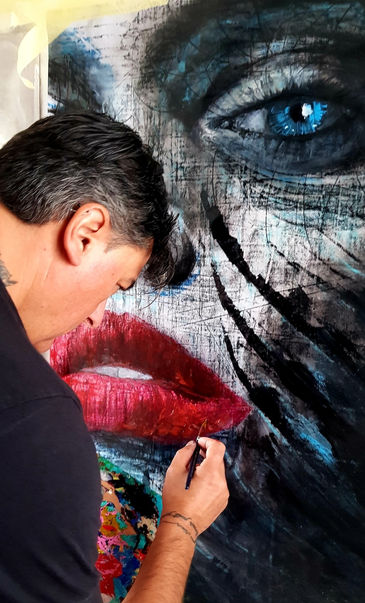
And although landscape, more or less abstract, more or less imaginary, is, as we have seen, the main motif in Jesús Cuenca's work, we shouldn't miss the chance to mention two of his latest paintings: Dialogantes and Miradas. In the first one especially, the expressionist, non-mimetic use of colour reminds us of the Fauvism of Maurice de Vlaminck. Looking in order to learn, and talking in order to come together, to build something jointly, are the meaningful elements in these artworks. Because Jesús Cuenca, despite a long and substantial career as a painter, has no intention of stopping learning (and building) from his studio.
We invite you to visit Jesús Cuenca's gallery on Artelista.
Comments (0)
Log in to leave your comment. Log in