
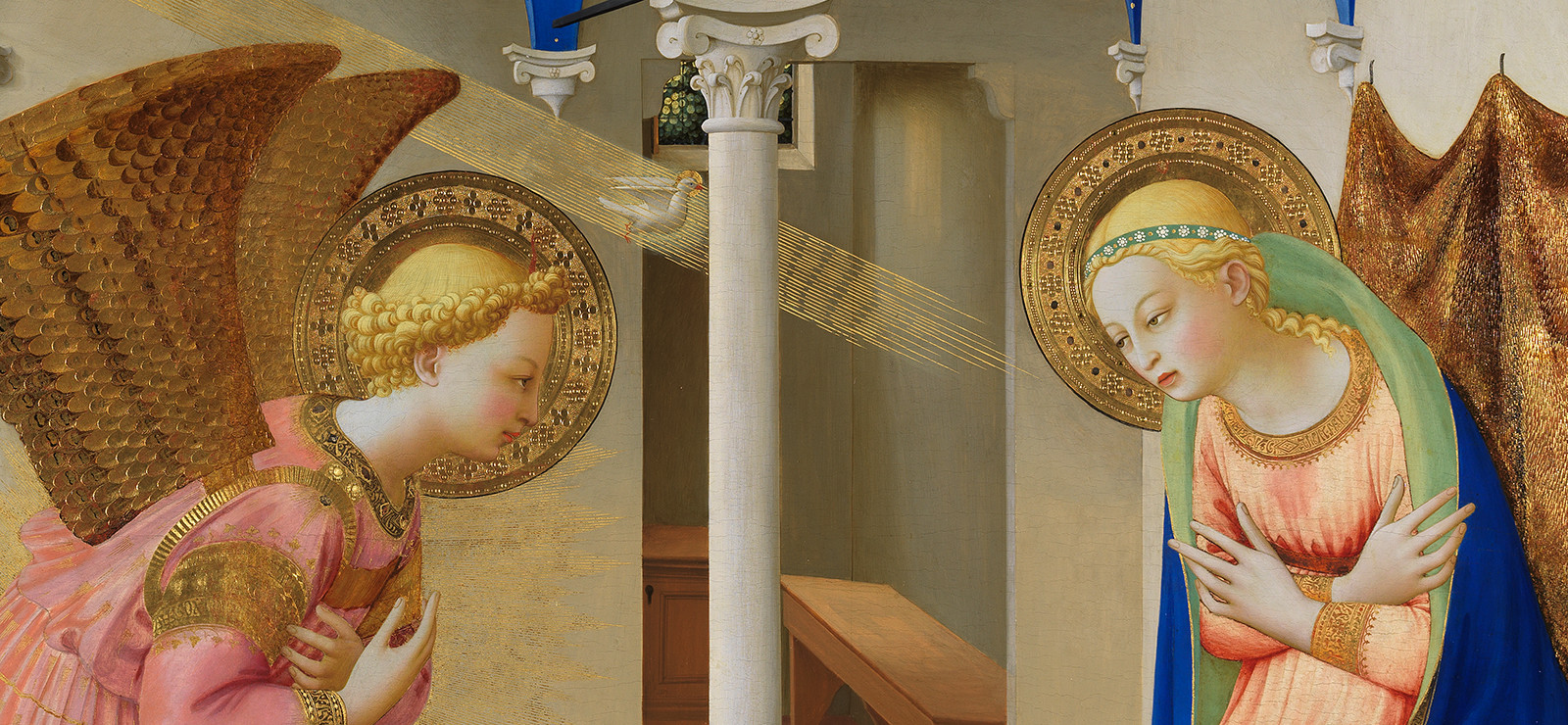
Until 15 September we can enjoy the exhibition Fra Angelico and the Rise of the Florentine Renaissance at the Museo Nacional del Prado in Madrid. A long-awaited exhibition that is part of the museum's bicentenary and is sponsored by the Fundación Amigos del Museo del Prado. A must-see for anyone visiting Madrid this summer, along with the other interesting exhibitions the city has to offer.
Fra Angelico and the Rise of the Florentine Renaissance looks into the artistic value of the early Florentine Renaissance, around 1420 and 1430, with particular attention to the figure of Fra Angelico, one of the great masters of the period. An artistic period of the Italian quattrocento of which there is barely a single artwork in Spain or in the Prado Museum. A unique chance to get close to this forgotten period of art history, one where our collections have certain gaps.
In its six rooms we find artworks by Fra Angelico as important as the Virgen con el Niño or Historias de los padres del desierto. You can also see artworks by other painters of the time such as Gentile da Fabriano, Donatello and Masaccio, among others. An exhibition that brings the essence of the Florentine Renaissance to Madrid and surprises with the quality of the artworks and the careful installation at the Prado Museum.
La Coronación de la Virgen y la Adoración del Niño con seis ángeles, Fra AngelicoTemple y oro sobre tabla, 77 x 43 cm (h. 1429)Florencia, Polo Museale della Toscana, Museo di San MarcoLa Anunciación at the heart of the exhibition
More than 40 lenders from Europe and America are taking part in this exhibition, and its centrepiece is the Prado's La Anunciación, now shown in all its fullness after its recent restoration. The exhibition is curated by Carl Brandon Strehlke, Curator Emeritus of the Philadelphia Museum of Art and a recognised expert on Fra Angelico and other masters of the Florentine Renaissance.
La Anunciación dates from the 1420s and has recently been restored and presented at the Prado Museum with the collaboration of Friends of Florence and American Friends of the Prado Museum. A key artwork in Fra Angelico's evolution, because it is the first time he does without gold backgrounds and presents a real architecture, moving towards the new style that the Gothic had pushed aside.
La Virgen de Granada. Temple sobre tabla, Hacia 1426The exhibition also includes la Virgen de la Granada, added to the Prado's collection in 2016, and another 40 artworks by Fra Angelico, as well as works by contemporaries such as Masaccio, Masolino and Filippo Lippi, and sculptors such as Donatello and Ghiberti, 82 pieces in all.
The figure of Fra Angelico
In his Lives of the Most Excellent Painters, Sculptors and Architects, Giorgio Vasari speaks of the painter Fra Giovanni Angelico as the owner of a “rare and perfect talent” and mentions that “he never took up his brush without saying a prayer, nor did he paint a crucifix without tears running down his cheeks”. The artist has become a reference point of the Florentine Renaissance.
Fra Angelico Angelico (Vicchio, Florence, 1390 - Rome, 1455) trained as a painter in a Florence where the public commissions for sculpture and architecture won by Brunelleschi, Donatello and Ghiberti turned everyone's eyes back to classical Antiquity in search of inspiration. Although he was an apprentice in the studio of the Benedictine Lorenzo Monaco, who cultivated a refined and elegant Gothic style, Fra Angelico gave himself over without reservation to the new artistic language and, like his master Monaco, entered a religious institution, San Domenico in Fiesole, the convent where he took his vows. As a friar he collaborated with other artists and ran a large studio that supplied paintings both to churches and to important patrons in the city and beyond.
Among his most important artworks we can single out La Madonna de la estrella, Cristo en la Gloria rodeado de santos y de ángeles, La Madonna dei Linaioli, La Anunciación, which is in the Prado Museum in Madrid, and numerous frescoes and altarpieces, found in Orvieto Cathedral and in the Vatican, decorating the chapel of Pope Nicholas V.
La Anunciación de Robert Campin (1420 – 1425). Óleo sobre tabla de madera de roble, 76 x 70 cmA different kind of exhibition
Among the altarpieces he painted for his convent was the Anunciación we can enjoy at the Prado Museum, the axis of this exhibition, which shows his active part in the Renaissance of the arts that took place in Florence, since together with Masaccio, younger than him, he invented a new way of seeing that would dominate Western art until the modern age.
Dated to the mid-1420s, La Anunciación is the first Florentine altarpiece in the Renaissance style to use perspective to organise space and to abandon Gothic arcading in favour of more orthogonal forms, following the principles advocated by Brunelleschi. Because he was a friar, his ability to handle light, space in perspective and narrative has often been overshadowed by reducing him to his role as a theological painter.
This altarpiece arrived in Spain in 1611, probably the first of his paintings to leave Italy, while the Virgen de la granada was acquired by the 14th Duke of Alba in 1817, when the artistic value of the early Florentine Renaissance was being rediscovered.
An exhibition where the Florence seen by Fra Angelico and by other artists of the time are woven together. A chance to get to know the work and the influence of this inexhaustible artist.
Fra Angelico and the Rise of the Florentine Renaissance. +info
Prado Museum, Rooms C and D. Jerónimos Building

Comments (1)
LEON DAHAN
July 4, 2019Log in to leave your comment. Log in