
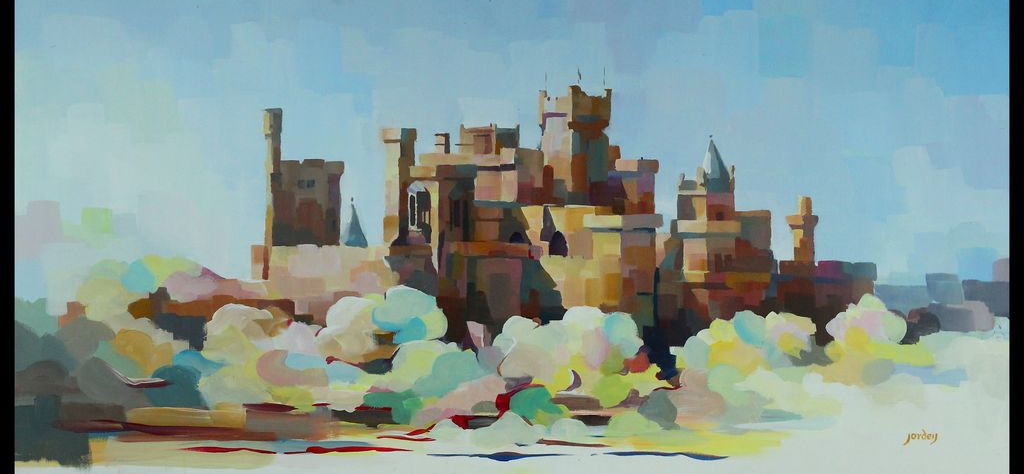
When the first Impressionist exhibition was held in 1874, nobody imagined the importance of what those pioneers were cooking up. Monet, Pissarro, Sisley and company had shaped a style that 150 years later is still the general public's favourite. Impressionism has sunk in so deeply with audiences because of its mix of colour, sensuality, hedonism and worship of the instant, of the «here and now».
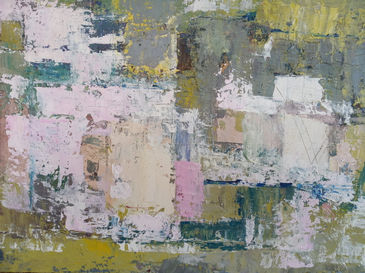
In José María Ordeig's series of the seasons, the light, the colour and the fleetingness that fascinated those first Impressionists all crystallise. Through small fields of colour, subtle transparencies and gradations, the artist catches the quality of the light. As in Otoño I, where the light filters magically through the treetops, a festival of colour that already borders on abstraction.
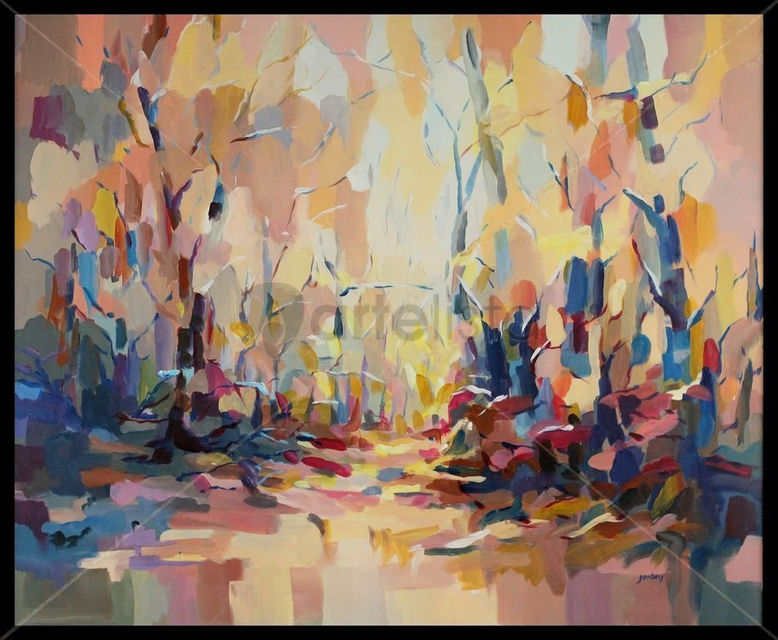
Of course, the painting of José María Ordeig (Valencia, 1948) has its roots in Impressionism, but the painter from Spain's east coast shows a greater interest in the first developments of that pictorial technique.
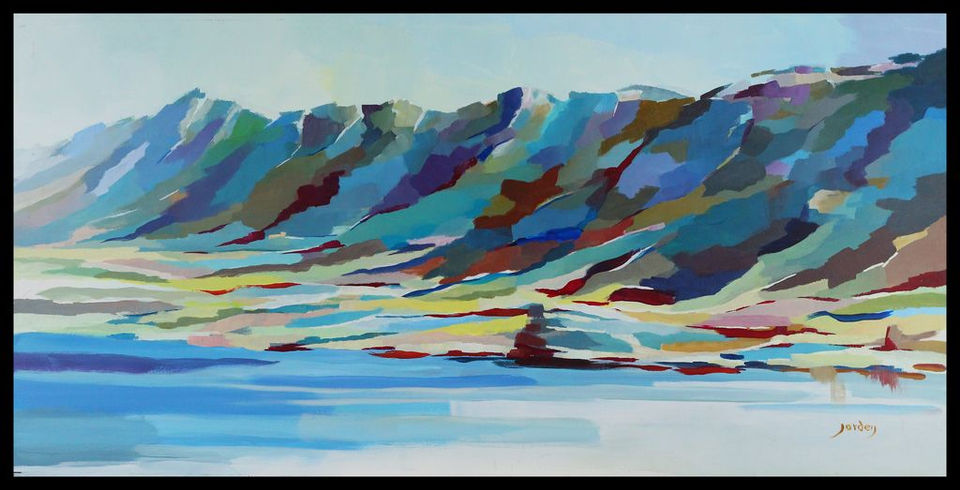
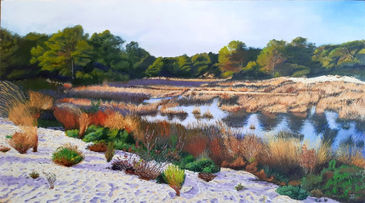
In his landscapes we detect the influence of the Cézanne obsessed with Mont Sainte-Victoire. El Pico San Donato is built with those small geometric fields of Cézannian colour that would later lead to Cubism. But Ordeig softens the colour, feeling more at home with mixtures of brighter, more cheerful hues, perhaps the fruit of his Mediterranean inheritance.
Sierra de Leyre is another festive display of colour, as is Midi d’Ossau, in which the cool tones already win the day on the foothills of the mountain, tones that also dominate the artwork Del Tallón al Casco.
Urban landscapes
Colour relationships are one of Ordeig's main concerns. All his collections pivot around colour harmonies, generally warm ones, as we have already pointed out. The painter from Spain's east has kept in mind the findings of Divisionism, of those followers of the first Impressionists who got very clever and decided that the brushstroke had to be «more scientific» in order to achieve a greater effect of light. The colours would not be mixed on the canvas, but in the viewer's eye…
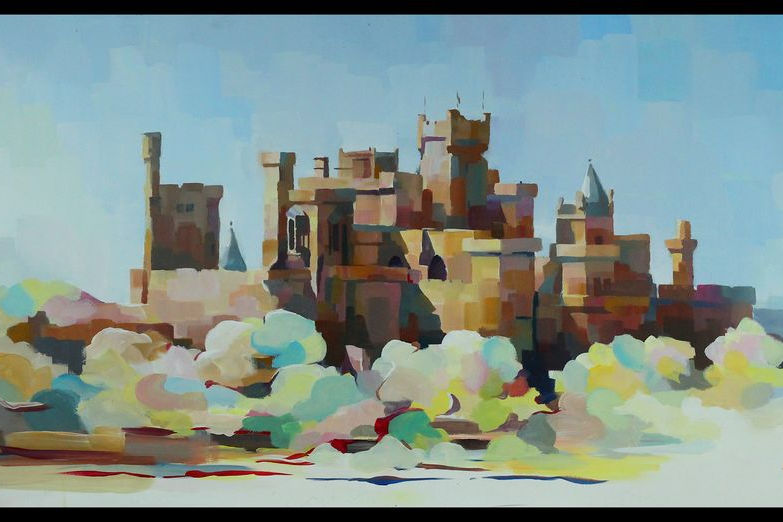
In the lovely artwork titled Castillo de Olite, Ordeig creates these divisions of colour that are so noticeable in the treetops in the lower part of the canvas. The castle thus seems to float on cotton wool of colours, creating a delightful effect. The castle itself is also built with those little squares of colour we had already seen in his natural landscapes or in the series of the seasons, geometric touches that unerringly produce a fantastic combination of light and shadow.
Figures
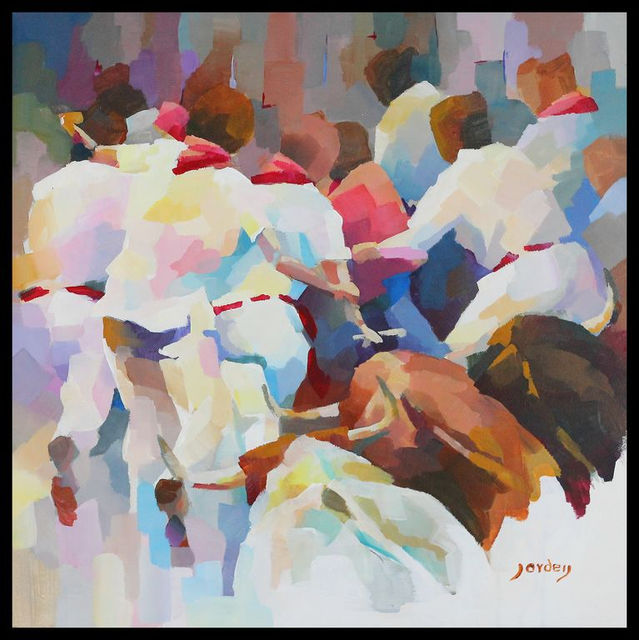
There is no doubt that Ordeig's technical choice has been key in forging his style. Acrylic paint on board produces these bursts of light and this festival of colours that in many cases is more expressive than naturalistic. And although the landscapes, both urban and natural, lend themselves better to this technique, the Valencian painter shows more and more interest in figures, as in his series on the Encierros. A resident of Pamplona, Ordeig, an architect and teacher, has not been able to stay away from one of the best known festivals in the world and has taken his colour geometries into the world of the bull run. It is interesting how, just as in the landscapes, the painter shows no mimetic intention, leaving the lower part of the board unfinished so as to place his signature there, as happens in Encierro 3 or Encierro 4.
Portrait
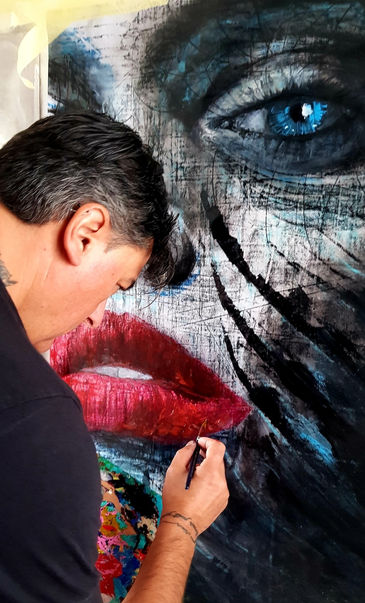
The young José María Ordeig combined his Fine Arts studies with secondary school and a degree in Architecture. Once he had finished the latter, he devoted himself full time to teaching and professional practice, setting aside painting, another of his passions. Since 2011 he has taken up his painting again. And any self-respecting painter has to try their hand at portraiture. Ordeig shows more and more interest in this genre, applying to it too his style of colour and light divisions.
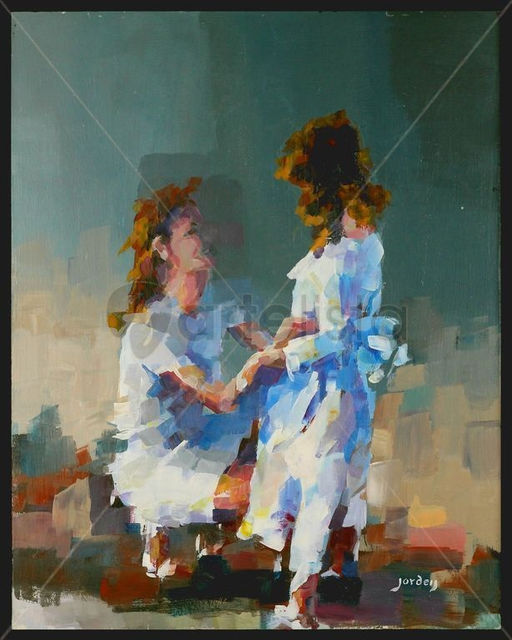
While he prepares his first exhibition, José María Ordeig's output grows year after year, exploring new motifs but keeping the same technical and stylistic coordinates.
We invite you to visit José María Ordeig's gallery on Artelista.


Comments (8)
pablo ferrer
January 27, 2017José C. V-G
January 25, 2017Jose L
January 19, 2017Magda QO
January 19, 2017Creo que ambos se entenderían bien, es más, creo que Picasso estaría orgulloso de la tenacidad de Ordeig.
Jorge O. Corsini
January 19, 2017Margarita
January 19, 2017Es fruto del trabajo intenso y constante en su faceta plastica e intelectual.
Efectivamente, roza la abstraccion!
Margarita Quesada
January 19, 2017José María Ordeig
January 19, 2017Log in to leave your comment. Log in