
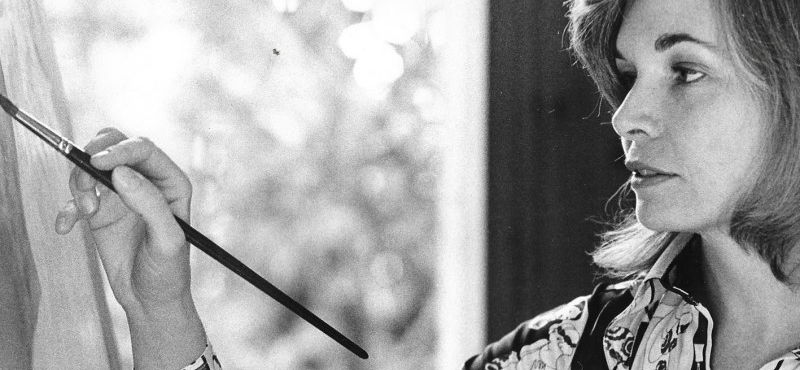
"Sometimes the painting is demanding something. It sounds unreal or absurd, but that's how it is, the painting asks things of you, you feel forced by it, the artwork gives more orders than you do."
-Montserrat Gudiol.
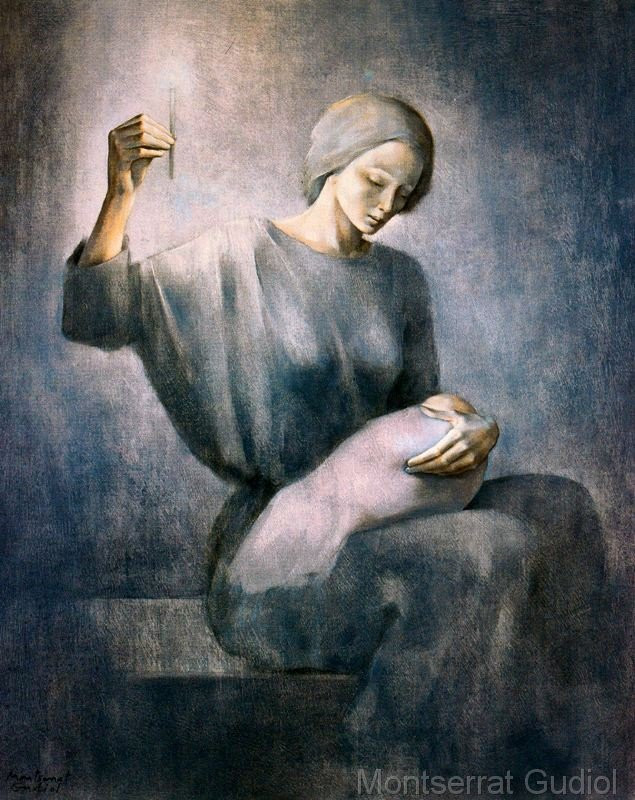
Like all children, little Montse always looked up to her father and sometimes watched him while he worked. None of this would matter much if her father hadn't been an architect and an art critic. And although the merit belongs completely and absolutely to Montserrat Gudiol (1933) for her artworks, art history would have missed out on a star in its sky if it weren't for that small detail. It was the 1940s when this Catalan woman from Sant Adrià de Besòs (Barcelona) started to paint, and back then a woman devoting herself to painting professionally was an act of rebellion. But, as they say, "She did it". This is the gripping life and work of possibly one of the five most important women painters on the peninsula in the 20th century.
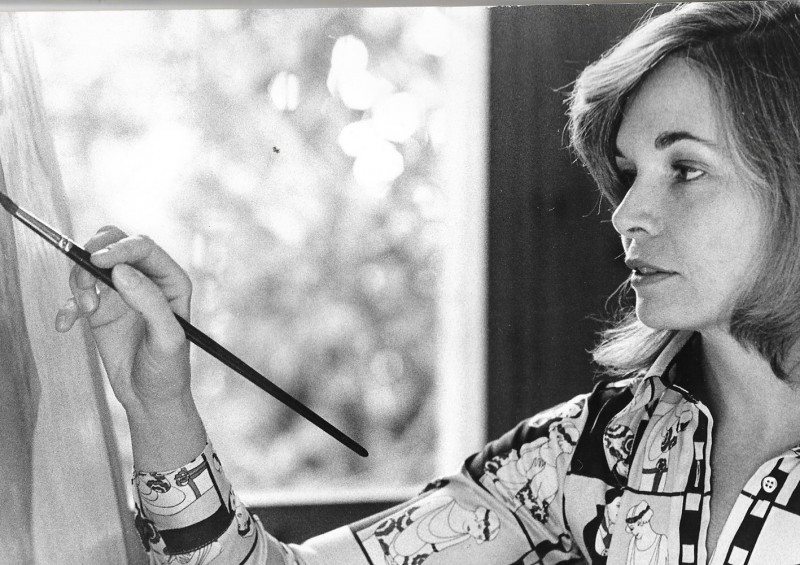
Montserrat Gudiol, Catalan academic painter and pioneer
Montserrat learned to paint the way people learn when nobody believes in them, on her own. She trained herself for years (later she would be taken on as a pupil in Ramón Rogent's studio) and at the age of 17 she got her chance when she exhibited at the Casino de Ripoll. Her big break would come with a group exhibition in the United States in 1964. Her artworks stood out among the great artists of her time, Tàpies among them.
It wasn't until 1970 that she created her great artwork Sant Jordi, which today is one of the major paintings of contemporary Catalan art. As if that weren't enough, Montserrat Gudiol won the favour of the Catalan bourgeoisie to such an extent that, in the seventies, she was the most sought after of all artists for private collections. Her fame lasted until her death on 25 December 2015.
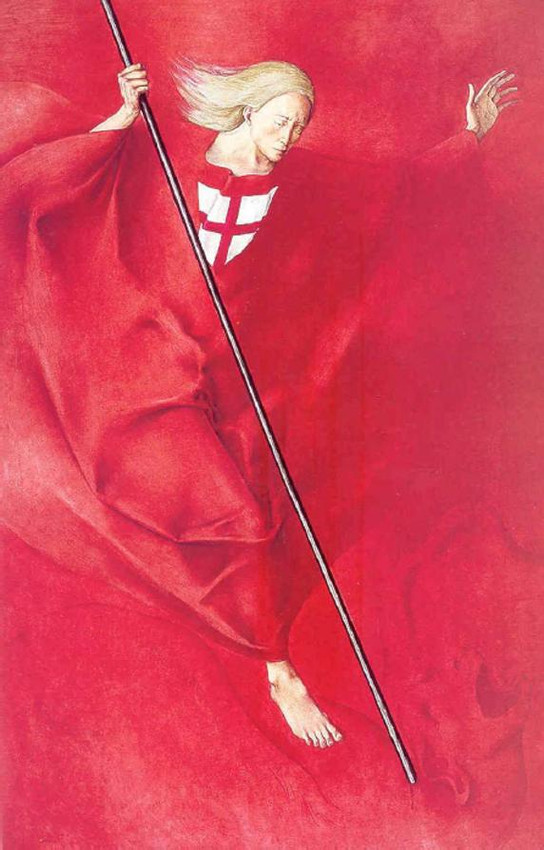
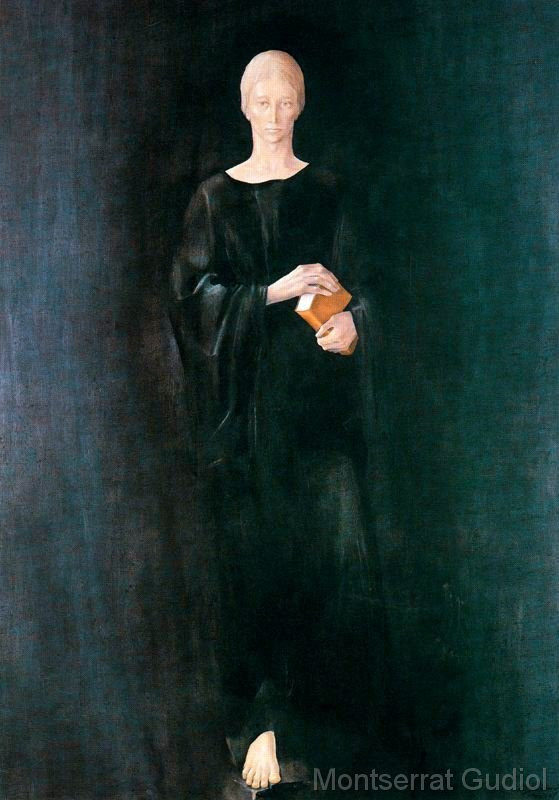
Sant Benet, Sant Jordi and Maternidad Azul, Montserrat Gudiol's trinity
Her first great artwork was made in 1964 in a turbulent Spain that was getting ready for the transition, even if it wasn't aware of it and even if her figures never carried any symbolism. The truth is that the impassive face in Sant Benet (1980), which looks like a mask covering the darkness of being, could well be an extreme expression of her time.
Sant Jordi burns in this painting, which gives off the voracity of colour over the human figure. Gudiol loved surrealism, into which she breathed an air more typical of the Italian quattrocento. That contrast earned her the sympathy of a good part of the bourgeoisie of the seventies and, in fact, she was the most in demand of the women painters of the period. It can be seen at the Royal Catalan Academy of Fine Arts of Saint George.
Her most mature famous artwork, Maternidad Azul (1974), showed this painter's skill when it came to light. In fact, we can conclude that what she learned in the German school of the time during her travels was well learned and well absorbed. This painting shows the purity that comes with the creation of life.
The artworks of Montserrat Gudiol: the extortion of Carina Boronat and the recovery of the art
As we said earlier, Montserrat Gudiol, Catalan academic painter, was a pioneer. That's why her paintings hang in many great museums. The Museo Reina Sofía is one of them. Her artworks can also be found at the Barcelona Museum of Contemporary Art. This magnificent artist's work can be seen in museums in Johannesburg, Lausanne and Bilbao, among others. In fact, it's possible that a few years from now some of the artworks from the artist's own private collection will be on view. And with them some other artworks by great painters that are part of the family collection.
The extortion of Carina Boronat
2016 was not a good year for Montserrat Gudiol's family, who had to face the artist's death and, on top of that, extortion by a gang who posed as potential buyers under a false name. They were asking for 600,000€ for a collection worth 3,000,000€. For months the family suffered constant extortion from this group, who claimed they would reveal compromising information about the artist. Montserrat Gudiol's artistic estate includes her own artworks but also those of other artists. The collection was stolen but the 443 artworks were recovered in the end. It was thanks to the intervention of the Mossos d'Esquadra. This December marks the first anniversary of this great painter's death.
This artist's legacy is plain to see in her extensive body of work and in the dozens of exhibitions she held during her lifetime. Over the course of her career she received numerous prizes. Today she is considered one of the great European painters and one of those who best managed to squeeze something out of the combination of two styles as different as romanticism and surrealism. Her work sometimes recalls the very great poet William Blake. In fact, some of her paintings come out of that shared hell you could see in the watercolours the writer turned into a hobby but which could well have been his livelihood. Montserrat Gudiol's marvellous ability to use innovative and traditional techniques on intimate, everyday subjects left a gap that only her dense body of work is able to fill.
Comments (0)
Log in to leave your comment. Log in