
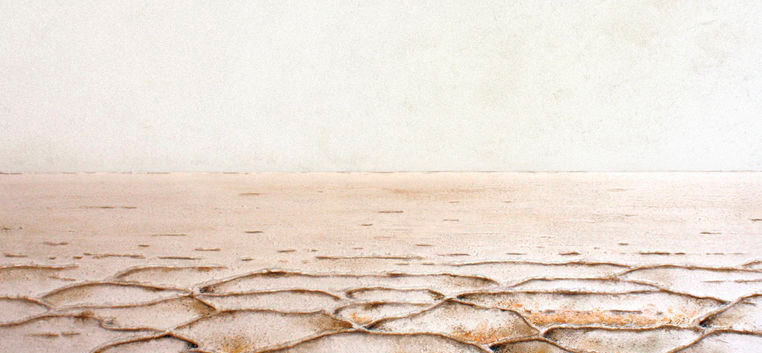
Beach or mountains? Give me a desert. A few weeks ago we were asking ourselves why most of us like the same paintings, and this time, taking advantage of Josep Obradors' series of artworks, the question worth asking is why one kind of aesthetic can have such different effects on a viewer's mood. Why does a lunar landscape ravaged by time have the power to soothe a restless spirit and, at the same time, to unsettle a calm one?
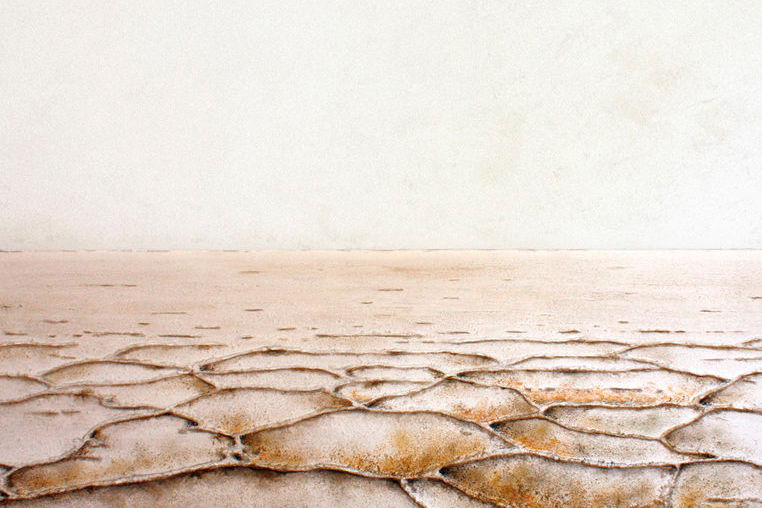
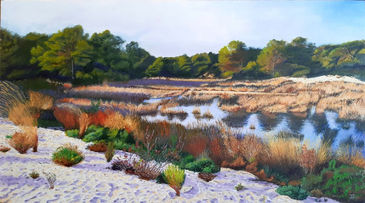
Desierto de sal is an important artwork in Obradors' recent career. He himself says that with it he began to “experiment with volumes, textures and perspectives”. As if it were the backdrop of a canvas by Yves Tanguy (even without his malleable little figures set in place), the Catalan painter reflects on the aesthetic possibilities of desolate landscapes.
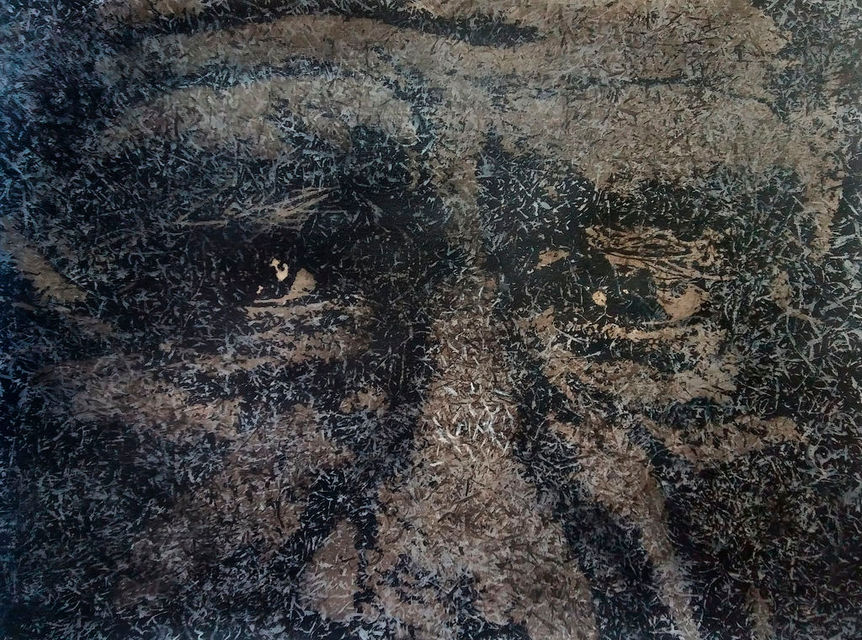
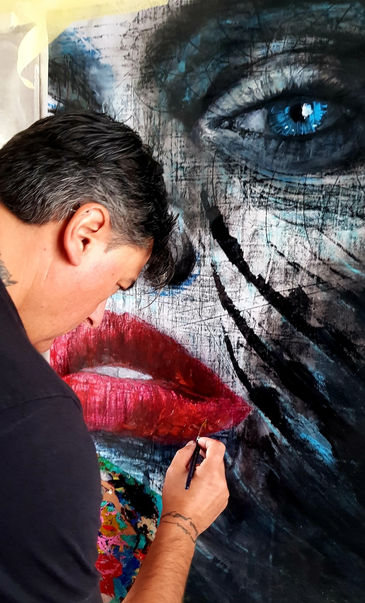
It is with artworks like Desierto de sal that Josep Obradors starts to shift his course, almost entirely setting figuration aside. But it hasn't been such a radical break, it's an evolution we can trace by looking at his earlier production. In the paintings where human figures appear, such as Viejo Pescador, the artist opts for an extreme close-up of the model's eyes. The face seems to fade away into a surface full of marks. Time swallows the memory that survives only through that tired but definitive gaze.
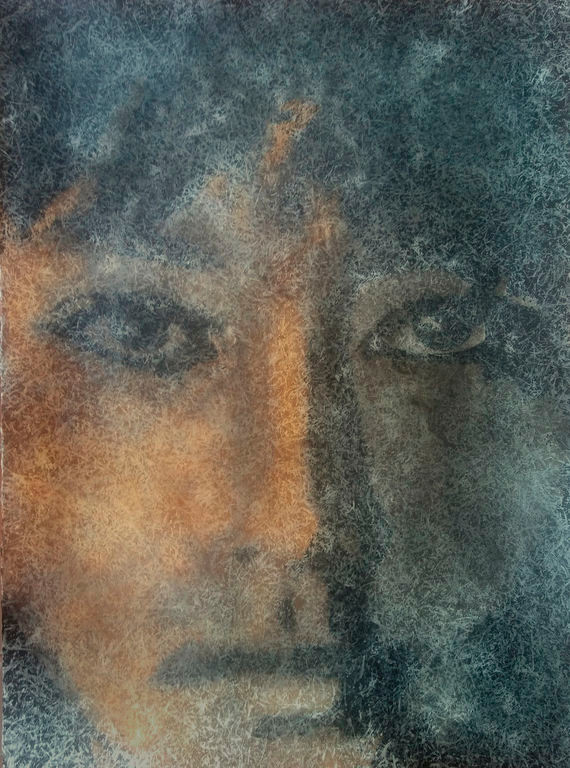
In paintings like Viejo pescador and Joven y neón you can already see an interest in textures, in stimulating the viewer through the impressions that surfaces generate. Along these lines, Obradors shows a desire to apply a patina to his paintings, creating an effect somewhere between hazy and burnt, as if those images had been rescued from a trunk covered in time.
We should also point out the artist's series of artworks on marine fauna, some of which are real aesthetic gems, as is the case of Arenques Ahumados, one of the latest glimmers in Obradors' production. A shine that links it to the glowing Melocotones, another reflection on the dimension of time: the creases of the paper are the folds of time. These peaches are definitely ripe.
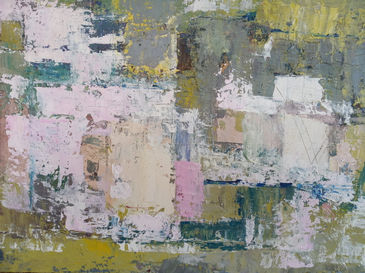
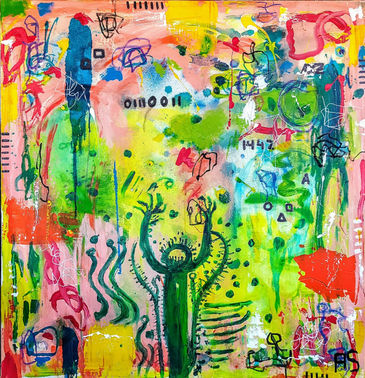
And ripe is how Josep Obradors felt when it came to taking another step in his career and, with artworks like Desierto de sal or El Páramo as the link, the Catalan artist opens up once and for all to textural abstraction in artworks like Las Edades del Olivo, Petroglifo or Epicentro.
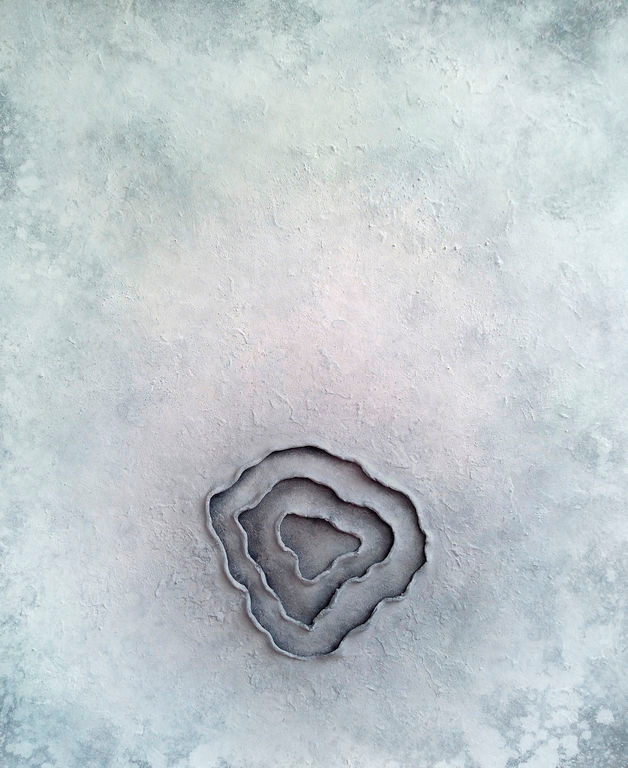
While Obradors was already reflecting on the passing of time in some of his earlier artworks, we get the feeling that in this new stage he takes pleasure in what lies beyond time. In an age like ours, marked by the most maddening nowism, the Catalan artist turns his attention to what has survived the lashing of the oceans of time: a thousand-year-old symbol on a rock whose message is today more indecipherable than ever, with our minds hijacked by the most arrogant present.
But beyond any possible weight of meaning, Josep Obradors uses his motifs as a vehicle for technical experimentation. Volume and texture, along with a chromatic economy, are the elements around which artworks like these pivot. Using ceramic clay as raw material, Obradors creates eternal spirals on a stony canvas.
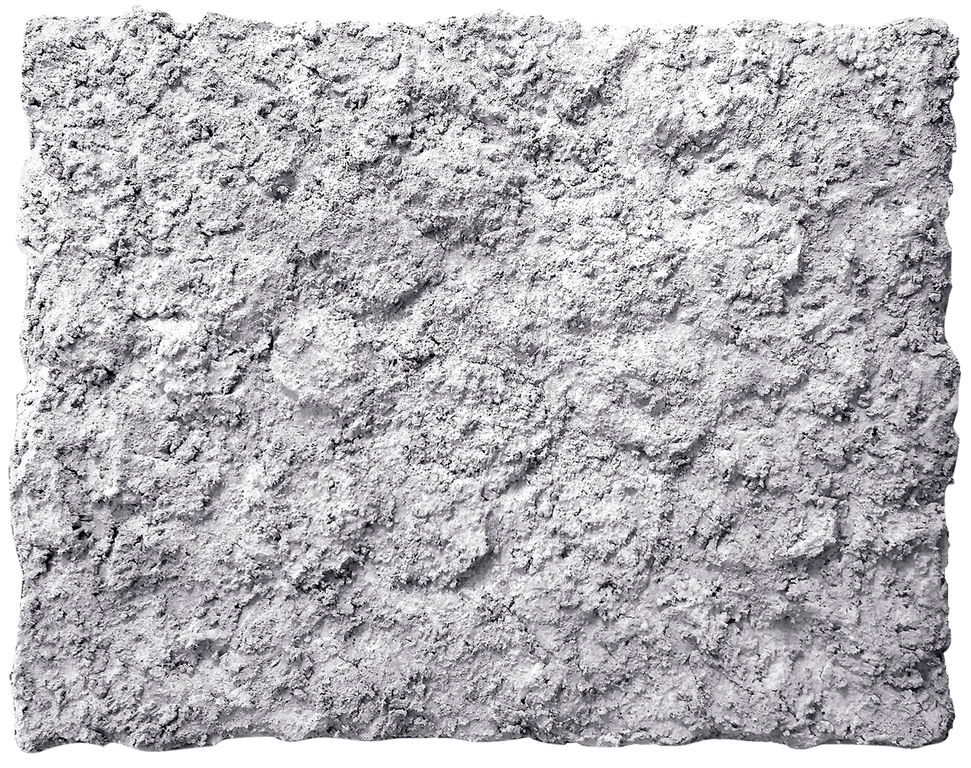
His series of artworks on the desert, on deserts, belongs here too: Desierto Blanco or Kalahari are just two examples of the point of no return reached after this trip towards textural abstraction. But, as the artist himself points out, it's an abstraction whose starting point is clearly nature. Density and aridity weigh on these artworks, before which the viewer may feel an uncontrollable urge to touch.
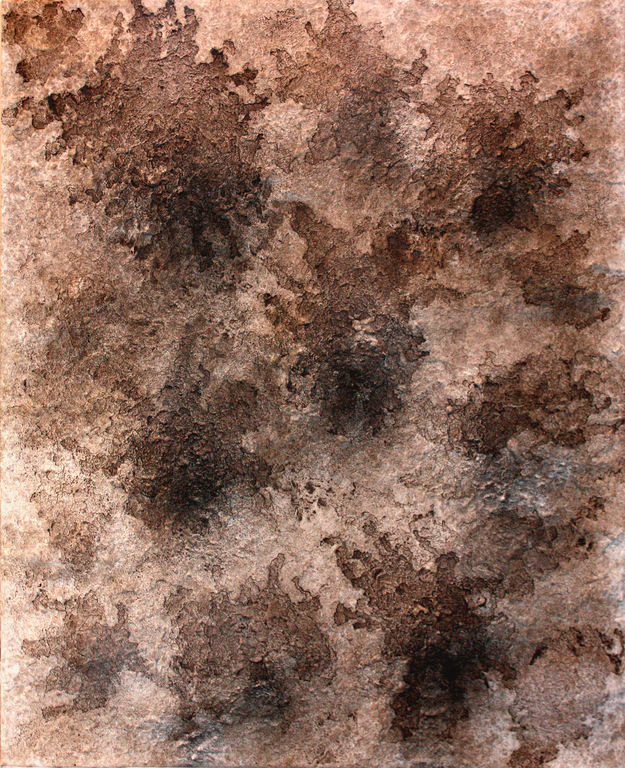
And if there is an ideal place on earth for a spirit like Josep Obradors', it is Islandia. In various spots on the island the traveller feels as if in another dimension, as if human history hadn't started yet... or had been wiped out eons ago.
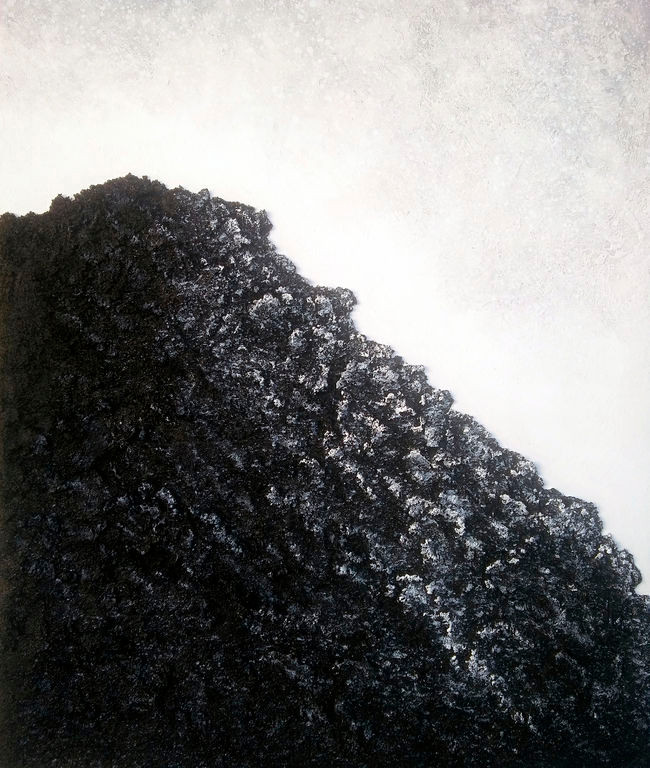
Even though the artworks of Obradors' latest stage are mostly marked by isolation, dehumanisation and a kind of centripetal energy that threatens to implode, it is in spaces like these that the tense spirit finally moves away from unease, where time stops blowing in its atrocious gusts and the human being, who no longer exists, can dissolve meekly before the unknown.
We invite you to visit Josep Obradors' gallery on Artelista.

Comments (0)
Log in to leave your comment. Log in