
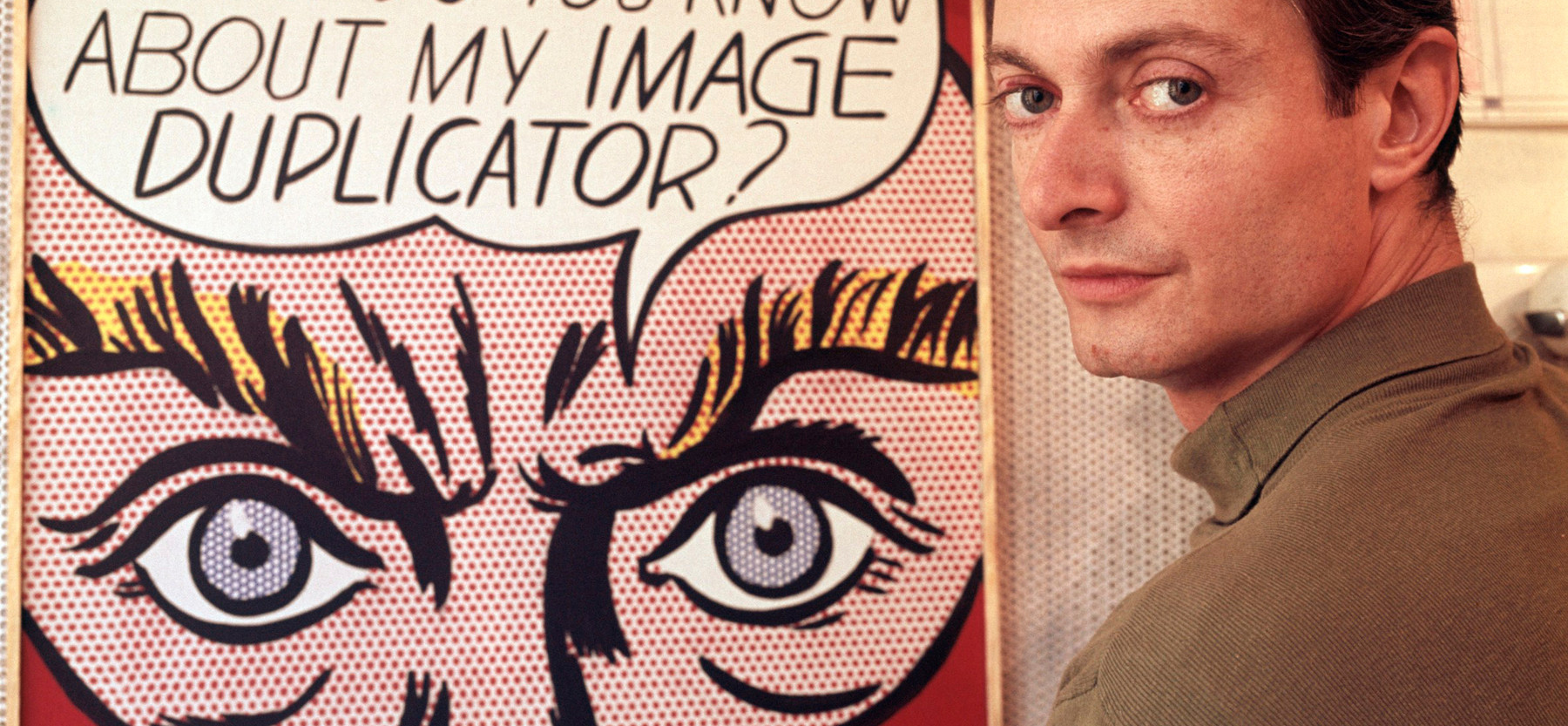
“My God, why didn't I think of that before?”. Those were Andy Warhol's words when he first saw Roy Lichtenstein's (1923 – 1997) artwork inspired by comic strips and comic books.
It was 1961 and American society was going through a time of change. The happy 50s had sent consumerism through the roof, and advertising was becoming a key element of popular culture. With that as a breeding ground, several artists started looking at mass culture as material for artistic reflection. On the other side of the Atlantic, the British artist Richard Hamilton put together his famous parodic collage Just what is it that makes today's homes so different, so appealing?. It would be the Americans who gave the definitive push to this artistic current, soon called Pop.
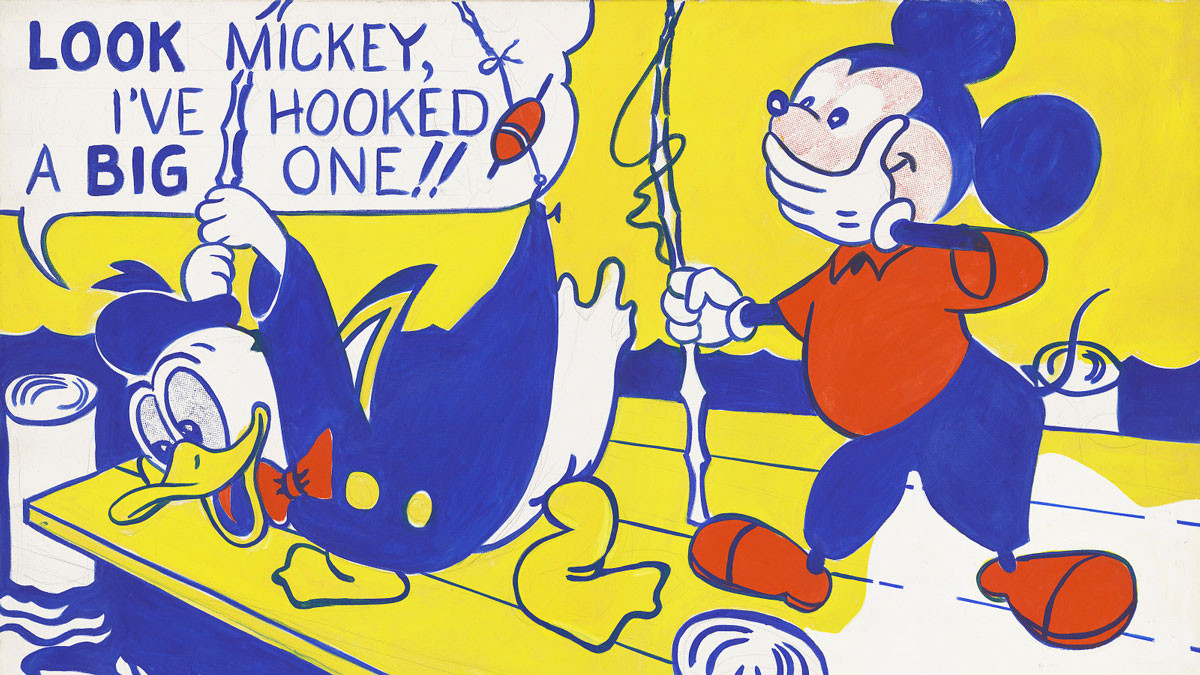
The late 50s. The Lichtenstein family home. Roy doesn't earn enough as a painter to support his family. He goes from job to job. To amuse himself (and to amuse his two small children) he paints chewing gum wrappers and comic strips. It is Roy's first encounter with his future. When in 1961 he paints Look, Mickey, a large format oil on canvas recreating a scene starring two popular Disney cartoons, the artist is no longer thinking about his children, he's thinking about the possibilities of an idea: the mechanization of art, raising popular culture to the status of art... Mickey Mouse in a museum.
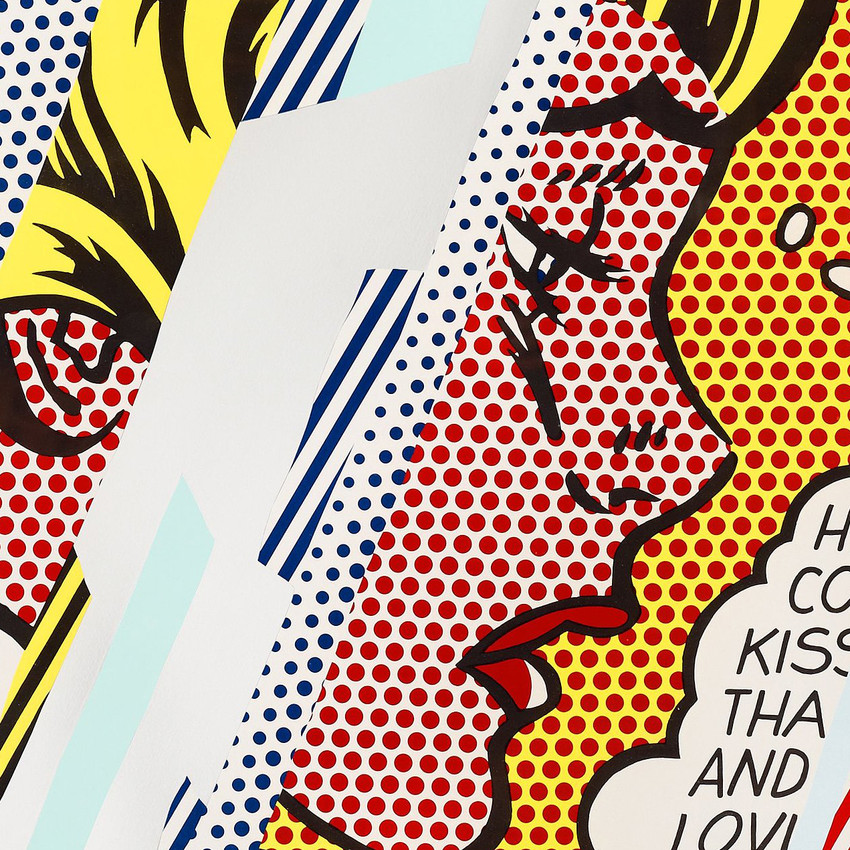
Roy shows his comic-inspired artworks to the dealer Leo Castelli, who becomes his protector. It was around then that Warhol realized comics were “territory taken” by Lichtenstein. He had already started painting comic panels without knowing his colleague's work beforehand, but the difference was in the style: Roy had brought the typical comic book printing, with its Ben-Day dots, to the canvas. Warhol, on the other hand, had stayed faithful to a more traditional brushstroke. In the end this would be Lichtenstein's great discovery: not just drawing inspiration from comics, but imitating the making of the traditional comic book with its industrial printing.
And the ball started rolling and never stopped. American Pop Art had been born. Gallery owners embraced the new trend for its obvious commercial possibilities and the public soon got used to this new art. How could they not, when they were surrounded by it everywhere!
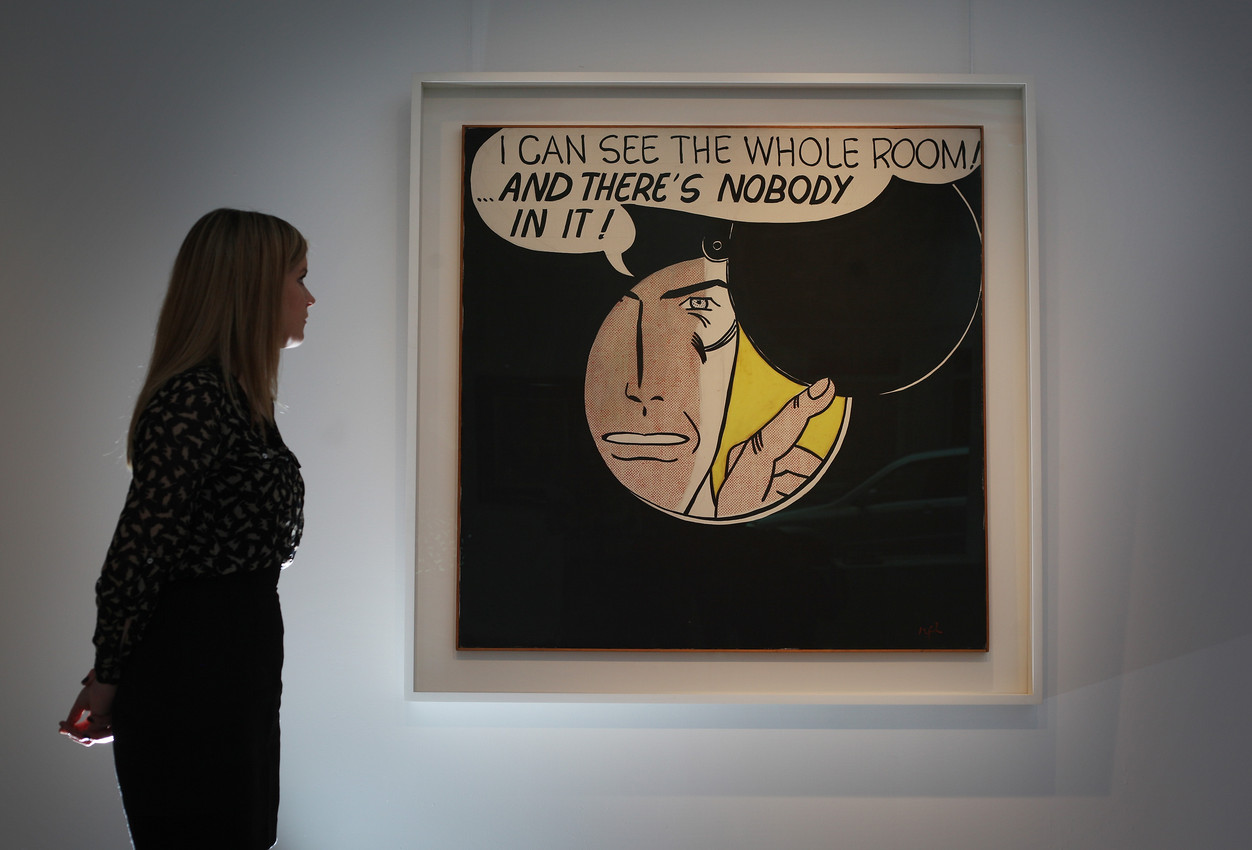
Of course, the initial impact was considerable. Since when is Donald Duck art? But Pop was quickly assimilated by everyone, to the point that critics started coming up with weighty theories about the meaning of Lichtenstein's work: biting critique of consumerism, radical anti-war stance, parody of the art market, and so on.
But Roy never admitted to any of these aims: “We like to believe that industrialization is despicable, but comic strips and signs are interesting, there are certain things in commercial art that are usable, forceful and vital”. Lichtenstein was raising comics and advertising to the status of art, something that now doesn't strike us as so far-fetched. “My work is more about the American definition of images and visual communication”.
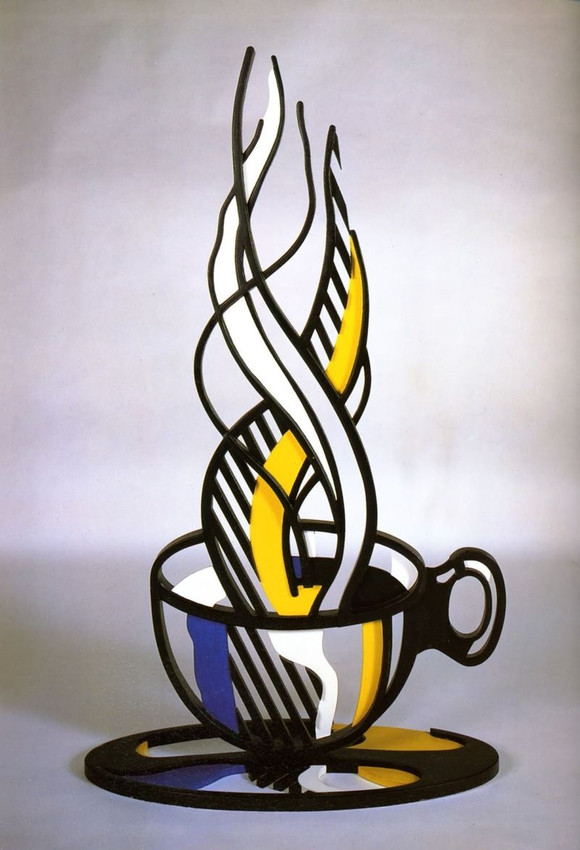
Indeed, Lichtenstein was more concerned with technique, with forms and with color than with giving his work an intellectual background. There's no denying there's a considerable amount of irony in many of his artworks, but in the end, like most artists, whatever the discipline, Roy was only trying to find a defined, satisfying style for his artistic output.
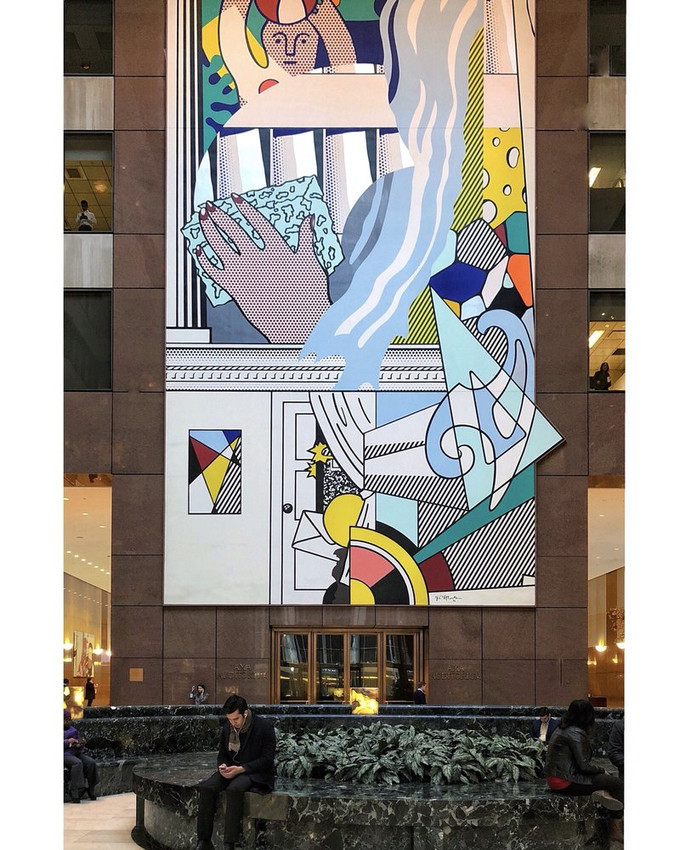
And he certainly managed it. He became one of the central figures of American art from the 60s to the 80s, a sure bet in museums across half the world. When the huge Mural with Blue Brushstroke for the Equitable Tower, 20 by 10 meters, was unveiled, it didn't disappoint: Roy Lichtenstein paid himself an ironic tribute by including, collage style, several of his great discoveries.
The artwork Roy Lichtenstein kept in his studio almost until the end of his days —he gave it to the National Gallery in Washington in 1990 to mark its 50th anniversary— was Look, Mickey. Perhaps it was a way of reminding himself that art and banality are so close that sometimes they can mix... with surprising results.

Comments (0)
Log in to leave your comment. Log in