

Magdalena Weber's nudes are lush, dense, rhythmic and seductive. They tempt you, but they keep their distance. They let us look, but they don't invite us in: they're wrapped up in their own bodies or in the bodies of their companions, they have no time for the viewer, in fact they look away, with a touch of haughtiness and a touch of languor. Magdalena Weber's nudes keep their distance, but they leave the door ajar, just enough for the viewer, won over, to want to know more...
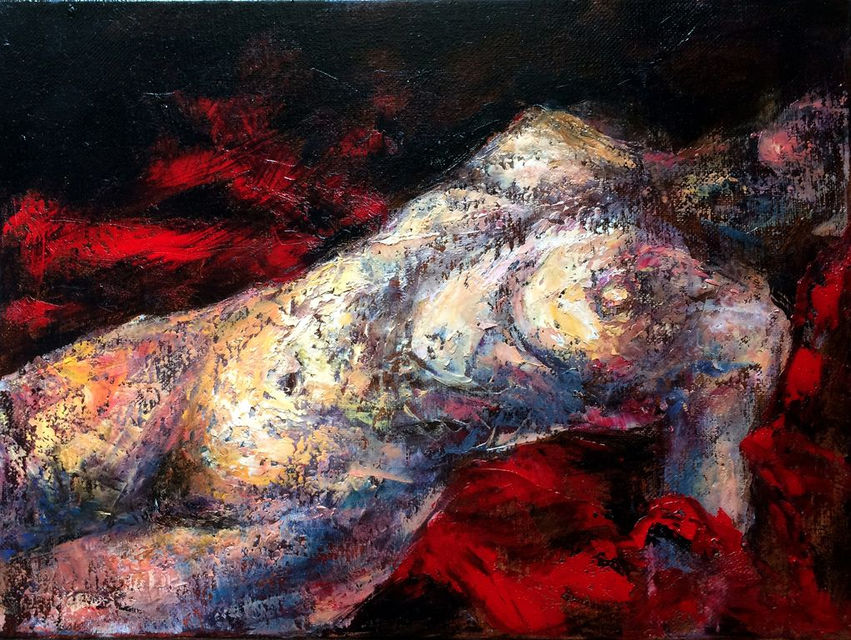
The nude has been one of the main motifs in the visual arts throughout history. It makes perfect sense: we're human and we like depicting ourselves. The artists of cave painting were the first to raise the nude to the status of art. And we haven't stopped since: the nude has plastic qualities that are ideal for artistic representation, but it also stimulates us because we feel it pulsing, it stirs us because we sense its warmth.
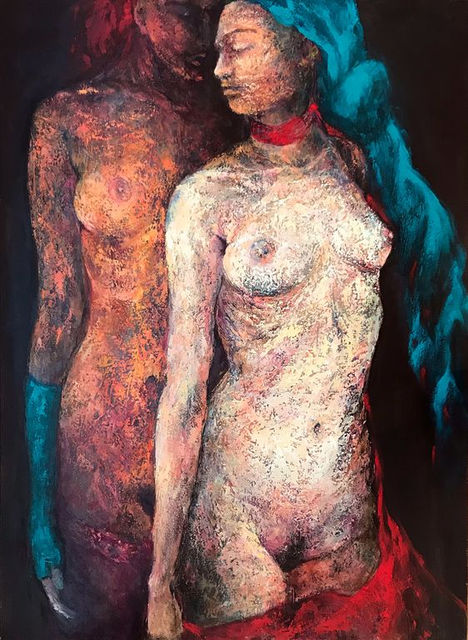
In Magdalena Weber's oils, the pulse of those naked bodies is heightened by the qualities of the texture. In some of her artworks, the paint itself sets the surface alight to the point of blurring the figure: hazy bodies float in the darkness of the background, creating deep contrasts. The light does indeed concentrate on the body, making it stand out in an almost unnatural way. As a link between the body and the black background, the Polish painter includes red or blue cloths that, in the most heavily worked artworks, produce a hallucinatory feeling: as if the viewer could lean into an unsettling dream, one that never quite becomes a nightmare but never quite settles either.
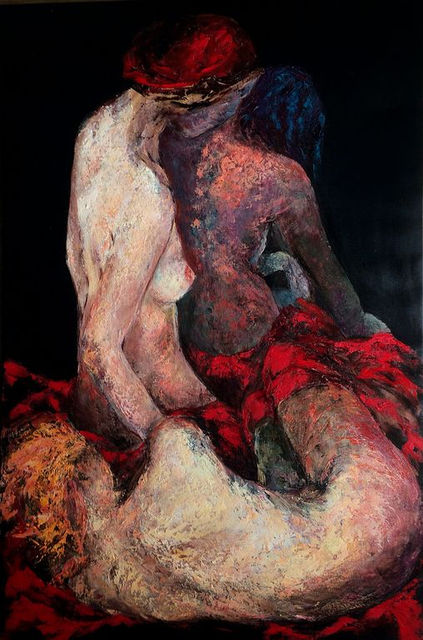
When a viewer looks at a painting with a classical nude, they don't think directly about the nude. Nobody is unsettled by Botticelli's Venus, quite the opposite: it's the very essence of purity. The nude, as an artistic motif, has carried different allegorical meanings over the course of history. From nakedness as a symbol of purity in classical art we moved on to nakedness as an attack on backward morals in famous artworks such as Courbet's El origen del mundo or Manet's Olimpia. These were no longer such pure nudes, they were real women with real bodies... And the viewer no longer felt safe, because when they looked at those paintings they did think about the nude, they did feel that nude.
The viewer who leans into that half open world of Magdalena Weber's nudes also feels the bodies, but isn't unsettled by their obvious sensuality, doesn't feel provoked, but rather, if anything, challenged: challenged by the indifference those figures show towards the viewer. It's hard for us to get inside their psychology, hard to connect with them emotionally. Those figures are busy with themselves, they lower their eyes or look inwards: they're not for us, there's nothing to be done, only look, if that... while the door closes.
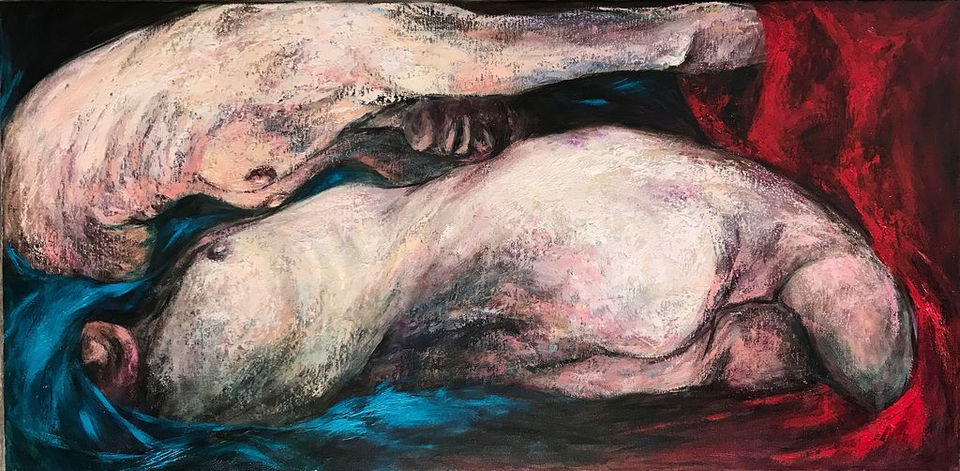
In contrast to her oils, Magdalena Weber's watercolours are softer, more graceful and less troubling. The technique is different and with it the Polish artist prefers to explore line, leaving the more docile colour on a second plane.
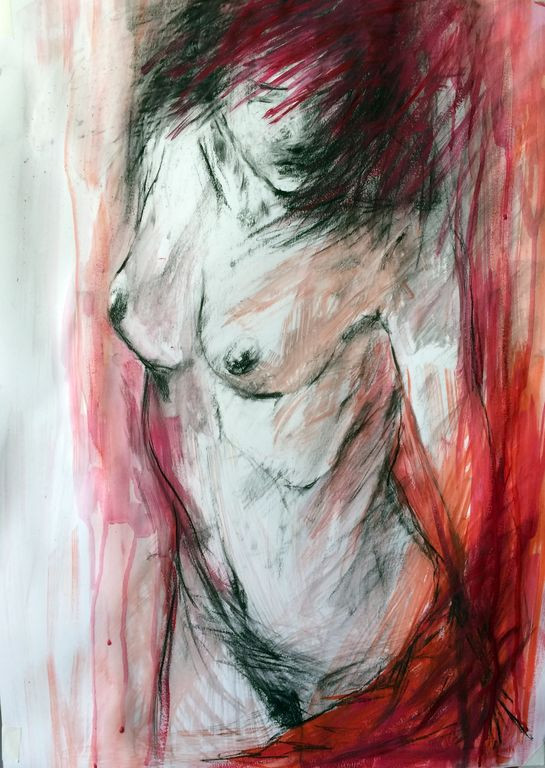
Her charcoal drawings do keep some of the density of her oils. In them, too, the female figure rules the whole surface of the picture, leaving no room for any spatial reference. In some drawings, though, red takes centre stage, even more than in her oils, wrapping around the nude and releasing the tension that stays more contained in her oil paintings.
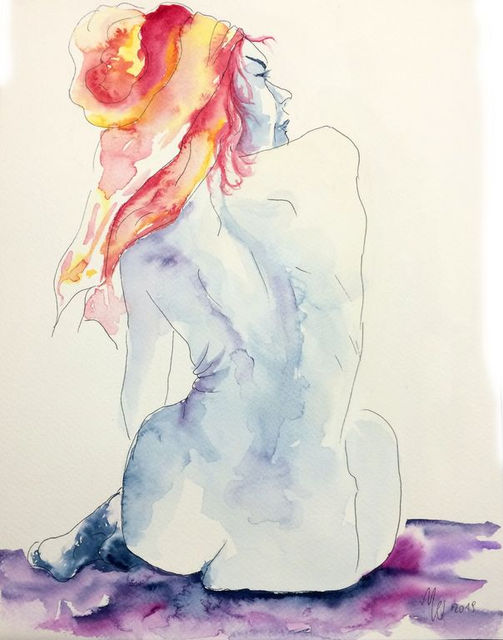
After spending almost a decade working in jewellery design, the painter born in Kraków has spent the last five years steering her career towards painting. In this phase of experimentation and search for a style of her own, she has found in the female nude the ideal motif for her plastic research, giving rise to a series of canvases, watercolours and drawings that satisfy because they manage to create a world of their own, with an internal rhythm, perhaps closed and unsettling, but aesthetically satisfying and suggestive from an emotional point of view.
We invite you to visit Magdalena Weber's gallery on Artelista.


Comments (0)
Log in to leave your comment. Log in