
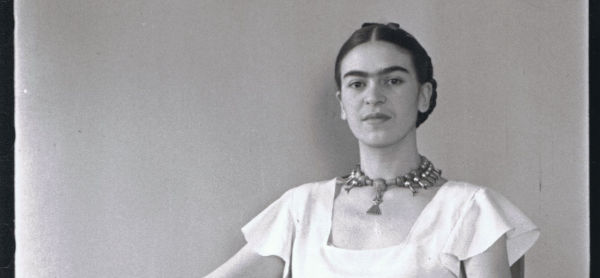
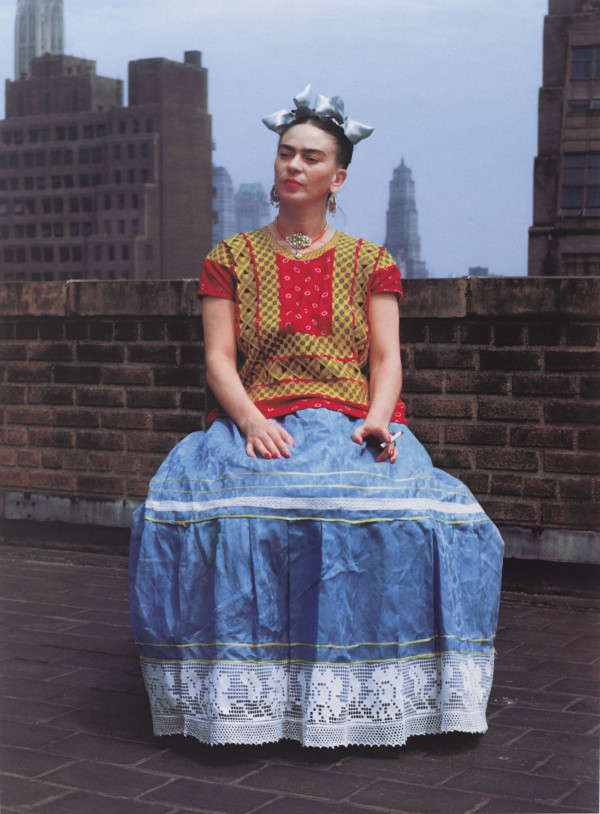
Until 12 May the Brooklyn Museum is showing Frida Kahlo: Appearances Can Be Deceiving, the largest exhibition about the artist held in the United States in the last 10 years. An original exhibition that explores Frida Kahlo's complex and very personal creative universe. On view are paintings and drawings by the artist, but also her photographs, films, documents and objects such as dresses and personal belongings from the museum's collection. Small scraps of the artist's life that let us get to know her curious creative universe.
In 2004, 50 years after the death of Frida Kahlo (Mexico 1907-1954), thousands of her personal belongings and various artefacts went on view at the Victoria & Albert Museum in London. That exhibition showed all these objects, rediscovered and inventoried in 2004 after being locked away in a room of the so-called Casa Azul since Kahlo's death in 1954.
A many-sided artist whose figure grew after her death and who was never separated from that of her husband, the Mexican artist Diego Rivera. Frida Kahlo had a complicated life in which she had to fight illness ever since, at the age of six, a bout of polio left her in bed for nine months and filled her days with medicines and sedatives. After recovering she had to get used to living with one leg shorter and thinner than the other. On top of that, at 18 she had the bad luck to be in a bus accident in which she suffered a triple fracture of the spine and multiple other fractures that would change her life.
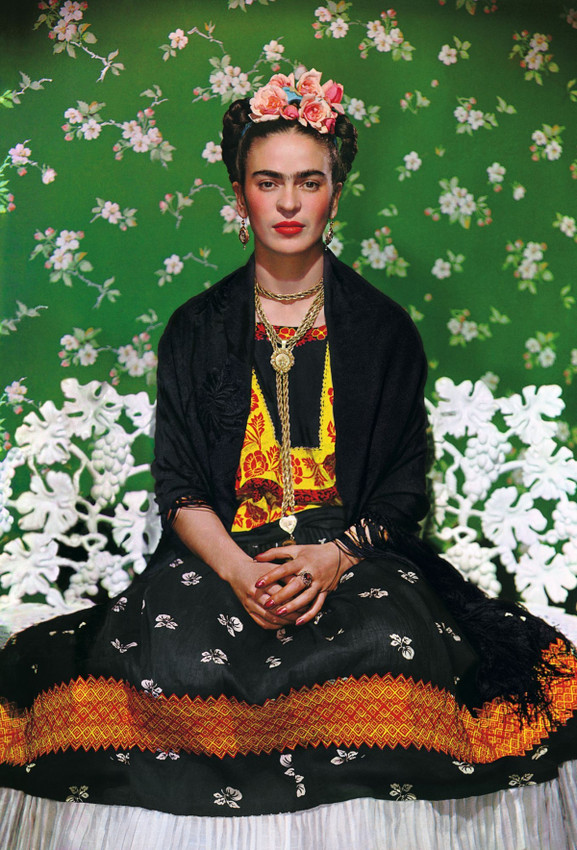
During her lifetime Frida Kahlo stood out for inventing a unique style that was part of her identity, and she reflected it in her paintings as much as in the way she dressed or lived. An identity marked by her ethnicity, her disability and her strong political thinking. Along with the paintings and objects there are drawings and photographs from the celebrated Jacques and Natasha Gelman Collection of 20th Century Mexican Art, as well as related historical films and ephemera. The exhibition also includes Mesoamerican artworks that she collected during her short life with her husband, the muralist Diego Rivera.
The exhibition brings together personal belongings of the artist such as clothes, contemporary and pre-colonial jewellery, and some of the many hand-painted corsets and prostheses she wore during her life. Objects that shed new light on how the artist created her personal and public identity to reflect her cultural heritage and her political beliefs, while at the same time dealing with and incorporating her physical disabilities.
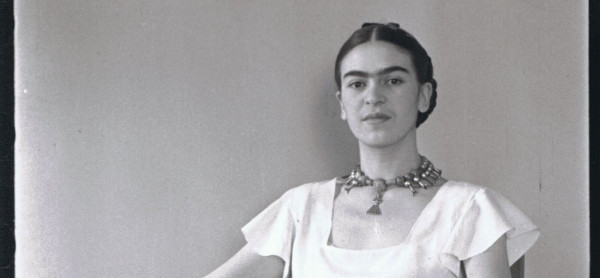
The exhibition includes the portrait Frida at the Barbizon Plaza Hotel, New York (1933) taken by Lucienne Bloch, Rivera's assistant and also an artist, who became a close friend of Kahlo's and managed to photograph the couple's life. And the famous Frida in New York (1939) by Nickolas Muray, where the floral background stands out, made from a fabric similar to one of Frida Kahlo's skirts. Although the artist always preferred to pose in three-quarter view, in this one by Muray she looks straight into the camera.
Her turbulent relationship with her husband, the famous Mexican muralist Diego Rivera, whom she met when she was 18 and he was already 42, also influenced the way she dressed, made herself up and wore her hair. Every morning Frida dressed as if performing a ritual, with her wardrobe and her jewellery, to hide the wounds on her body. Indigenous dress worn by Tehuana women, which became a political statement and a claim to her Mexican heritage. Complex outfits made up of 3 pieces: the petticoat, the huipil, a square-cut blouse that made her look taller, and her hair braided and full of flowers.
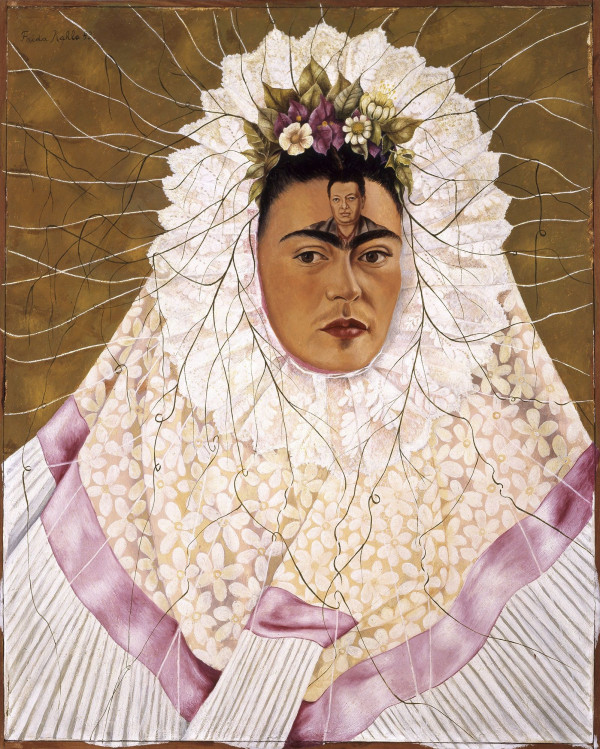
The headdresses also stand out, like the one we can see in this self-portrait in which Kahlo wears a starched piece with sumptuous flowers in her hair. The gold background of the painting stands out, and the portrait of Diego Rivera on her forehead recalls the Mexican genre of "Crowned nuns" portraits, which show nuns taking the veil and pledging themselves to Jesus.
A different kind of exhibition, built on others held at the Museo Frida Kahlo (2012), curated by Circe Henestrosa, and at the V&A London (2018), curated by Claire Wilcox and Circe Henestrosa with Gannit Ankori as advisor. Their involvement has been essential in presenting this Brooklyn Museum exhibition, organised by Catherine Morris, Sackler Senior Curator for the Elizabeth A. Sackler Center for Feminist Art, and Lisa Small, Senior Curator of European Art, Brooklyn Museum, in collaboration with the Banco de México Diego Rivera and Frida Kahlo Museums Trust and the Jacques and Natasha Gelman Collection of 20th Century Mexican Art and the Vergel Foundation.
Frida Kahlo: Appearances Can Be Deceiving offers the chance to get to know the life and artwork of the Mexican artist through those objects, dresses and photographs that were hidden away in the Casa Azul, for the first time in the United States. Without a doubt one of the best exhibitions of this 2019, outstanding for its originality and its organisation.
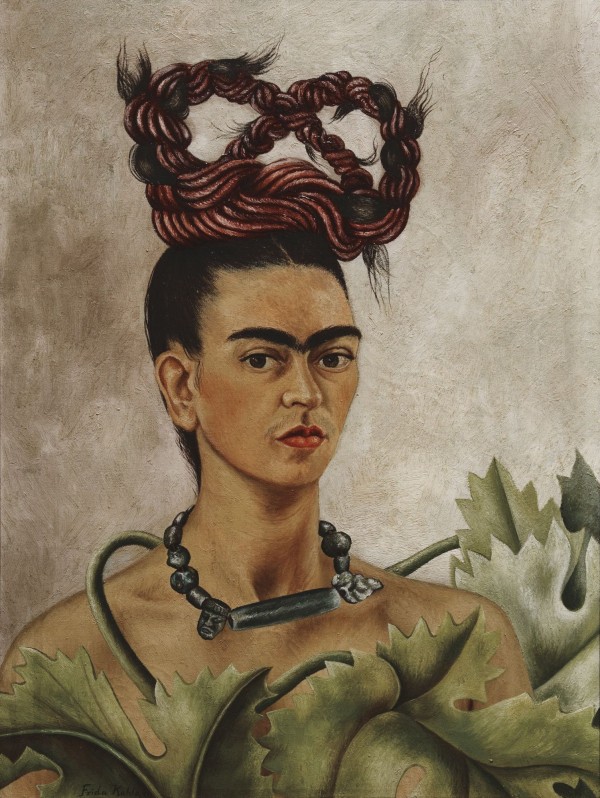
Frida Kahlo: Appearances Can Be Deceiving
Until 12 May 2019
Brooklyn Museum, New York
Robert E. Blum Gallery, 1st floor
More info: https://www.brooklynmuseum.org/exhibitions/frida_kahlo #fridakahlobkm

Comments (0)
Log in to leave your comment. Log in