
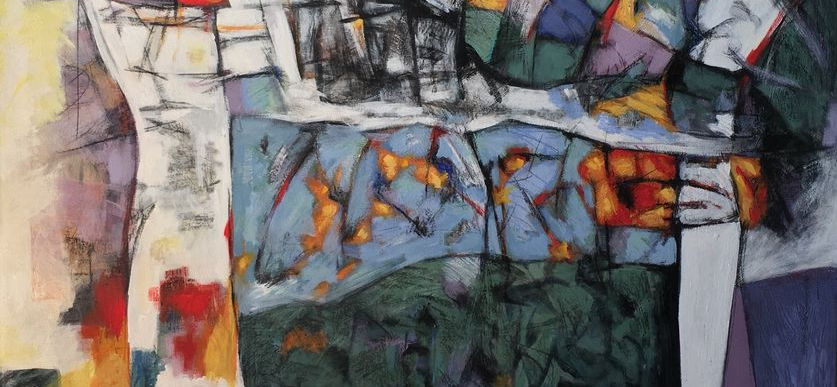
An artist's evolution shows, among other things, the desire to explore, to look for new ways of expression. The artwork by Mayra Lifich (Buenos Aires, 1969) on Artelista shows that the Argentine artist has no intention of standing still, that her aim is to keep discovering forms, subjects and resources. Only with eyes open to the world can an artist move forward. And Mayra Lifich keeps breaking new ground.
An active state of tension
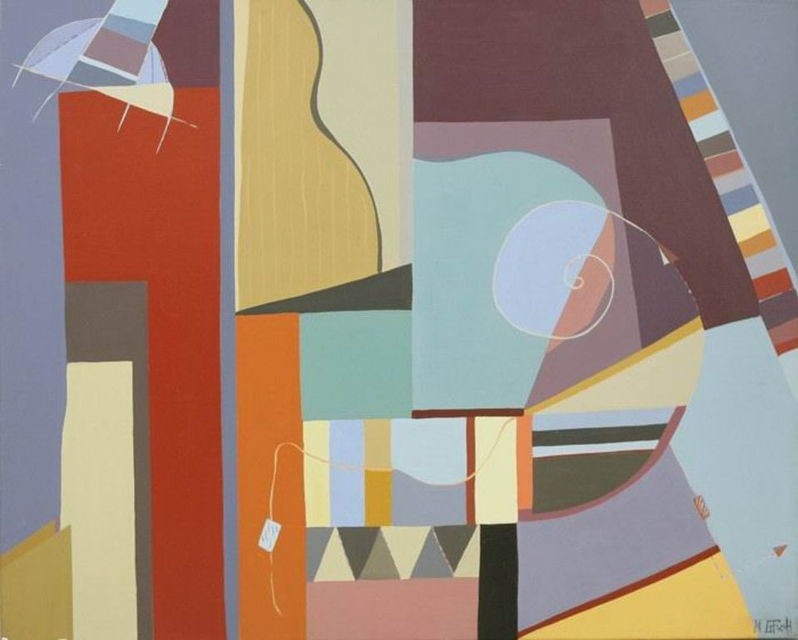
That could be the name of the new creative path Lifich has taken up some time ago. She has moved from a radiant, gentle, clean geometric abstraction, the kind we could savour in artworks like Escalera al cielo or El Circo, to a more aggressive, nervous and incisive abstract expressionism.
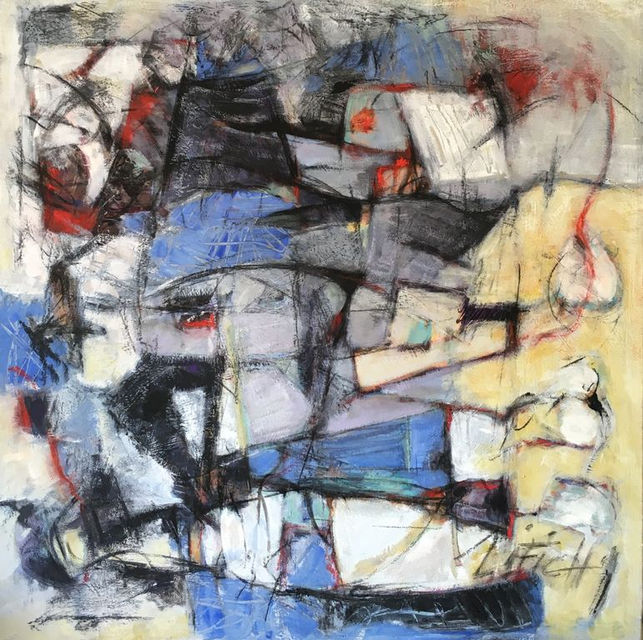
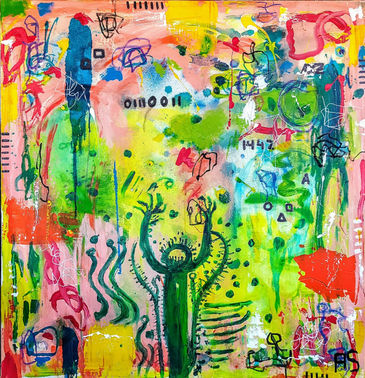
Furia is a good example of this stylistic turn in Lifich. For the painter from Buenos Aires, «every artwork is an enigma to be deciphered, an active state of tension». For the viewer, an artwork like Furia is an intoxicating, unsettling riddle that shakes you from an aesthetic point of view. The painterly strokes are aggressive, dominated by black lines that hold in an unstable geometric scheme, about to explode. The touches of red are the cherry on top of this harsh painterly cake
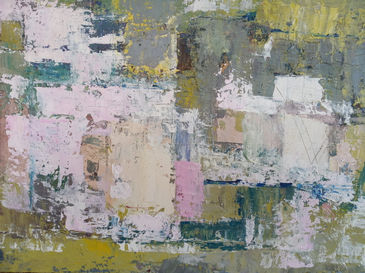
The same style appears in recent artworks such as bleu-blanc-rouge, where the line falls once and for all under the dictatorship of colour. And yet this abstract expressionism, which could bring De Kooning to mind, softens in other artworks without losing its enigmatic, captivating character. In Azules or Blanco the viewer can stop and enjoy the play of lines, planes and colours the Argentine artist proposes. And in Woman in Blue, Lifich seems to move closer to Picasso and Klee to offer a real display of textures and chromatic subtleties.
Nor can we forget, among her most recent output, two closely related artworks: Fragmento Yuly and Yuly II. In them we again see Lifich's taste for games of warm colours that spill over in these lovely collages, pure chromatic nerve.
The hidden city
For Mayra Lifich the city is another source of inspiration. Its mixture of noises, colours and smells builds the stage on which the lives of most of us play out.
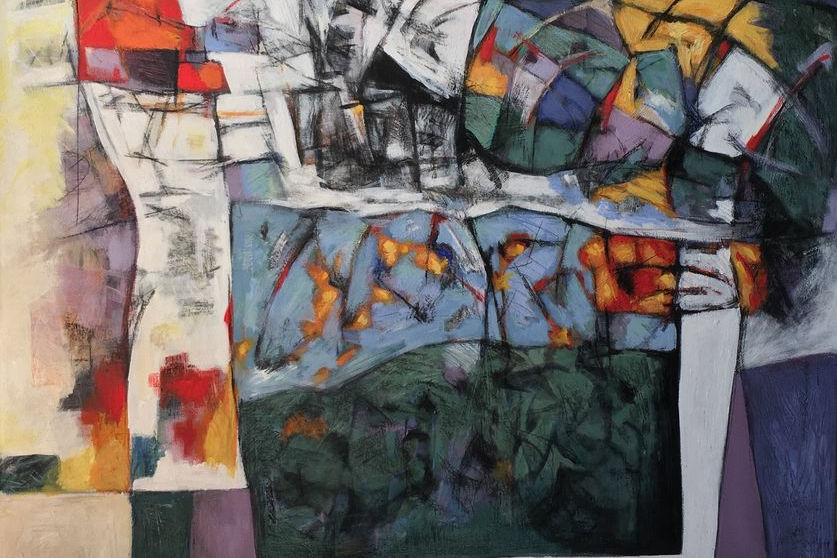
The Argentine painter deconstructs the city, playing with different resources drawn from the classic avant-gardes. Cubism, expressionism and geometric abstraction join hands in artworks like Suburbano II, Suburbano III or Ciudad Oculta. The last one catches the eye again for the roar of the textures, which devour the lines until they produce a powerful effect on the viewer.
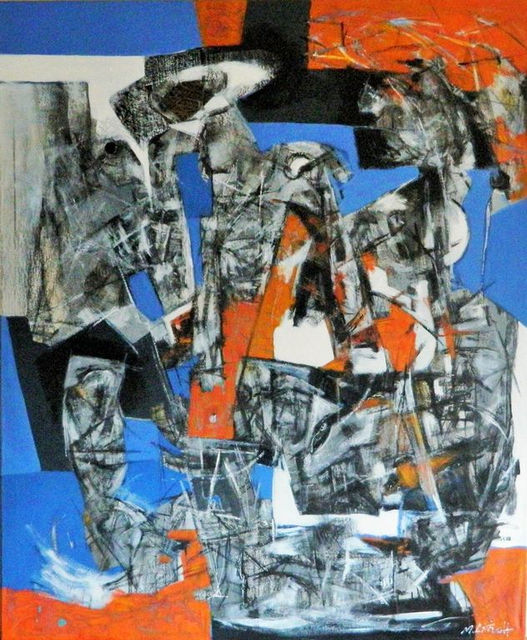
Among her visions of the city, we would single out above all the one dedicated to Berlín, for the aesthetic compromise it proposes, a crossing between her most aggressive abstract expressionism and flat fields of colour. The painting looks like a spin dryer in which the tension between the fragments, almost like shards of coloured glass, becomes more palpable than ever, as if Lifich had put two different paintings in the washing machine. Without a doubt, one of her most striking artworks aesthetically.
The «other» Mayra Lifich
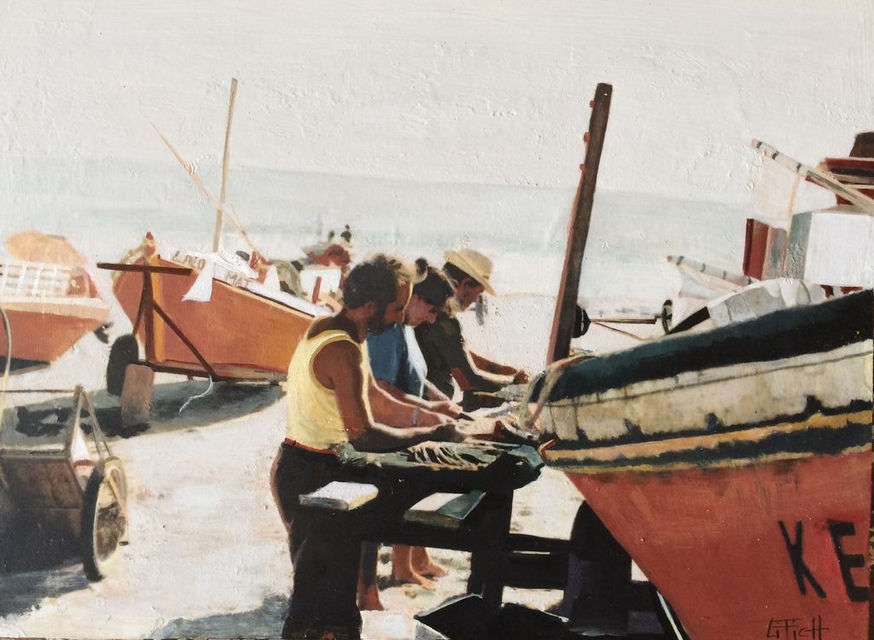
The Argentine painter is also capable of surprising us with a series of artworks that break completely with the ones reviewed above. We're talking about her Pescadores series, in which Lifich shows us paintings of a hyperrealist, photographic character. They are small format paintings (40 x 30 cm) that reveal her many sided personality.
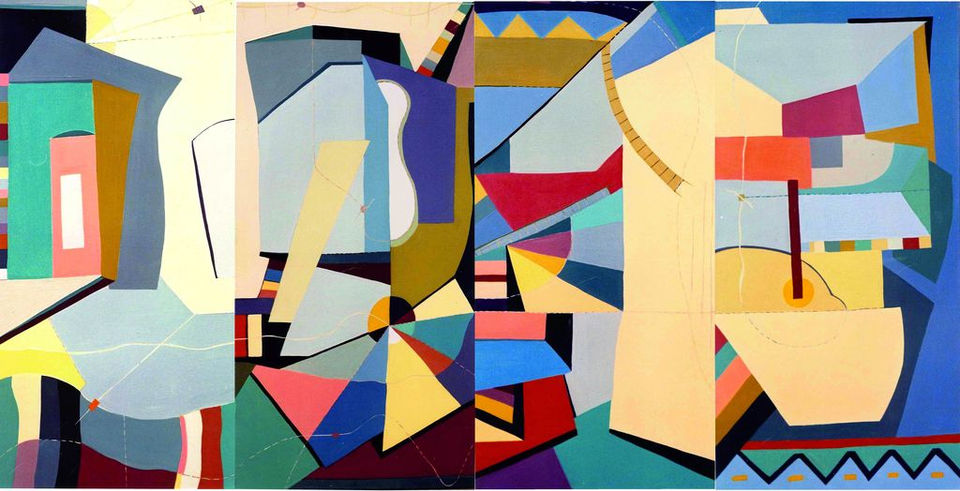
But the Argentine artist's Artelista collection also includes artworks from her earlier stages, the ones we link to a calmer, gentler, more colourist geometric abstraction, which reminds us of, for example, Jacint Salvadó. The already mentioned Escalera al cielo and El Circo are examples of this phase. The second is a large format painting (200 x 100 cm) whose chromatic harmonies also connect it with Miró.
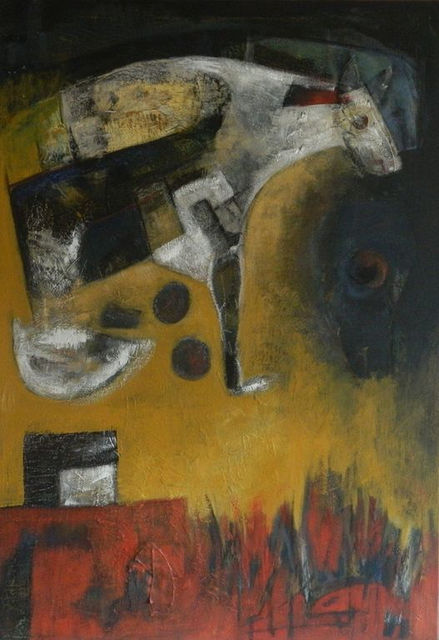
We don't want to close this look at Mayra Lifich's work without mentioning the tribute the artist pays to her dog Pampa in the painting of the same name. Another example of the stylistic heterogeneity of the Argentine artist, whose evolution confirms Lifich's enthusiasm for going on breaking new ground in her artistic career.
We invite you to visit Mayra Lifich's gallery on Artelista.

Comments (0)
Log in to leave your comment. Log in