
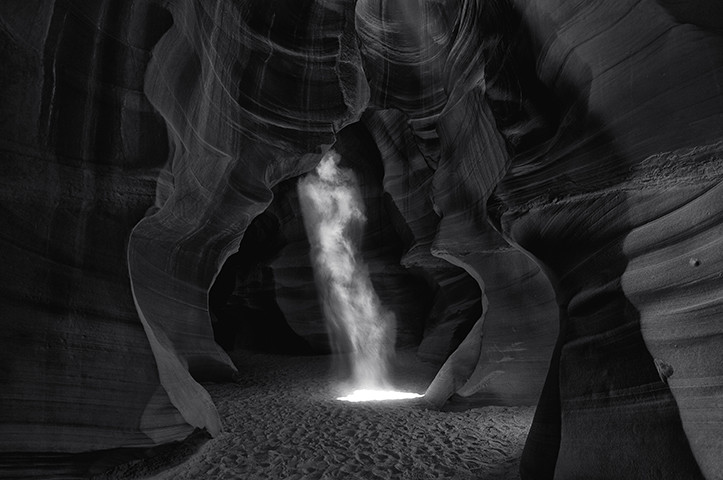
This week we're going to talk about artists who have stirred up controversy with their photographs, like the famous Cindy Sherman, Andreas Gursky, Richard Prince and Peter Lik. Artists who have not only managed to spark debates in the art world but have also seen their photographs become highly sought-after pieces. Sold for 5.2 million euros, Peter Lik's Phantom, which captures Antelope Canyon in Arizona, became the most expensive photograph in the world.
Peter Lik is an Australian photographer who now lives in the US and is known for his panoramic, expansive landscapes. Another of his artworks, llusion, sold for 1.9 million euros and Eternal Moods for 885,000. Having also sold One for 800,000 euros, Lik is now the creator of 4 of the 20 most expensive photographs ever sold.
Another of the most sought-after is the American artist and film director Cindy Sherman, one of the most important figures in post-war photography in New York, who exhibited her work at the Museum of Modern Art for more than three decades. Most of her photographs are images of herself, but they aren't self-portraits, they're a vehicle for asking questions about the modern world. Sherman talks to us about the role and representation of women in society, or about the nature of art-making.
Sherman was born in Glen Ridge, though she soon moved with her family to the town of Huntington on Long Island. Curiously, she took no interest in the art world until she got to the University of Buffalo. Sherman started out with painting until one day she realized it wasn't enough, and from then on she gave herself over to photography. Her time at university was decisive in her life because she met the artist Robert Longo and Charles Clough, with whom she founded Hallwalls, an independent artists' space where she and other artists exhibited.
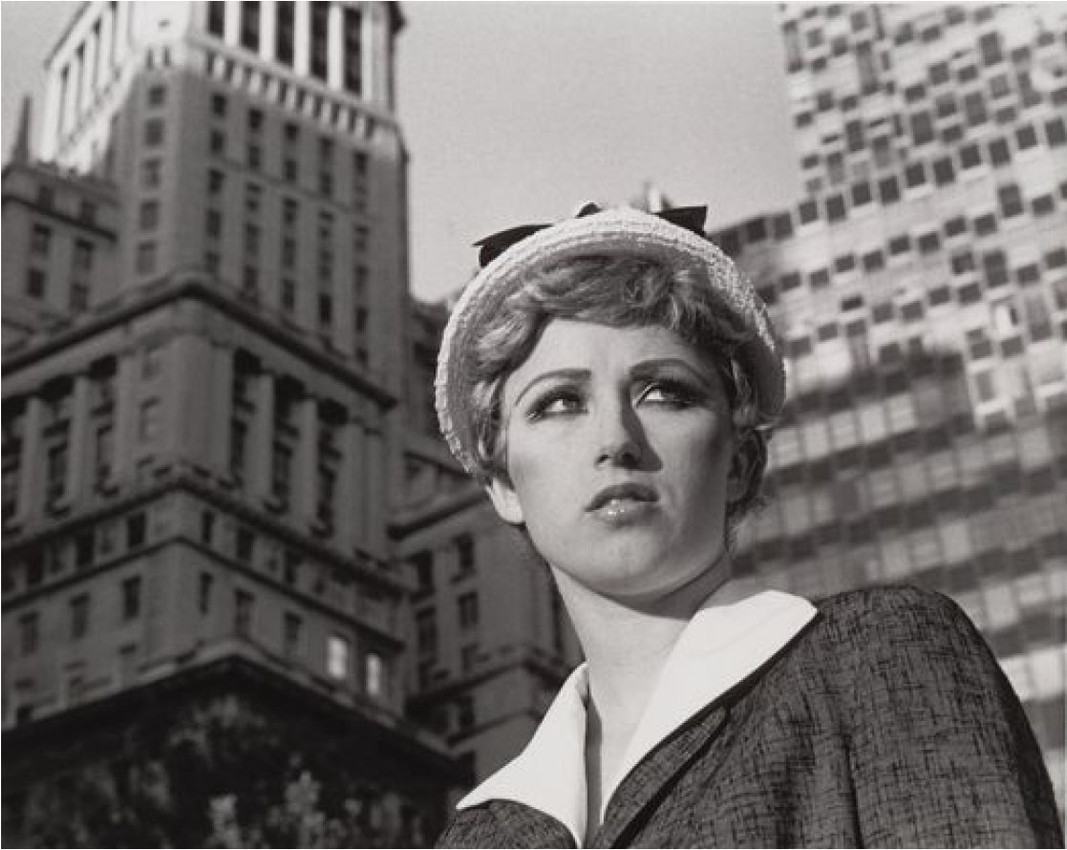
In 1976, after graduating, she moved to New York, to a loft on Fulton Street in lower Manhattan, and there she began taking photographs of herself that would start off her series Complete Untitled Film Stills (1977-1980). Sherman stages various situations with wigs, hats or dresses to give the appearance of a film still, with the look and the framing of film noir. Sherman becomes a housewife, a prostitute, the woman in danger, the woman in tears or the dancer.
Her technique is a hybrid of photography, performance and theatre. In it we can find humour, criticism, mystery, drama, farce and play.
In another of her series, known as History Portraits, she embodies male figures from classical paintings in the history of Western art, such as Caravaggio's Sick Bacchus.
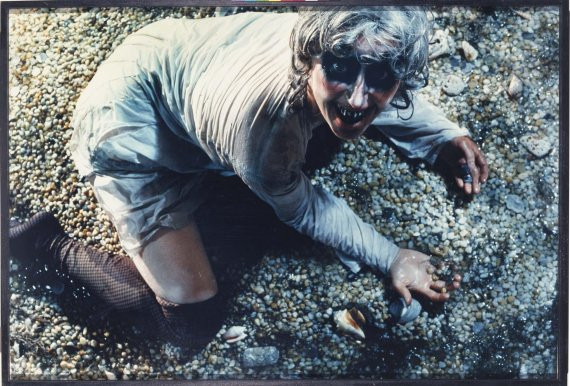
From the eighties on, Sherman moves towards a series of photographs that give off an overwhelming rage, moving away from the charming imagery of her early work. Some photographs are repellent and grotesque, playing with extreme disfigurement using dolls, mannequins and plastic prostheses. For example, Untitled #177 (1987) offers a pair of buttocks with enormous boils that may offend those who look at them. In the series Disasters / Fairy Tales (1985) we see the face of a hideous woman lying on the ground, utterly desperate.
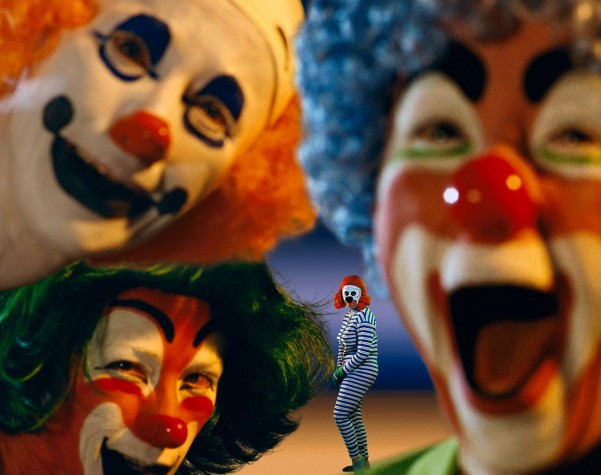
After this phase she went back to replicas of classical paintings. From 2000 on, Sherman immerses herself in images of clowns, drifting towards the grotesque or the kitsch. The series again makes the deformations explicit and uses make-up and heightened colour to create a set of visual paradoxes, as in Untitled #425. Clowns (2004).
In her latest work, such as Society Portraits (2008), she studies wealthy American women. In 2012, a major retrospective of the photographer was a hit at the MoMA. The New York museum brought together more than 170 of the artist's works and it became one of the great exhibitions of the start of this century. This video shows part of the exhibition.
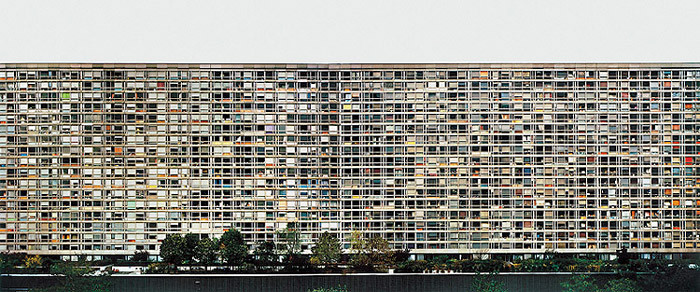
Another of the great artists of this century is the German photographer Andreas Gursky, recognized for his large-format work and for working with digitally processed colour images. A photographer who has received numerous awards, such as the "Berlin Bear" cultural prize. He is also a highly sought-after artist ever since his artwork Rhein II reached 4.3 million dollars.
Andreas Gursky was born into a family of photographers, since both his father, Willy Gursky, and his grandfather Hans worked as advertising photographers. The artist studied Visual Communication at the University of Duisburg-Essen with Otto Steinert and Michael Schmidt. At the same time he was studying at the Düsseldorf Academy of Art, where he studied with Bernd Becher. Along with the photographers Axel Hütte, Jörg Sasse, Thomas Struth, Candida Höfer and Thomas Ruff, he belongs to the Becher-Schüler group, known as the Düsseldorf School of Photography. Married to the photographer Nina Pohl, he has made part of his work with her.
Gursky had his first exhibition in 1981 with his series "Pförtnerbilder" (Doorman Pictures), a collection of works portraying pairs of German security guards. Gursky then focused on photographing urban landscapes, both interiors and exteriors, and began to increase the size of his large-format prints. Gursky had his first solo exhibition in 1988 at Galerie & Johnen Schöttle. Surely the growing interest in photography on the international art market and Becher's rising popularity helped bring about the beginning of his commercial success. In 1990 Gursky began the May Day series in reaction to the economic crisis, reflecting everything from the stock market crash to the rise in drug addiction. During this time, Gursky travelled to several cities around the world such as Tokyo, Los Angeles, Stockholm, Cairo and Hong Kong.
In 1985 he had his first solo exhibition at the Johnen + Schöttle gallery in Cologne, and in the years that followed he has exhibited in Switzerland, Germany, Amsterdam, at Tate Gallery Liverpool, the Milwaukee Art Museum, the Castello di Rivoli Museo d'Arte Contemporanea in Turin, the Museum of Modern Art in New York, the Museo Reina Sofía in Madrid and the Pompidou Centre in Paris.
Influenced by the style of Henri Cartier-Bresson during the seventies, and in the eighties by the arrival in his universe of photographers such as the American Dan Graham, the Canadian Jeff Wall, the German Jochen Gerz and the Frenchman Jean Le Gac, Andreas Gursky created a unique style based on large formats, simplicity and rigour of composition and chromatic sophistication, as well as a constant dialogue with the history of painting.
In his outdoor photographs such as Klausenpass (1984), Aletschgletscher (Aletsch glacier) (1993) or Niagara Falls (1989) he portrays mountain landscapes, waterfalls and roads where you take in the immensity of the surroundings in contrast with the smallness of the human.
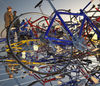
Many of his photos show repetitions or accumulations of similar objects which, although they have an obvious complexity, keep an implicit order. For example the open-air car storage lot at the centre of Salerno (1990), the workbenches of factory workers in Siemens (1991) or the thousands of books on the shelves of Bibliothek (1999).
Gursky brings the advantages of technological advances in the photographic process into his technique. Digital manipulation lets Gursky create an invented world in which, nevertheless, the viewer of his photographs recognizes themselves immediately. In 1999, Gursky created 99 Cent, the first of a series of photographs of discount stores, which was quickly recognized as one of his most important works.
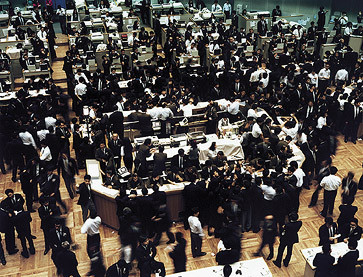
He also stands out for his taste for geometry and for portraying work at the Tokyo Stock Exchange, raves with hundreds of people packed together, or sporting events like a football match in Zürich or the horse races at the Sha Tin racecourse.
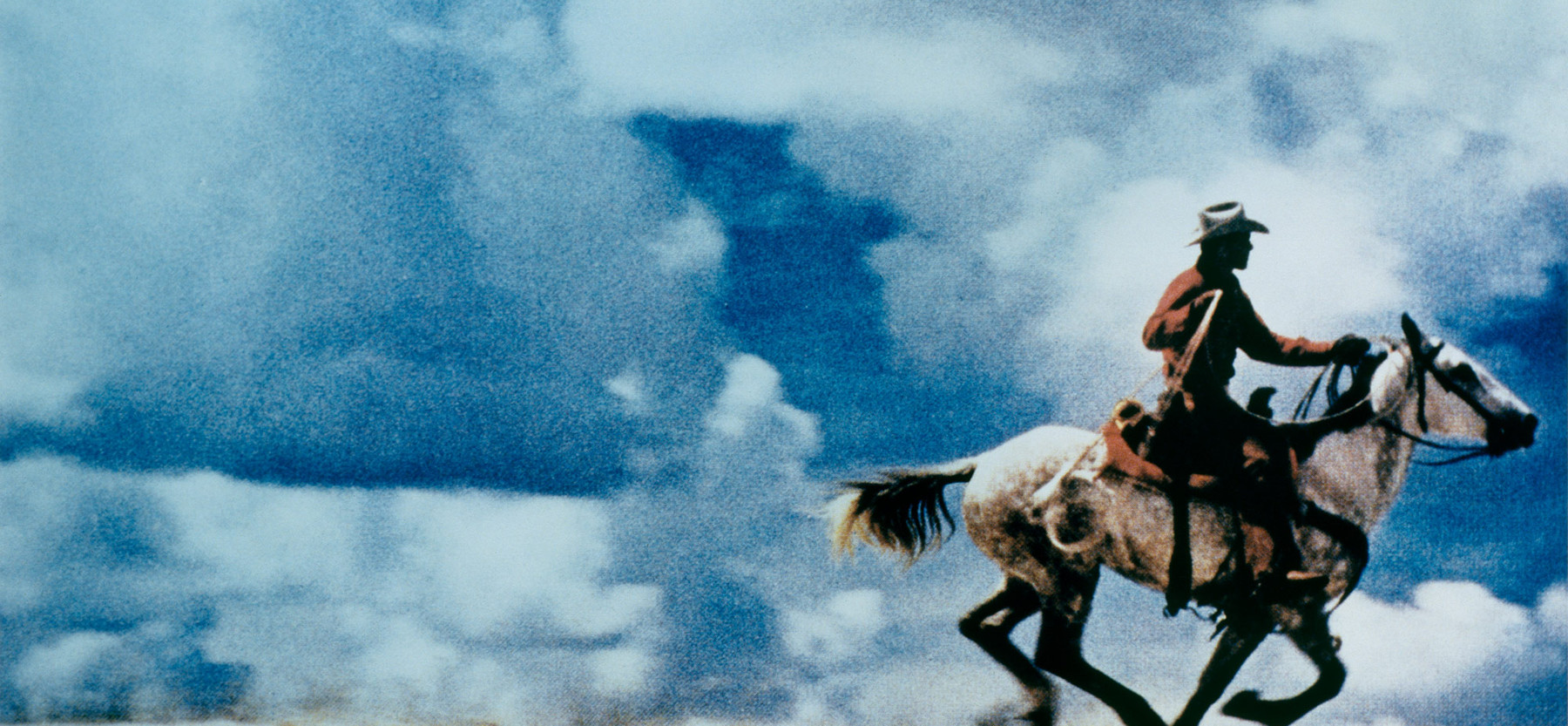
Another of the great photographers worth highlighting is Richard Prince, born in Panama but today an American painter and photographer. A controversial artist who started out making collages with photographs in 1975. Price absolutely revolutionized the idea of authorship, questioning the traditional role of the artist but also giving rise to a huge debate within the art world. In the Time-Life archive, working with magazine clippings, he thought about the possibilities of working with so many images, combined, juxtaposed or manipulated. That's how his first works came about, Untitled (Cigarettes) (1978-1979) and Untitled (Three women looking in the same direction) (1980).
Untitled Cowboy, a rephotograph, a photograph of another photograph, was the first "photograph" to reach the price of a million dollars at a Christie's auction in 2005, but with it he set off a real debate in the art world. Years later, in 2005, the photograph managed to reach the figure of a million dollars at an auction organized by Christie's in New York.
Critics have called his technique Appropriation, Artist's Book, Simulation... and have worried about where that leaves the authorship of those photographs, or the copyright. In fact, in 1977, Prince was caught up in a major lawsuit with the New York Times over the use of some of its already published photographs, when Prince created a controversial rephotograph out of four photographs that had previously appeared in the New York Times. The controversy arose over the authorship and authenticity of the images and their copyright. In 1983, in his artwork Spiritual America, he showed a photograph by Garry Gross in which Brooke Shields appeared at 10 years of age, standing in a bathtub, heavily made up and in a clear allusion to sexual precocity. Following this photograph, the actress's mother began a legal battle with the artist.
As for his later work, the series Jokes (1986) starts from existing images and texts that he redrew as silkscreens, setting out his view of the sexual fantasies and frustrations of the American middle class, using humour and caricature.
After living in New York for 25 years, the artist decided to move upstate and create a kind of mini-museum there, the Second House. In it he gathered some of his works, photographs as well as sculptures and paintings, among them his Car Hood series, which he used to decorate the grounds around the house. This museum stayed open for six years, between 2001 and 2007, and its collection was given by the artist to the Guggenheim Museum in New York. Sadly, a lightning strike caused a serious fire in the building that did significant damage.
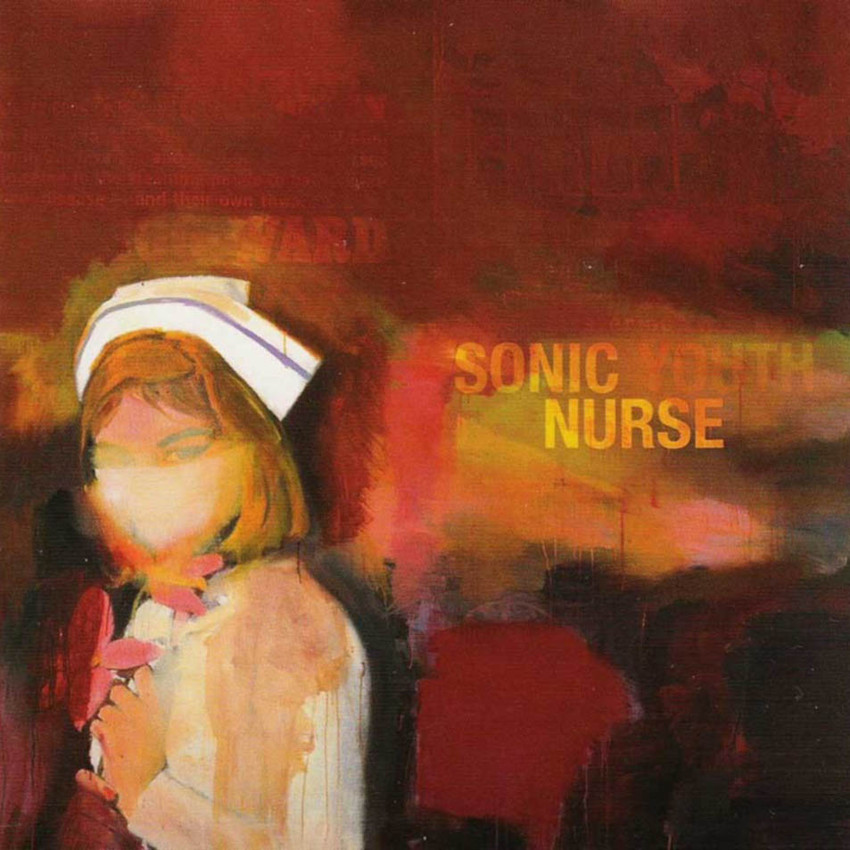
In this place he also created the well-known series of paintings Nurse Paintings (2003), inspired by fifties romance novels with medical storylines. To make this work, the artist set about photocopying the covers of many of these comics and then turning them into paintings, with a certain air of mystery and terror at the same time. The influence of this artwork of his led him to a collaboration with Marc Jacobs on a Louis Vuitton show (2008) inspired by them.
If that series represented the female world, in September 2008 at the Serpentine Gallery he focused on the male world through a series of car sculptures made of different materials and decorated in his distinctive style. The exhibition opened with the image of an enormous plastic car decorated with a woman painted on its hood.
Throughout his career Richard Prince has never stopped going against the current and has faced numerous lawsuits. In 2012 a Manhattan court ruled against the artist, finding him guilty of improperly appropriating some photos published in a book by the French photographer Patrick Cariou about the Rastafarians. But it has to be said that Richard Prince has managed to place himself at the very top of the contemporary art world for his revolutionary way of understanding everyday reality, combining painting, photography and word.
We invite you to visit the photography gallery on Artelista.
Comments (0)
Log in to leave your comment. Log in