
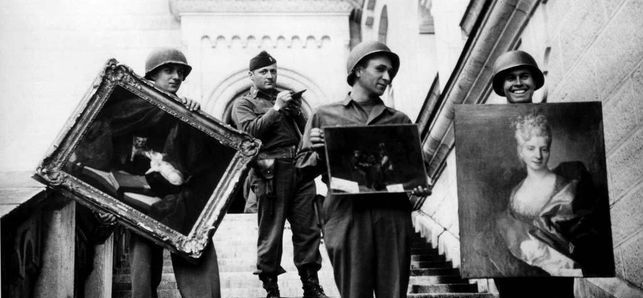
For some years now many countries such as Greece and Egypt have been reclaiming the artworks taken from them in wars and conflicts. But in many cases those artworks were bought for a very low price or in a slightly murky way.
The Metropolitan Museum in New York has already returned to Egypt a set of 19 pieces belonging to the tomb of Tutankhamun, among them a bronze dog and a sphinx-shaped lapis lazuli bracelet, and the Pergamon Museum in Berlin also had to return the Hattusa sphinx to Turkey, 3,000 years old.
The piece had belonged to the museum since 1934, but its return was anything but cordial, since Turkey threatened not to let German archaeologists carry on working on its territory if the sphinx did not come back to the country. The German archaeologist Hugo Winckler was responsible for the discovery of two sphinxes and, with them, of the capital of the ancient Hittite empire: Hattusa. The sculptures were sent to Germany in 1915 to be restored, but once the work was finished only one of the sphinxes was returned to Istanbul. The archaeological digs the Germans have been carrying out for years at Hattusa, today Bogazköy, forced Germany to give in and repatriate the sphinx after Ankara threatened to withdraw the relevant permits.
There are already several cases in which the claimants do not get a no and the pieces requested end up going back. Egypt, for instance, managed to recover other archaeological treasures, in this case 19 pieces belonging to the tomb of the pharaoh Tutankhamun. The objects were on display at the Metropolitan Museum of Art in New York (MET) and came from the collection of Howard Carter, an archaeologist who took part in the discovery of Tutankhamun's tomb in 1922, and of Lord Caernarvon, who funded the excavations.
But in most cases the request for a return is followed by a string of refusals. The controversy even reaches Leonardo Da Vinci's La Gioconda, on show at the Louvre in Paris. The Italian Committee for the Valorisation of Historical, Cultural and Environmental Heritage has asked for the artwork on several occasions so that tourists and residents of her native Florence can visit her. The request has always been turned down. Not even the centenary of the painting's recovery seemed reason enough for the artwork to be lent to Italy for a week in 2013. The Louvre refused because "the trip could cause irreparable damage" given "its extreme fragility". La Gioconda was acquired at the beginning of the 16th century by King Francis I of France, and it has remained in the country ever since.
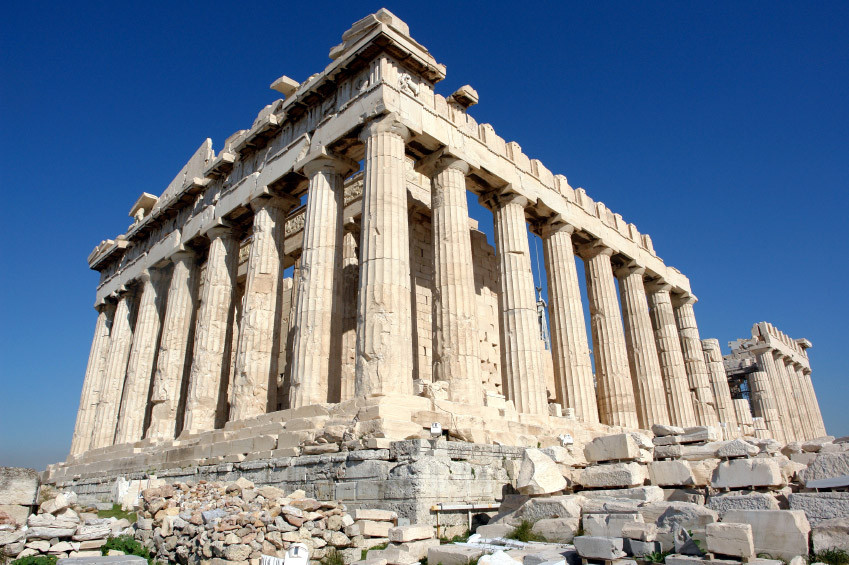
The British Museum and the Parthenon sculptures
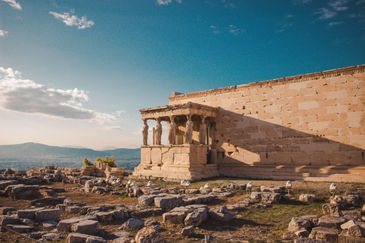
One of the most controversial cases is the Parthenon sculptures on display at the British Museum in London, which the Greeks want back in Athens. The work of Phidias, carved some 2,450 years ago, was split in two by the English nobleman during the Ottoman occupation of what is now Greek territory. More than two centuries have gone by since then and the Greeks have not forgotten, and they demand that the sculptures return to Athens.
The British Museum and its government, however, refuse to let the relics go back to Egypt. Several Greek and international organisations such as Marbles Reunited have been founded in recent years to press for the return of the sculptures, and figures as well known as George Clooney have joined them, having become aware of the issue after his film Monuments Men. What they argue is that the temple to Athena has come to be recognised, thousands of years after it was built, as a symbol of democracy. Reuniting the sculptures matters enormously not just to the Greeks but to the whole world.
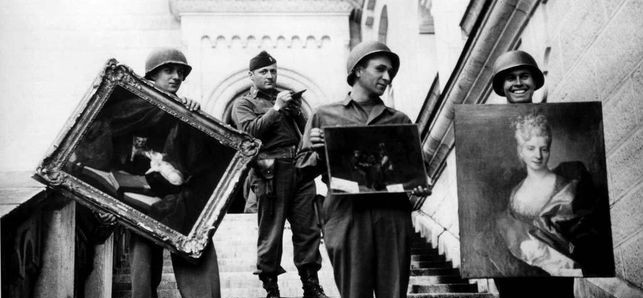
In 1801 Lord Elgin was the British ambassador to the Ottoman Empire and he made use of a controversial state permit to take part of the Parthenon frieze and other sculptures back to his country. Researchers have only found an Italian translation and not the original, and it lacks the Sultan's signature and seal. They also believe Elgin went well beyond what it said and that the document did not give him permission to take the sculptures.
The fact is that a collection including some 75 of the 160 original metres of Phidias's frieze, 17 sculptures from the east and west pediments and 15 metope panels was bought for 35,000 pounds. It amounts to more than half of the Parthenon's original decoration that has survived to our day. The rest is mostly in the Acropolis Museum in Athens, although there are pieces in other institutions such as the Louvre.
What the request for a return is after is putting the frieze back together, since it tells a story, probably the procession of the Great Panathenaea, held every four years to honour the goddess Athena. And also because back in its natural setting it could be understood as a whole. In fact, the new home of the Acropolis Museum in Athens displays the Parthenon frieze exactly as it was originally arranged on the building, but without the pieces that are outside Greece.
The problem for museums like the British Museum, if they were to grant claims like Greece's, is that they could set a precedent and would probably face an avalanche of similar claims, which could drain their holdings.
The British Museum has said it is willing to lend the artworks for an exhibition in Athens on condition that Greece accepts British ownership of the pieces. But it has not met with a positive answer, because as far as the Greeks are concerned the Parthenon marbles belong to nobody, they are universal heritage.
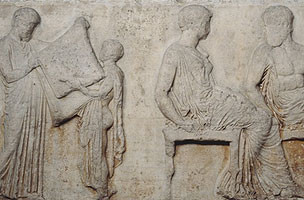
The return to Greece of some of the Acropolis pieces scattered around other countries has attracted worldwide interest and, according to some experts, gives legitimacy to the movement for the sculptures' return. The Vatican gave back a small piece in 2008, and a Swedish citizen and a German university had already returned Acropolis pieces two years earlier. Athens has been busy on the diplomatic front demanding the marbles back and is pursuing that goal through Unesco's mediation process.
Nefertiti in Berlin
Another of the most controversial cases has been the Egyptian authorities' claim for the bust of Nefertiti. Several German archaeologists found it in the Amarna Valley in 1912 and, according to Egypt, took it out of the country illegally. The bust of Nefertiti is one more of the 5,000 artistic pieces that, according to Egyptian figures, were taken out of the country more or less fraudulently. Egypt had already asked Adolf Hitler, without success, to hand the bust back, and in recent years it has requested permission, with no luck at all, to exhibit the bust temporarily in Egyptian museums. Berlin has always pointed to the risks involved in transporting it.
The bust is today the star of the Neues Museum, the last piece still to be recovered on Berlin's Museum Island, wrecked by the bombing in the Second World War and now redesigned by the British architect David Chipperfield. For 3,000 years she lay buried in the Amarna Valley, but ever since she was discovered by the archaeologist Ludwig Borchadt she has gone from move to move, between various temporary German homes. She was first shown at the Neuen Museum, on Museum Island, but after the war broke out the Third Reich authorities hid her in a mine in Thuringia. After the fall of Nazism she was recovered by American troops and displayed on the outskirts of the American sector, and from 1967 in the Charlottemburg district.
After reunification she was moved again, first to the Kulturforum, a modern museum complex, among neon installations. Then she was taken to the Altes Museum, on the same island as the Neues and the Pergamon. Now she returns to the museum restored by Chipperfield, and the Egyptian authorities are asking for her back again.
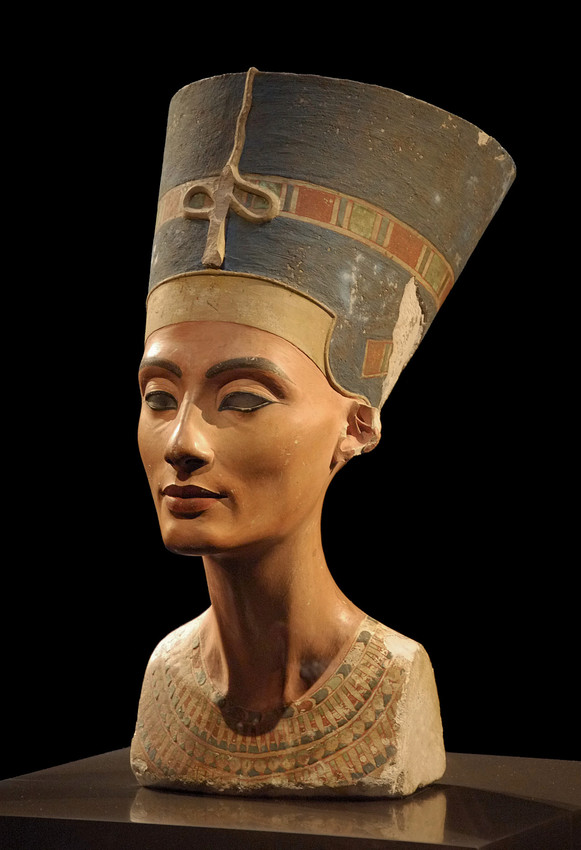
The documents he submitted in order to take her away show that the archaeologist was cannily vague when describing the identity of the effigy to the inspectors, with poor-quality photographs and a false composition to play down its value. Once in Berlin, Nefertiti was in the hands of a private collector who donated her to the Ägyptische Museum. Her formal presentation to the general public came in 1923. In 2011 the Egyptian government formally requested the return of the archaeological jewel and the answer came just as quickly. The Prussian Cultural Heritage Foundation, which runs the Berlin museum, said a flat 'no', arguing that "she is and will continue to be Egypt's ambassador in Berlin".
Curiously, in March 2016 the bust of Nefertiti was reproduced on a 3D printer and exhibited at the Cairo biennial. What is more, those behind it have made the files public so that anyone with access to a printer can reproduce it at home, calling the project "Nefertiti for all". For now, the only way of returning Nefertiti to the place she belongs.
Though the way this 3D reproduction was obtained has been heavily criticised. Last October, Nora Al-Badri and Jan Nikolai Nelles went into the Neues Museum several times with a 3D scanner hidden under their coats. With the material they gathered they created a perfect replica in resin. They then released the "recipe" at the Chaos Computer Club congress, the great international gathering of hackers, under an open Creative Commons licence. Their aim was to free the queen and "inspire a critical re-evaluation of the colonial notion of ownership in German museums". Time magazine called them thieves, accusing the pair of stealing the German museum's intellectual property to sell it to the Cairo museum.
The Spanish case
In Spain too the debate has opened up about who holds title to a cultural asset taken from somewhere else. Recently the Museu Nacional d'Art de Catalunya (MNAC) returned the 53 pieces to Villanueva de Sijena. The judge of Court of First Instance No. 2 in Huesca ordered the institution to return to their place of origin the artworks taken from the chapter house of the monastery in that Huesca town in 1936.
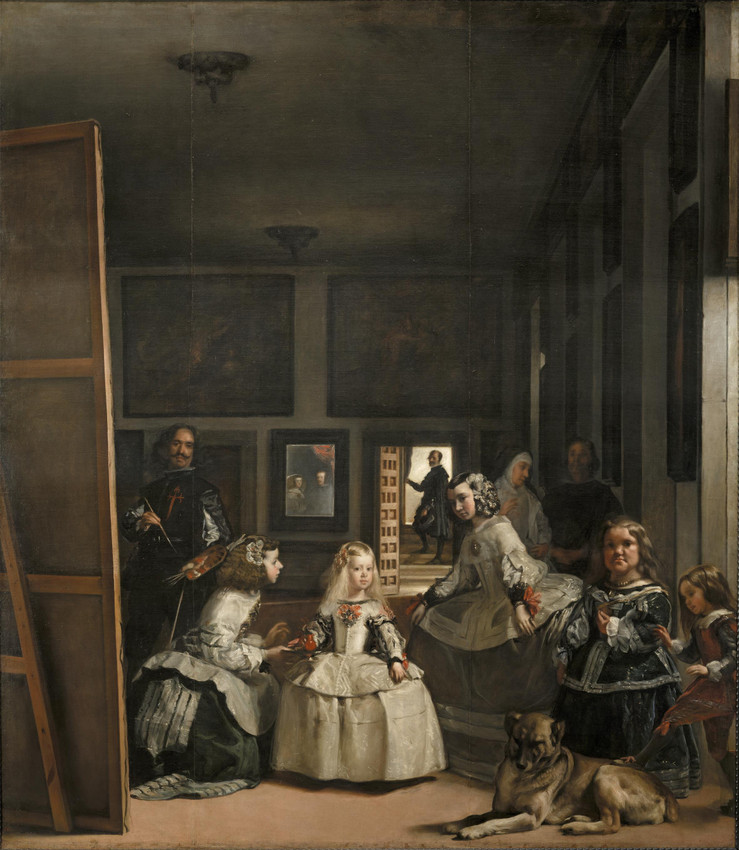
Paintings such as Velázquez's Las Meninas had already had to be saved during the Civil War thanks to a long trip the artworks made from Madrid to safety in Geneva. With Madrid under siege from the bombing, the Second Republic decided to set up the Central Board for the Artistic Treasure in order to bring the main artworks from various museums and institutions in Madrid to safety in the Prado Museum.
The situation in Madrid meant a difficult decision had to be taken: evacuating the main artworks in order to keep them safe from the bombing. A few days before the Prado Museum was bombed on 16 November 1936, a trip to Valencia began with more than 20,000 artworks, among them paintings by Goya, Velázquez and El Greco. After thousands of ups and downs along the way, the artworks reached Figueras in 1939. The area was under constant bombardment. International neutrality led to the creation, outside governments and the League of Nations, of an International Committee for the Rescue of Spanish Artworks made up of anonymous art lovers and the world's leading museums, which raised the money needed for the artworks to cross the Pyrenees.
On 3 February 1939 the Figueres Agreement was signed with the Second Republic, guaranteeing that all the artworks belonged to the Spanish people and that they had to return to the country once the war was over. When the war ended, the Franco government accused the Second Republic of plunder and demanded the immediate return of the treasure from the International Committee. Under pressure from the Franco regime, the artworks were handed back.
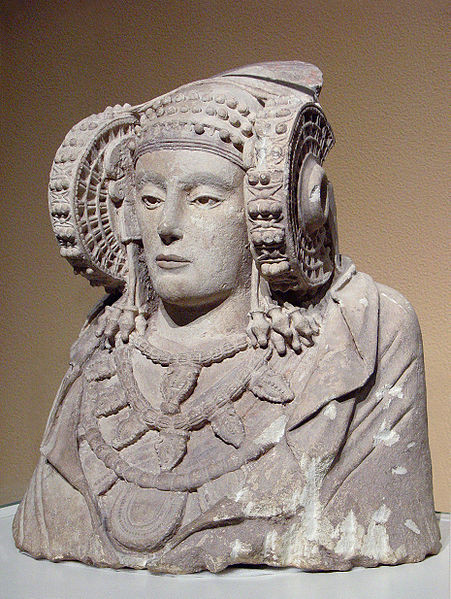
Many other artworks in Spain are in a contested situation, like the Dama de Elche. Ever since she was found in 1897 by a young man at the La Alcudia site, the Dama de Elche has become a symbol for the Alicante city, but the artwork is on display at the Museo Arqueológico Nacional (MAN) in Madrid as a representative piece of Iberian art. The Real Orden de la Dama, an association set up to promote Elche and the famous sculpture, has demanded her return on several occasions. Their determination to get the piece back is such that it has even been suggested that the Archaeological and History Museum of Elche (Mahe) become a branch of the MAN in order to recover her.
Paintings, sculptures and other artworks that are still being claimed by cities and countries and that have now become the centre of the controversy.
Comments (5)
CARLO
September 5, 2016Luis Javier Zapata Castrillón
September 2, 2016Héctor
September 1, 2016Armand
September 1, 2016Maria
September 1, 2016Aunque es verdad que hay obras que queremos que regresen a su origen como "El Penacho de Moctezuma". Que Viena lo devuelva ya!!!! :)
Log in to leave your comment. Log in