
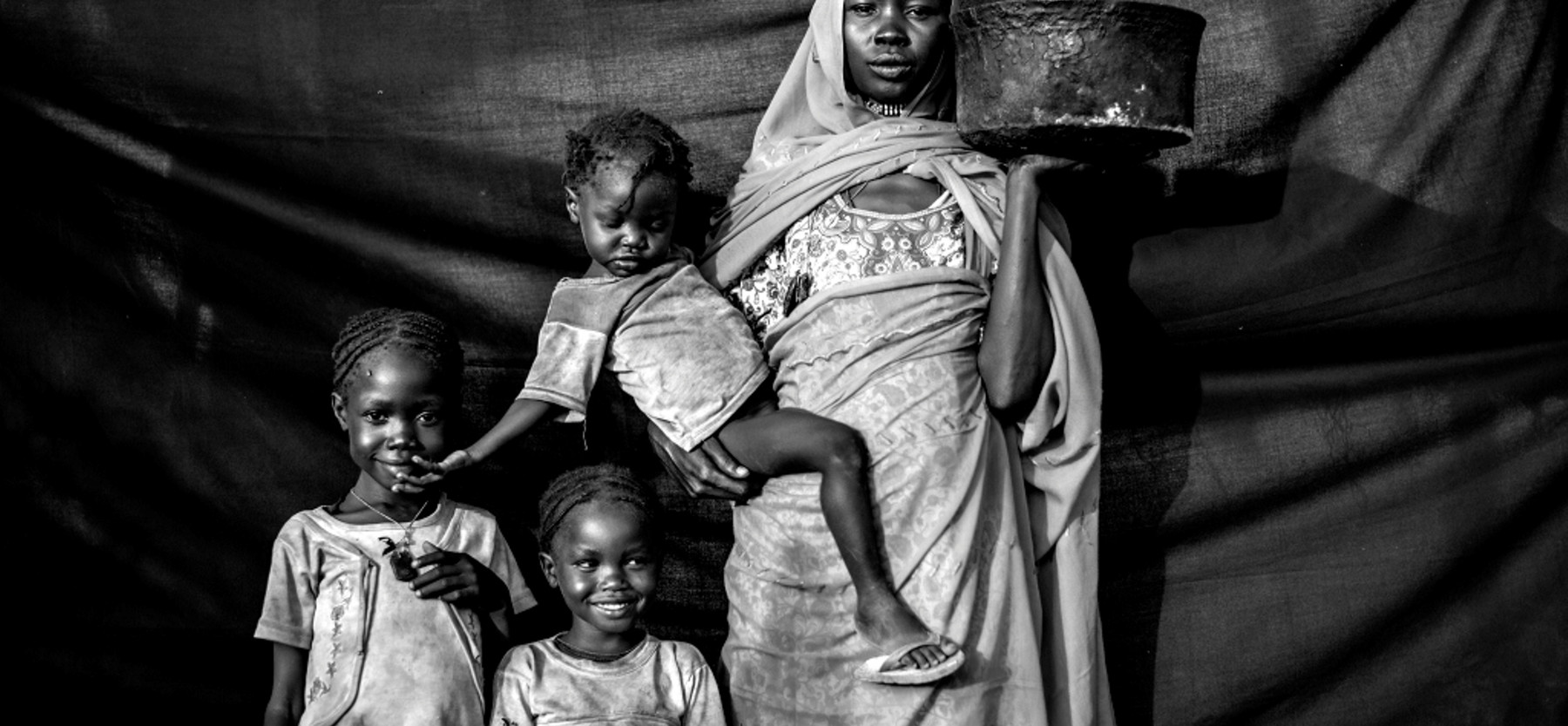
One of the most interesting exhibitions of 2016, and one you can't miss, is The most important thing. Retratos de una huida which reflects on the reality of refugees. At CaixaForum Zaragoza you can visit this original exhibition until 15 January 2017, which mirrors the drama of the thousands of people who are forced to flee their country. Over the last three years the conflicts in Syria, South Sudan, the Central African Republic and Mali have led to severe humanitarian crises. As a result of persecution, widespread violence or human rights violations in these countries, more than 15 million people have been forced to flee their homes, with a third of them moving to other States and so becoming refugees.
The exhibition The most important thing. Retratos de una huida, organised by Obra Social La Caixa and the United Nations High Commissioner for Refugees (UNHCR), presents photographs by photojournalist Brian Sokol. Its aim is to make us think about what matters most to all these people who have been forced to flee their homes because of war or poverty. Through the portraits of the American photojournalist Brian Sokol, the exhibition looks closely at the testimonies of 24 specific people who, at the moment they were photographed, had just been forced to flee their homes taking with them what was most important to them.
Brian Sokol is an American photographer dedicated to documenting human rights violations and humanitarian crises. A writer by training, he uses words and images to tell the stories of people who go unnoticed by the media. His career began in Nepal, where, as well as learning the language, he immersed himself deeply in the country's culture. In 2011 he moved to South Sudan to document, from the inside, the first 18 months in the life of the world's newest country. He has been awarded the National Geographic magazine's Eddie Adams fellowship and is one of the photographers selected for PDN's 30 New and Emerging Photographers to Watch. His clients include Time, The New York Times, The New Yorker, Geo, Stern, Ogilvy & Mather and Philips. He works regularly with UNHCR and other humanitarian organisations to document and raise awareness of social problems around the world. He currently divides his time between Europe, South Asia, Latin America, Central Africa and the Middle East. He is a member of the photo agency Panos Pictures.
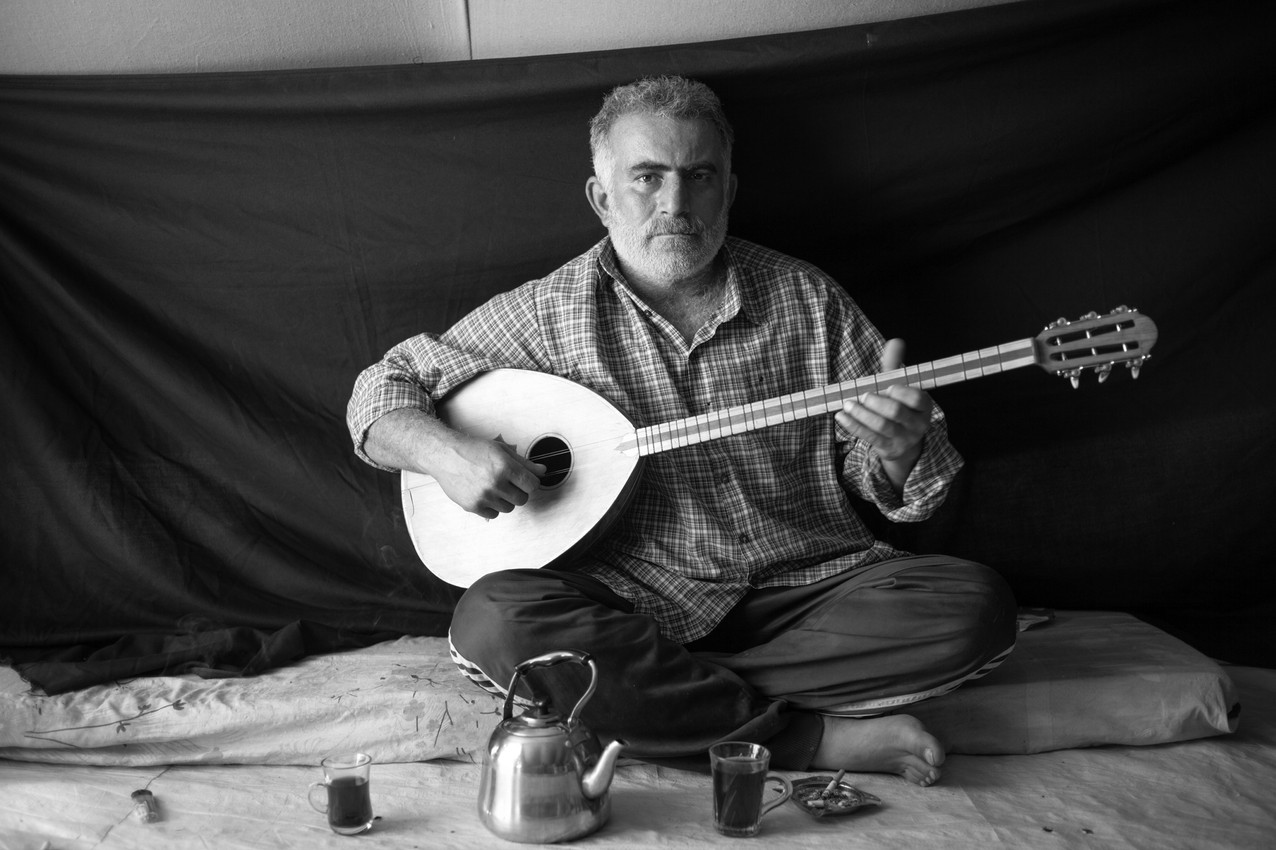
For example, in this photograph he tells us the story of Nasraldien Mohammed Ibrahim, 37 years old, in his tent at the Domiz refugee camp in Kurdistan, Iraq (16 November 2012). Omar fled Damascus with his wife and two children on the night his neighbours were murdered. As he tells it in the exhibition, "they came into the house and cut my neighbour and his two sons to pieces. They dragged the bodies out into the street, where we found them in the morning". Omar decided to take his buzuq, the instrument he is holding in this photograph. "Playing fills me with a feeling of nostalgia and reminds me of my homeland. For a moment, it eases my sorrows a little", he says in the exhibition.
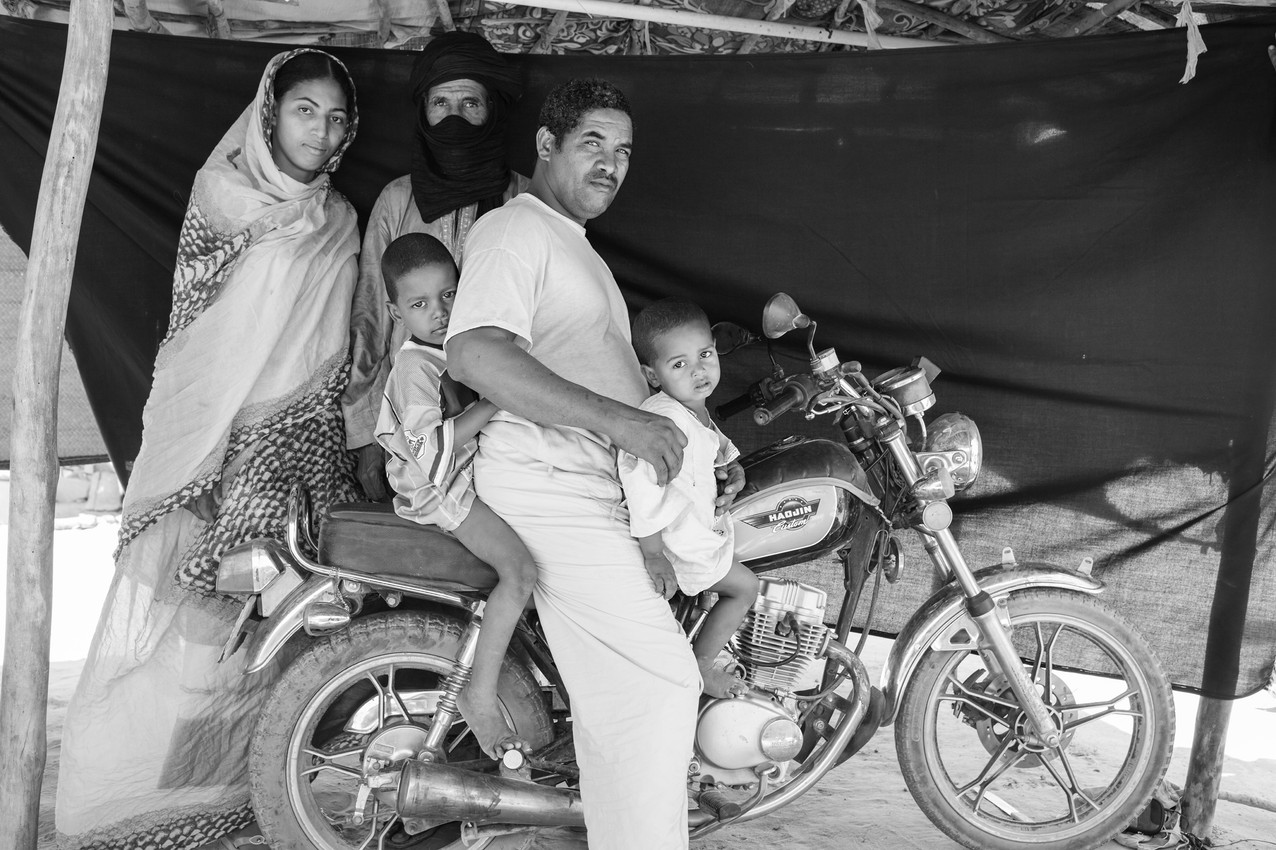
Another of the most striking is the one in which Abdou sits with his family on the motorbike he says saved his life. Abdou's family fled their home in Mali after his mother and four other women were kidnapped, taken into the desert and killed. When Abdou found out what had happened, he waited for nightfall and escaped into the desert with his wife and two children. He came back a few days later to bury his mother, and then put his wife and children into a car while he and his father followed them on the motorbike.
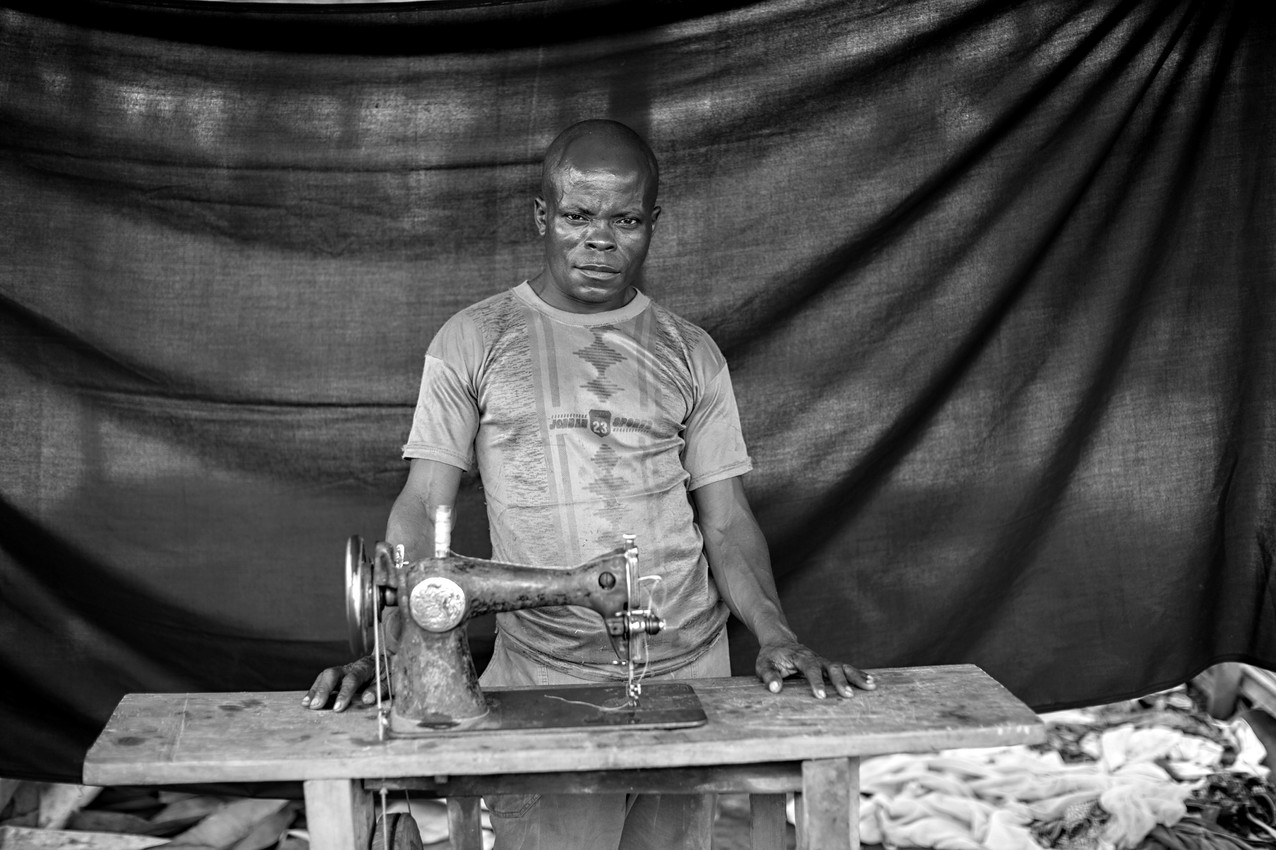
This portrait is also interesting, in which Benjamin, with his sewing machine, says of it: "It's my life, it's my blood. I use it to be able to buy food for my family". In Batanga, he earns a little money mending the clothes of refugees and local people. Benjamin decided to flee after seeing a Seleka fighter shoot a trader dead in the port area of Bangui.
An interesting exhibition in which photojournalist Brian Sokol makes us reflect, through his portraits, on the drama of the people who have been forced to flee their homes, until 15 January 2017 at CaixaForum Zaragoza.
Comments (0)
Log in to leave your comment. Log in