
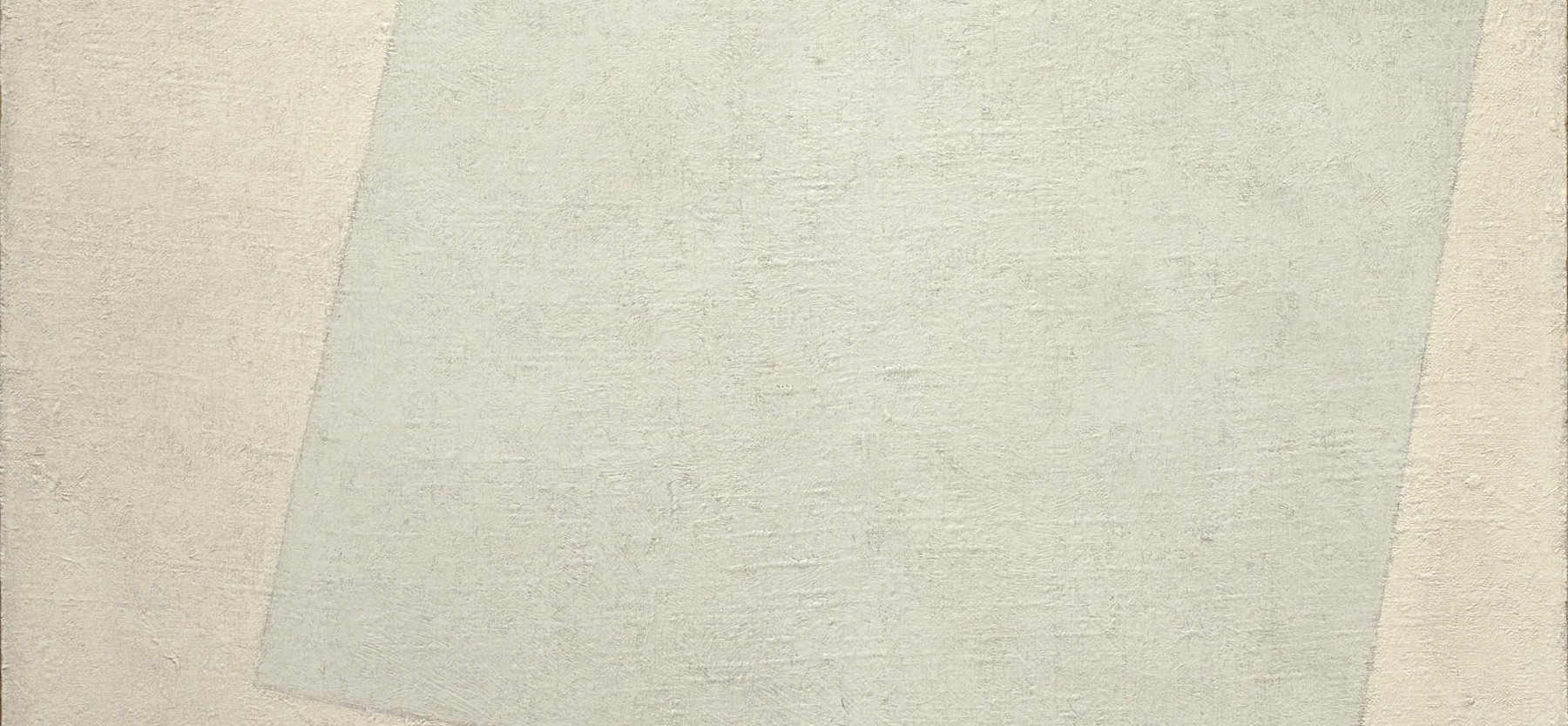
Have you ever felt that absolute emptiness that comes after a dream comes true? Months, maybe years of work to turn an ethereal illusion, a vague idea that comes to us in a moment of magical lucidity, into something tangible, into a reality you can touch. Kazemir Malévich (1879-1935) must have felt something like that the day he finally completed Blanco sobre blanco, one of the most revolutionary artworks in the history of contemporary painting.
Absolute emptiness to present pure emotion. Rarely in the history of art has such a radical artwork come out of such careful thought. Because there is nothing spontaneous, accidental or ironic about Blanco sobre blanco. This painting isn't a toilet out to needle the conservative establishment of contemporary art: it is an artwork that aimed to become the beginning and the end of art. The end of painting understood as representation and mimesis, and the beginning of an abstract painting that reflects a pure emotion, with no artifice beyond the surface and the pigment.
Malévich was 39 when he made his most famous artwork. The Russian artist had covered everything there was to cover in avant-garde painting. He was an impressionist, flirted with the Nabis, experimented with cubism and embraced futurism. In the early 1910s, Malévich is one of the most significant visual artists in his country. But Kazemir is still chasing his dream and he knows that if he keeps pushing the futurist creed his art will stall. The avant-gardes run out faster than a glass of absinthe in a Parisian café, and Malévich needs something more lasting. Lasting, what am I saying... he needs something eternal.
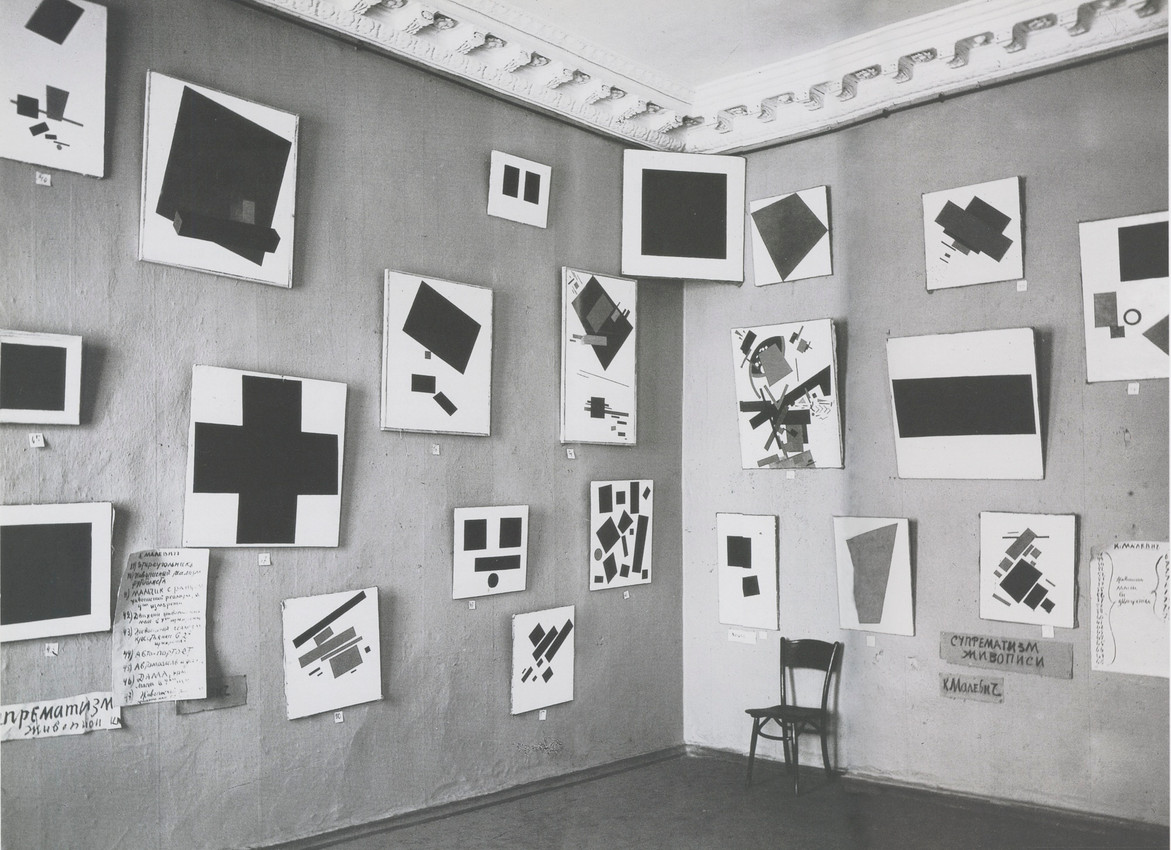
In 1915, the Kiev-born artist puts on an exhibition that will mark the start of his pictorial revolution: The Last Futurist Exhibition: 0,10. In it he hangs a series of artworks defined by a radical use of colour and geometric shapes. Suprematism is born, the "supremacy of pure feeling". And how do you give that pure sensibility a material form? Through a basic economy of colour and a geometry pared down to its bare minimum. There is no representation, the artist moves away from nature, from the object, from any rhetoric that might pull the senses outside the painting.
In this exhibition we see crosses, rectangles, cubes and so on. But one painting stands out above the rest and earns itself a place of privilege in the show: it is Cuadrado negro sobre fondo blanco, which we can see up in the corner of the exhibition room. They say Malévich was so struck by his own artwork that he was left in such a state that he neither ate nor drank for days. Although they also say that, jokingly, he referred to this artwork as Two black men fighting in a cave.
Be that as it may, the Russian artist was on the verge of the utmost purification of his suprematist concept. Not long after he forged Blanco sobre blanco, using only two pigments (lead white, one of the warmest colours on the palette, for the ground, and zinc white, with a bluer tone, for the square) and only one geometric shape (the square), tilted slightly to create an illusion of movement, unlike what happened in Negro sobre negro, which conveys a static feeling.
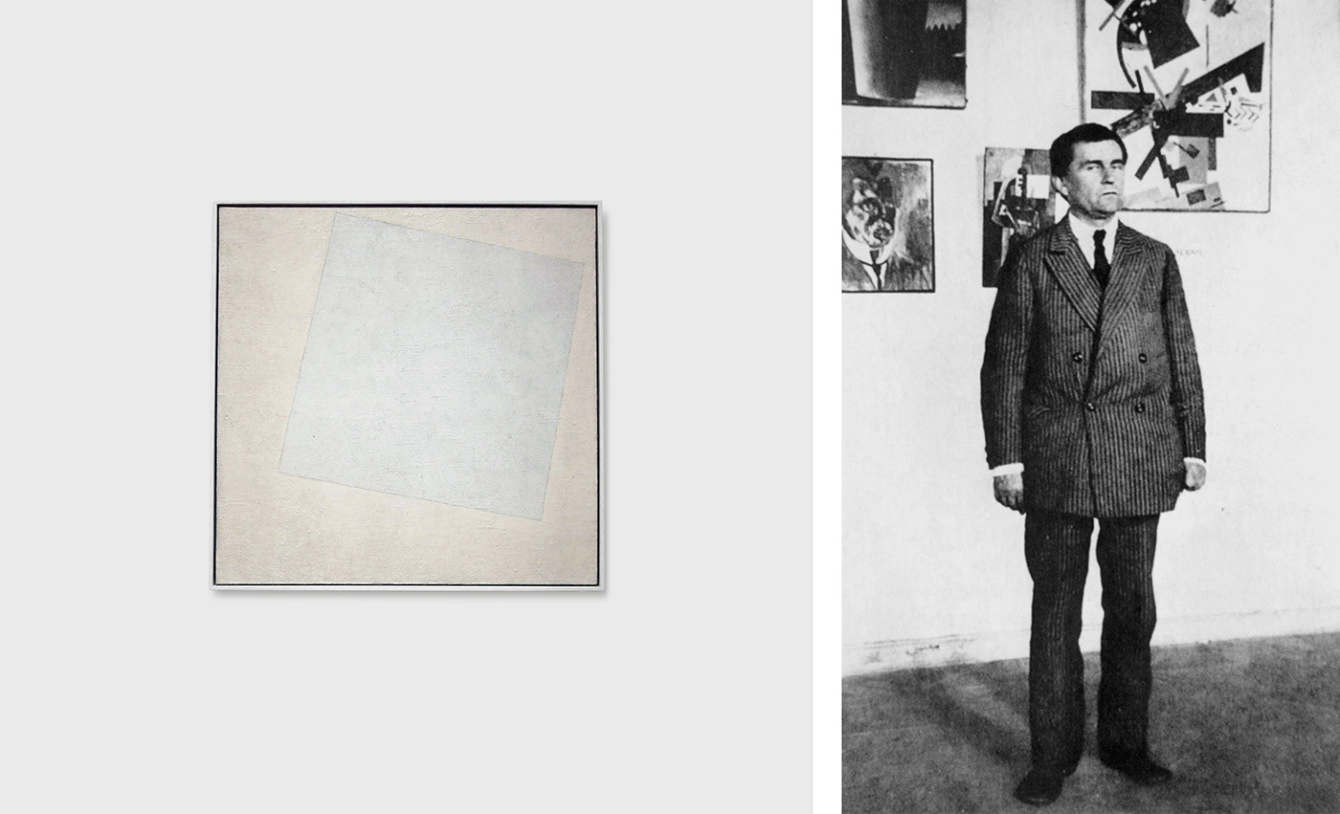
And after this, what? The end was the beginning... but it was the end. How do you go on purifying the idea of a suprematist art if there is nothing left to purify? The idea of an essential art reflecting pure emotion, mystical consciousness, reaches a point of no return. Malévich has reached the essence of pictorial abstraction, he has created an artwork with the same power to move you as a medieval icon but without the religious background: the artist stirs you using nothing but paint matter reduced to its bare minimum. Dream fulfilled. Absolute emptiness.
Malévich would go back to figuration in the last years of his life, perhaps to get his appetite back after Blanco sobre blanco. Either way, his suprematist experimentation marked a high point in the history of the pictorial avant-gardes.
Comments (1)
Victoria
April 13, 2024Log in to leave your comment. Log in