
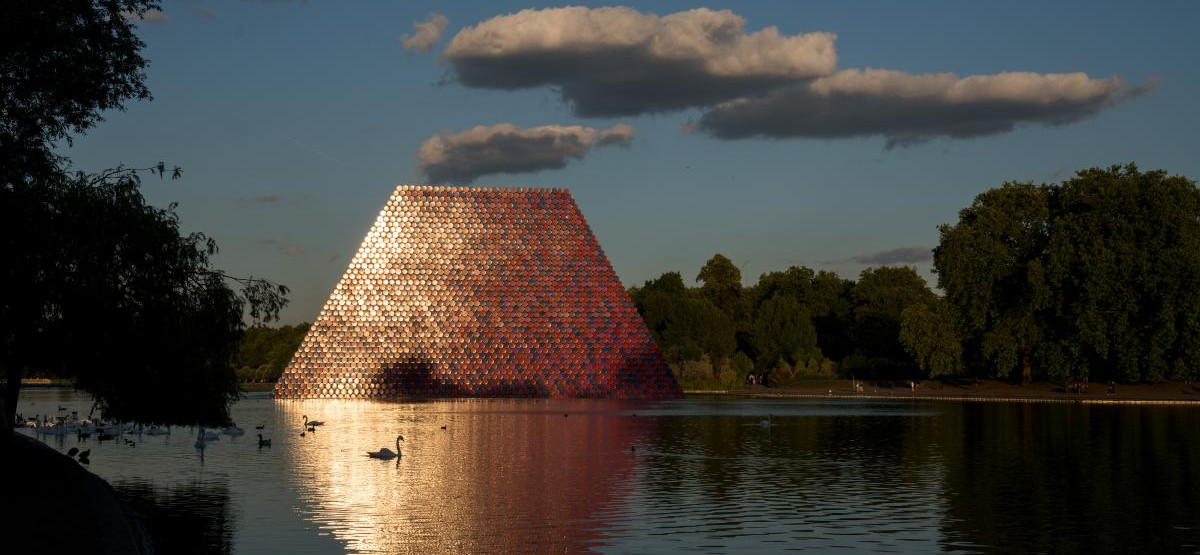
“There's no point looking for any meaning in these artworks, the visual arts aren't rational, they're sensory, there isn't a shred of politics in them (…) There's an important element here, which is water, and nobody asks me about it, everyone looks for meaning in the barrels, and they don't have any”. Like every truly great artist, Christo Vladimirov Javacheff (better known simply as Christo) always played the “I don't mean anything with my art” card, a very effective strategy because it saves you a lot of grief and a lot of arguing: it's an elegant, comfortable way of stepping aside: “Hey, I'm the artist, I make art, I don't argue, you argue, my public, my critics”.
But when Christo put the focus on water in his last great artwork, Barrels and the Mastaba (a 20 metre mastaba built out of more than 7,500 barrels, planned for a site in the United Arab Emirates but finally installed on the Serpentine Lake in London's Hyde Park), he wasn't just playing the artist, he was explaining the very foundation of poetry: looking differently. Because poetry means opening your eyes again to the beauty of the world, which needs no explanation and no panel discussion. It's there. Yes, before understanding and/or judging, you have to know how to look.
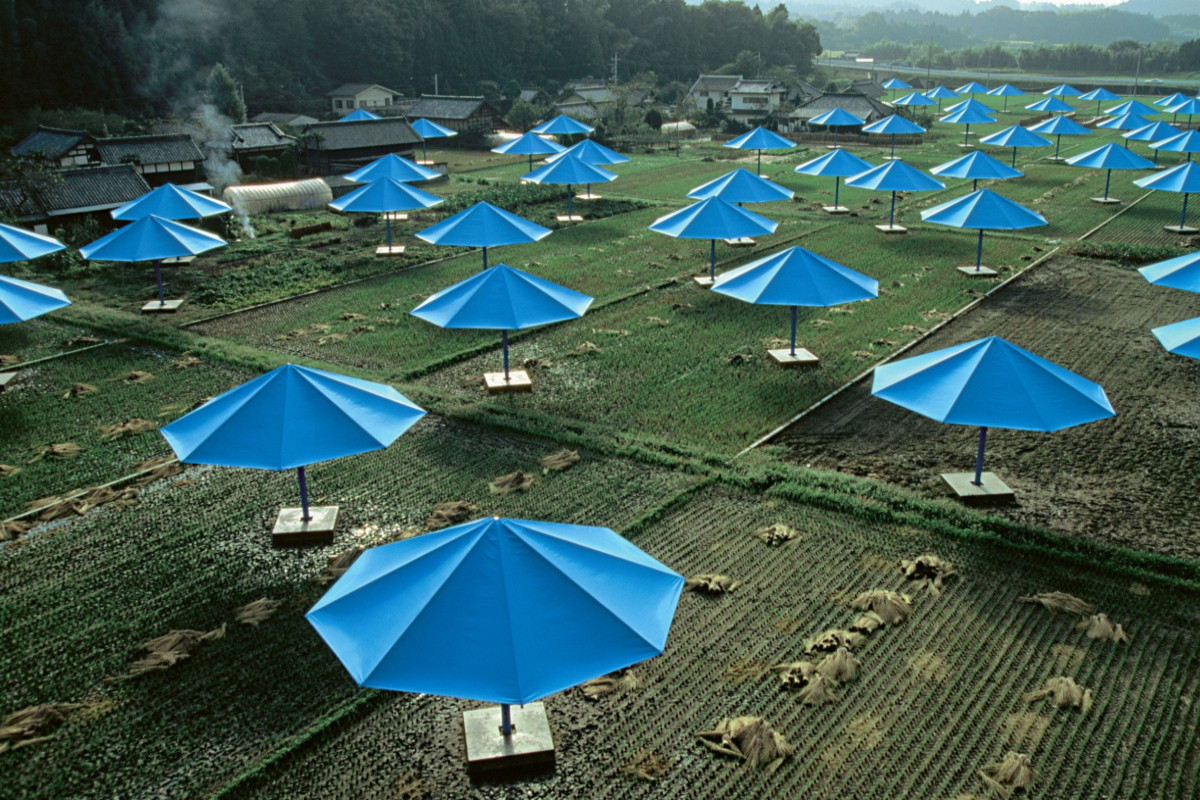
Christo and his partner, in creation as in life, Jeanne-Claude, spent their lives writing poetry in the landscape, offering new perspectives on the world. Their land art not only caught the attention of the specialist critics, it also fired the imagination of viewers who couldn't care less about contemporary art. Because wrapping a parliament or a bridge in fabric grabs your attention without heavy-handed devices or provocative posturing. And that's no small thing.
Born in Bulgaria in 1935, he left the country in the 1950s for Paris. There he met Jeanne-Claude, whom he would marry in 1962. Back home he had already shown an interest in wrapping objects, which he would then usually decorate. In 1961 this curious artistic technique, halfway between sculpture and the ready-made, took a step further as he scaled his projects up: he wrapped barrels in the river port of Cologne. Not long after, now working with his creative partner, they blocked the Rue Visconti with oil barrels in a symbolic intervention against the Berlin Wall (construction of which began in 1961), earning a certain amount of press coverage.
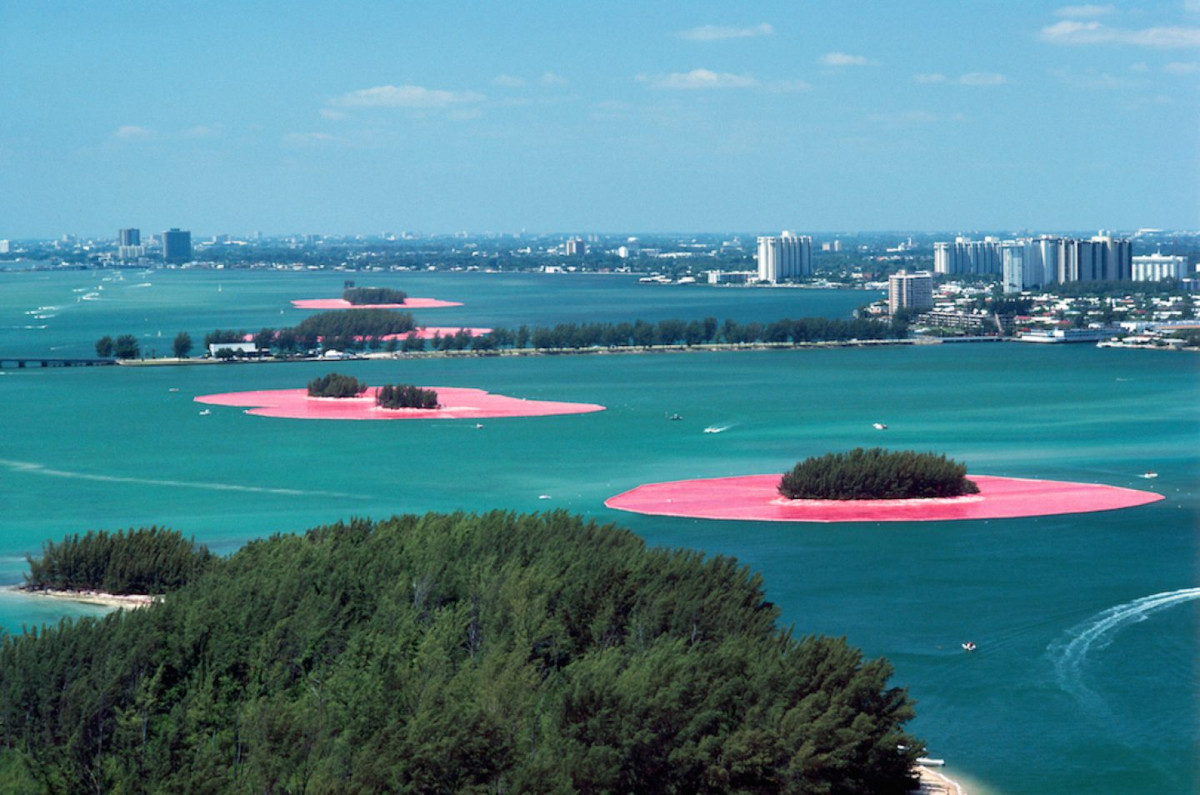
At the end of the 1960s came Documenta 4, the couple's first big project, in an artistic climate far more favourable to this kind of intervention in the landscape which, on the other side of the Atlantic and under the patronage of Virginia Dwan, was beginning to flourish: what starts out as Earth Art will end up as Land Art, gathering together a series of very different proposals whose common ground is that they are interventions in nature. In the end, a label like any other, one that most of the movement's artists disowned. Let's not forget that an artist starts to feel like an artist the moment he disowns the label the critic pins on him.
Christo and Jeanne-Claude preferred to be known as ecological artists and moved to New York, a city that, in the 1970s at least, was the very opposite of ecological. During that decade Christo would become an icon of intervention in the landscape with artworks such as Wrapped Coast in Australia, Valley Courtain in the Rocky Mountains in Colorado and Running Fence in San Francisco.
The design of his artworks moves decisively away from sculpture and closer to architecture, at least in complexity: only 22 of Christo's 60 projects were finally realised. Because bringing an artwork of this scale into being takes years of work, involving not just countless sketches but long negotiations with the authorities and tiresome environmental impact reports. And on top of that, they're free and ephemeral interventions. And this really is close to a miracle: for a city or a region to back an ephemeral artwork that isn't going to become a landmark for tourists to visit, the way a building or a big sculpture would, deserves enormous credit.
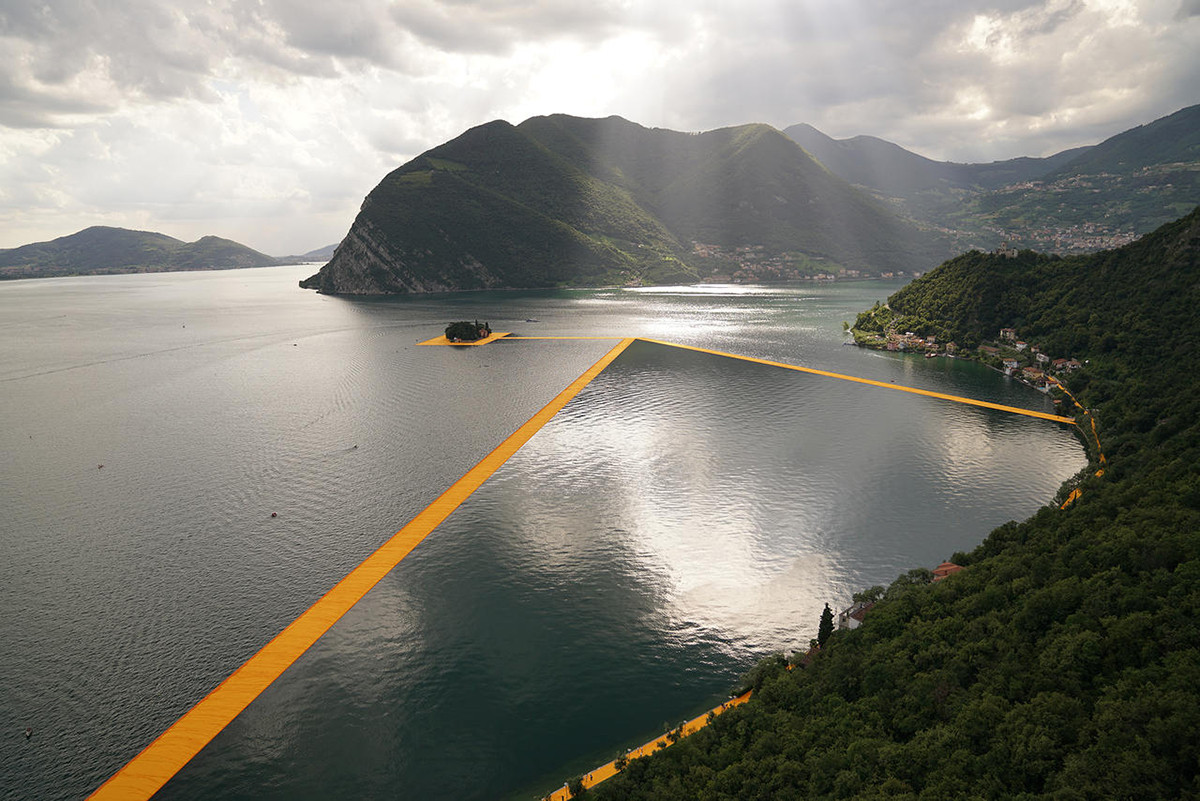
“The power of my projects is that they are free. You cannot buy them or sell them. You cannot sell tickets to see them. They are unique, in the sense that they last only a couple of weeks and are then never repeated (…) There is a radical gratuitousness in my projects, in every sense of the word”.
That radical gratuitousness, the imagination, the originality and, above all, the poetic charge are what we will always remember about Christo's extraordinary body of work, an artist who gave us back the water, the mountain, the stone and the valley, who taught us to look beyond ourselves.
Comments (0)
Log in to leave your comment. Log in