
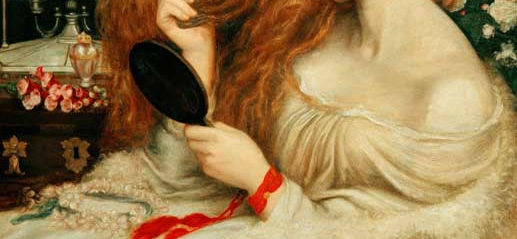
The same nightmare frightened the painter Dante Gabriel Rossetti every night after the death of his wife Lizzie in 1862. Seven years tortured by guilt for burying the only edition of the poems she had written along with her lifeless body.
Nobody would ever know how good Elisabeth Siddal was as a poet, as well as being the model and inspiration of the Pre-Raphaelite Brotherhood, the group of painters who turned the art scene of strict Victorian England upside down.
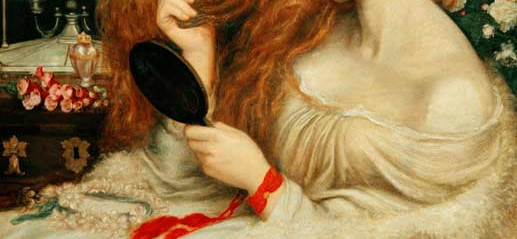
Lady Lilith, by Dante Gabriel Rossetti, 1866-1868. Portrait of Elizabeth Siddal.
Rossetti decided to exhume the body to recover the manuscript and publish it. What happened when he opened the coffin made everyone there freeze. Lizzie was untouched. Just like the day she died. But her red hair had gone on growing and completely filled the box.
This story feeds the legend around the Pre-Raphaelites and their muses. A legend that catches the fantasy subject matter of the paintings themselves and soaks into the very making of the artworks. Elisabeth got to live, as a model, one of those mythical stories from the back room of art.
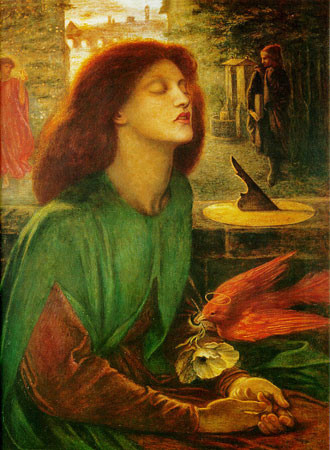
Beata Beatrix, by Rossetti, 1864-1870. Lizzie was the model this time too.
La Hermandad Prerrafaelita la fundan tres estudiantes de la Royal Academy de Londres a mediados del siglo XIX: William Holman Hunt (1827-1910), John Everett Millais (1829-1896) y Dante Gabriel Rossetti (1828-1882). Estos dos últimos desempeñan un papel decisivo en el destino de Lizzie: en su fortuna y su desgracia.With English painting stuck in academic conventions, the artists of this movement created a new art by looking back to a time before Raphael: the Middle Ages. They evoked its myths and sought a faithful reproduction of Nature, in a style we recognise today in the sets of The Lord of the Rings films.
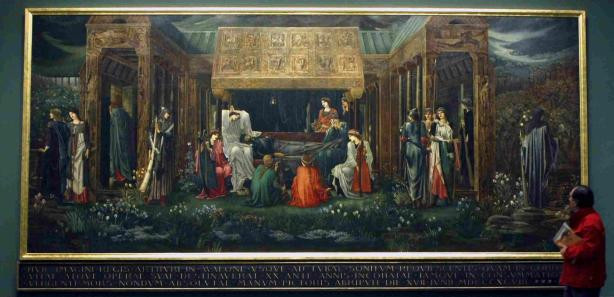
El sueño del rey Arturo en Avalon, by Edward Coley Burne-Jones, 1881-1898.
Lizzie posó para la mayoría de estos artistas. Alta y muy delgada, con su larga melena cobriza y sus grandes ojos verde-grises, representaba perfectamente a las heroínas medievales que imaginaban los prerrafaelitas. Trabajaba como modista en una tienda de sombreros cuando fue descubierta por el pintor Deverell y pudo compaginar este empleo a tiempo parcial (algo nada frecuente entonces) con el de modelo.Millais painted her most famous portrait: Ophelia (1852), which is the most important artwork of the movement. It shows Prince Hamlet's sweetheart in Shakespeare's play. She loses her mind when her betrothed kills her father by mistake, and she wanders through the woods, singing and reciting the meaning of the flowers she gathers. The willow branch she has climbed onto, envious of her beauty, breaks and Ophelia falls into the lake beneath the tree. The weight of her soaked dress drags her down to the bottom, "from her melodious lay to muddy death".
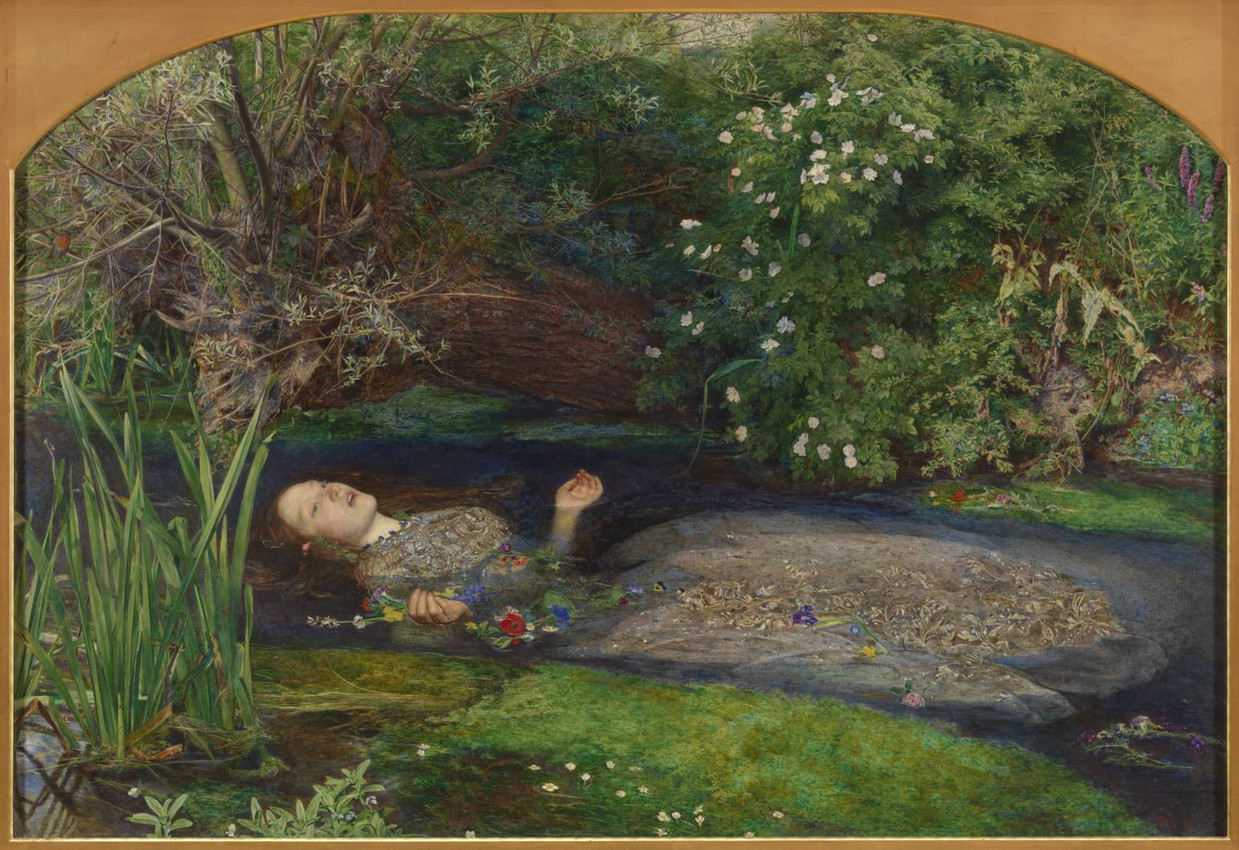
There isn't much talk about the importance of muses for art, and when there is, it dwells more on the intimate side of their relationship with the artist than on the model's professionalism. Lizzie teaches us a good lesson in commitment to artistic creation. The water in the bathtub went cold while Millais carried on painting, absorbed in his task, and Lizzie held out, falling seriously ill with pneumonia.
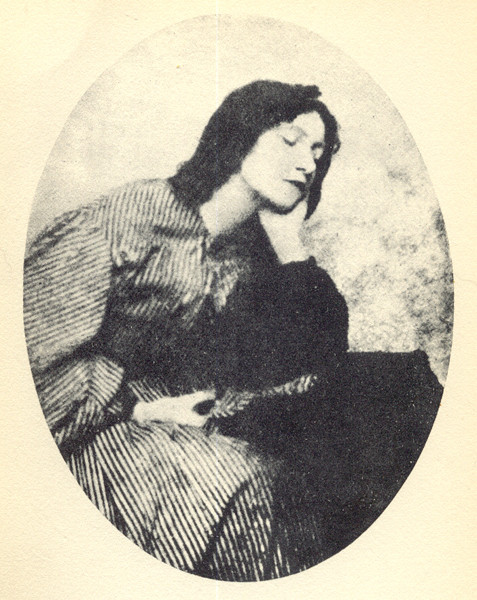
Photograph of Elisabeth Siddal.
No fue esto lo que la mató con solo 33 años, sino su posterior adicción al láudano con que calmaba su dolor por la pérdida de la hija que esperaba de Rossetti, con quien se había casado tras años de relación y a quien se deben muchos de sus retratos.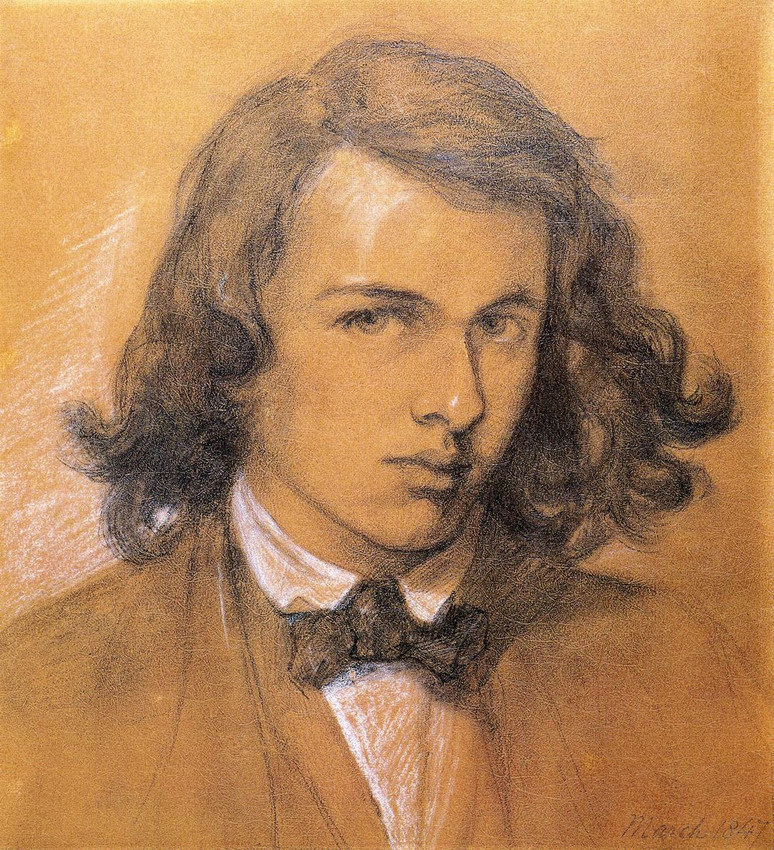
Self-portrait of Rossetti, 1847.
Elisabeth Siddal no es solo un ejemplo de esas musas sin las que no se entendería el arte tal cual es. Rompió esquemas en una época en la que el hogar era el único lugar reservado a la mujer. Pero también fue una víctima de este tiempo de tabúes (no se hablaba de la depresión y del abuso de los opiáceos en mujeres) y, como Ofelia, murió en el desconsuelo de la muerte de un ser querido, aunque su rostro y su poesía seguirán vivos para siempre.

Comments (1)
Oscar Botero P.
May 27, 2014Log in to leave your comment. Log in