
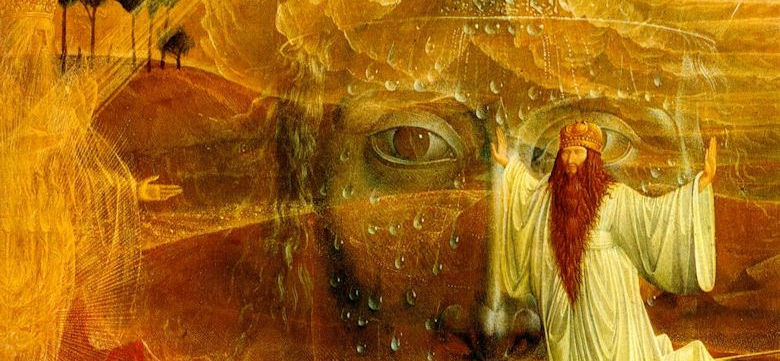
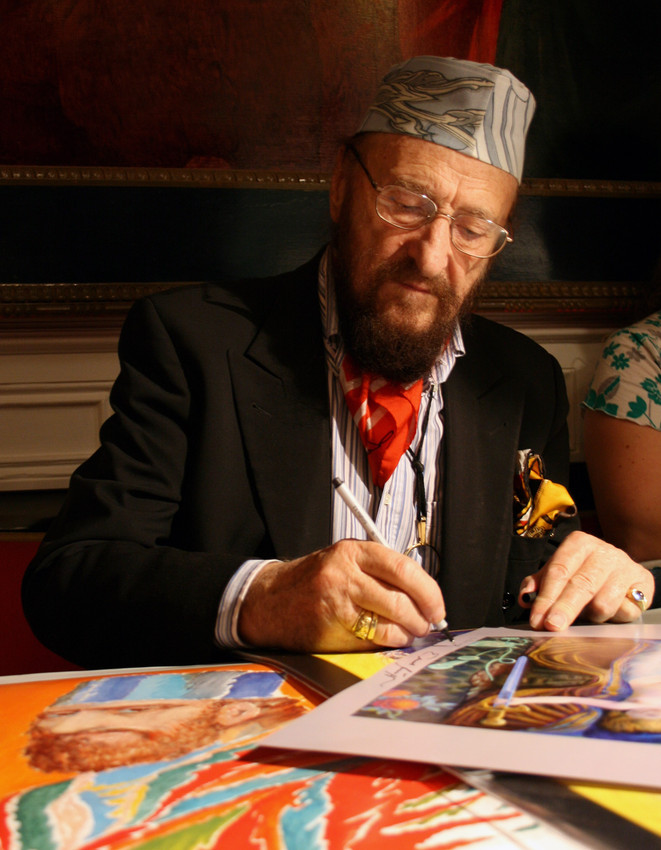
Ernst Fuchs (Vienna 1930 - 2015) stood out early on for his virtuosity as a draughtsman. He studied at the Academy of Fine Arts Vienna, where he met his future colleagues from the Vienna School of Fantastic Realism. Over the course of his artistic career he experimented with a great variety of techniques and even worked as an architect and a composer.
He studied in depth the iconographic and symbolic roots of Western culture, starting from the Jewish tradition and from the techniques used throughout the history of art, all filtered through his own artistic experimentation. He developed a language of his own that stands out for a very personal vision of certain cultural symbols, generally Hebrew and Nordic, reinterpreting mythological figures such as the sphinx and the unicorn, among others.
Among the old masters his references were Bosch, Matthias Grünewald and Pieter Brueghel, and among the more modern ones Jean Cocteau, Max Ernst and Salvador Dalí. The last of these had a particularly important place in Fuchs's artwork. His style could be considered a mixture of Surrealism, Symbolism and figurative tradition, with a strong religious and mystical presence.
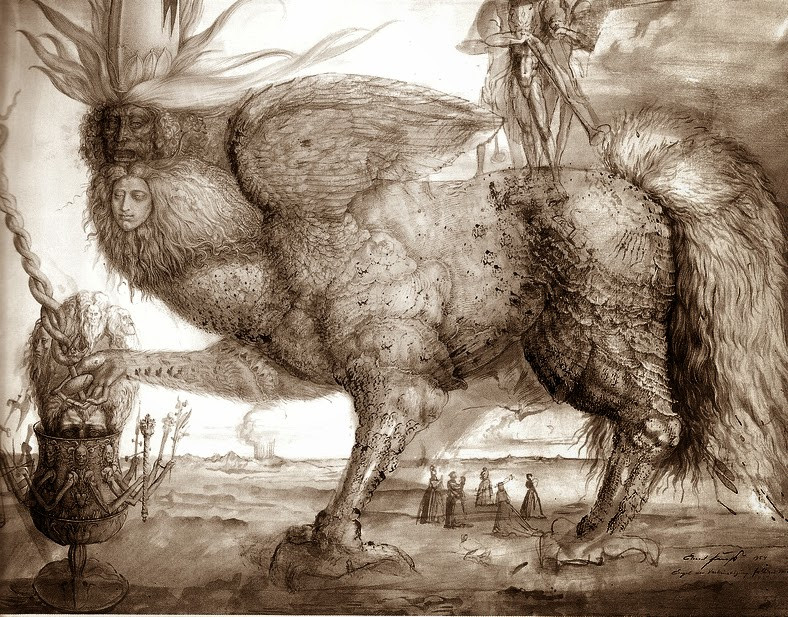
Feminine beauty, the depiction of monsters and, above all, religious iconography became very important to him. A strong taste for the decorative line and Art Nouveau ornament can be seen in his work. His sources of inspiration were basically literary: the Tales of Hoffmann, the Arthurian legends and, of course, the Bible.
His first works, from the 1950s, stood out for the apocalyptic, catastrophic character that came out of the post-war context and the desolation of the West. He depicted bodies eaten away by famine, putrefaction and deformity. We also find references to the concentration camps. In this period, his artworks had a strong religious basis.
From the 1960s on, his artworks stopped being miniature in format and became more monumental. It is in these artworks that he shows his particular reinterpretation of the architecture of ancient civilisations.
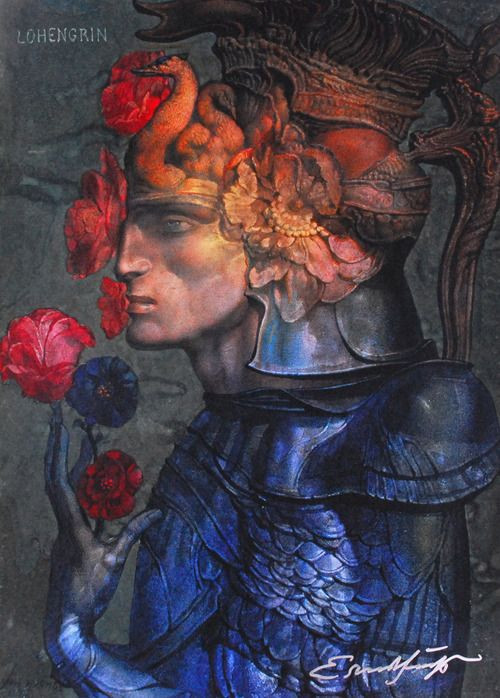
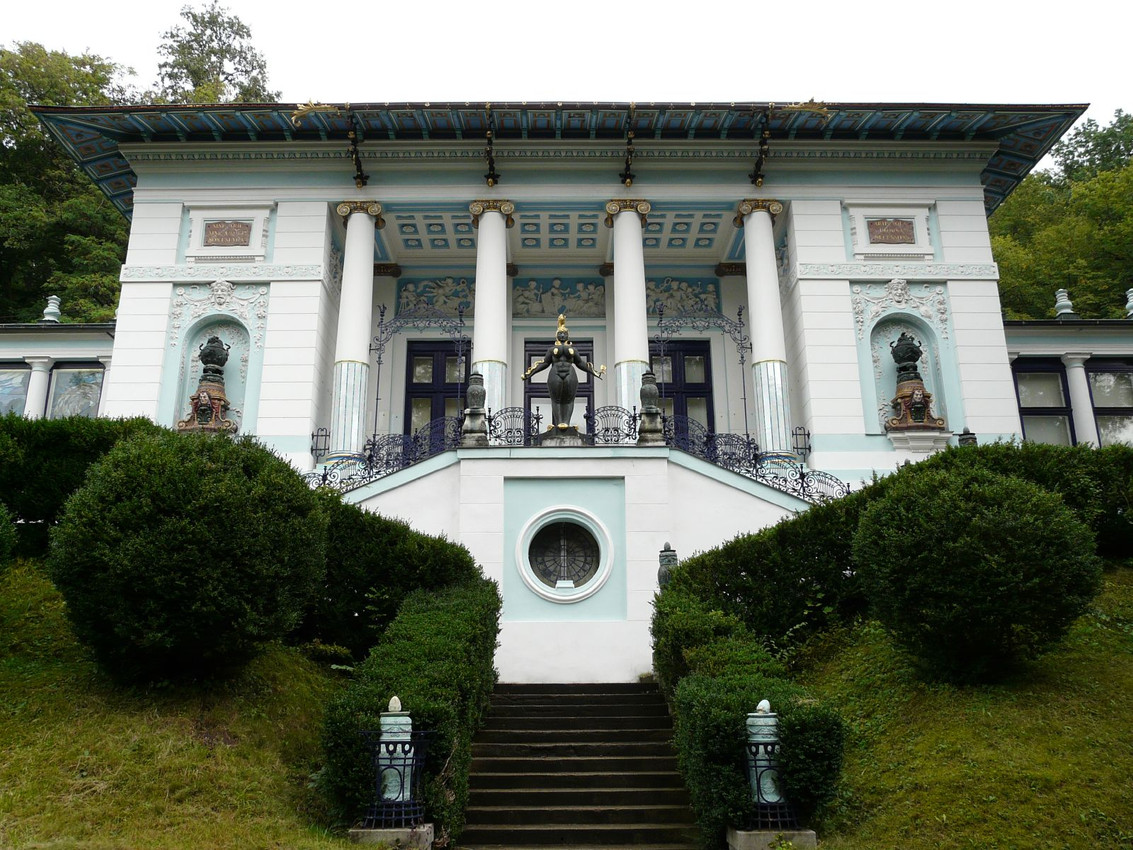
In 1978 he began a new phase characterised by the use of lighter tones and less complex compositions. He grew interested in Germanic mythology and began to reflect on it, starting series related to the legend of Lohengrin. It was also from this moment on that he began to diversify his artistic output, designing costumes for some Wagnerian operas and large-format sculptures. He experimented with architecture too, applying his fantastical vision to a hotel and a church, and these experiments culminated in the decoration and restoration of the Villa Otto Wagner, on which he worked for ten years and which since 1988 can be visited as the Ernst Fuchs Museum (Vienna), where his most important works can be seen.
The friendship and influence that bound Dalí and Fuchs together was very important for the Austrian's career. In 1947, Fuchs was able to visit an exhibition of Surrealist works that included a Dalí, which made a great impression on him. At that moment he decided he would achieve the same precision in his drawing.
Fuchs wanted to meet Dalí, and in 1951 he went to see an exhibition of the Catalan painter's work at the Raymond Weil Gallery. Inside the gallery, Fuchs unexpectedly ran into Dalí and took the chance to show him his drawings and artworks, and Dalí told him: "You are the German Dalí". That was the beginning of a long friendship between the two artists.
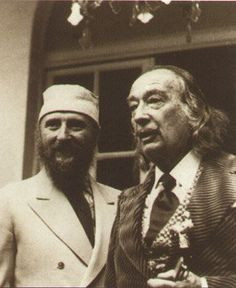
Ernst Fuchs admitted in his memoirs that Dalí was his greatest influence and that what impressed him most about his work was "the quality of that so realistic drawing created out of things completely imagined."
Fuchs was a fierce defender of the commercialisation of art. In an interview for Visionary Revue about his relationship with Dalí, he defends him against the criticism of the way he promoted his art and his status as a showman. For Fuchs, the commercialisation of art should be part of art studies, so that every artist would know how to sell their artwork, since after all the artist was a merchant in the past. He was very critical of those opinions that tried to hide a reality: for better or worse, art has always been a business.
On Dalí's eccentricity, Fuchs said: "[He was] A very sweet person. Everybody saw him as an eccentric, but being an eccentric myself, I saw him differently. All his extravagances were not extraordinary at all. The only difference is that he didn't hide them." He also stressed how easily the two of them understood each other and how they could be completely honest with one another, especially where religion was concerned (Catholic / Jewish).
Comments (1)
Carmelo González Gutiérrez
June 9, 2016Seguiremos con interés estos temas que creo siempre serán bien recibidos, sobre todo por los artistas.
Log in to leave your comment. Log in