
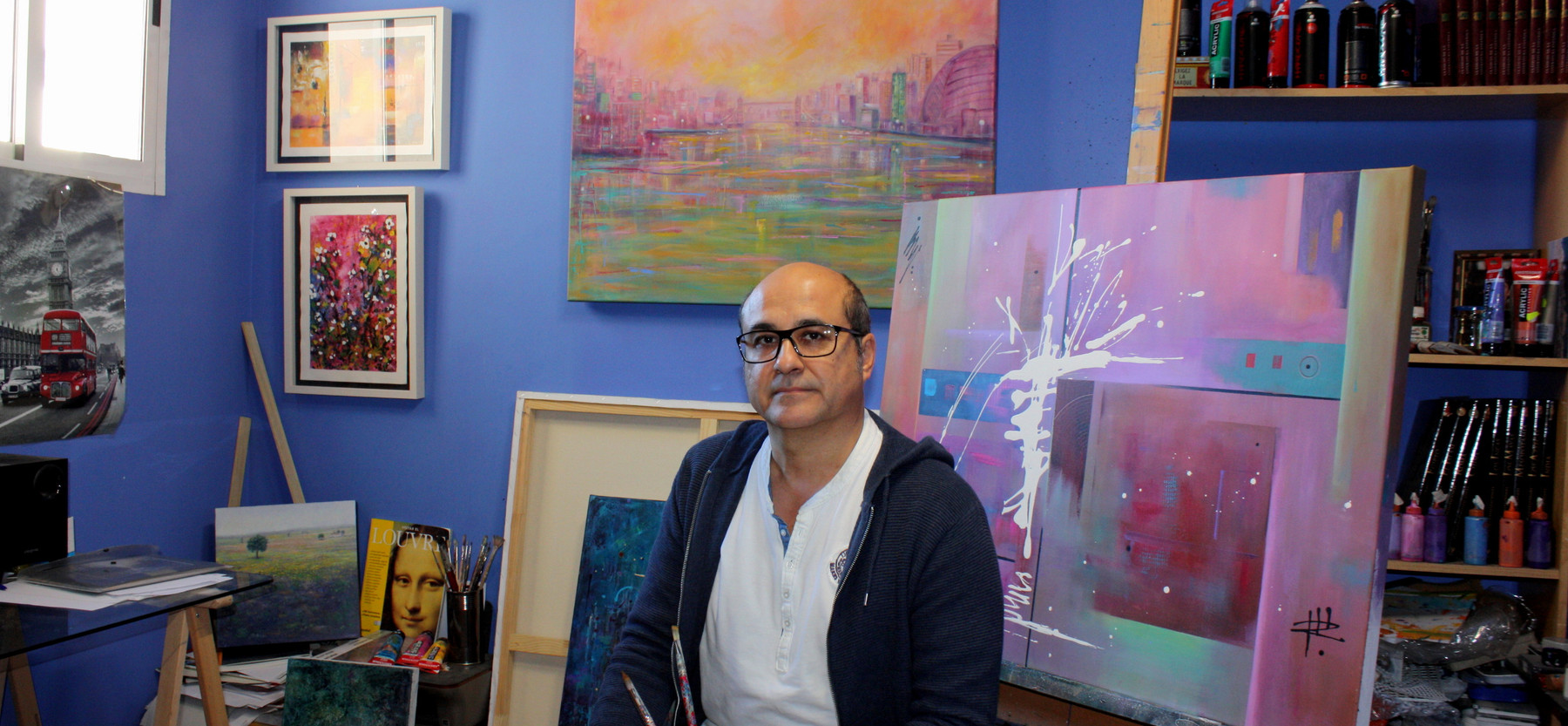
I was born in Casar de Cáceres, a village known for its tortas, where I spent half my life. As a boy I was passionate about anything artistic, first at school with circus acts, then theatre, then music, I composed, I sang and played guitar with my friends, and I used to look at the charcoal drawings my uncle Ángel Luís made while studying architecture, they really caught my eye.
At 14 I was given a grant to study BUP at the Universidad Laboral in Zamora, and it was there, on one of our Friday outings into the city, that I discovered an abstract art gallery. I left my classmates and went in to see it, and while I was looking at the artworks I felt something very special and I knew that at some point in my life I would have to learn to paint.
I've always believed I was born an artist and that I came at this moment in history to bring art and beauty to the world, because hard times are coming and what better way to bring a bit of peace, common sense and a different perspective than through art.
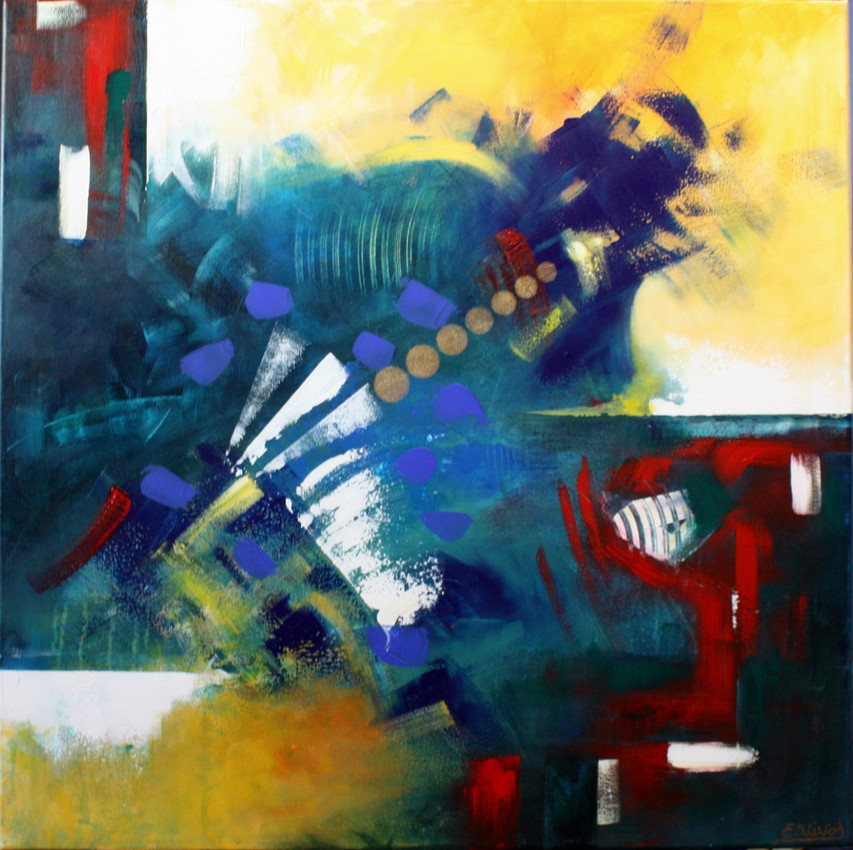
It's very important that we artists get involved socially, helping out, standing up for rights and fighting social injustice, showing solidarity, contributing your ideas and your personal view of the world in an aesthetic way, through creativity and the resources of painting.
When and why did you start painting?
Fourteen years later, with a qualification and a steady job as a civil servant, I moved to Manzanares (Ciudad Real), where I joined the drawing and painting school-studio of the teacher and excellent artist Pedro Miguel Pérez Villegas, an even better person, who spent more than a decade teaching me every technique of figurative painting. I also learned to paint outdoors with one of the best landscape painters in the country, Fermín García Sevilla, a reference point in my first painting period.
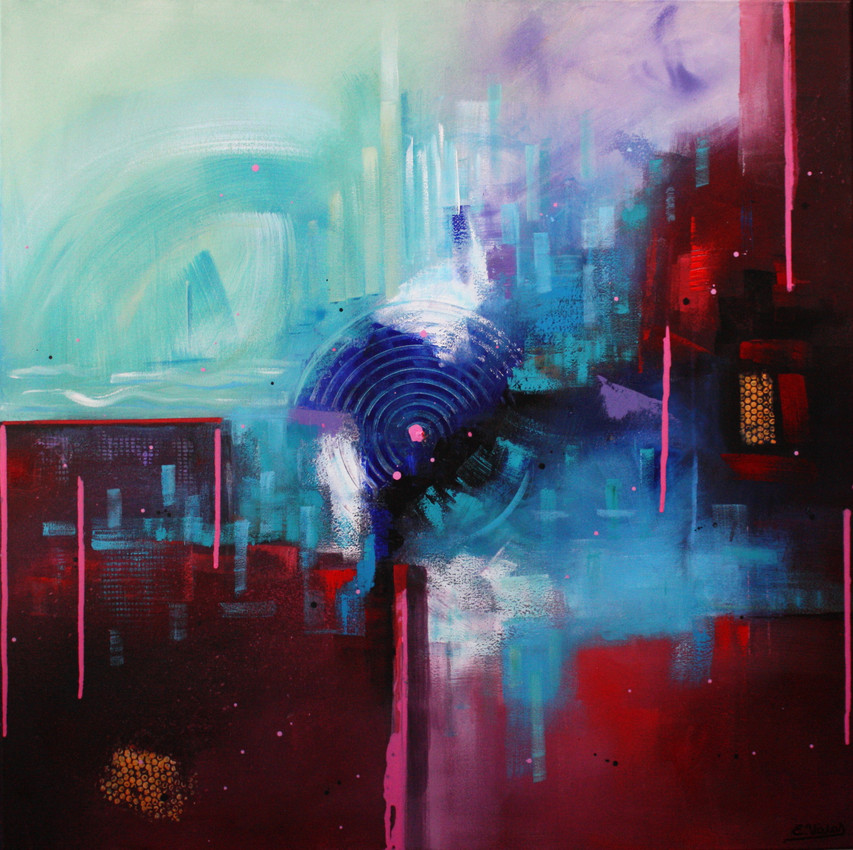
These days, through evolution and the need to research and find my own style, I've moved from figuration to expressionism and abstraction, but I keep searching, creating, and right now I'm working on fusing opposing pictorial tendencies into what I dare to call Expressionalism (yes, very bold of me, but others did it before and in time they were rediscovered and left their mark).
How do you think a gallery and its artists should help each other?
By keeping a serious relationship between the two. The gallery promotes you, spreads the word about your work if it thinks it has quality and something to say, finds you clients, and you commit to keeping up the quality and the production of artworks, and both sides benefit. The artist devotes himself to creating and the gallery owner to placing and spreading his art.
It has to be said that there are a lot of crooks in this sector who take advantage especially of those starting out, asking for money to exhibit, plus commission… but these aren't real gallery owners, they're a kind of swindler who does damage to the rest of the professionals.
What advice would you give to artists who are starting to show their artwork?
To enjoy their work, to be constant and spend time creating, to put excitement into it and believe in their artwork, and above all to be patient, because the road ahead will be hard but thrilling and in the end it will pay off in many areas of their lives.
To start with small rooms and cultural centres, where it's usually free or you negotiate and leave an artwork behind, and in time, with a CV and a good photographic and digital dossier, pick galleries that suit their style and try their luck. Sooner or later they're sure to find their space.
Another option is to look for free online portals like Artelista, for example, where they can show their artworks, and to be on social media, which is essential now, because it's the future and you can reach thousands of people all over the world. The most important thing for a true artist is to be able to spread his artwork, and the more people the better. I'll take the chance to congratulate the Artelista team on the work you're doing to spread and promote our art.
Physical galleries are quite limiting and reach a limited, exclusive audience, and many of them have had to close for lack of clients.
How did you sell your first artwork? Is there one you feel a stronger connection with?
Four years after I started at the school-studio, a friend of my wife's came by the house and liked a landscape so much that I sold it to her, then she commissioned a portrait and another artwork that she bought from me at my first exhibition, Paisaje nostálgico (thank you Marita and Tita for being the first to trust me). Little by little I started selling at exhibitions to family, friends and private buyers, until I got to the first art and decoration fair in Ciudad Real, where I sold every landscape I'd painted from life. What a rush!
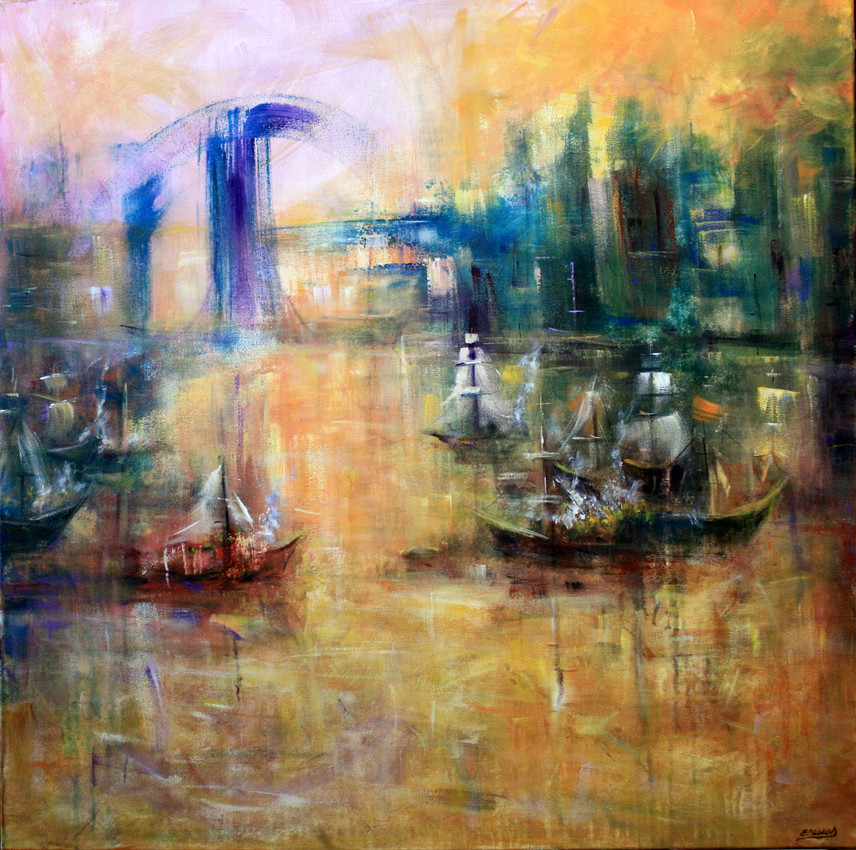
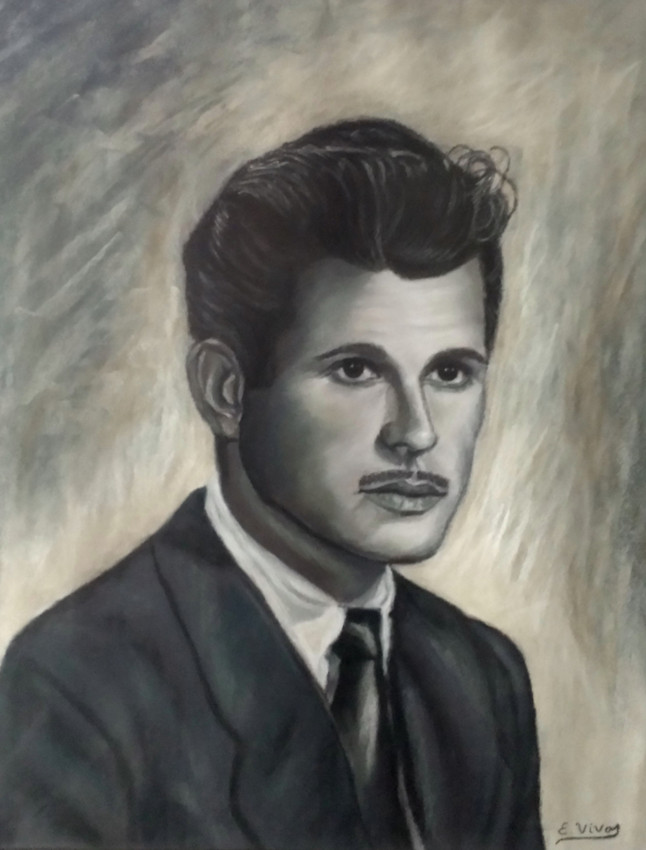
There's a pastel portrait in grey tones from my first period that I made of my father as a young man, and I feel a special connection with it. And from the shift into my second period I'd single out Trafalgar Memorial, Enigma, Éxtasis musical, Nirvana artístico and En busca del Unicornio. I try not to get too attached to them, but there's always one that fills you up more and those usually go into my private collection, though most of them go on sale at the exhibitions.
What is art for you? What part does it play in your life? Do you make a living from art?
For me art is more than a way of life, it's a channel for sensitive, aesthetic, personal and intimate expression where I give free rein to my feelings, emotions, moods and preconceived ideas, and with no guide other than intuition I work from enjoyment, good taste and that unfathomable, fleeting moment of composing and setting the creative process down in an artwork. I can't imagine my life without painting, and art is one of the best medicines for the soul, which is why I think it has to be shared and that expressing what you feel is slowly getting closer to happiness.
I don't make a living from art, my spirit feeds on it, but I live off my job as an educator, though I try to combine the two. That lets me create relaxed and enjoying myself, with no money worries, but of course with less time to paint. Living off painting today is a privilege for a few.
What are your sources of inspiration? Do you identify with any other artist?
I'm inspired by all the great artists who left us their legacy: Velázquez, Veermer, Turner, Kandinsky, Bach, Vivaldi, María Callas, Charly River, Chillida, Tàpies, my friend Gemma Granados, no longer with us, and so many others. Also places I've visited on my travels around the world, museums, childhood memories, emotions, details, feelings… There's beauty and art in almost everything, it depends on who's looking.
I don't identify with any artist, I try to keep my own style and personal stamp, always researching and looking for new forms of expression. Turner has influenced me in a way with those hypnotic sunset atmospheres, so I paid him a tribute in one of my artworks, Trafalgar Memorial, mixing the classical with fleeting strokes of contemporaneity. Another of the greats, and one I love, is Gustav Klimt. I've been able to follow and enjoy his artworks at the National Gallery in London and at the Belvedere in Vienna during the artist's 150th anniversary, and I came out of both amazed by his work, because we shouldn't forget that they were the forerunners of modernity.
What is it about your creative process that makes it special?
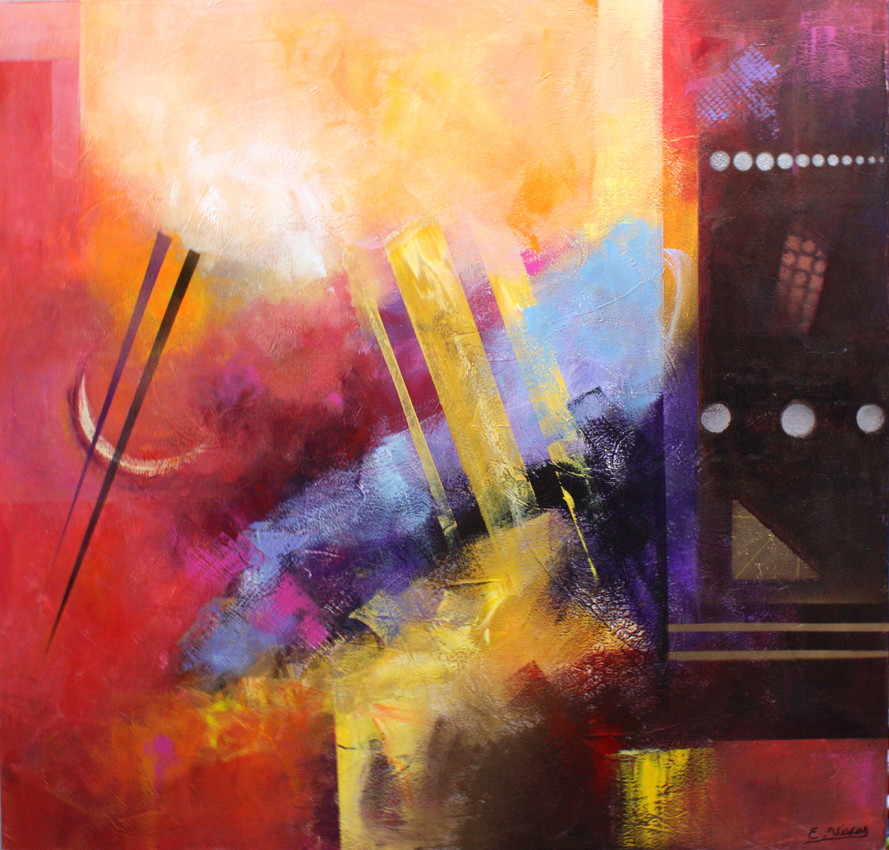
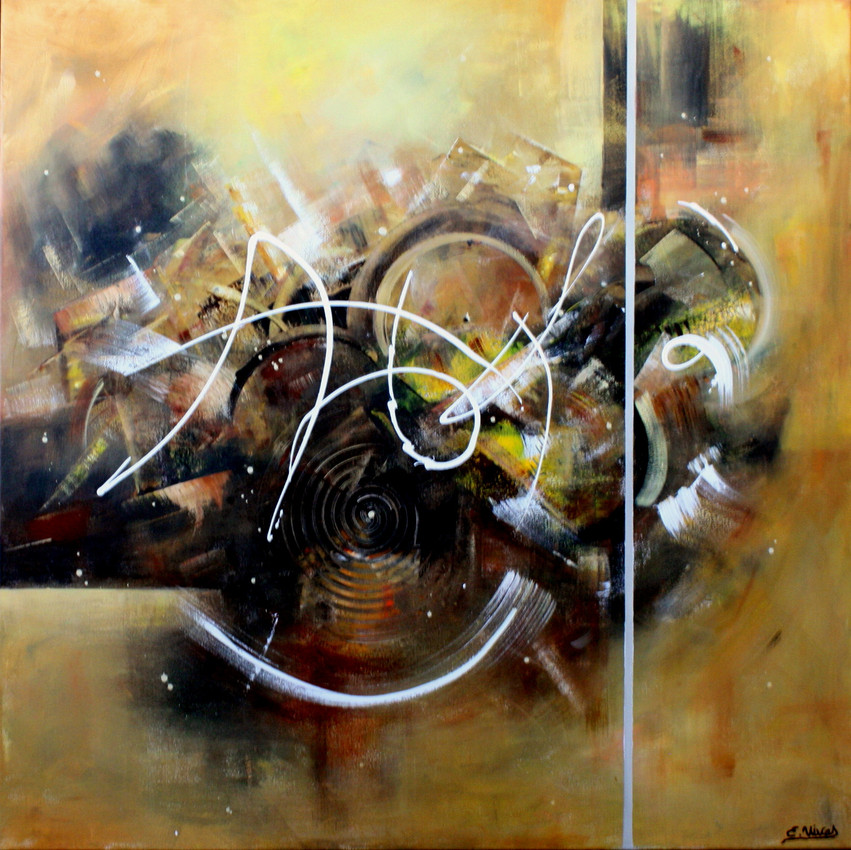
It's a mixture of romanticism, geometry, colour, technique and constant searching. I develop conceptual strategies, like introspection, the fusion of classical and modern, or perhaps the magical or the invisible, and they run through a hugely creative body of work, with a pictorial conception full of modern, innovative elements where imagination and the senses come together, creating suggestive, expressive and evocative artworks through form, chromatic harmony and texture.
I have the most important habit a painter can have, which is to paint every day, in a pleasant setting, with the right light, good music, clear ideas about what I have in hand, some research, and then off I go creating. Until the flash of inspiration comes, which almost always turns up when you've been working for hours, and it can turn an artwork around or put the final touch on it if it catches you working.
Other times I start by putting marks on a blank canvas, with no references, until it talks to you and starts to come alive. The feeling is wonderful, you enter a state of happiness and energy that's hard to describe, your infinite solitude in the studio rises up to the pure essence of being and feeling, to what I call “artistic nirvana”.
Have you had any exhibitions lately? What can you tell us?
Yes, at the BP exhibition hall in Manzanares, and at the I Muestra Offline 2015 held this October in Barcelona, where I had the chance to meet you and some of the artists who came along, and I have fond memories of it. On 18 December I'm off to the IV Muestra de arte contemporáneo Alas solidarias at the Príncipe Felipe auditorium in Oviedo, with a very notable line-up of artists, running until 7 January and for charity. In spring 2016 I'll be at the exhibition hall of the Ateneo in Cáceres, and I'm excited about showing my new period in my own city. In December 2016 I'll be at the Gran Teatro in Manzanares (Ciudad Real). I'm also preparing a second international exhibition for 2017 in London, where my daughter lives and works, an expat like so many young people because of the crisis and the ineptitude of certain politicians, something our country will end up paying for sooner or later with the brain drain in every field.
Could you recommend us:
An artist: William Turner.
An artwork: The Fighting Temeraire tugged to her last berth to be broken up by William Turner and The Kiss by Gustav Klimt (sorry).
A book: One Hundred Years of Solitude, by Gabriel García Márquez.
A film: Cinema Paradiso by Giuseppe Tornatore.
Thank you very much, Eloy.
We invite you to visit Eloy Vivas's gallery on Artelista and the review by Artelista.

Comments (0)
Log in to leave your comment. Log in