
From 24 November until 27 March next year, the Madrid gallery is hosting an exhibition with the main artworks of the French painter Ingres, one of the first to move beyond Neoclassicism and announce the artistic revolutions of the end of the 19th century, a time when the arrival of photography was forcing the art of painting into a genuine reinvention.
Over the coming months, anyone interested in enjoying the paintings of the master of Montauban won't need to visit the world's most important galleries, or that picturesque French town, the birthplace to which Ingres bequeathed a good part of his output, in order to enjoy the stylistic refinement of a painter who studied classical forms in depth through drawing only to end up surpassing those ideals and carrying out the transition towards what would become modernity.
“Ingres's painterly personality is so overwhelming that it installs itself in reality, modifies it and gives it back to us reflected in the mirror of the aesthetic ideal, as if that were its authentic and true image. This is precisely the heart of his lesson: that painting, like beauty, remained a mental question”, writes García Guatas in an approach to his biography.
Born on 20 August 1780, Jean-Auguste-Dominique Ingres was the eldest of seven siblings. His father, who would go on to become a member of the Academy of Fine Arts, instilled in him a taste for art from the very first moment, taking him to Toulouse at the age of eleven so he could start mixing with the world of artists and soak up their knowledge. Hence, when he entered the School of the Academy of Toulouse a few years later, his cultural background was already very extensive. From that early age, both drawing and playing the violin would stay with him for the rest of his life. Perhaps his precocity and the solitary dedication that artistic training demands went a long way towards determining the seriousness of character he would develop in his maturity.
But if anything was decisive in Ingres's formation as a painter, it was the period he spent as an apprentice in Jacques-Louis David's studio. Relations between the two must have been complex and contradictory, probably as a result of the long stretches of silence between them following their quarrels and of the lack of agreement over some of the aesthetic precepts the master was trying to pass on to him.
The master's lack of support when Ingres's submissions as a scholarship holder to the Salon of 1806 were savaged by the critics may also have played a part in this. In spite of all that, Ingres's artistic debt to David is unquestionable, and years later he himself would describe David as “the great master who, a century after Poussin, has been the glorious regenerator of Art in France”, even proposing that the Louvre devote one of its rooms to some of his masterpieces.
Ingres took to heart David's advice about the importance of Raphael's painting, the function of the study of ancient art as a way of learning to see nature and the belief that the genre of historical painting was superior to all others. Both were excellent draughtsmen and both worked by the same method of drawing the figures naked first and then clothing them through painstaking exercises in the folding of garments. David was more of a colourist and heightened his chiaroscuro more, while Ingres would lean towards forms, bright colours and softness of shadow.
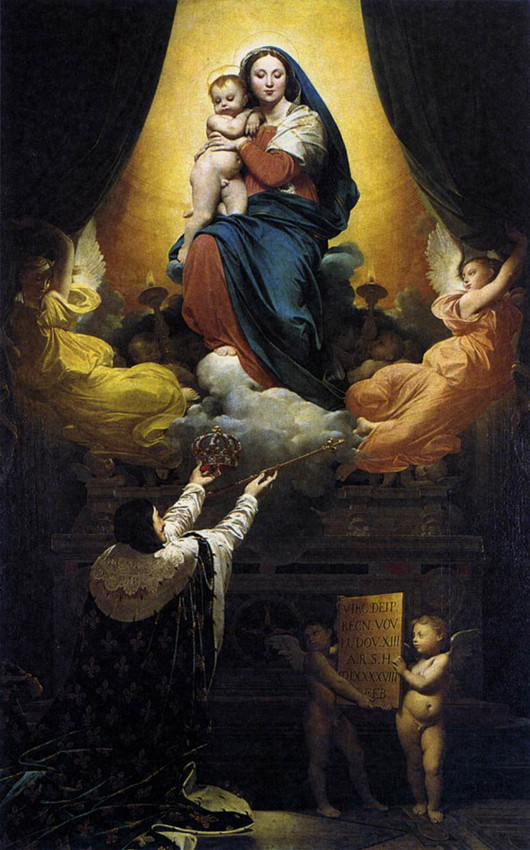
Throughout his career, Ingres kept up a great veneration for Raphael's painting. During his time in Italy he did not hesitate to make a pilgrimage to the places where the painter from Urbino had lived and developed his painting. After his first trip he would go so far as to declare: “For a long time now my artworks have recognised no discipline other than that of the Ancients, that of the great masters of that century of glorious memory in which Raphael set the eternal and irrefutable limits of the sublime in Art. I believe I have shown with my paintings that my only ambition is to resemble him and to carry art on from where he left it. I am therefore a keeper of the good doctrines and not an innovator…” Ingres's first great canvas, El voto de Luis XIII, which would open the doors to his later fame, is without doubt a tribute to Raphael.
Even though it gave him no satisfaction whatsoever and he made a show of accepting commissions reluctantly, Ingres would also become a successful portraitist. The need to fit in with the hierarchy of the painting genres made him try to put off his talent as a portraitist by obligation in order to attain the prestige he wanted as a painter of History. Yet from his first Parisian forays into portraiture, it revealed itself as one of the main foundations of his art and as the ideal vehicle for presenting his aesthetic ideas.
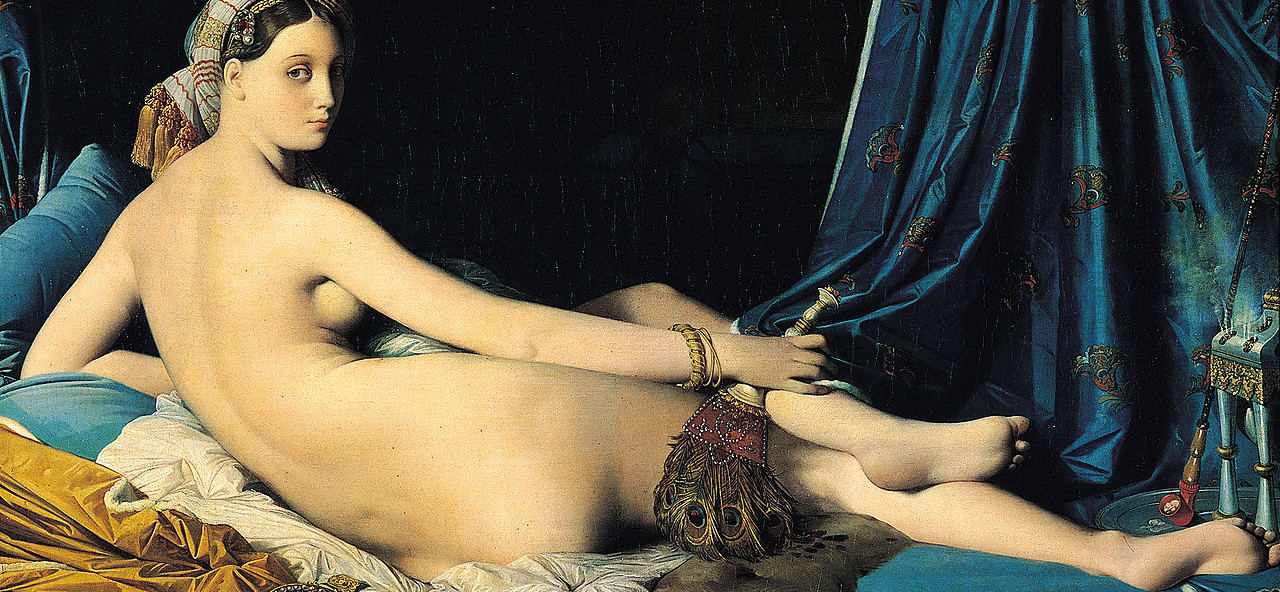
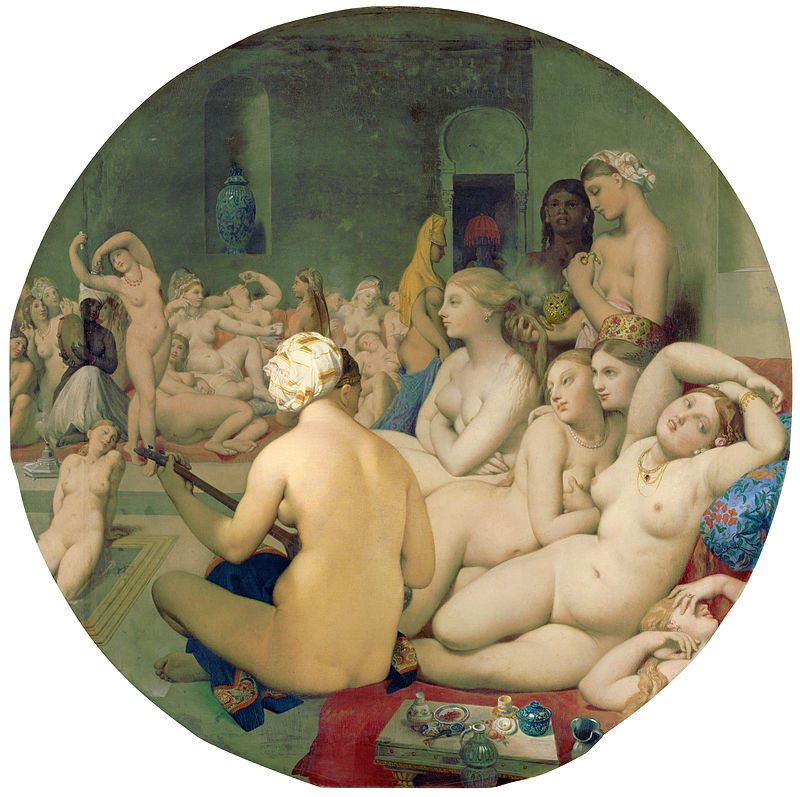
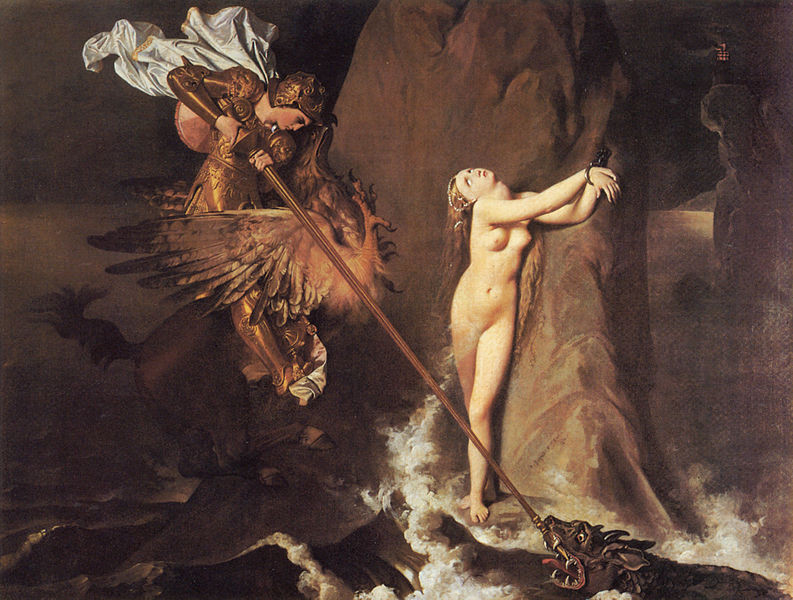
After his return from Italy, Ingres would realise that historical painting would never fulfil the ambitions he had originally placed in it, and he would concentrate his efforts on rethinking his literary and erotic canvases, but above all, and although as we say he never accepted seeing himself as a painter of them, on portraits. Unlike the treatment of the male nude, heroic and martial, that he had learned from David, Ingres entered that genre solely through the pure erotic charge contained in the beauty of the female body, without obeying the aesthetic canons of the academic nude. His Odalisque became famous for being a direct invitation to sensual pleasure. And it is therefore considered the first great nude of the modern tradition. Bound in chains or captive in a harem, his ideal women, morbidly deformed in their contemplative surrender to an unreal pleasure, have been imagined as the antithesis, perhaps the complement, of the virtuous reason that the masculine embodied at the time.
The mature Ingres, who had put up with criticism of his excessive idealism throughout his career, seems to take his revenge now with the realist display of the most mundane details, with the sharp descriptions of the tactile qualities of his models' fabrics, flesh and hair, turning all of it into an artistic marvel without precedent.
Remember that until the end of March the Prado Museum is offering the chance to enjoy, and in chronological order across rooms A and B of the Jerónimos building, the entire artistic evolution of the celebrated French painter, through a rigorous collection that includes, among more than seventy artworks, most of his most outstanding output.

Comments (0)
Log in to leave your comment. Log in