
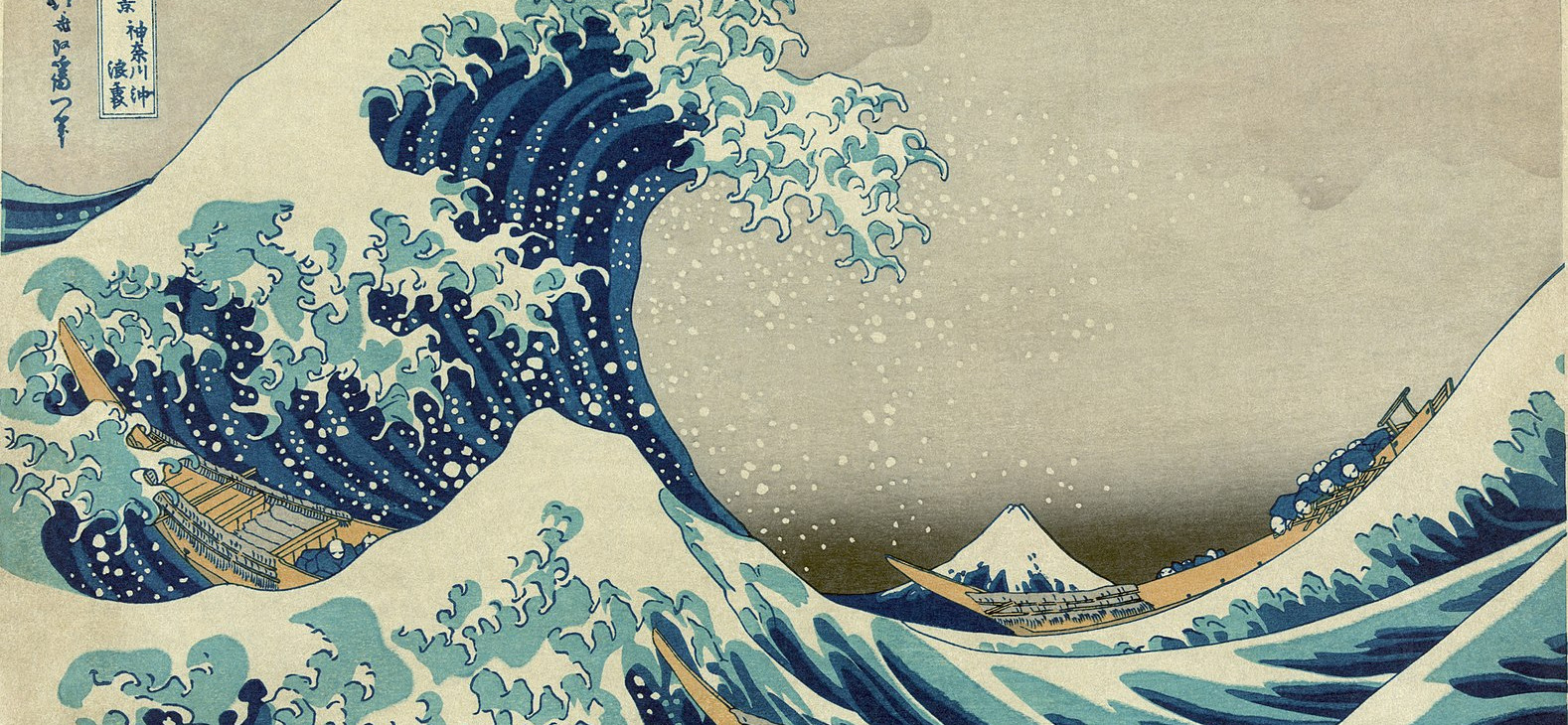
The Starry Night, the Mona Lisa, Guernica, the Sistine Chapel… There are paintings that have crossed the border of art to become popular icons that almost everyone knows. Among them, without a doubt, is The Great Wave off Kanagawa, a print by the artist Katsushika Hokusai that is one of the most celebrated symbols of Japanese culture and hides a fascinating story.
It may well be the most popular print in the history of art. The Great Wave off Kanagawa, about to swallow two boats with Mount Fuji looking on from the horizon, has been reproduced on every kind of surface and decorates walls, T-shirts, fridges and even arms and legs in every corner of the planet. But what is it about this wave that captivates us so much? Why has a simple print turned into a myth?
It's the piece that opens the series Thirty-Six Views of Mount Fuji, published in 1830 in Japan. As the name of the series suggests, Hokusai took Mount Fuji as his motif in these prints. But one of the curious things about The Great Wave off Kanagawa is that Japan's highest mountain doesn't appear in the foreground. On the contrary, it's almost hidden, cut across by one of the boats in the image.
The absolute ruler of the composition is that great wave about to come down on the boats crossing the waters of the Pacific. It's a monster wave, its crest turned into terrible claws about to charge at the long-suffering rowers in the boats who, like little white ghosts stuffed into blue uniforms, look rather sweet in their resigned postures if you look closely.
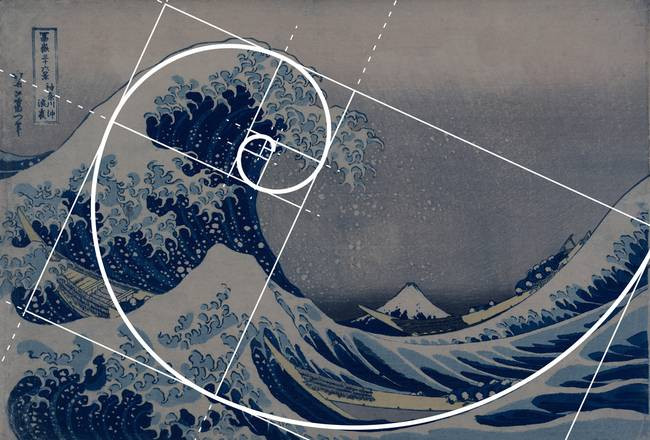
The whole artwork is a marvel of symbolic symmetry. Several studies seem to confirm that Hokusai used the golden section and the Fibonacci sequence to organise the elements of the print in such a way that, subconsciously, the viewer feels an irresistible pull towards it. On top of that, a second wave in the lower part creates another harmony with the image of Mount Fuji in the background. Choosing Prussian blue to dominate the composition chromatically was another of Hokusai's finds. Finally, the details of the foam and the leaden sky help keep the colour balance across the rest of the print.
Among the many readings of the artwork, two levels of analysis stand out. On one hand, the wave would symbolise the unstoppable force of nature, capable not just of bending mere humans but of rising, metaphorically, above a timeless icon like Mount Fuji. On a second level, art historians have wanted to see the monstrous wave as a metaphor for the arrival of foreign powers in Japan which, with their greater political and military might, would be able to bend traditional Japanese culture. Let's not forget we're in the first half of the 19th century, a time when Japan was torn between opening up to the outside world (which would take shape from 1868 with the so-called Meiji era) and isolation in the face of the siren songs coming from Europe.
Be that as it may, The Great Wave off Kanagawa went far beyond Hokusai's allegories to become a landmark for decades. The fact that numerous copies of this print were distributed in Europe helped its fame. And when some Impressionist painters came across this artwork they became the first European artists to be influenced by the culture of the Japanese print.
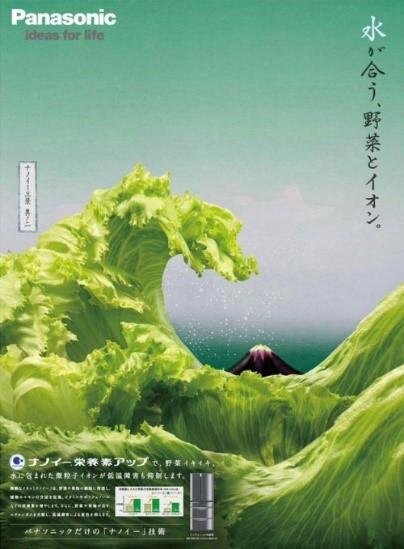
Almost 200 years later, the influence of The Great Wave off Kanagawa has touched all kinds of artistic expression, to the point of becoming a reference for advertising.


Comments (5)
Maribel
May 9, 2022En relación al sentido histórico tiene su porqué aunque luego un siglo después Japón se enmascaró tb como potencia colonizadora, con episodios feroces , que se lo digan a los pueblos del sudeste asiático, muy triste.
Por otra no deja de ser una cultura interesante , lo que tienen de bueno desde luego es muy valorable ... La estética, el minimalismo, el orden, el buen gusto, lo armónico, cierta parte de su dieta , pero incluso esas ciudades macropobladas con frikadas el manga, la tecnología pueden ser interesante, pero yo aprecio más el Japón conservacionista , de la calma, la armonía , la belleza ,naturaleza , esos jardines. Más zen . Saludos y excelente artículo .
Ariel valencia
January 26, 2020Thais De Angelis
September 4, 2023Karina Barrios
January 23, 2020Thais De Angelis
September 4, 2023Log in to leave your comment. Log in