
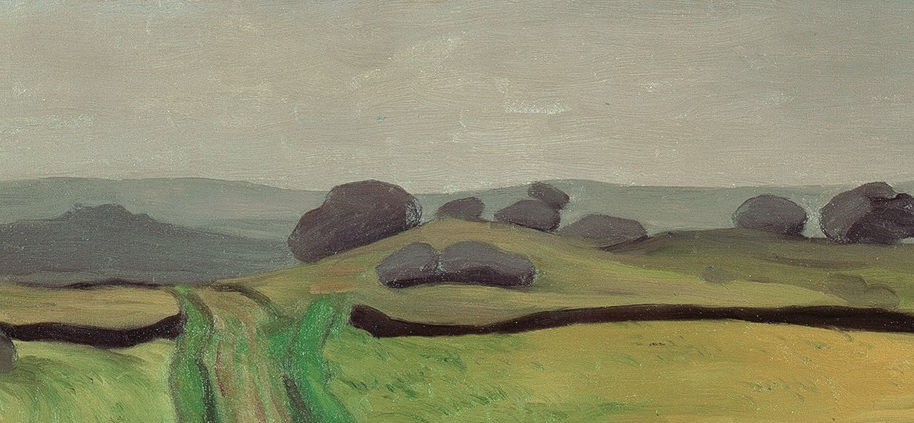
Depicting the edges of the world is a challenge artists of every age have taken on, changing the way we perceive reality in the process. A cross-cutting tour of the subject, with artworks by Monet, Miró, Magritte, Richter, Chagall, Flavin and Ruscha, among others, who, by going beyond their own limits, invite us to do the same with ours
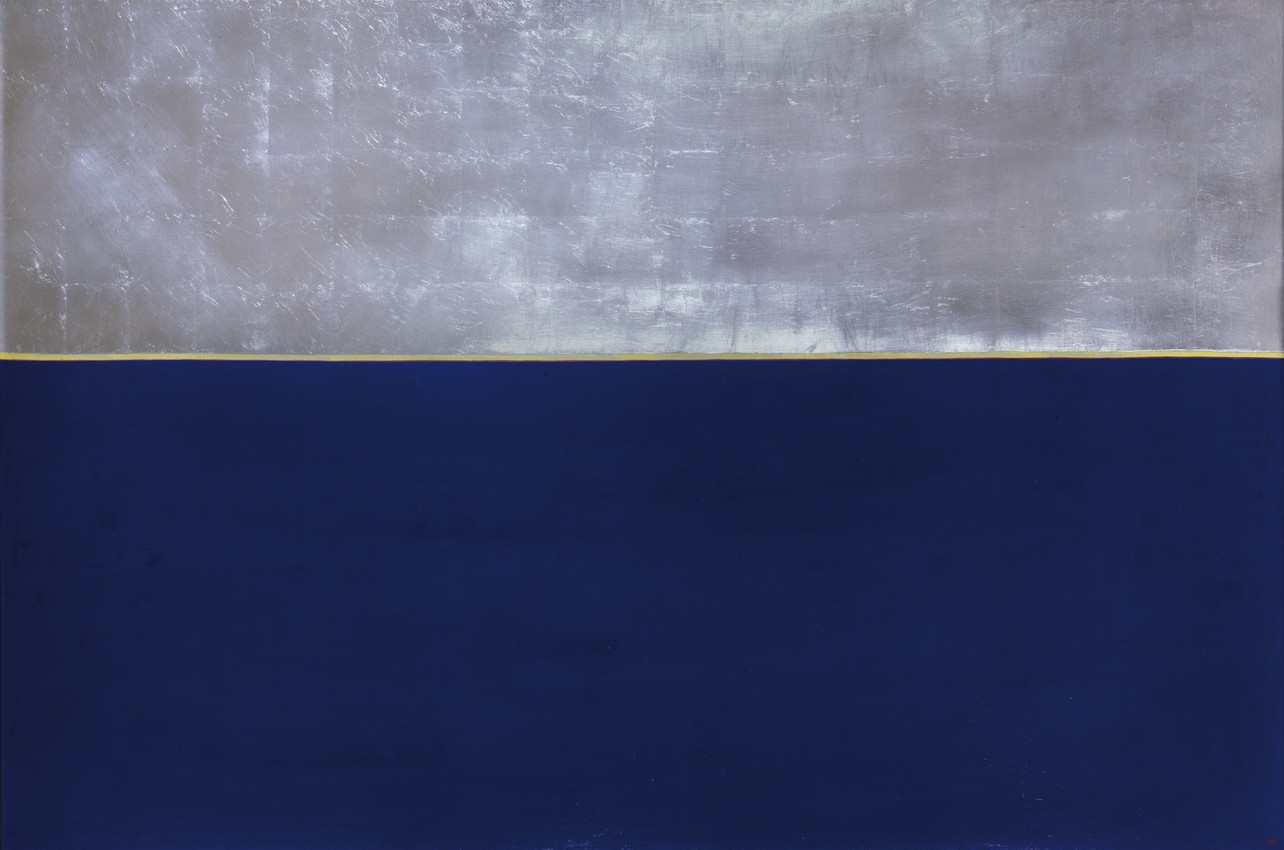
It is arranged as a series of conversations between all of them. It opens with Joan Miró, his teacher Modest Urgell and his disciple Perejaume and their shared interest in the horizon, in order to put forward the idea that for creators, crossing this border is also going beyond the limits that the support imposes on representation.
The next conversation brings together the German, Swiss and Scandinavian artists of Romanticism and Symbolism, for whom the horizon has sentimental implications: the questioning of the human condition, through the sensations aroused by the sight of the landscape and the sublime. They are Arnold Böcklin (his artwork Abetos, from 1849, is the oldest in the show), August Strindberg, Ferdinand Hodler, Gerhard Richter and Anna-Eva Bergman.
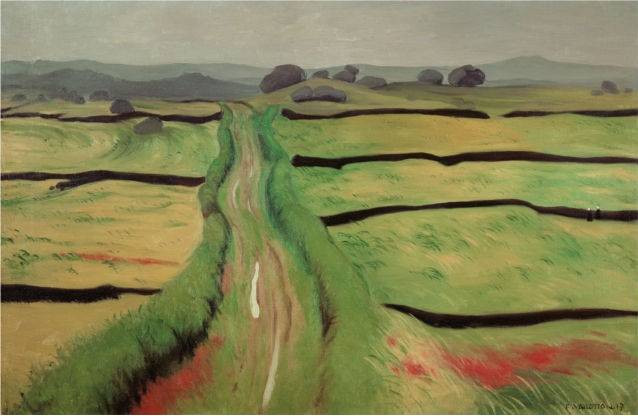
With the 20th-century avant-garde artists based in France, the show looks at how pictorial modernity abstracts the notion of horizon: Édouard Vuillard, Raoul Dufy, Alexander Calder and François Morellet, as well as Kees van Dongen, Pierre Bonnard, Salvador Dalí and Max Ernst, who examine it in the context of seascapes.
The contrast between the Western and Eastern traditions is one of the most interesting aspects of the exhibition. It lets you see how European artists stick to, and even sublimate, the laws of perspective only to dismantle them later, while the Japanese do without them entirely from the start. You can see it in the artworks of Emil Nolde, Max Beckmann, Hiroshi Sugimoto and Yayoi Kusama.
Other notable approaches are those of Ettore Spalletti, Yves Klein and Marc Chagall, with their mystical treatment of the horizontal margin, and the sculptural expression of the horizon, with Chillida and Ann Veronica Janssens and the minimalists Dan Flavin and Carl André. These last two open the American block, made up of Ansel Adams's iconic photographs of the infinite desert, where anything is possible; the intervention in the Californian landscape by Christo and Jeanne-Claude, representatives of Land Art, creating an ephemeral horizon within the horizon; and Ed Ruscha's urban skylines, which conceptually capture the essence of the city and shape its identity.
The show closes with a selection of artworks by René Magritte, Claude Monet, Alphonse Osbert, Olafur Eliasson and Antoni Llena, which sum up the artistic approaches to the subject and invite us to go beyond our own limitations, as creators do, altering the perception of reality. A reality without limits.
More information: Fundació Joan Miró (Barcelona)
Until 16 February
Comments (0)
Log in to leave your comment. Log in