
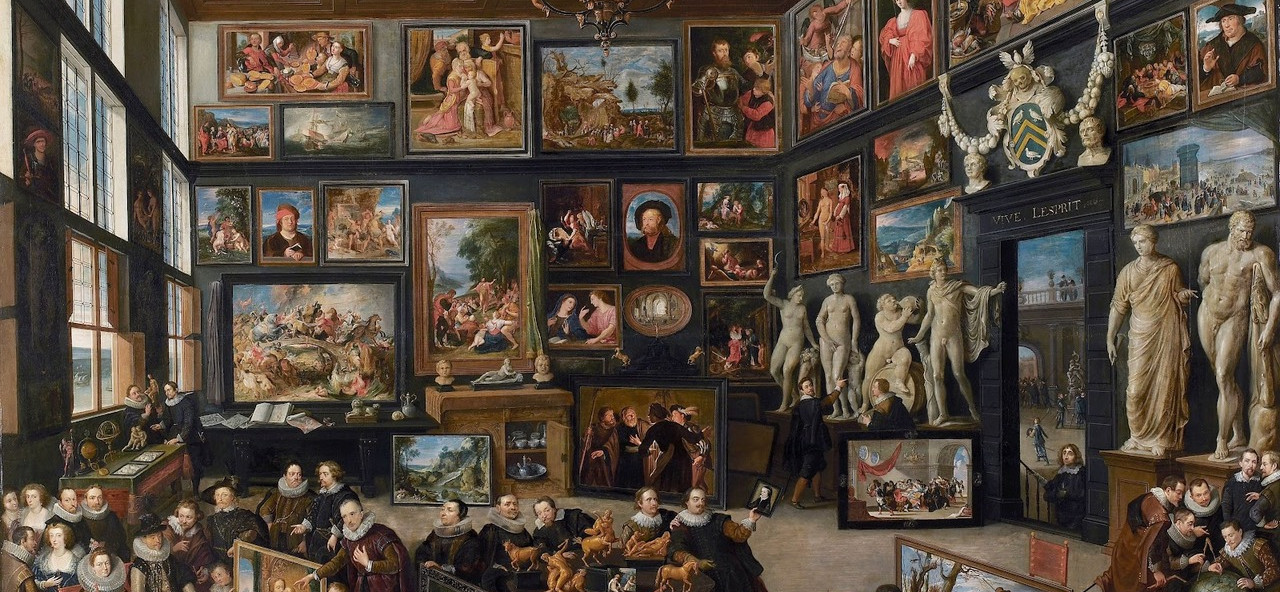
It's time. The doors have opened. We've waited patiently for our turn, longer or shorter depending on how much media attention the artists on show are getting, and also on how much of a tourist draw the museum or gallery happens to be. Well then, aware of our wait and of the road we took, we're finally there. We're inside. The artworks are waiting for us, eager to stir up impressions. But how did they get here? What journey did they follow, in some cases across centuries, to stand there in front of us? In what conditions have they survived? Why are they where they are?
Nothing in the art world pulls in the public like exhibitions. These days they're increasingly defined by being temporary. In an attempt to turn them into unique, spectacular events, within a society hungry for novelty, greedy for urgency and consumption, museums, from the most lavish to the most modest, have converted a good part of their spaces into temporary shows in order to survive. That possibility, in which art comes closer to the viewer since Muhammad has no plans to travel to the mountain, is one of the reasons behind the explosion of exhibitions as a mass phenomenon. As Walter Benjamin pointed out: "bringing things closer, spatially and humanly, is an aspiration of today's masses".
It's well known that the most important museums and art institutions, whether on the main circuit, New York-Frankfurt-Tokyo, or among the European capitals with the longest artistic tradition, Paris, London, Madrid, Barcelona…, carry out constant exchanges, periodically lending each other part of their holdings. However, as we say, this flow doesn't only happen on a grand scale, it's already common practice even among local institutions and exhibitions. From which it follows that not just the upkeep but also the logistics and distribution of artworks has become, in our day, a problem that professionals in the field have to take very seriously.
In that sense, it's important to meet the minimum requirements in the technical conditions under which an exhibition ought to take place, in terms of climate control, lighting and security. There's no arguing that moving artworks around and the mass character of exhibitions send the physical risk to an artwork soaring, which is why the insurance required keeps getting higher, along with the reluctance that comes with it. That fact makes you question how appropriate it is for historical collections to be shown so widely, much as we value the museums' role in spreading knowledge. On this point it's also worth pointing out that big exhibitions are being replaced by "chamber" shows, which make it possible to reframe important pieces from the collection with few, but very significant, loaned artworks, so that the flow of visitors to museums keeps up.
As an example of the meticulous conditions required for an exhibition, let's mention the ideal figures for maximum recommended lighting. For light, the values would be 150 lux (180,000 lux/hour a year) for paintings, and 50 lux (120,000 lux/hour a year) for work on paper and sensitive objects. Let's remember at this point that a lux is the unit of measurement of illuminance, equivalent to one lumen per square metre. Then again, the thermohygrograph readings should sit between values of 18 and 60 per cent relative humidity.
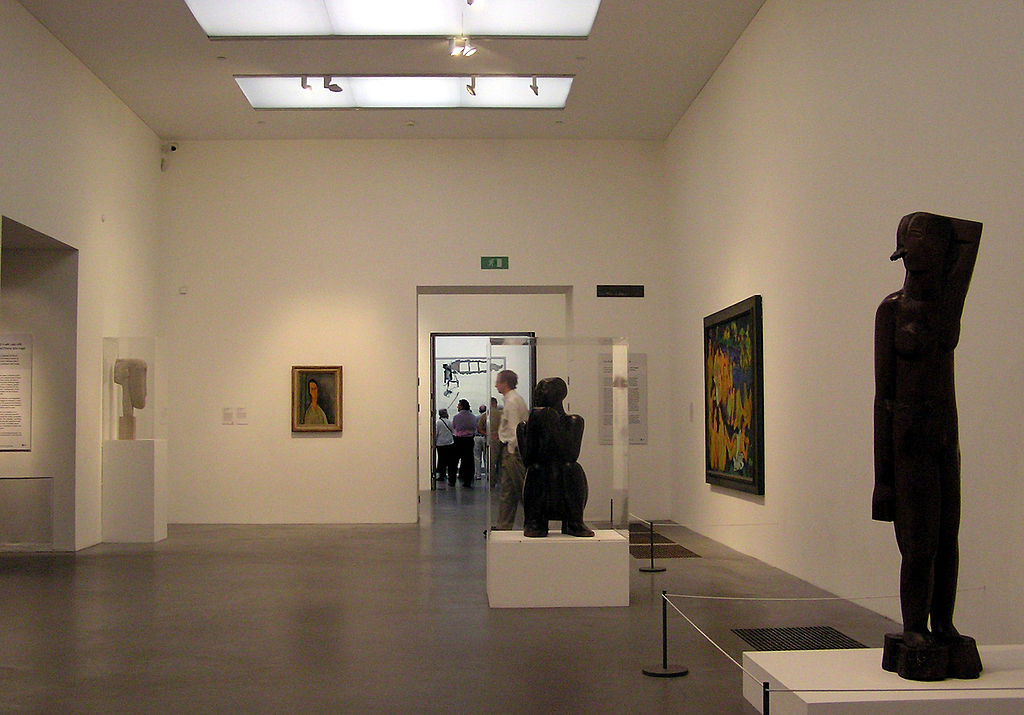
Without losing sight of how important the technical, environmental conditions are for upkeep, the space an artwork is given within the gallery or museum is also especially relevant, almost decisive. The physical dimensions of the object on show already determine the minimum spatial conditions for exhibiting it. Sometimes, above all in our contemporary art, it's the artists themselves who have a very clear idea of how their artwork has to relate to the viewer and to the space and arrangement it occupies. As the experts know well, the results can be very different if you go for a notion of exhibition asepsis or for one of cushioning, in which a supplementary staging is introduced, mediating between object and space. To put it more simply, the architecture of the space occupied is part of the artistic experience of the artwork itself.
Thinking along these lines, the expressionist painter Mark Rothko theorised about the relationship between his paintings and the walls they occupied in exhibitions, and the danger of the two depending on each other as if they were mere decorative areas. In that sense, he gave special importance to the colour of the walls, to the height at which the painting was hung and to how close it was to or how far from the rest of the artworks. As we can see, every detail ends up mattering, to the point of determining and altering the viewer's perception and the way details can distort or help the grasping of the artwork. These aspects have been magnified to such a degree that a good part of art criticism today pays more attention to the installation than to the actual content of the artworks.
These are only some of the issues faced by the people who let us reach, once we're inside the exhibitions, our artistic experiences as viewers. Still, the particulars we've talked about can give us a rough idea of how complex it is to transport, maintain and exhibit artworks. Let's be aware of the problems involved in putting history, experience, perplexity and the mastery of conveying human life through forms and paintings ever more within our reach. Now then, we're inside. We've made it. And let's look at them in the certainty that it's they who have come to watch us go by.


Comments (0)
Log in to leave your comment. Log in