
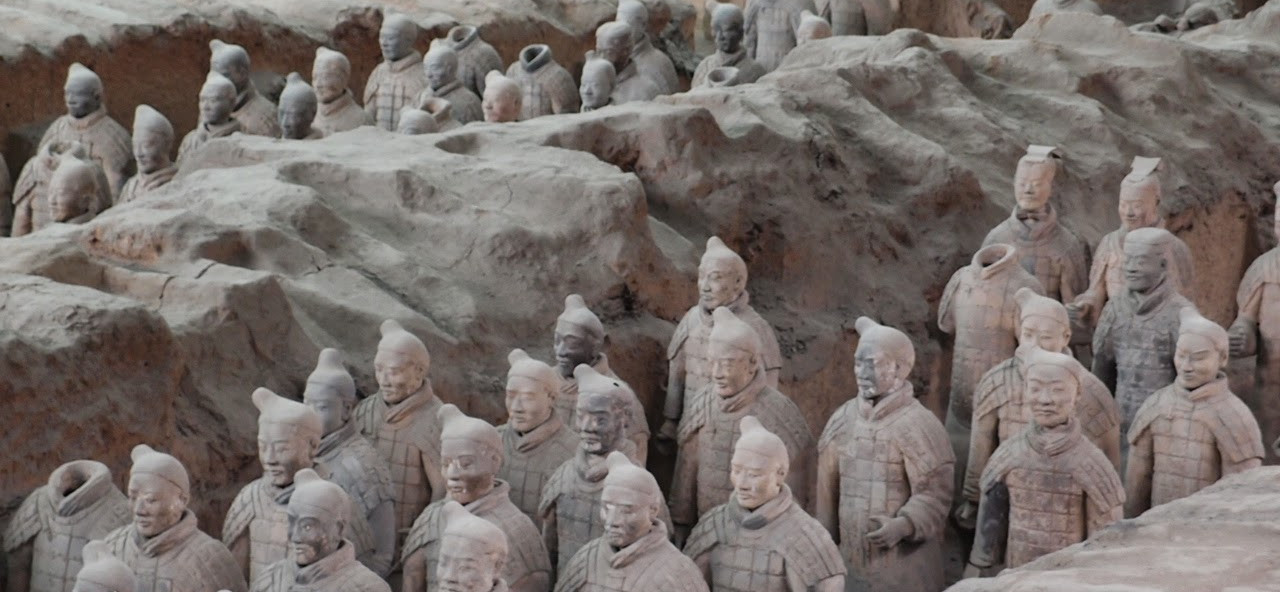
You don't have to see them in the mausoleum of Qin Shi Huang, the Xi'An warriors overflow with mystery, thousands of faces on a single body. The macabre visions we contemplate when we look at these sculptures with a funerary purpose are proof that the Grim Reaper disturbed our dreams in the oldest civilizations just as much as she does today. They are proof of mortality and, in this case, of the ancient emperors' search for immortality. Throughout this feature we'll tell you more about the history of the Terracotta Warriors, which even today remain a supernatural myth that pseudoscience has taken it upon itself to promote with conspiracy theories. As well as telling you about these unproven hypotheses, just out of curiosity, we'll talk about the true story of the Xi'an warriors and where you can see them outside their Asian home. Enjoy!
The myth of the Xi'an warriors
https://www.youtube.com/watch?v=ivZ-lglHNe4The year was 210 BC. Emperor Qui Shi Huang was a fervent believer and his travels had turned into expeditions to Eastern China with a single goal, to find the secret of eternal life. He was so obsessed with eternity that he didn't realize in time that the immortality he longed for was out of his reach. And he died. Of course he died. He died while his starving people were building a titanic work, his brand new mausoleum brimming with sculptures of warriors that were meant to protect him in the beyond. We don't know whether they did, but despite the suffering of his people, forced into herculean labour in exchange for little more than a crust of bread, today we have clear proof that death knows nothing of rich or poor, even if his mausoleum stretches over a kilometre and a half and is guarded by an army of eight thousand warriors.
It was prime minister Li Si who had a great deal to do with the building of Qui Shi Huang's mausoleum, before the emperor's strength failed him. The prime minister's aim was nothing other than to turn Huang into a demigod who would terrify the people in life and in death. The Xi'an warriors had a tough assignment: to protect the Chinese emperor from the twists and turns of death, from the underworld. Still, it's unfair to give all the "credit" to Li Si's ambition, since Qui Si Huang considered himself a descendant of the gods.
The Xi'an warriors: travelling exhibitions and curiosities
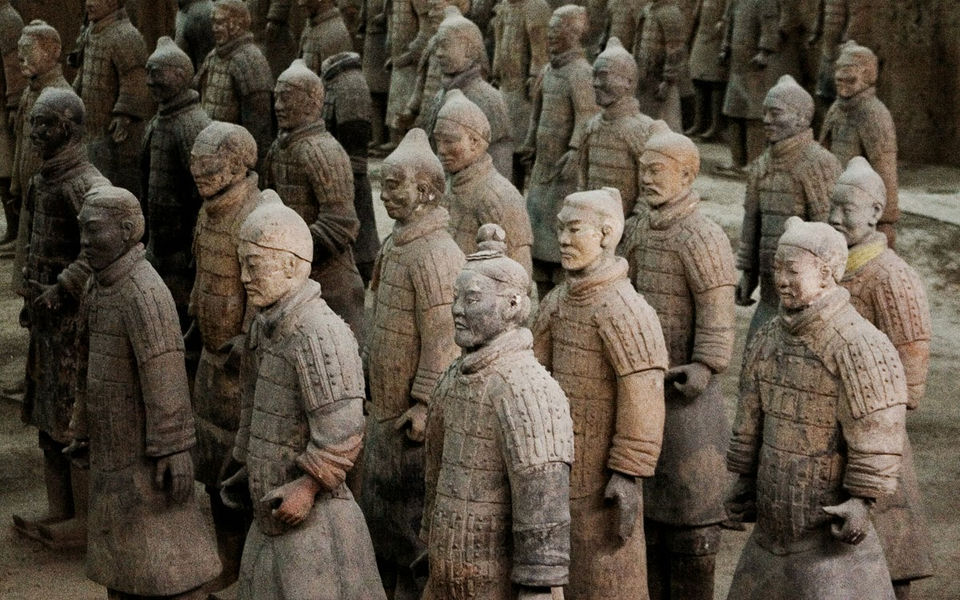
These days, the travelling exhibitions of the Terracotta Warriors come one after another all year round. In fact, until 1 June 2016 Barcelona hosted a selection of the famous sculptures after they had passed through Seville (Muelle de las Delicias) and Madrid. We also got to see them in Bilbao (Guggenheim Museum) and we'll surely have another chance to look at this evidence of the search for immortality that has always defined human beings and that took shape in clay statues more than 2,200 years ago.
The mysteries surrounding the sculptures: who was capable of creating those sculptures and their modern weapons? How did they get there?
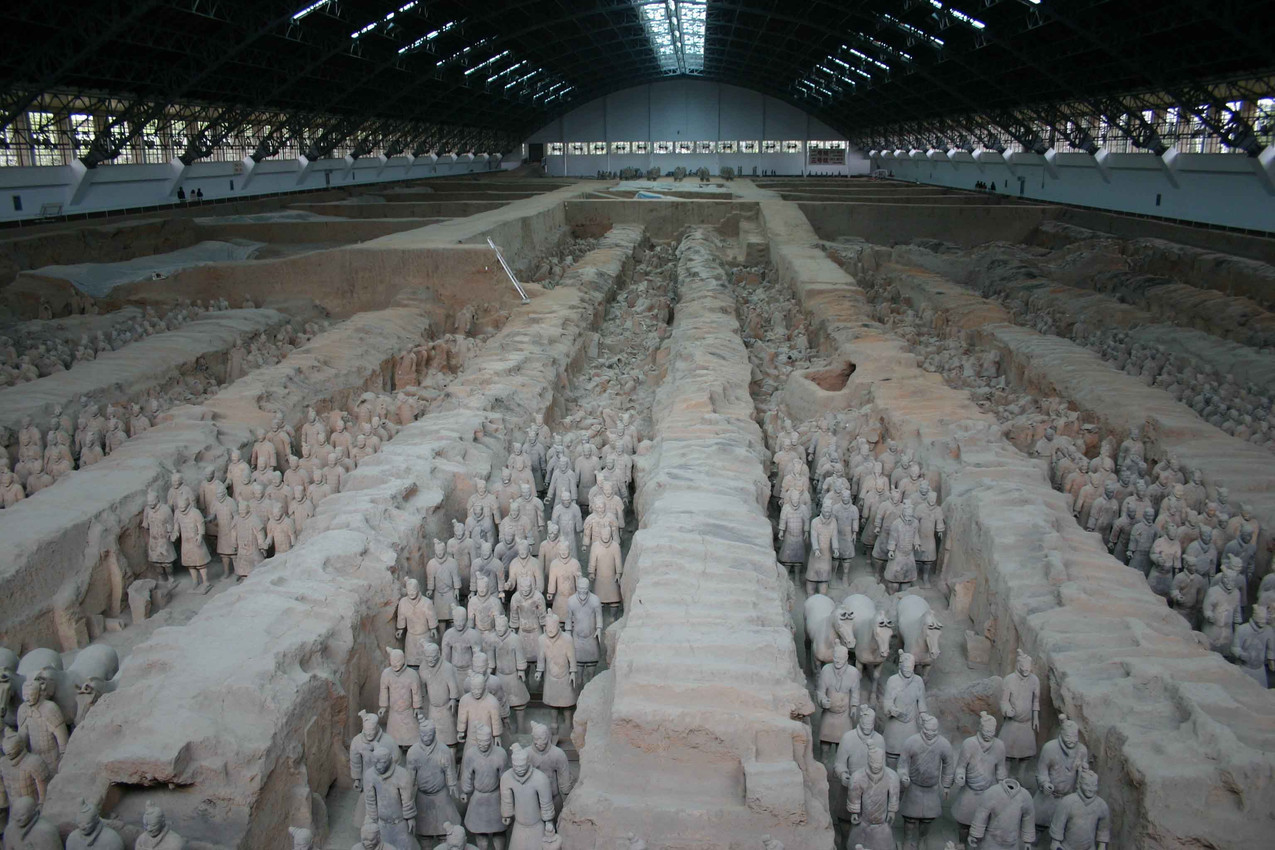
Conspiracy theories keep muddying the fascinating story of the Xi'an warriors. Some of these hypotheses question whether the statues and the mausoleum are real at all. In theory it was a group of farmers digging a well who discovered some of the statues. That was in 1974. However, the area where the mausoleum stood was nowhere near the farms and homes of the people of Xi'an. Add to that the fact that the region is full of underground rivers, so they wouldn't have needed to go so far to dig a well. As for the construction of the whole mausoleum, there are plenty of sceptics who claim that the project really only took a total of 10 years when, given the complexity of the materials and resources used, it should have taken at least three times as long.
These hypotheses, however, have not been proven and are considered pseudoscientific conspiracies. In part, today's society isn't ready to understand that there were different ages on planet earth and that art went through setbacks and advances over the centuries, so the creation of this mausoleum and its great army of warriors is perfectly feasible. What is certain is that anyone who wants to visit the travelling exhibition will find 150 sculptures from the group, transported on huge ships under the most extreme security conditions. All so that we can now witness a piece of the past and, why not say it? Of eternity.
Some interesting facts about the sculptures and the mausoleum of Qin Shi Huang
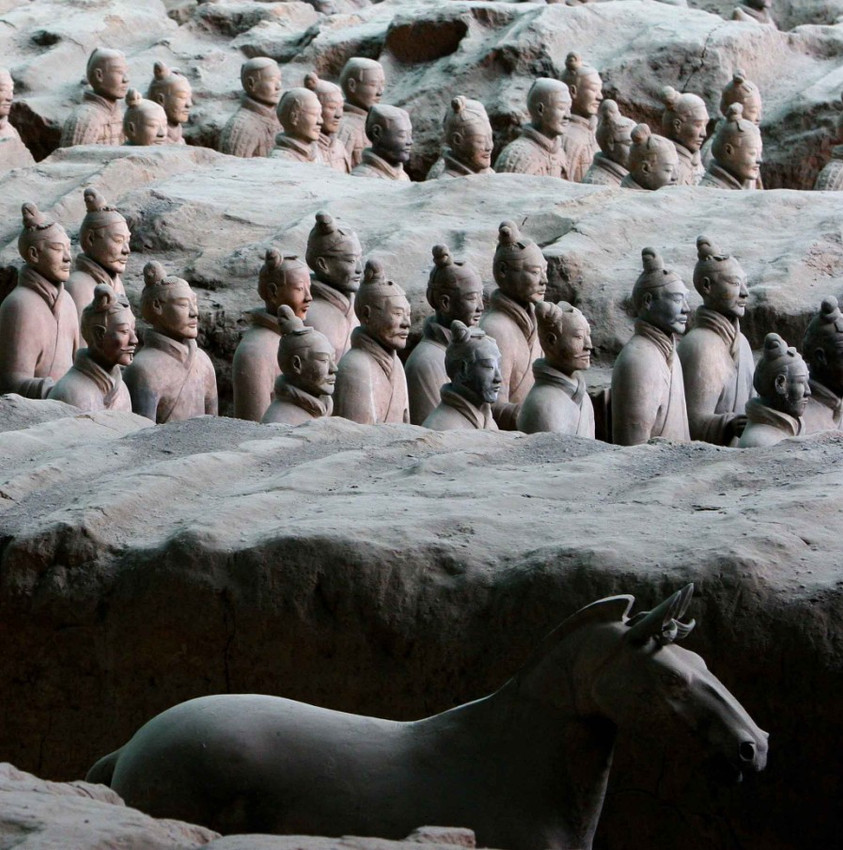
- En total, son más de 8000 estatuas y no todas han sido excavadas aún.
- Muchas de las estatuas están pintadas con colores vivos, lo cuál ha dado lugar a numerosas hipótesis.
- Sus sobrenombres se deben al lugar en el que fueron halladas (Xi'an) y al material que se utilizó para crearlas (terracota).
- Las figuras de los guerreros de Terracota están creadas a tamaño natural y alcanzan los 1,80 metros de altura.
- Uno de los fosos hallados en Xi'an se puede visitar íntegramente mientras que el resto de hallazgos solo se pueden contemplar gracias a las infraestructuras creadas en torno al yacimiento arqueológico.
- En las ruinas hay un hangar denominado Museo de los Guerreros que puede ser de interés para el viajero.
- La mayor parte de las expediciones que se realizaron llevaron a descubrimientos y excavaciones llevadas a cabo por la arqueóloga Xu Weihong y su equipo. Obtuvieron el Premio Príncipe de Asturias de Ciencias Sociales en agradecimiento a su dedicación.
- En Xi'an encontramos un conjunto monumental mortuorio mucho más grande que el conjunto de las pirámides de Giza.
- Hay evidencias de que los guerreros de Xi'an portaban armas en sus brazos de Terracota.
Sources and images: Arqueohistoria ,DOCUMENTALIA , MEP , comunicacionysociedadfvallin , lamasbolano , Nómada , facturandolamaleta .



Comments (0)
Log in to leave your comment. Log in