
Creativity is a word that turns up in our lives every day, but what does being creative really mean? Is everyone creative?
We've gathered some of the theories that think about creativity and offer answers about where it comes from. Where does it come from? Is it worked at, or is it something innate?
In a lecture in 1938, the Austrian writer Stefan Zweig set out what a work of art is, how its author comes to conceive it and build it. Distinguishing two kinds of creative action in his talk. One, born of inspiration, automatically, and another, born of effort, of the persistence that lets an artist improve the work during the act of creation itself, through sketches, notes or diagrams. So arriving at a masterpiece wouldn't be only the fruit of an instant of lucidity.
Pablo Picasso gave the same answer about the part inspiration plays in creativity: "Inspiration exists, but it has to find you working."
Zweig finally concluded that there is no single formula to explain the creative process, but rather that both states combine in the artist, and that's how ingenuity springs up. He does specify that one must possess superior intellectual qualities, presenting a necessary interrelation between genius and creativity in order to reach a unique creation.
The German psychoanalyst Paul Matussek thought differently in La Creatividad desde una perspectiva psicodinámica (1984), for whom the creative act and intelligence have no causal relationship in themselves. Because most of the time, creativity shows itself thanks to intuition, to the need to create something as the solution to a problem.
So creativity would be tied to the potential each person has to create, to discover something new. And that, moreover, will depend on each individual's freedom and technical skill.
In turn, in Art, Mind and Brain (1993), the American psychologist Howard Gardner brought together the many factors at play in the creative moment, highlighting the tension between creativity and experience. That is, the habit of putting the same knowledge into practice can lessen the desire to change the forms one normally uses.
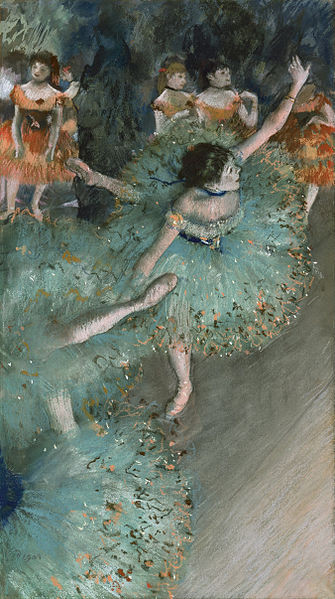
That's why improvisation is considered by many to be one of the leading mechanisms in the creative process. A dialogue that takes place between the artwork and its author and that surfaces beyond the conscious, that is, from the unconscious. Edgar Degas underlined that spontaneous side inherent to creativity: "Only when he no longer knows what he is doing does the painter do good things."
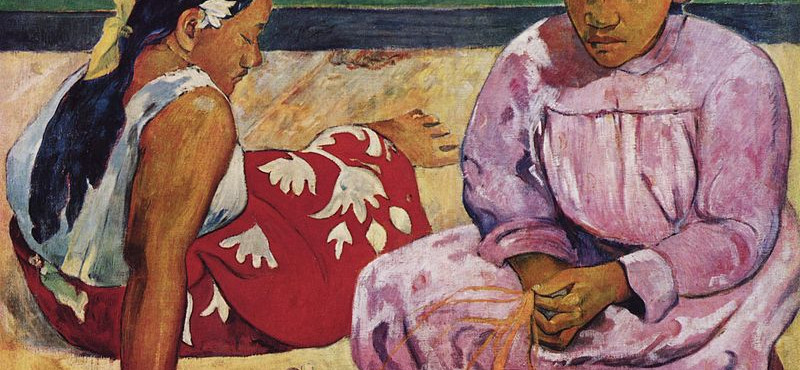
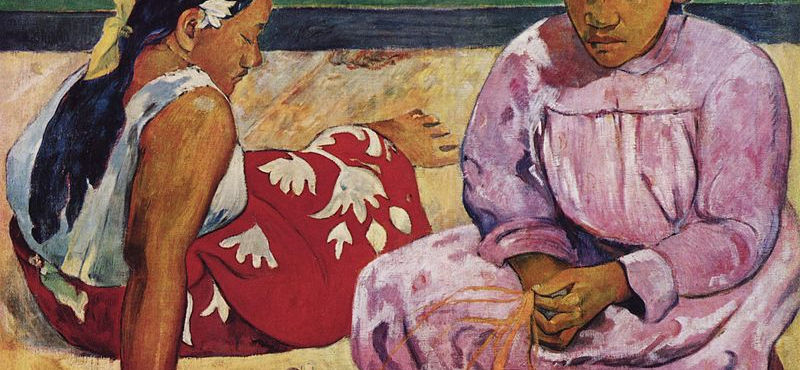
What does seem unanimous is that creativity is intrinsically tied to imagination and to a logic that escapes the intellect, just as happens with the very idea of art. "I shut my eyes in order to see," Paul Gauguin confessed.
Creativity looks for and finds new challenges to face. And it also gives human beings the chance to meet their needs through new and innovative forms.
What do you think? Is creativity worked at or is it something innate? Is it the combination of both states? Does it depend on other factors?
Comments (0)
Log in to leave your comment. Log in