
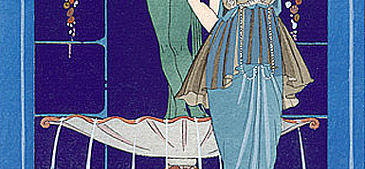
Can the everyday and the functional become artistic material? Art déco answers yes to that question, making it clear that art can be more than just beauty. And it was precisely that bet on function that cost it its place in the history of art.
Déco comes from the abbreviation of the French word decoratif and names the style that emerged in the depths of Paris in 1910 and went on to become the look of the roaring twenties. Its own name, though, would work against it, to the point of demoting it to nothing more than a decorative expression.
The truth is that déco has been seen as something superficial and reduced to a consumer product. Its birth, tied to an episode of industrial design in which the desire to seduce and to bring good taste to everyday objects came to the surface, linked it to consumerism. It steered clear of art for art's sake and of any commitment to breaking with the past, drawing on a wide variety of styles to arrive at its own, such as cubism and Egyptian, Japanese or African art. A current that is hard to classify and that, overshadowed by the movements it lived alongside, lasted thanks to its quality, avoiding being just a passing fad, but whose proposal would never win much recognition.
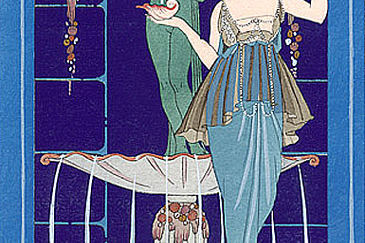
With the exhibition El gusto moderno. Art déco en París, 1910-1935, the Fundación Juan March reclaims its place in the history of art and sidesteps its reputation as mere decorative art, a view that had stripped it of its vital part in the construction of modernity. The show recreates its captivating spirit through more than 350 objects by 122 makers, coming from over 50 collections in Europe and the United States. Among them are paintings, lamps, jewellery, magazines, films, rugs, ceramics, books, wall lights, furniture... Mostly valuable, rarely seen pieces by celebrated artists, and others, also remarkable, by lesser known names. Paintings by Juan Gris, Léger or Picasso, dresses by Jeanne Paquin, the legendary Chanel No. 5 perfume bottle, furniture by Le Corbusier, accessories by Cartier, screens by Albert Rateau and even a corner of the 1931 colonial exhibition or the decoration of the colossal lounges of the ocean liner Normandie.
These artworks reflect how the style evolved up to 1935 and illustrate the union of function and good taste that déco was after. From there, they turned the everyday into art and brought new habits to design and decoration.
It can be visited until 28 June in the rooms of the Fundación Juan March in Madrid.

Comments (0)
Log in to leave your comment. Log in