
The Plague by Albert Camus sold out in bookshops and The Seventh Seal by Bergman as the official film of the quarantine. Europe has been turned upside down in a matter of weeks and many want to know more about those plagues that ravaged our continent in times gone by. The Spanish flu of 1918 rings in the ears of those shut in at home, who are starting to feel the anxiety that always comes with a radical, unexpected change in the way we live.
But humanity has survived plenty of plagues, most of them far more devastating than this one. We turn to painting to try to think about fear, pain and death. Because the only way to get our sanity back and vaccinate ourselves against hysteria is to take a step back, look at history and dodge the over-information virus that is frying brains all over the planet.
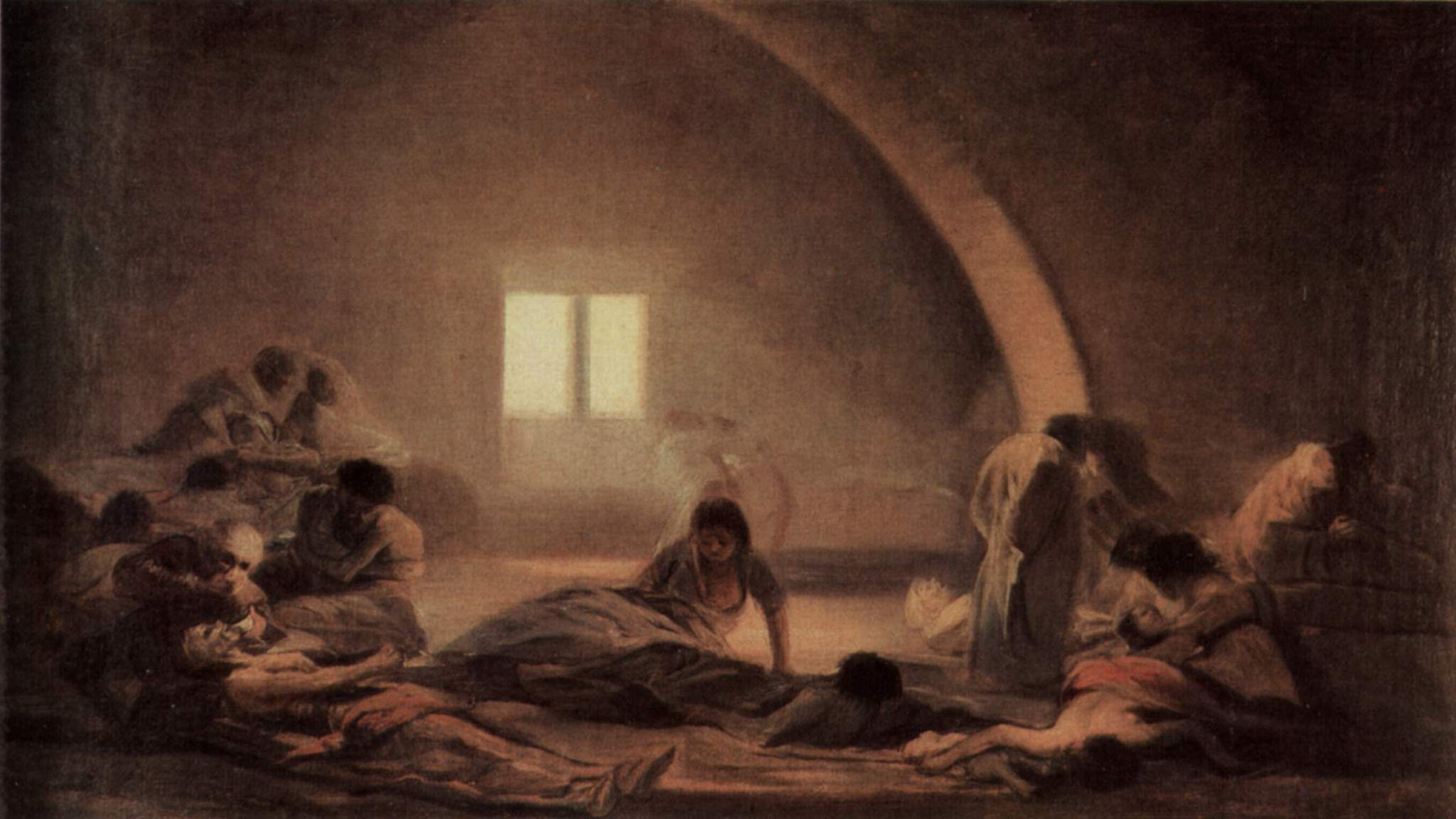
Goya's El corral de apestados almost leaves us breathless, and we've only just begun. Painted by the Aragonese genius between 1798 and 1800, it shows the confinement of a group of sick people in a hospice. No beds, no air and most of them with no hope, waiting for death to arrive while holding themselves up as best they can. Other figures lie on the floor, defeated. The rapid brushwork and the monochrome heighten that dreamlike feeling, a nightmare with the sentence already passed.
We go back several centuries and travel to Italy for a close look at one of the most catastrophic plagues in human history. Although the estimates vary depending on the source, it is said that between 30% and 60% of the European population died as a result of the plague of the mid-14th century: as many as 25 million people in Europe alone.
Although we still don't know which infectious agent caused the disease, there is speculation that the plague spread from Asia along the trade routes. Italy was one of the worst affected countries. In some cities such as Florence it is estimated that only a fifth of the population survived. In Venice things weren't much better.
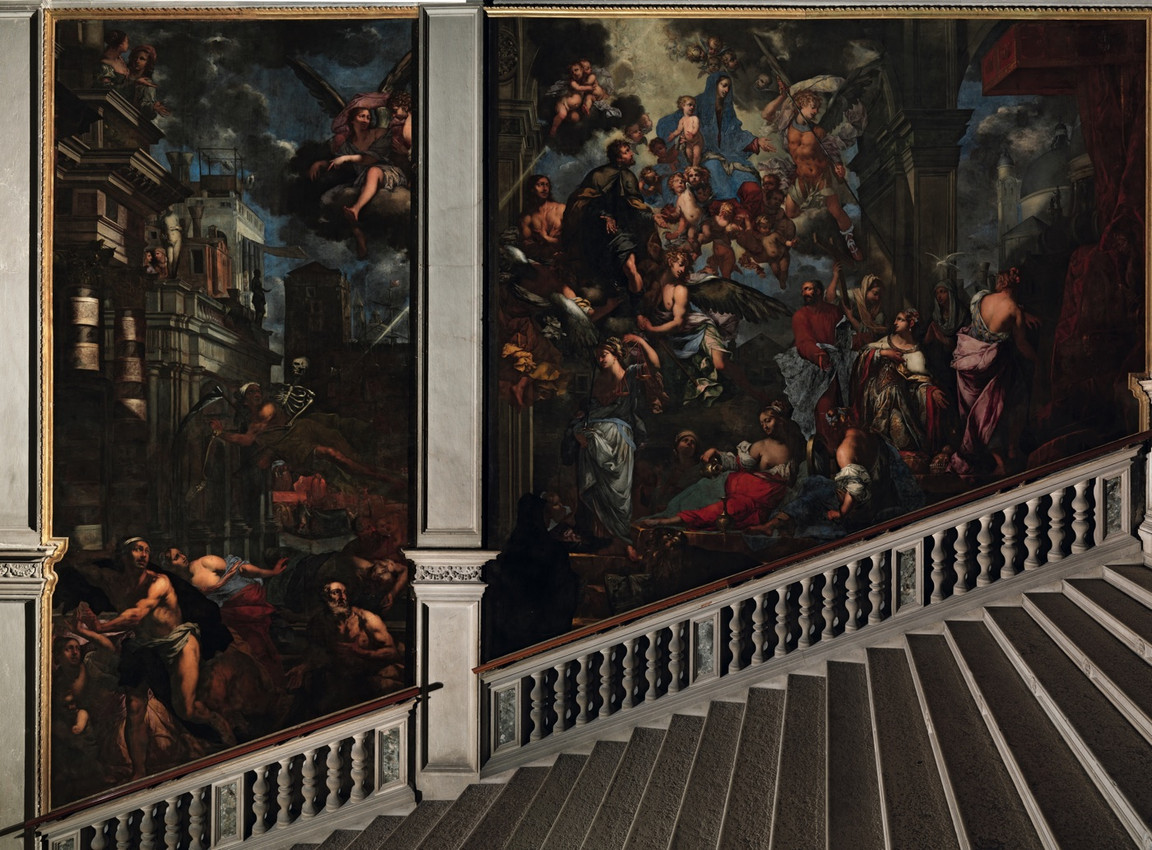
The Scuola Grande di San Rocco in the Italian city was built in honour of the patron saint of plague victims. Saint Roch caught the plague, but he pulled through. A good part of the artistic depictions of the saint dwell on that fact. On the Scuola Grande's staircase connecting the two levels of Tintoretto's Sistine Chapel, one artwork tends to go unnoticed because it doesn't bear the Venetian genius's signature. It is La Virgen aparece a las víctimas de la peste, a thoroughly Baroque artwork signed by Antonio Zanchi in a year with a whiff of the devil about it: 1666.
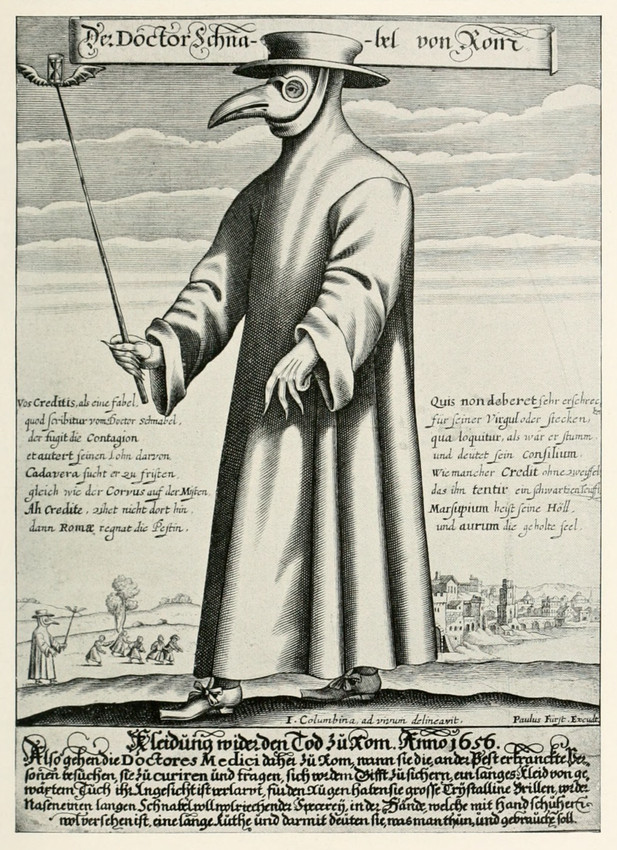
The peculiar nature of Venice, wrapped in canals, made it one of the plagues' favourite victims. It was one of the places where the Plague Doctor started to appear. It is said that from the 17th century onwards many of them began to wear beaked masks in which they kept aromatic substances that supposedly protected them from the miasmas thought to cause the infection. Il dotore della peste was, then, a physician and not a diabolical being despite his appearance, but over time he took on that sinister connotation until he became one of the most common costumes at the famous Venice Carnival.
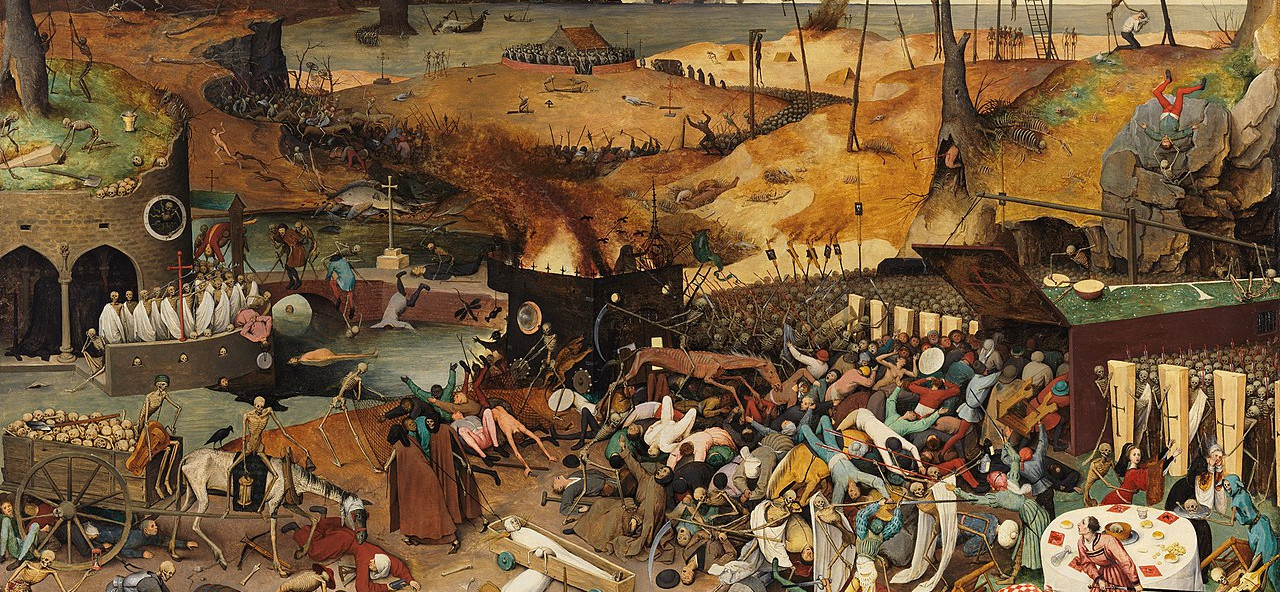
Although it doesn't tell the story of one specific historical plague, The Triumph of Death by Bruegel the Elder, painted in 1562, is another of those artworks that have gone down in history as a metaphor for the terror the disease spreads. Heavily influenced by Bosch, Bruegel takes up the theme of the dance of death, those macabre dances that welcome the guest who never fails to turn up.
We head to the other side of the Atlantic to picture the yellow fever epidemic that devastated Buenos Aires in several outbreaks between 1852 and 1871. The last of them is said to have killed almost 10% of the Argentine capital's population: some 14,000 people in total, a good number of them emigrants from Europe.
For years nobody knew what caused the disease, until in 1881 doctor Carlos Finlay put forward the theory that it was the mosquito Aedes aegypti, known today as the dengue mosquito or the yellow fever mosquito, which is still wreaking havoc in much of the world, as happened with zika fever a few years ago.
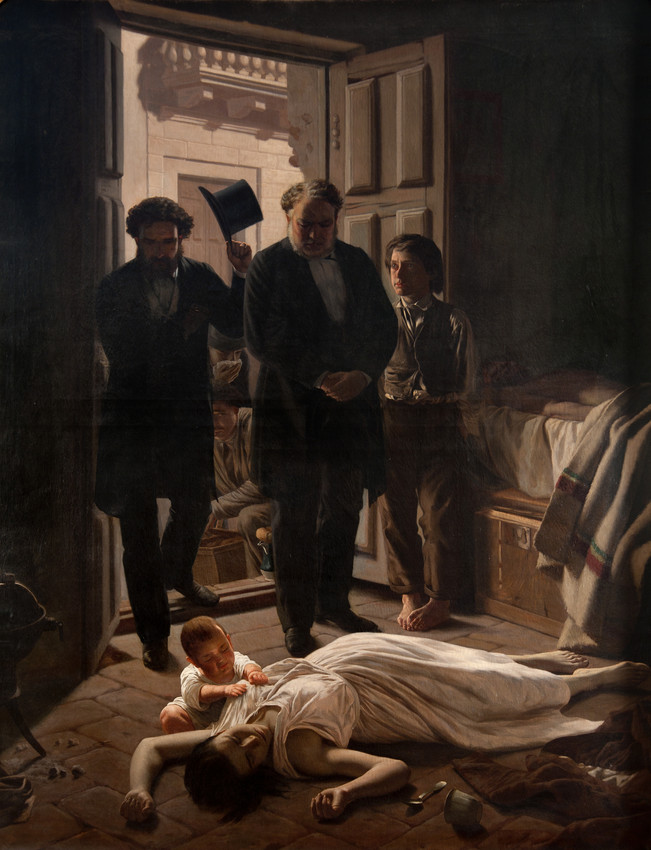
The artwork Un episodio de la fiebre amarilla in Buenos Aires by Juan Manuel Blanes, in the realist style typical of that period, pictures the mystery and the pain of death in the most direct way possible.
The chronicler Mardoqueo Navarro, one of the witnesses of that epidemic, described the state of the city in times of plague like this: "Businesses closed, deserted streets. There are no doctors, the dead go unattended. Whoever can, flees". Maybe the times haven't changed all that much, right?



Comments (0)
Log in to leave your comment. Log in