
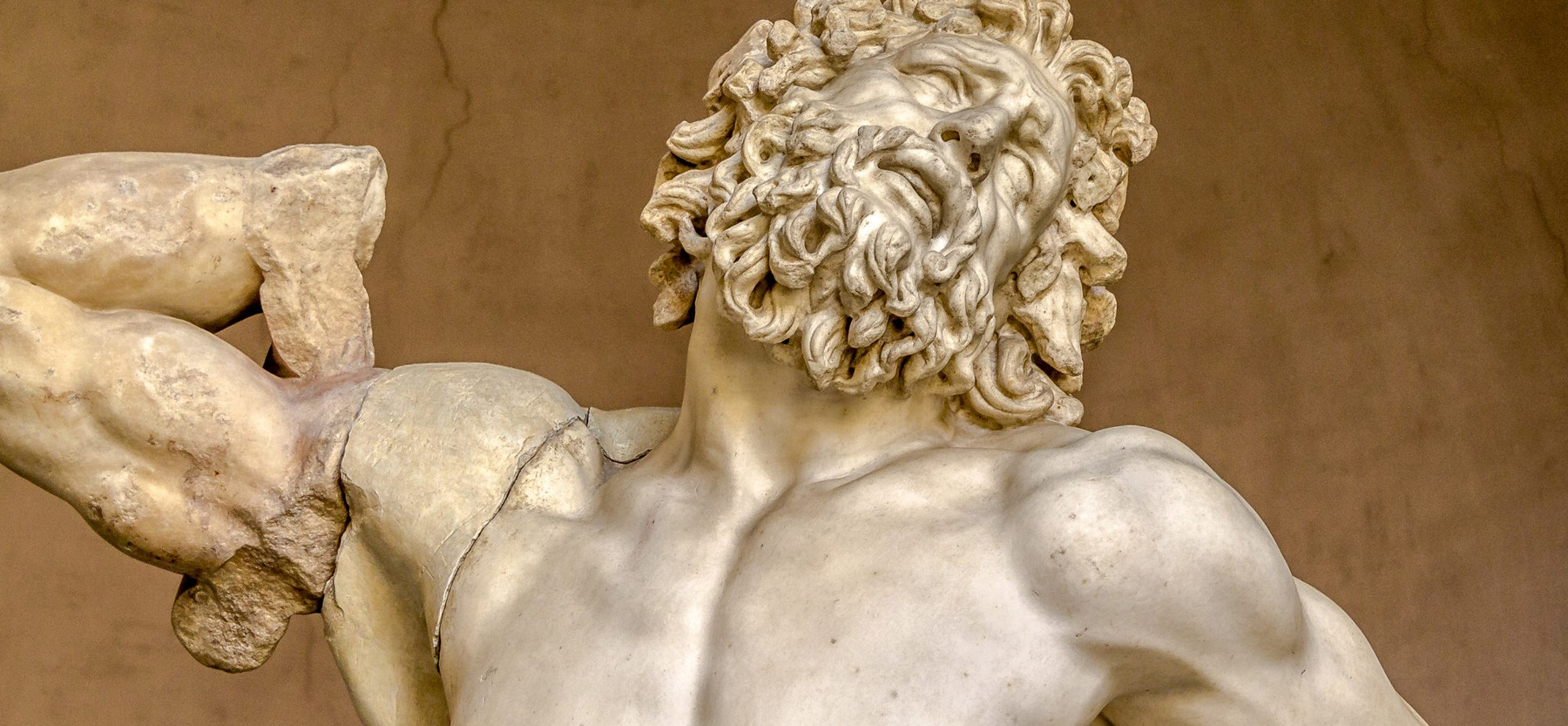
“I climbed down to where the statues were and my father said straight away: “That's the Laocoön Pliny talks about”. So they dug the hole wider so they could pull the statue out. As soon as it was visible everyone started drawing, talking all the while about ancient things”. That's how Francesco da Sangallo tells the story of the famous encounter with the sculptural group of Laocoön and his sons by his father Giuliano da Sangallo and Michelangelo, an encounter that would change the history of sculpture, and of art in general, forever.
1506. Da Sangallo and Michelangelo answer the summons of Julius II, who suspects that the sculpture found in a villa near Santa Maria Maggiore is a unique piece. The Florentine sculptor was 31 at the time and had just been commissioned to design and carve the tomb of Julius II, an unfinished artwork for which his study of the Hellenistic group would be crucial. Three years later, Michelangelo began painting the ceiling of the Sistine Chapel, where he also applied what he had learned from the Laocoön.
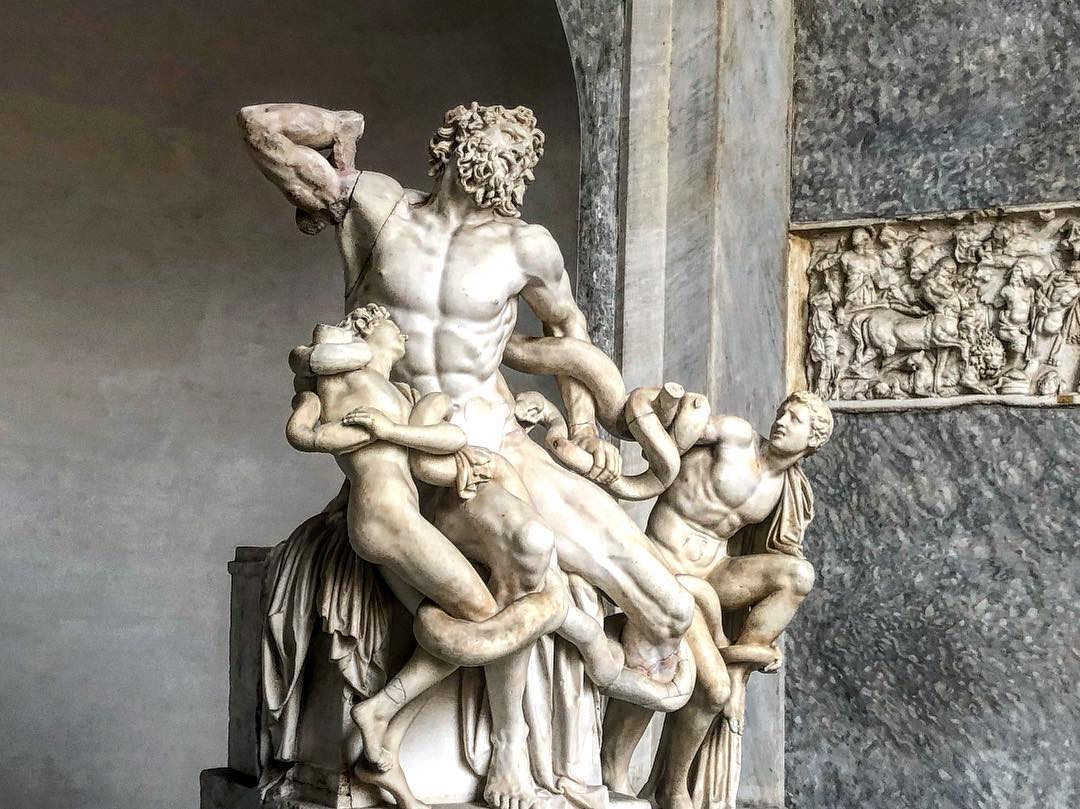
Because the Laocoön was already a famous piece and it didn't even exist anywhere but on paper. The fact that Da Sangallo recognised it after a single glance at the excavations in the villa near Santa Maria Maggiore shows that its fame, acquired through Pliny the Elder's account, was considerable in an age as archaeology-minded as the Renaissance.
“It is to be placed ahead of all others, not only in the art of statuary but in that of painting too”. Pliny couldn't praise it enough as he described the dramatic beauty, the pathos radiating from the suffering figures of Laocoön and his sons strangled by the serpent. It was a legendary sculpture back in the 1st century AD and it became one again in the 16th.
But when was the Laocoön made? The million-dollar question. For decades now, art historians have been arguing about the group's true dating. Just one example: the researcher and art historian at Columbia University Lynn Catterson even hinted that the Laocoön on display in the Vatican Museums is in fact a forgery by Michelangelo himself…
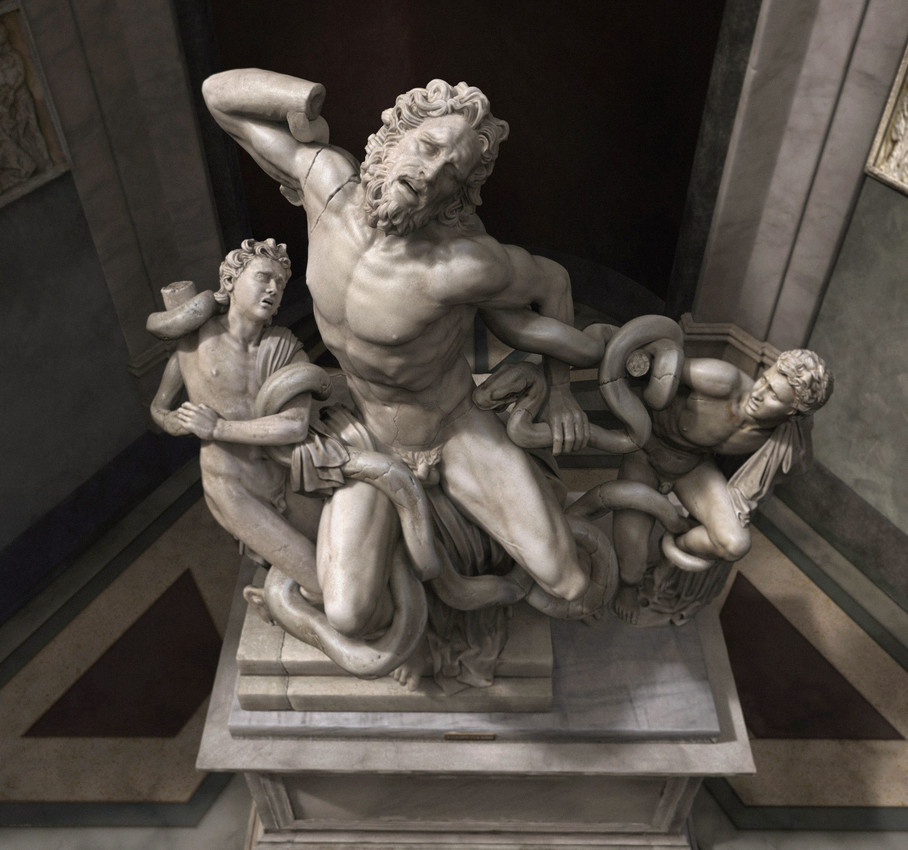
Conspiracy theories aside, the dating with the widest consensus is the one holding that this artwork is an original by the sculptors Hagesander, Athenodoros and Polydoros, carved in the 1st century BC, in the middle of the Hellenistic period. The argument rests on the style, on Pliny's descriptions of the artwork and on other remains found in the 1950s at Sperlonga which resemble the style of the Laocoön. Even so, various historians claim it is a Roman copy of a Greek original or even a Hellenistic copy of an original bronze from the 4th or 3rd century BC.
And who was this Laocoön who earned such a tragic (and legendary) sculpture? He is the protagonist of an episode connected to the Trojan War and told by Virgil in The Aeneid. Laocoön was a Trojan priest who warned his people about the true nature of the horse the Greeks had left at the gates of Troy as a supposed offering to Athena. “Fools, don't trust the Greeks, not even when they bring you gifts!”.
But nobody believed poor Laocoön, who was also punished by the gods for warning the Trojans (the Greeks had the upper hand), gods who sent serpents to devour him and his sons… just in case. The Trojans, who were determined to lose that war at any cost so as not to contradict Homer and company, decided that the death of Laocoön and his sons was final proof that the horse was a sacred image capable of finishing off its detractors. So the city gates were opened to the horse… and goodbye Troy.
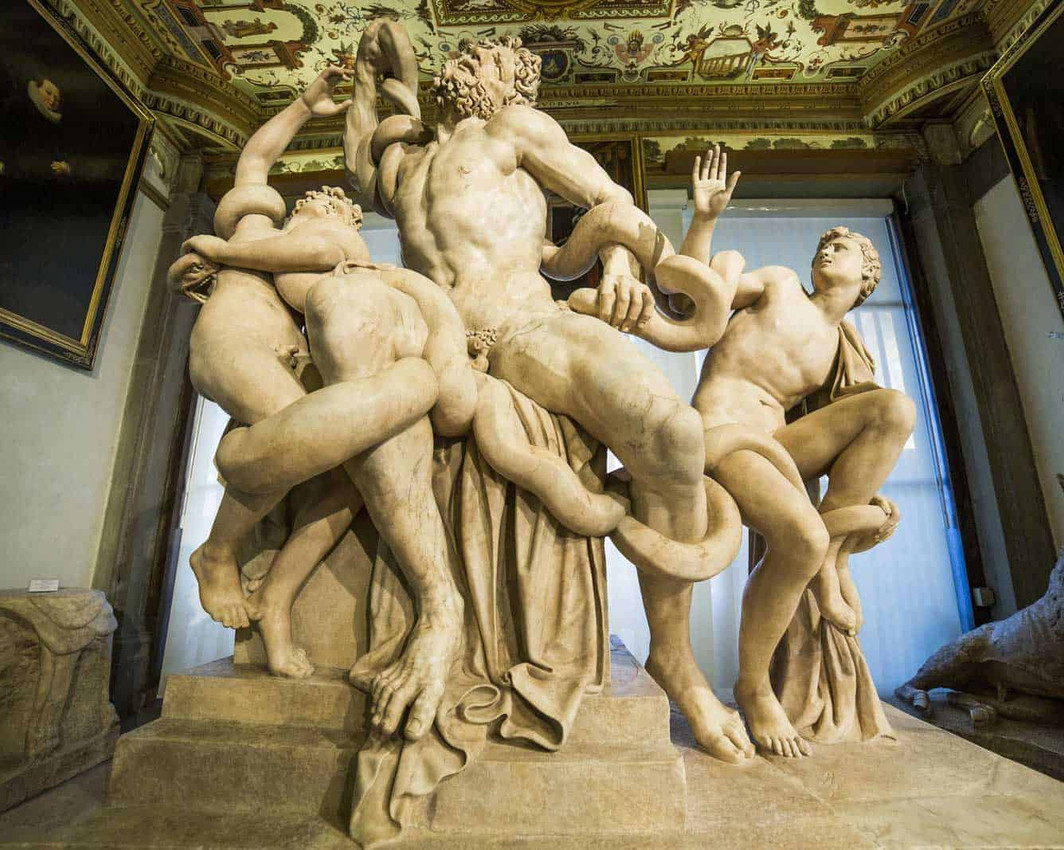
The sculptors of the Laocoön caught the crucial moment of that legendary struggle between the father, his sons and the serpents. The precision of the anatomical analysis of the straining limbs, the faces full of pathos (this is where terribilità begins) and the tragic air of the scene changed the history of sculpture. “From the Laocoön I learned everything I know”, Michelangelo once said. If the most famous sculptor of all time points to this artwork as his benchmark, there isn't much more to add, is there?



Comments (0)
Log in to leave your comment. Log in