
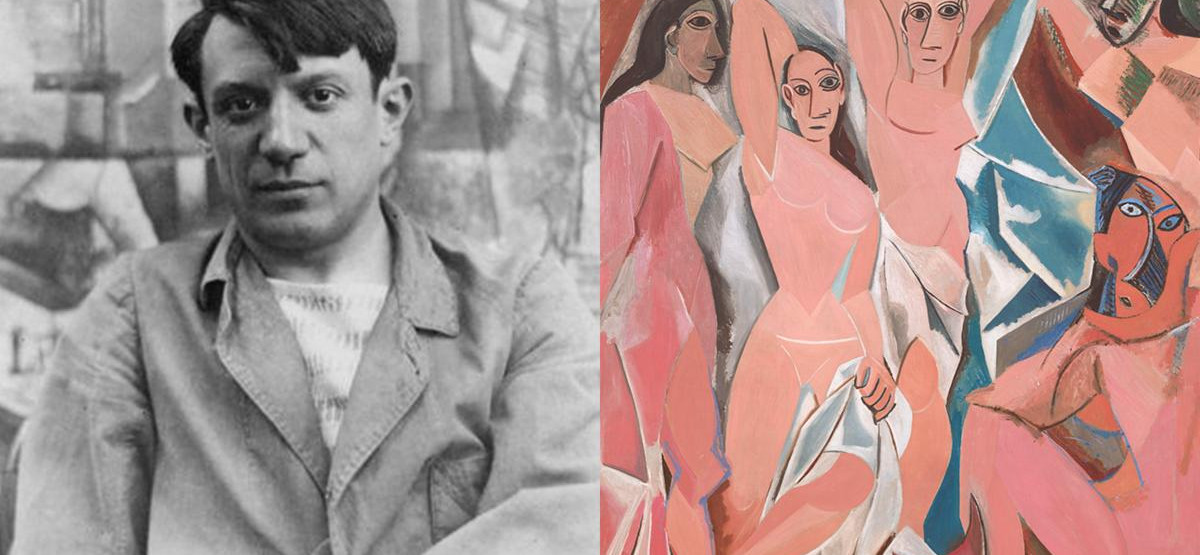
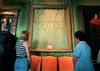
If we were to draw up a list of the most representative paintings of the 20th century, leaving out Las señoritas de Avignon would be unthinkable. The painting Picasso made in 1907 didn't start circulating until several years later: it stayed under the guard of the painter himself, who clearly didn't want to part with one of the most thought-through artworks of his career. But plenty of artists, gallerists and critics already knew it from having dropped by the painter's studios at some point: Las señoritas de Avignon was the seed of the avant-garde, the beginning of cubism.
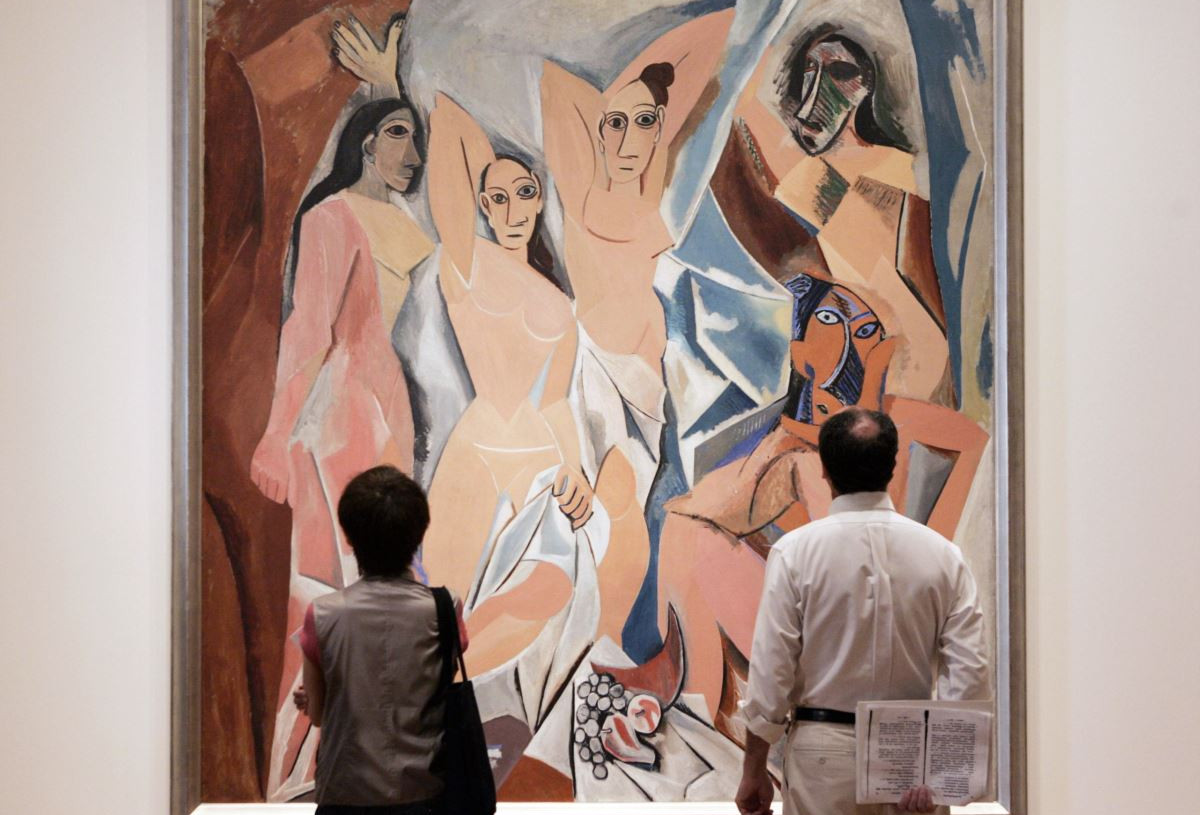
“An outrage, an attempt to ridicule modern art”. Matisse was one of the first to see the painting and to suffer its impact, because Las señoritas never leaves anyone indifferent. Even though Picasso was hardly short on pride, the hammering he took at those first exclusive viewings surely didn't leave him too happy. A year of hard graft and not even your own colleagues appreciate your work. Maybe those first reactions also had something to do with the Málaga artist letting a painting whose moment hadn't yet come rest for a while.
A year and a half earlier, Pablo Picasso begins preparing a large-format painting inspired by his hero Cezanne. It was to be a scene of bathers in which he would carry on exploring the stylization of the human figure, as he had been doing since 1905. But after seeing some prints by Degas he changes the setting: the women will be in a brothel, specifically on Avignon street in Barcelona.
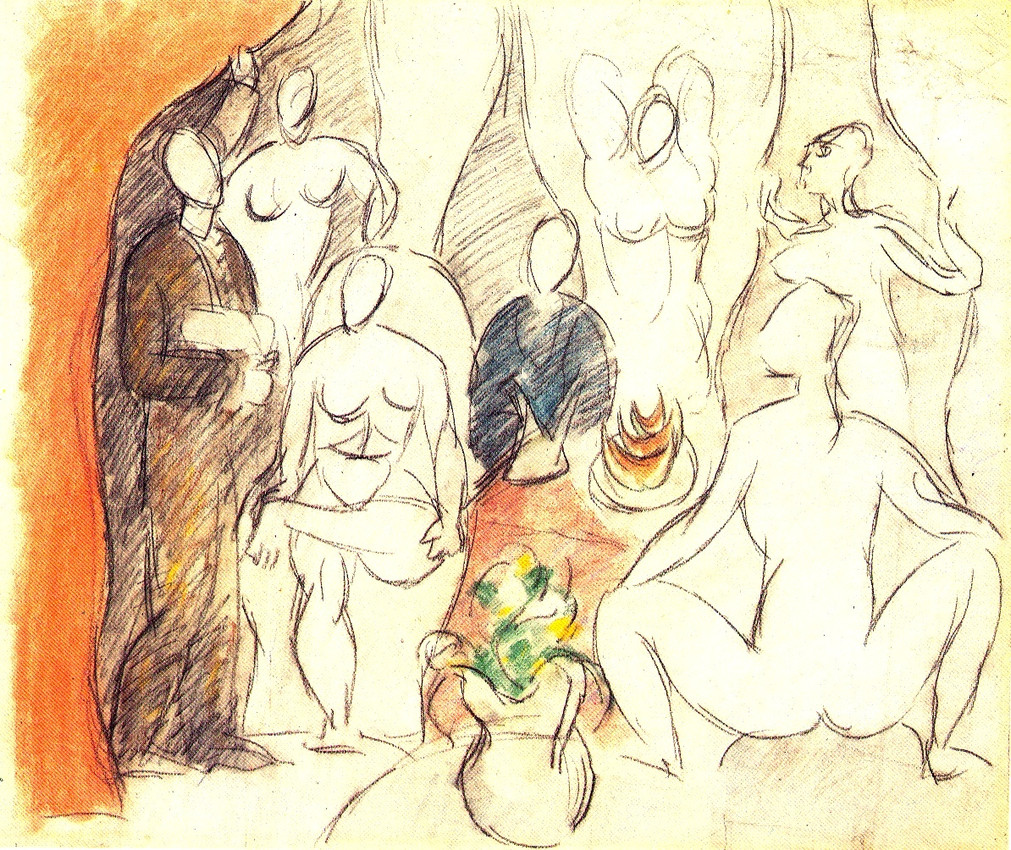
This change of subject may seem of little consequence given that it's the formal side of the painting that ends up turning it into a myth, but there's no doubt it mattered to the artist. Because Picasso made more than 700 sketches during the preparation of the painting: he knew he had in front of him a canvas that could shape his artistic future.
It's through these studies that analysts uncovered his main influences beyond Cezanne, Matisse and other painters who had shown paintings with similar subjects: Iberian art, Egyptian art, African art, primitivism, in short, defines the faces of the women of Avignon. The three faces on the left are related to Egyptian reliefs, while the two deformed faces on the right recall African masks. And in the lower face, the revolution: it is painted from two different perspectives. Picasso tries out cubism for the first time.
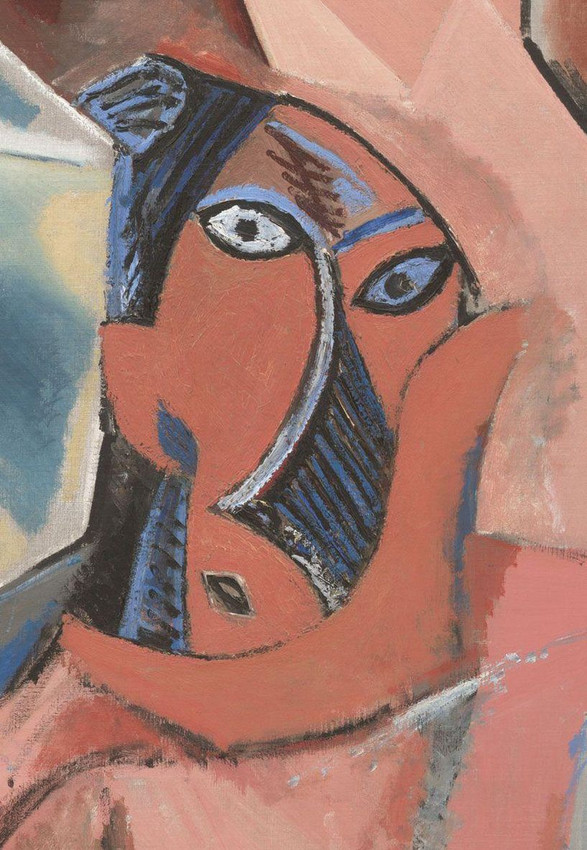
And the thing is that Las señoritas de Avignon are the antithesis of sensuality in the classical sense. The bodies are broken up into facets, they look like sharp, aggressive shards of glass. The fact that they appeal directly to the viewer with that cold, indolent, almost animal gaze, together with the icy unfinished background, also adds to the unease of the voyeur.
There's no doubt Picasso was after more than a new language with this artwork: the subject he chose and his take on it gave rise to plenty of theories, some of them uncomfortable and provocative. It was even said to be a magic talisman against venereal disease. But Picasso never said a word about the symbolic background of the painting.
All in all, Las señoritas de Avignon is still one of the most mysterious canvases of the 20th century. For some analysts it's the story of a failure since, if we read it from left to right, it shows us different formal approaches, as we've pointed out. The figures at either end have little to do with each other. In fact, the painting was never finished, maybe because the negative reactions got to the genius too much, maybe because, after 700 sketches and countless changes to the artwork, Picasso decided Las señoritas were beyond saving. Or maybe because one fine day the Málaga artist looked at it and said "that's it, not one more brushstroke, they'll understand it in a few years".
We don't know whether this lack of stylistic harmony in the painting was deliberate or a stroke of luck, but in the end it has been the main element that turned Las señoritas de Avignon into a myth: this artwork is the hinge on which the painting of the years to come turns, it's the door through which the avant-gardes step into a new language. One single canvas for the past, the present and the future of art.
Comments (1)
Patricia Ortiz
April 5, 2021Log in to leave your comment. Log in