
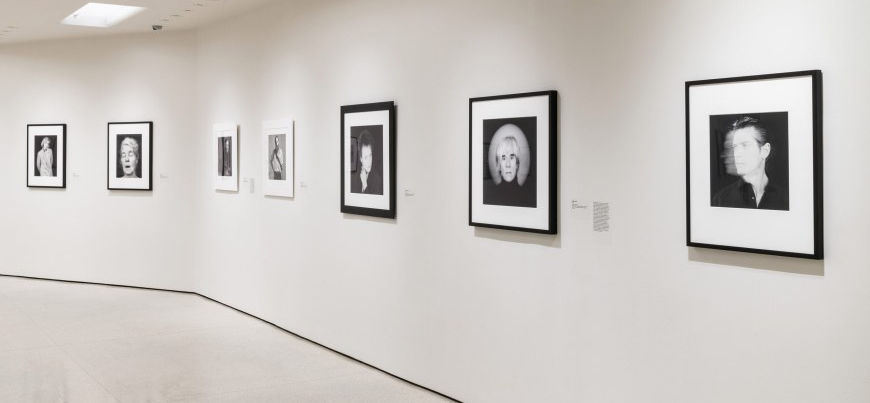
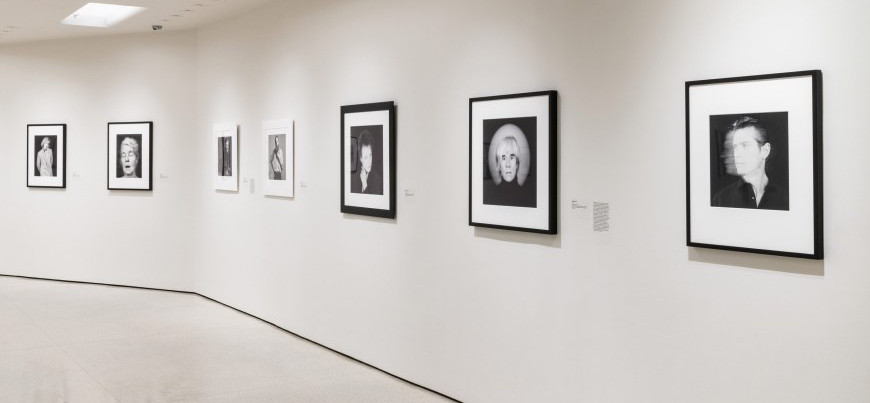
Until 10 July you can enjoy the exhibition Robert Mapplethorpe - Implicit Tensions (I) at the Guggenheim Museum in New York. The first part of an exhibition that is amazing half the world and one of the most eagerly awaited of the year. In 1993, the museum received a donation of around 200 photographs and personal objects from the Robert Mapplethorpe Foundation, which all visitors can now enjoy. The exhibition is organised by Lauren Hinkson, Associate Curator, Collections, and Susan Thompson, with Levi Prombaum, Curatorial Assistant.
Mapplethorpe is still an art icon and in recent years there have been plenty of varied exhibitions and retrospectives of his work. In 2016 two simultaneous exhibitions could be seen in the city of Los Angeles: the first at LACMA, the Los Angeles County Museum of Art, and the second at the J. Paul Getty Museum. In 2014 Paris bowed down to the artist with two exhibitions, one at the Musée Rodin and another at the Grand Palais. Also in 2014, in London, his work was shown at Tate Modern, and in 2013 the Alison Jacques gallery devoted a retrospective exclusively to his work in the world of fashion. On top of that, in April 2016 HBO premiered, with great success, the documentary about his life Mapplethorpe: Look at the Pictures. Shows of the artist's work have been frequent in recent years and now, in 2019, he resurfaces with this big exhibition in New York.
A long-awaited exhibition
Although Robert Mapplethorpe is now a key figure in the history of American art, we should remember that he scandalised the country in the 80s and 90s with photographs of naked African American men and ritualised scenes of sexual domination and bondage. The exhibition also tries to underline his technical skill and that search for perfection. With his work the artist forces us to look not just at those things that make some people uncomfortable, but also at that way of portraying beauty that is harmless and exciting at the same time.
Above all, the aim of the exhibition is to reflect the influence of the controversial photographer's work on contemporary art. Robert Mapplethorpe. Implicit Tensions (I) comes in two parts: the first, the one we can enjoy right now, focuses on the artist's early work. The selection includes polaroids, collages and mixed media artworks, as well as iconic photographs of male and female nudes, portraits, still lifes, self-portraits and underground scenes of New York.
Before he became that controversial photographer, Mapplethorpe was a different, somewhat odd artist who enjoyed portraying different individuals and communities. Thanks to his fame, these photographs have been seen by people who would never even have noticed them.
The second part opens in July and will remain on view until January 2020. It focuses on Mapplethorpe's complex legacy in the field of contemporary art. A focused selection of his photographs will be on show alongside artworks by artists in the Guggenheim collection, including Rotimi Fani-Kayode, Lyle Ashton Harris, Glenn Ligon, Zanele Muholi, Catherine Opie and Paul Mpagi Sepuya.
A controversial photographer
Robert Mapplethorpe was born in 1946 in Floral Park, Queens, into a Catholic family. In the mid 60s he moved to New York to study Art and shared an apartment with punk legend Patti Smith, with whom he began a relationship. In 1970 he got a BFA from the Pratt Institute, Brooklyn. This unusual couple started hanging out in the underground bars of the time, where the artistic society of 70s New York was beginning to take shape. They spent their nights in clubs like Max's Kansas City and the legendary punk-rock space CBGB. Both of them began to move in these avant-garde circles, where the young Robert Mapplethorpe set about photographing the most visible faces of the scene, such as Debbie Harry, Andy Warhol and Grace Jones.
One of the most polemical and controversial American artists of the late 20th century, above all for his daring images, with which he deliberately transgressed social conventions. And also for the censorship debates that kept coming up around his work in the United States during the 1980s and early 1990s.
An artist obsessed with perfection who has become a full-blown cultural icon. His work has been the subject of numerous solo exhibitions since the 70s, among them Robert Mapplethorpe: Photographs, Chrysler Museum of Art, Norfolk, VA (1978); Robert Mapplethorpe, Centre Georges Pompidou, Paris (1983) and Robert Mapplethorpe, Whitney Museum of American Art, NY (1988). From recent years, the exhibitions Robert Mapplethorpe and the Classical Tradition: Photographs and Mannerist Prints, Solomon R. Guggenheim Museum, New York (2005) and Robert Mapplethorpe: The Perfect Medium, J. Paul Getty Museum, Los Angeles and the Los Angeles County Museum of Art (2016), which we've already mentioned, stand out.
Robert Mapplethorpe died in 1989 from complications of AIDS and has since become a myth for the art world. His many self-portraits can be seen in this exhibition. Among them the well-known final self-portrait taken before his early death, in which he grips a cane topped with a skull, his own gaunt face against a blurred background.
His influence on the art world has been decisive and his great contribution was to raise photography to the status of art. An artist like no other who devoted his life to seeking out experiences and emotions by constantly challenging cultural and artistic norms.
https://www.guggenheim.org/exhibition/mapplethorpeRobert Mapplethorpe - Implicit Tensions (I).
Guggenheim Museum, New York.
Until 10 July.
The exhibition comes with an extensive programme of activities that can be found on the website, such as a tour of the show with Levi Prombaum or private visits.
https://www.youtube.com/watch?v=Dm7KE1PTD9c
Comments (0)
Log in to leave your comment. Log in