
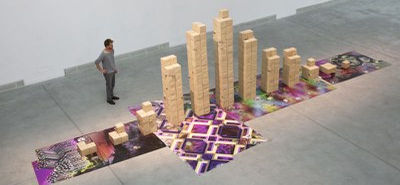
The writer Claudia Giannetti was very clear about it in her book Estética Digital. Sintopía del Arte, la Ciencia y la Tecnología (2002, p. 8, L´Angelot), calling Media Art “an integral part of the very context of contemporary artistic creation. Using the term “media” is a device for distinguishing them (and not separating them) from the artistic expressions that use tools based on electronic or digital technologies”. What becomes clear when we read this definition is that New Media Art is not an artistic movement but a form of art that can only be understood through its technological context. Right now you can find art for smartphones, art created with Artificial Intelligence or through 100% digital tools. New Media Art also takes in interactive art, telepresence, virtual reality and video performances, among many other artistic expressions that anyone will surely have come across in the most unlikely places because, while it is true that it belongs more to museum exhibitions, these days we can see video art or telepresence on screens in bookshops or clubs. Creativity takes to the streets with New Media Art!
The background of New Media Art
Although other antecedents are described, such as Stridentism (a movement that emerged in Mexico) or conceptual art, the parents who were really the forerunners of New Media Art were, without a doubt, Pop Art and Dadaism. These two movements, which have nothing in common beyond extravagance and provocation (they were in fact absolutely different currents), shaped the idea of New Media Art.
Dadaism, for its part, contributed its political side and its performances, as well as alternative methods of creation marked by collage or decollage. Contradictions, social criticism and parody are also part of NMA. Pop Art, on the other hand, brought in new “surfaces” on which to make its art, stepping outside the classic oil on canvas.
NMA had its first expressions in the Happening, Fluxus (popularised, by the way, by Yoko Ono) and video art. Feminist art and Land Art coincide with New Media Art in the 70s and feed off each other, forming part of a whole that culminates in performance art.
What's new in New Media Art?
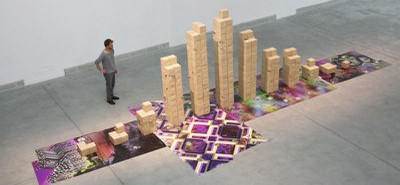
The identifying trait of New Media Art is change, and perhaps that is why we should not lose sight of a form of art that is everywhere. NMA crosses the boundaries of the museum, even if artworks like “Primer Diagnóstico Taxonómico” by Enrique Radigales fall within this way of making art. Robotic technology has also made it possible to create musical works or paintings, so we are talking about Artificial Intelligence taking over from New Media Art.
Unlike classical painting or sculpture, which were individualistic in the way they were carried out, the traits that define New Media Art are shared participation and appropriation, seen not as plagiarism but as the amplification of a message.
Really, and as we were saying earlier, New Media Art is not an artistic movement in itself but a way of conceiving art that takes in the whole space. We move from creating something from scratch to borrowed art being perfectly welcome.

Comments (0)
Log in to leave your comment. Log in