
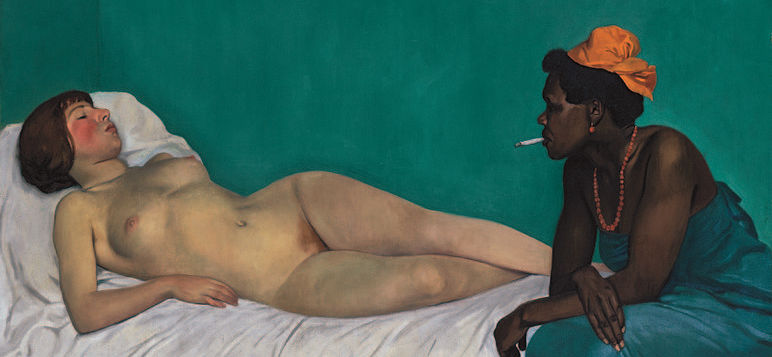
Originality is one of the traits that define the artwork of the Swiss-born artist Félix Vallotton. His roughly 1,700 oils, 250 engravings and countless illustrations make up a body of work impossible to label under a single premise, beyond idealism and the purity of line and colour.
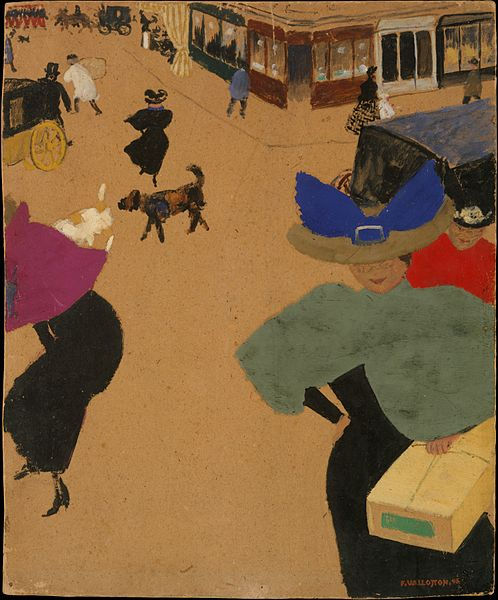
Félix Vallotton (Lausanne, 1865 - Paris, 1925) was born in the Swiss city of Lausanne and settled in Paris at sixteen, the place where he built his artistic career. He joined the group of post-impressionist painters known as the Nabis, who at the end of the 19th century championed the dominance of colour and its liberation from gradations and shadows so it could be enjoyed in all its authenticity.
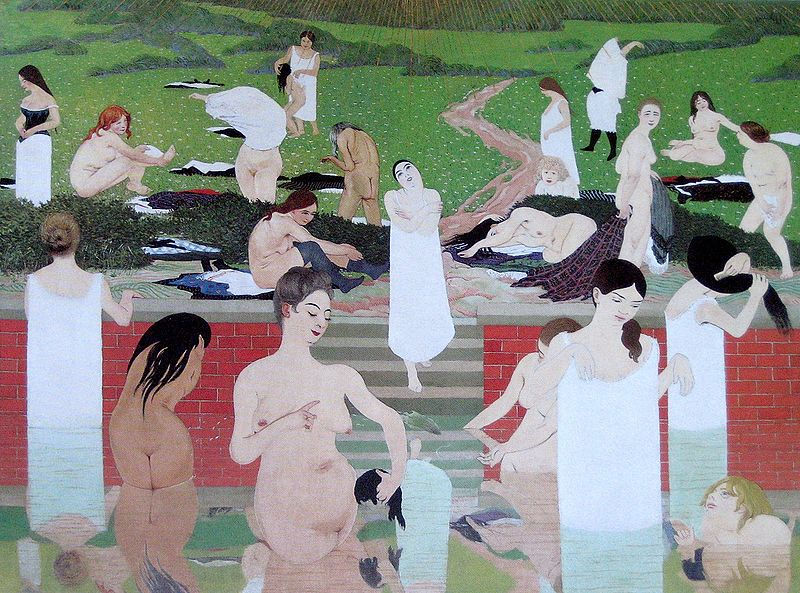
He created a painting in which the delicacy with which he deforms matter, especially the human body, bringing out the expressiveness of his figures' gaze and the subtlety of their hands, sets the rhythm of the composition. These are usually landscapes and bourgeois, domestic scenes loaded with tension and melancholy that reveal the painter's aesthetic, social and political reflection. And which, in most cases, were conceived with an eye on primitive references, flat perspectives and his photographic gaze, drawn to the spontaneous and the natural.
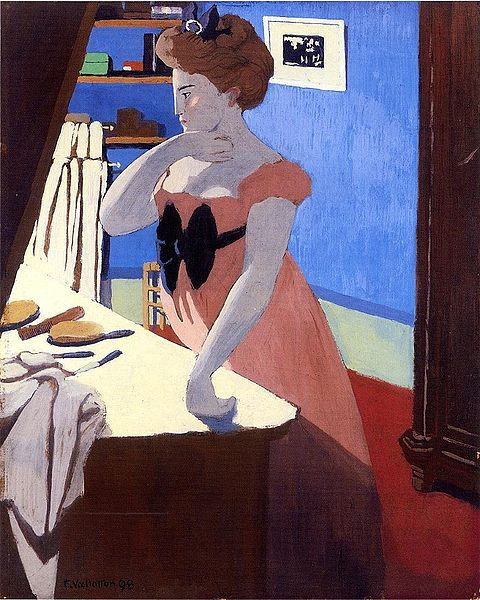
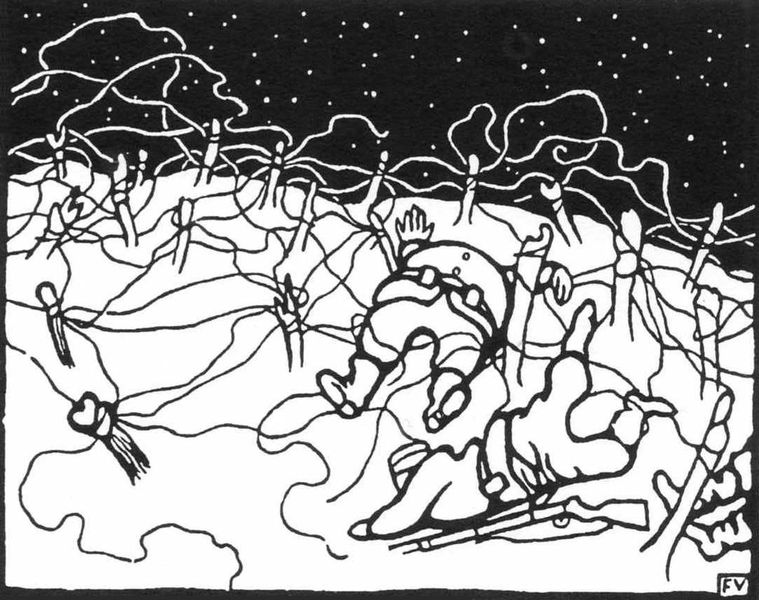
But Félix Vallotton did not only interpret the life of his contemporaries. As we say, he had a great artistic restlessness that led him, for example, to experiment with the tragic violence of black in his engravings, which made him enormously popular between 1891 and 1901. The same goes for the cold eroticism of his nudes, his abrupt still lifes or his modern mythologies that dig into complex personal relationships. His last canvases held more darkness, and he even portrayed the horrors of the Great War with his brushes.
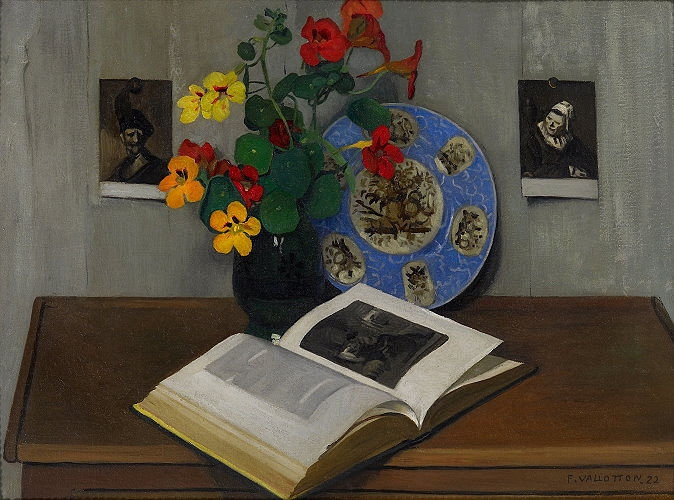
In 1899 he married Gabrielle Rodrigues- Henriques, a young widow with three children. Her wealth gave him the financial comfort he had lacked in earlier years, leaving behind the bohemian circles of Paris for those of the upper bourgeoisie, the very class he had always criticised in his painting. His brushwork changed too. It became even softer, more luminous and more delicate, though it always kept the melancholy, deeply meditative halo that signs his pieces.
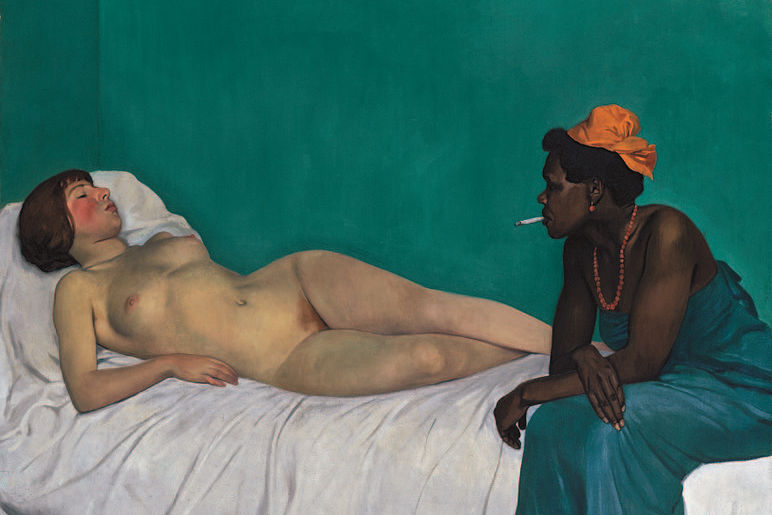
A body of work full of emotion and creativity which, without a doubt, had its best years between 1895 and 1912, precisely those before and after his marriage, the most productive and successful ones and also the most turbulent of his contradictory life.

Comments (0)
Comments are closed on this article.