
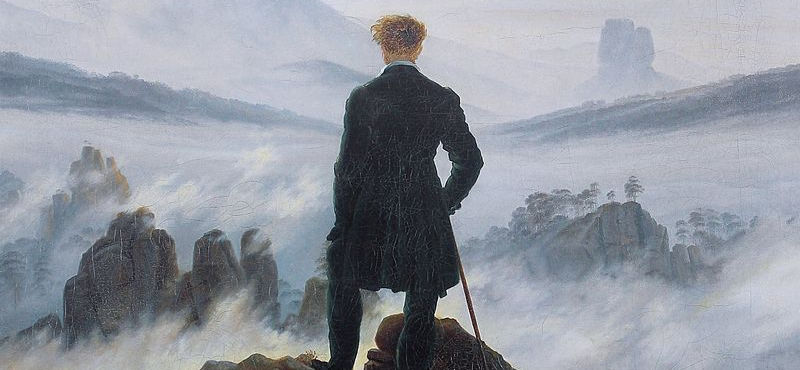
At the height of Romanticism, the German painter Friedrich revolutionised the landscape genre with an approach in which the objective, faithful depiction of the elements of nature was subordinated to achieving a subjective reflection of the artist. Water, trees and crags therefore had to give outward form to the painter's soul as well.
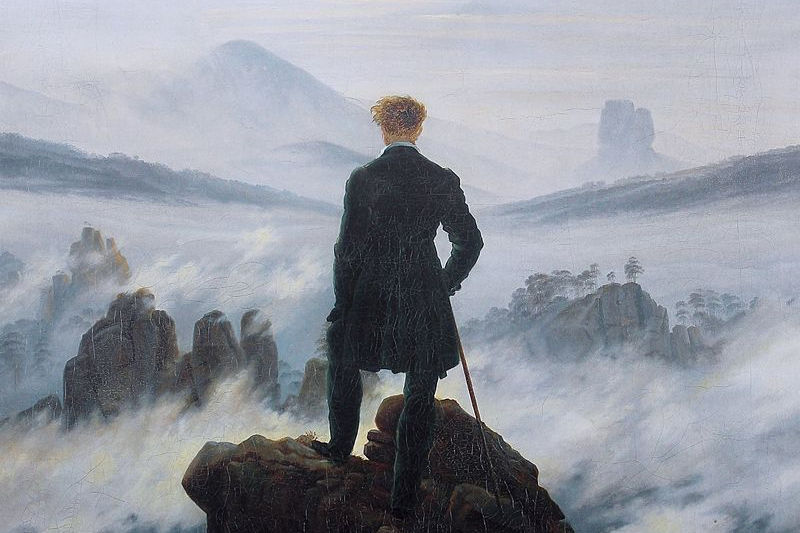
A man of his time, Caspar David Friedrich (Greifswald, 1774, Dresden, 1840) was one of the great exponents of Romanticism and, in that sense, one of the artists who worked best with the aesthetics of the sublime set out by Burke. To do so, he developed his own symbolic language, one that answered to his main concern: a deep pantheistic religiosity. Hence the essential role of nature in his work. The idea was to replace the usual iconography with landscape and turn it into an intellectual and spiritual experience rather than a sensory one.
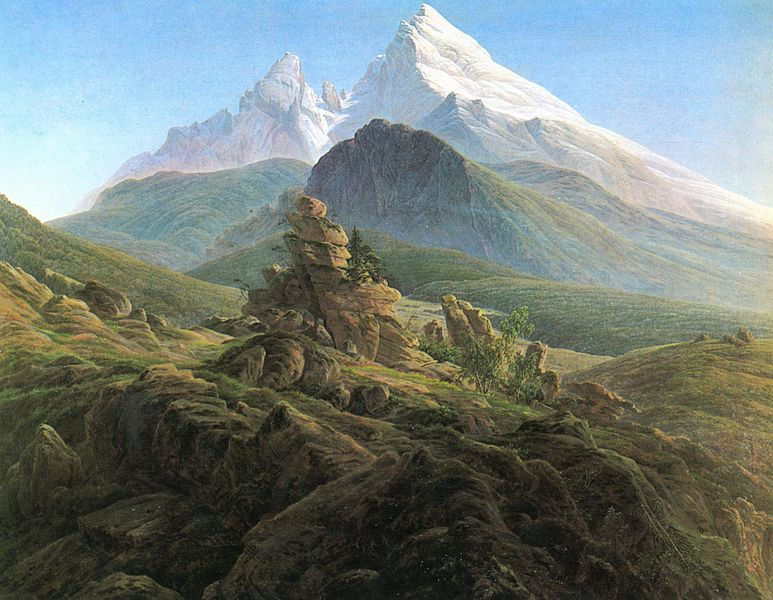
His landscapes, silent and deeply still, move between realism and abstraction, using the objectivity of nature as a mediator for an inner exercise. An experience he achieved by deploying elements with a high mystical and allegorical charge in his artworks.
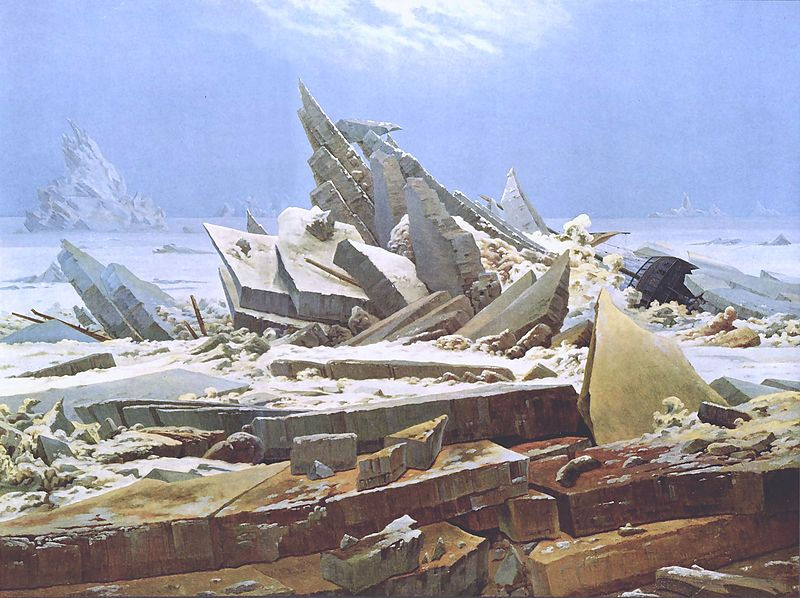
Take geometry, for example, of which he was a great enthusiast and which he used deliberately as a mirror of the artist's inner vision. The same goes for symmetry, whose introspective qualities he turned to his advantage. To heighten that spiritual depth, Friedrich chose to work in the vertical format, rarely used in this genre and one that gave the composition a sense of exaltation. The blurring of contours and the gradation of colours produced by atmospheric perspective confirm that depth. The dark tones and the light, meanwhile, are filtered through a haze that strengthens the mysterious, uncertain side so sought after by the aesthetics of the sublime.
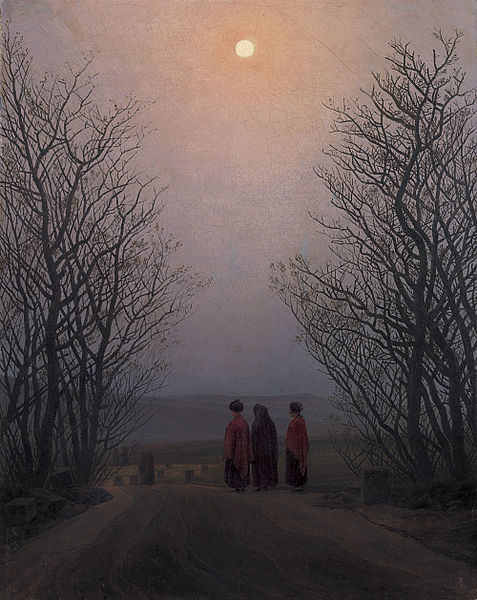
Another of his essential elements are the figures. Usually silent figures seen from behind, contemplating the immensity of the natural space, which the German reduces to the essential. That offers two readings. First, the smallness of man and the infinity of nature, a reflection of God, merging in harmony. And a second reading that evokes the primitive, enigmatic state of the natural surroundings, while the figures, in their mystical restlessness, express the Romantic longing to take in the whole universe.
The contemplative role of these figures invites us to adopt a similar attitude, so that the landscape sheds its objective qualities and rises to a higher state. Friedrich draws the viewer into a new landscape dimension, inviting them to contemplate the grandeur of the landscape in silence, to stop for a moment and meditate.



Comments (2)
salvador
July 2, 2015Gracias Adriana por el artículo, interesante como casi siempre. Un abrazo de
Salvador
Alejandro Vallespín
July 2, 2015Log in to leave your comment. Log in