
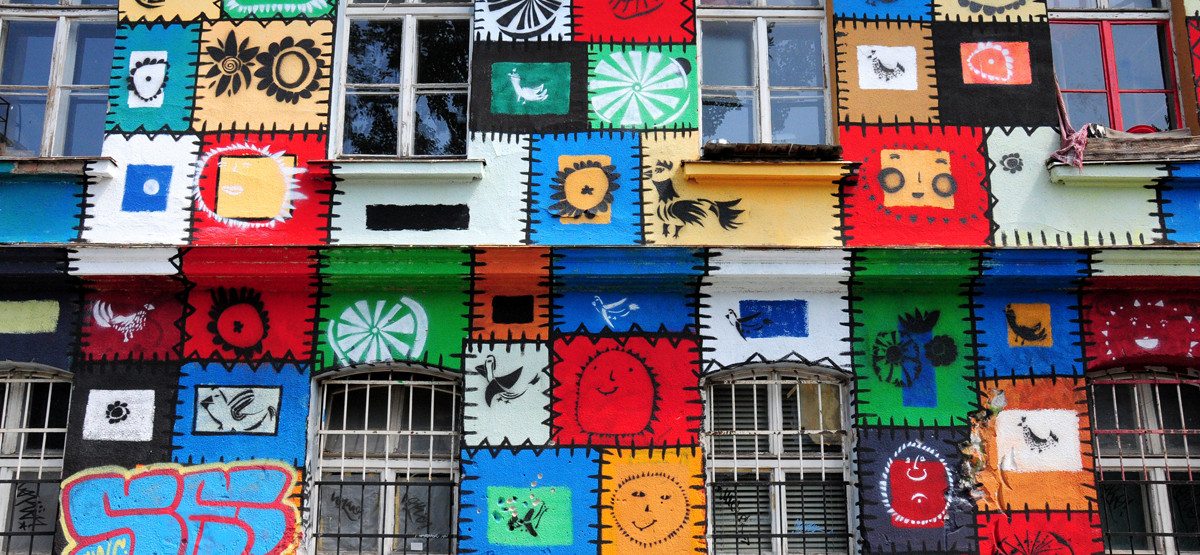
One of the greatest contributions the great architects of the 20th century made to art was their passion for turning the urban environment into a work of art in itself. Alongside them, sculptors and visual artists of every kind created art in public spaces through all sorts of channels. We take a tour of some social urban artworks without leaving out other sculptures by great European artists. Nor do we forget our more critical side towards those "other artworks" that decorate roundabouts and big buildings. We're talking about Plop Art. A multiple perspective on art living in public spaces. Enjoy!
Art lives in public spaces (and you can go and visit it)
Free art in all its splendour, from the most unusual neighbourhoods and museums to sculptures by leading artists. Live art!
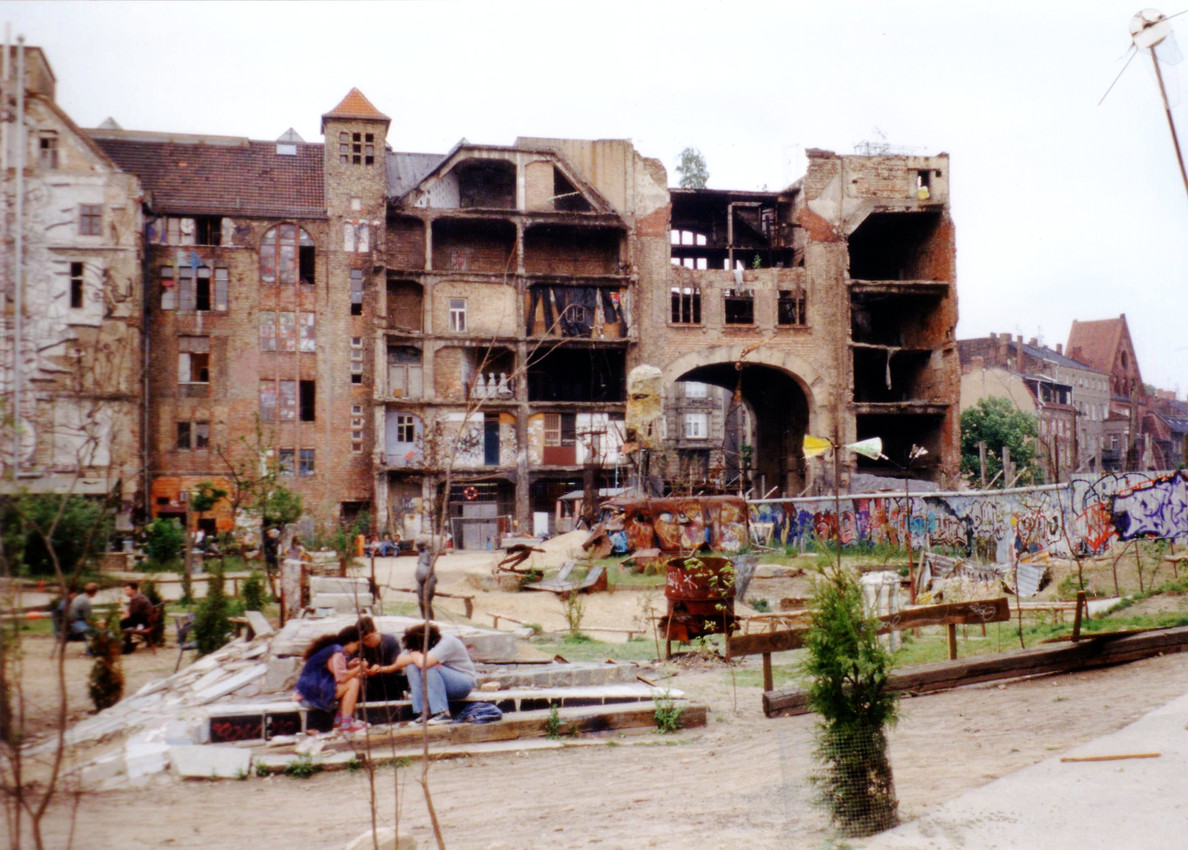
#Kunsthaus Tacheles in Berlin
This former squatted gallery is currently closed to the public, except for the back part and its splendid façade. At the back of the place you'll find artists putting on plenty of exhibitions as well as events of all kinds. You can visit the house near the Neue Synagoge, on Oranienburger Straße. To get in you have to go round to the street running parallel behind it. A curious fact is that the word tacheles means "to speak plainly" in Jewish Yiddish.
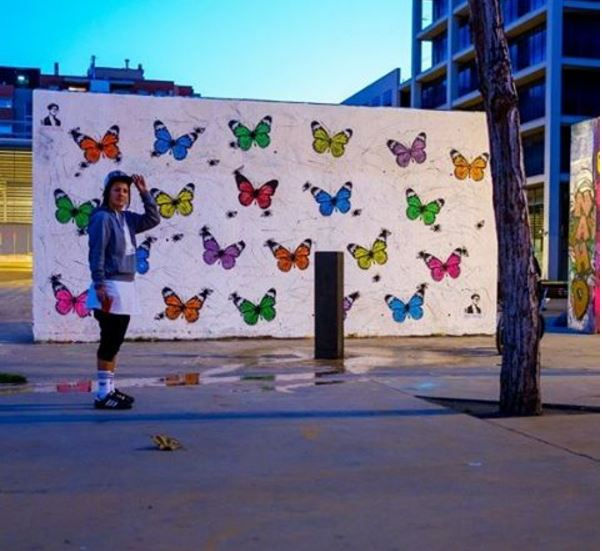
#Murs Lliures
Esta iniciativa artística de vanguardia aparece para dar un aire único a los barrios más deprimidos de Barcelona. ¿El objetivo? Llenar de colorido los suburbios de la urbe. Esta iniciativa ya fue emprendida en numerosas ciudades europeas y son comunes en algunos países sudamericanos como es el caso de Argentina. Como ya se hizo en el barrio de "La Boca" se trata de revitalizar las zonas más marginadas de la ciudad y convertir el arte urbano en una manera de integración social.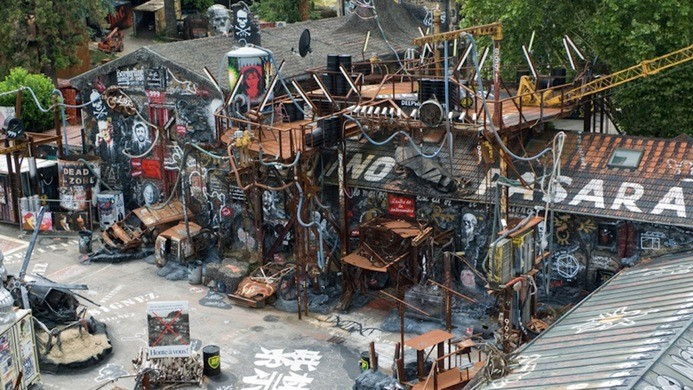
#Abode of Chaos
Este museo de arte contemporáneo situado muy cerca de Lyon, en la localidad de Saint Romain au Mont D'Or, es una maravilla conceptual repleta de espacios artísticos. Hasta 2500 trabajos alternativos confluyen en una muestra de que el arte en espacios públicos no tiene por qué incurrir en el Plop Art*. El concepto central de esta obra de arte radica en una reconceptualización de un edificio del siglo XVII en contraste con la localidad en la que está localizado.El arte actual debe ser provocaciónA pesar de su éxito entre los extranjeros, el alcalde de la localidad criticó duramente la construcción diciendo: "es humanamente intolerable, feo, dramático, con imágenes que evocan destrucción. Sea lo que sea lo que piensen, para mi no es arte, es provocación". Dio en el clavo pero visto desde una perspectiva diferente porque el arte actual debe ser provocación. Porque lo otro puede ser técnica pero el arte necesita tener alma. Si no, no es arte.
#Kunstpassage and Plastik Hill Arches in Vienna
By Ernst Caramelle and Henry Miller respectively, these artworks are located in Vienna's famous Karlsplatz. These aren't the only must-see stops the Austrian city has for lovers of art in public spaces, since in every corner you can discover new spontaneous displays by great sculptors and architects. That's the case with Lawrence Weiner's sculpture "Roto en pedazos", which stands at the Haus des Meeres in Vienna. Get more practical information here.
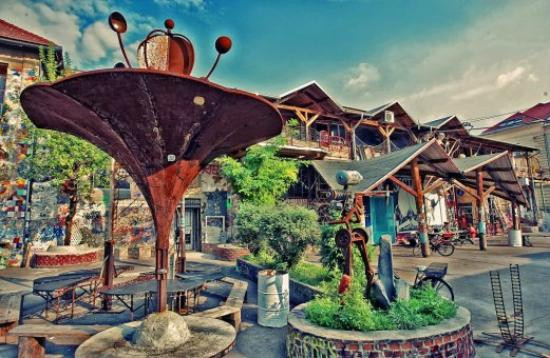
#Metelkova
This neighbourhood in Ljubljana sits on the outskirts of the Slovenian capital and it'll surprise you from the moment you get near it. It has something in common with Abode of Chaos in that it creates a museum out of elements from the area. The big difference? It was created by Slovenian artists who decided to build not a museum, but an entire alternative neighbourhood. In it you can find everything from nurseries and children's areas to bars and clubs. Its charm lies in recycling as the basis for artistic creation.
A criticism of art in public spaces: when Pop Art became Plop Art*
Plop Art is the name given to artworks, mainly sculptures, that decorate urban spaces and were commissioned by public bodies and authorities. The term has a clearly pejorative ring to it and was coined by the architect James Wines, coming from a play on words with Pop Art, or popular art, of the sixties. The criticism of art in public spaces from the artistic community is tied to the artistic decontextualisation of the artworks chosen to "decorate" that space. So we can come across a piece of Plop Art in the New York police department itself, completely out of context.
On the other hand, there are plenty of movements that stand in opposition to so-called Plop Art. That's the case with environmental sculpture or "Land Art". In both cases, the integration of the natural, real space acts as inspiration for the artist, who creates the artwork on environmental foundations that Plop Art lacks. It happens, for instance, that some artworks such as the sculptures by the great Henry Miller in Vienna or those by Ernst Caramelle are perfectly integrated into Karlsplatz, to the point that the leap in time between the Karlskirche (Karl's church or temple), dating from the 18th century, and the 20th century sculptures is imperceptible.
Did you know these examples of urban art? Had you heard of the Plop Art current? Don't hesitate to comment and share your impressions. We're always on the lookout for the best stories. If you're left wanting more, discover Ernst Fuchs, the German Dalí and the fascinating story of the Xi'an warriors. Soak up some art!
Images: wiki , atlasobscura , visitljubliana , tripad .
Comments (0)
Log in to leave your comment. Log in