
Fear. That emotion we reject as much as we're drawn to it. Fear sets off the alarms in our body, shakes us awake, forces us to sharpen our senses. Fear threatens and we go on guard. But fear is also life, it switches us on and stirs us up.
People say we should learn to overcome our fears. Like almost everything, that's a half truth. Whoever doesn't know fear is, among other things, reckless. In fact, one of the first signs of maturity in a small child is fear: becoming aware of the consequences of a reckless act. If I dive out of the crib head first I'll hurt myself, better call someone to help me. And things of that sort.
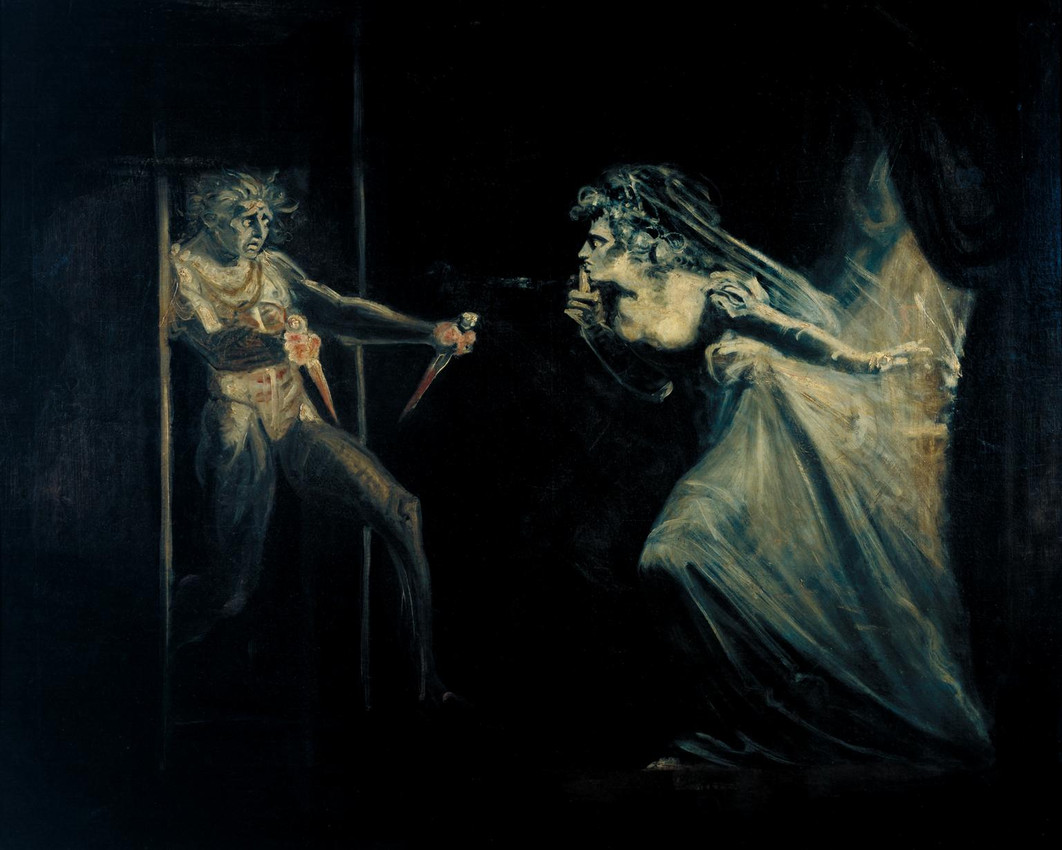
We don't know whether Johann Heinrich Füssli (Zurich, 1741 – London, 1825) took a good knock on the head as a child, but he soon steered his art towards a field that was barely explored: the dark, the unknown, the dreamlike, the hidden side of the human soul. In short, the world of dreams that so often turns into a nightmare.
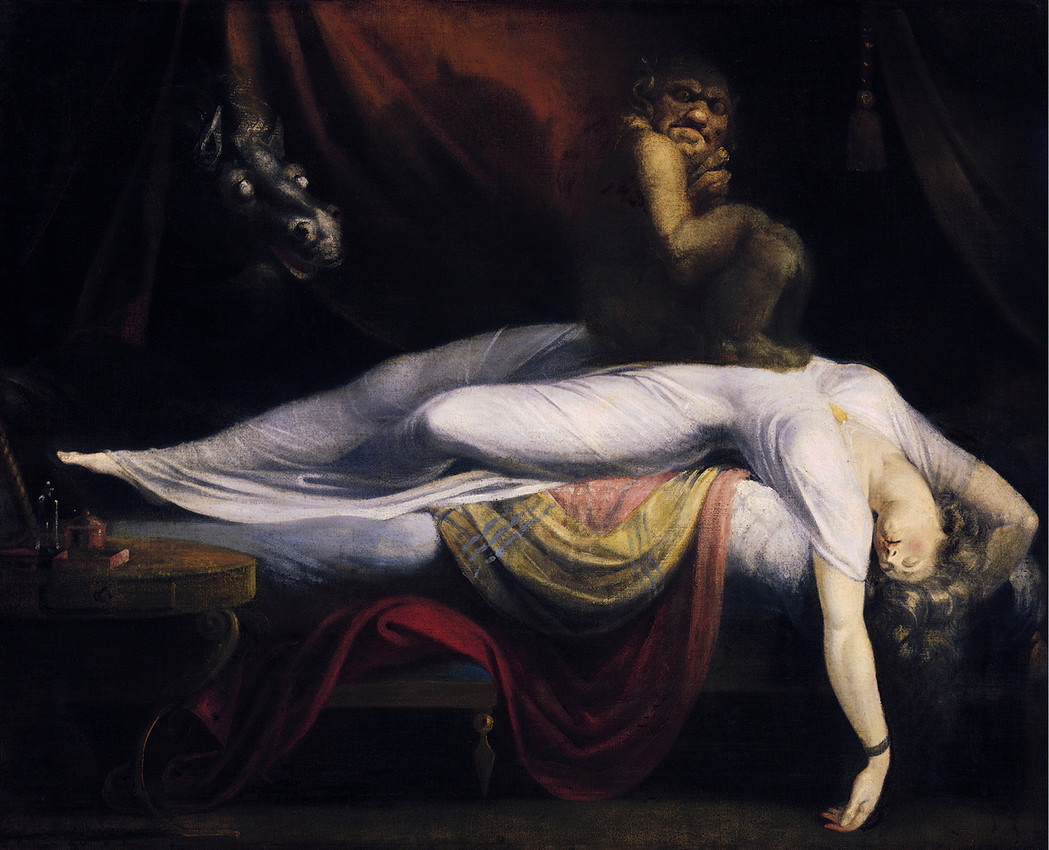
While European painting went on taking its cues from classicism, other arts, literature for instance, were starting to experiment with new forms of expression. Mysticism, mystery, the sublime, romanticism and fantasy were beginning to conquer the page in the hands of authors such as Goethe, Novalis, Hoffman and Horace Walpole. The latter is one of the founding fathers of the English gothic novel thanks to The Castle of Otranto, published in 1764, the year of Füssli's first trip to England…
So the Swiss painter's fantastic, dreamlike streak doesn't come out of nowhere, but he is one of the first painters to take it to canvas. After temporarily leaving his native Switzerland, he arrives in England, where he comes into direct contact with his beloved Shakespeare, translating Macbeth into German, one of his favourite plays and, without a doubt, one of the most terrifying by the British dramatist.
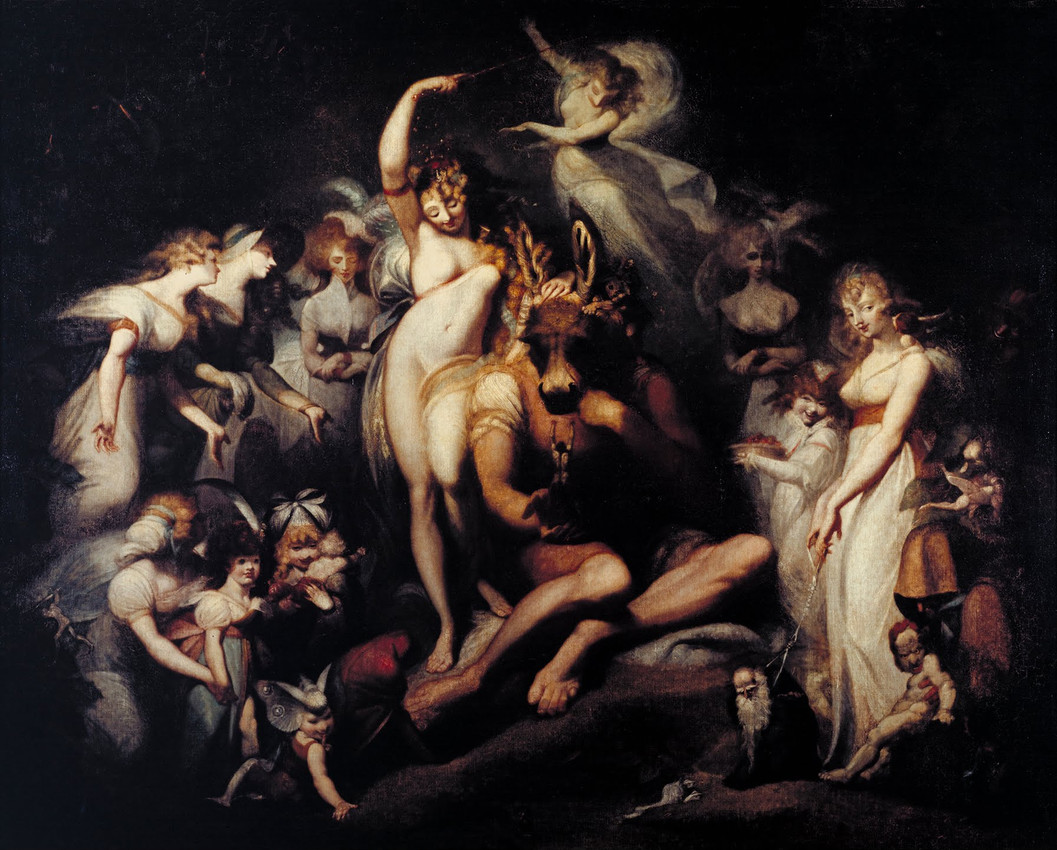
After spending time in Rome studying the classics (Michelangelo would be one of his earliest aesthetic references), he returns to England, where he starts to move away from the neoclassical principles of leading painters such as David and begins to experiment with other, less heroic, moralising and political subjects. Even though formally he hasn't yet abandoned neoclassical pictorial precision, artworks like La Pesadilla are clear proof that Füssli definitively opens the door to the world of dreams, taking those visions straight onto the canvas.
Often compared to Goya, the Swiss artist isn't as revolutionary technically, but he does set the tone for the British romanticism to come, and has a great influence too on the shaping of other expressionist tendencies that would have a huge impact in Germany and other countries in the north of the continent.
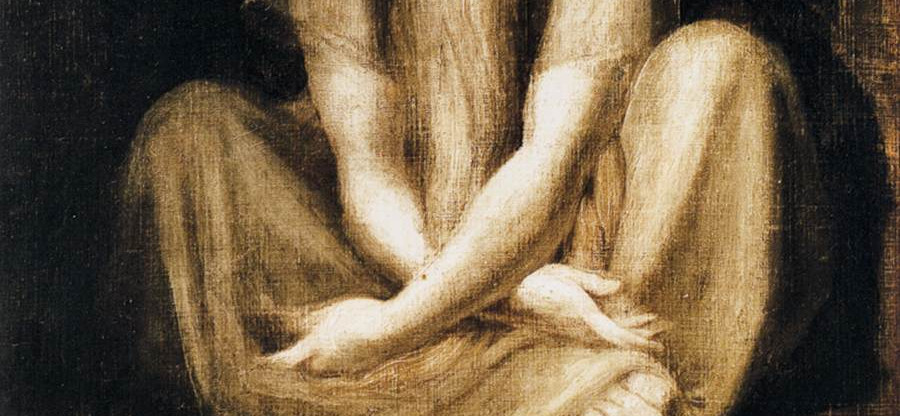
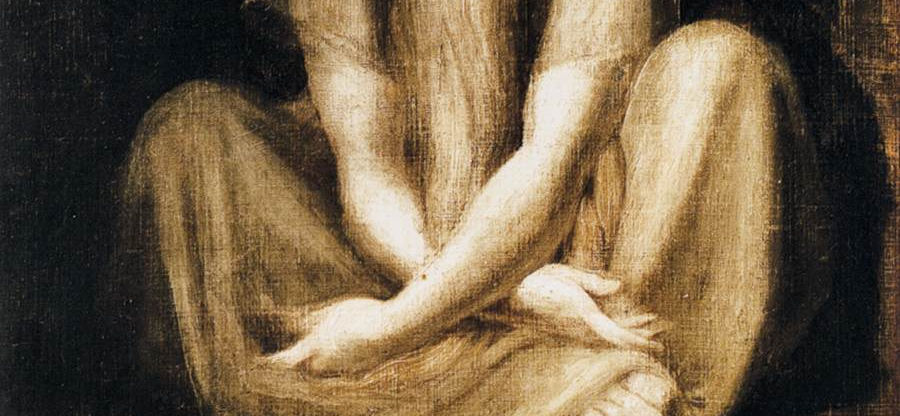
If we look carefully at paintings such as Silencio, dated 1800, we can even feel a shiver running up our spine. It's practically a monochrome painting, with a strangely luminous figure surrounded by the purest darkness, a figure wrapped up in itself, abandoned. It is, no doubt about it, one of his most far-reaching paintings, one of those canvases that will go on unsettling the viewer even after another two centuries, just as happens with Goya's black paintings.

Comments (0)
Log in to leave your comment. Log in