
For Rousseau, happiness was contemplating nature and painting what he saw in it. Sheltered by the innocence of that idea, he exhibited at the Salon des Indépendants in 1886, opening the door to recognition for naïve art.
There have always been amateur painters, but why did the naïve artists triumph in the first years of the 20th century?. Two circumstances came together to create just the right context.
When naïve art was granted some importance, the avant-garde artists were nurturing the ambition to find a state of purity and a virgin language. They were desperate to break with the existing artistic forms and stay clear of the contaminated tradition of official art, of ideological aesthetics.
Second, the guilds and the painters' studios gave way to the age of the individual artist. That put the brakes on the training of anyone with little money, and amateur painters multiplied. Those who, while holding down their everyday job, gave their free hours to painting and to teaching themselves. And so they developed a naïve, spontaneous pictorial style, with no regard for academicism.
Henri Rousseau (Laval, 1844 - Paris, 1910) was known as The Customs Officer, the job he held until he retired. From then on he devoted himself entirely to painting. And the oasis of living, serene peace that Henri found by spontaneous grace, Paul Gauguin went looking for, mistakenly, in the Marquesas Islands.
That connection was what filled Rousseau's candid world with success. A clear, enamelled, serene universe that gave his canvases a magical touch, a vision of freshness, of spiritual freedom. It stood for escape into a human fable, with no tensions, no monsters and no violence. The green childhood paradises of Charles Baudelaire had become the new refuge.
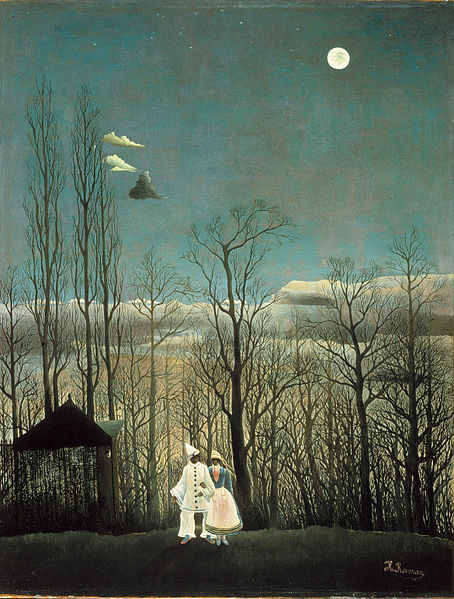
With Velada en Carnaval (1886), Rousseau formally introduced himself to his contemporaries in Paris under the wing of the Société des Artistes Indépendants. The style of his creations was appreciated little by little by the artists of the moment. In fact it was his contemporaries, in their fight against every traditional and academic form, who turned him into the symbol of their cause.
The poetics of escape were under way and anything that handed the modern artist tools to get away from the rules would be taken into account. Along with the other currents based on primitive art, childlikeness appealed to the avant-garde.
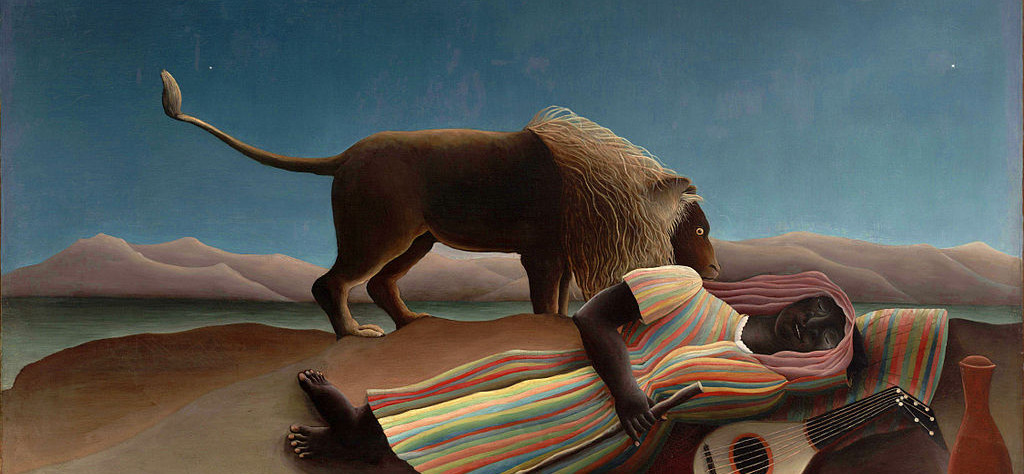
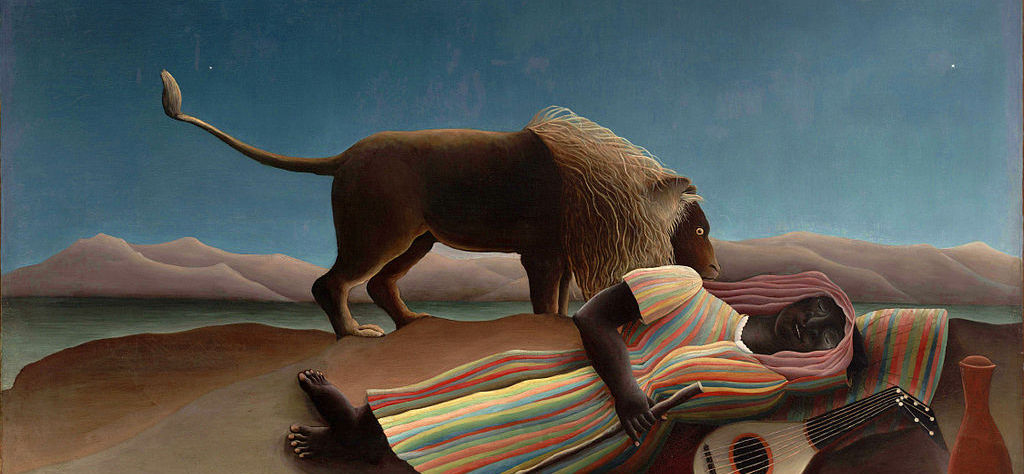
They wanted to turn art's attention towards the suggestions of elemental myths, carriers of purity, and to get away from the reviled bourgeois society. But they also wanted to hoard forms that disobeyed the agreed figurative dimensions, and in naïve art they found a source of inspiration. In La gitana dormida (1897) you can already see a dreamlike scene with a cubist form and an image that belongs to surrealism. Even Kandinsky took the view that Rousseau was already producing, in a certain way, a kind of realism analogous to pure abstraction.
Naïve painting presented itself as innocent and sincere, based on a child's drawing. Its figurative forms were free, loose, following a fantasy without prejudices. Can we find in the naïve current, then, the most disinterested, purest conception of art?, can we take its ultimate aim to be simply making art?.
Comments (0)
Log in to leave your comment. Log in