
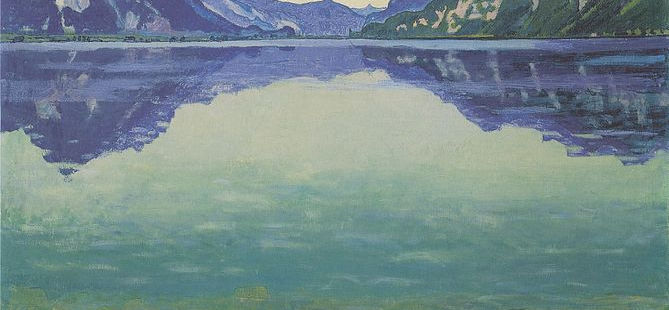
At the artistic crossroads of the late 19th century, one of those who took the helm of change was the Swiss painter Ferdinand Hodler (Bern, 1853- Geneva, 1918).
Of humble origins and cursed from childhood with the deaths of close relatives, Hodler steered painting towards symbolism through a creative force governed by simplicity, symmetry and rhythm. Or, as he called it: parallelism. His arrival in Geneva at the end of 1871 marked the start of his artistic career. There he met one of the people who most influenced his work and who would become his teacher: Barthélemy Menn, a close friend of Corot and a former student of Ingres. His teaching freed him from conventional composition and encouraged him to base his painting on drawing, measure and observation.
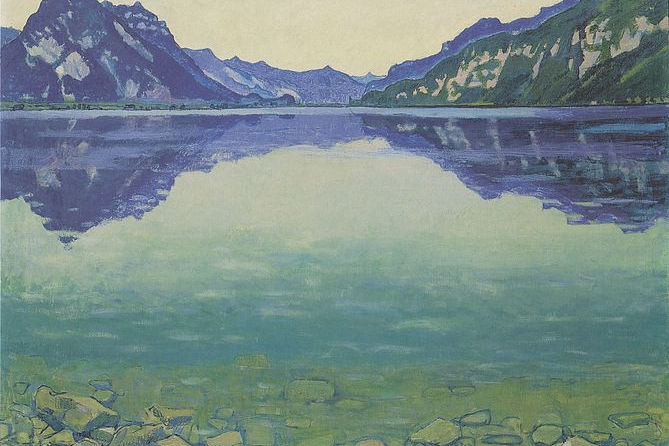
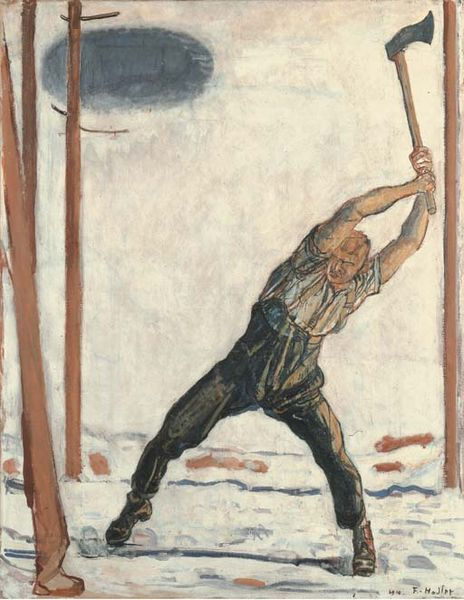
It was then that Hodler's work moved towards a sharp realism, full of idealism and symbolism. The latter had nothing to do with the mythological or religious strands of the movement, though it was cautiously steeped in a certain mystical aura, a reflection of the serene vision he drew from nature and the cycle of life. He thus created a philosophical dimension that also connects with the Swiss tradition of relating to one's surroundings. This particular undercurrent finds its fullest expression in his untouched landscapes, stylised and majestic, which place him among the greatest landscape painters of all time. And equally in later canvases such as El leñador (1910), which became the motif on the 50 franc note.
That reflection on human destiny first dawns in his idealised portraits of craftsmen, a memory of where he came from. Among them, Mirada hacia la eternidad (1885) would set the new tone. Hodler depicts an old man carving a child's coffin and, although he exquisitely exalts the ins and outs of the carpenter's labour, the act seems to point instead to a higher order, hinted at in the figure's prayerful attitude and in the rigour and luminosity of the canvas. Stripped of any reference to daily life or social class, the scene heads towards our inevitable end: death. A subject that would become almost an obsession for the Swiss painter.
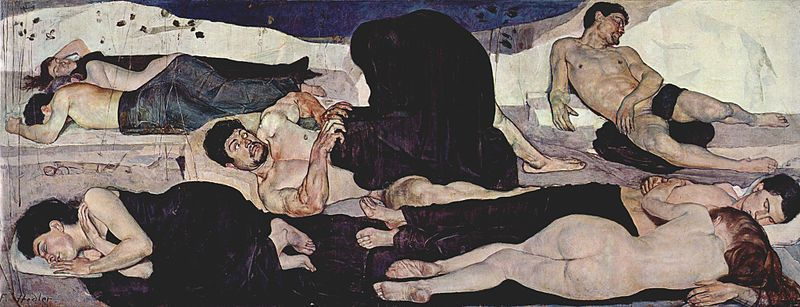
As expressed in La Noche (1889- 1890), his masterpiece and the manifesto of Hodlerian symbolism. The painter is woken from his sleep by the ghost of death and finds men and women sleeping around him, among them self-portraits and portraits of two of the most important women in his life: Augustine Dupin, his partner since his early days as an artist and the mother of his son, and the woman who would be his wife, Bertha Stucki. It is, then, an autobiographical painting, with the dimensions of a history painting, in which he presents the balance sheet of a period of his existence. For Hodler this is no trivial or private matter, but a universal one in its symbolic meaning: it evokes the essence of what night and death are. Here the artist inaugurates the combination of extreme realism and a refined decorative sense, the hallmark of his work.
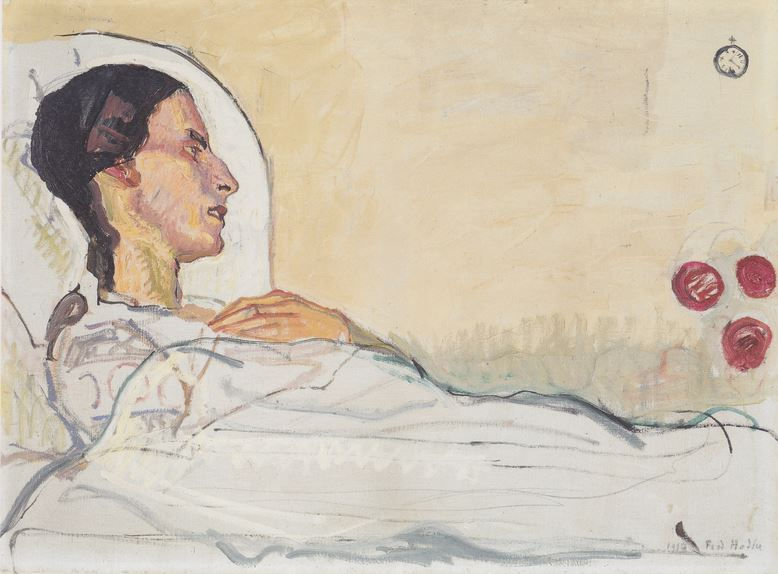
In his final years, when he was already moving towards expressionism, he painted a harrowing series showing the physical decline and agony of his partner Valentine Godé- Darel, ill with cancer, in which he meets death again. His tireless companion since childhood.

Comments (0)
Log in to leave your comment. Log in