
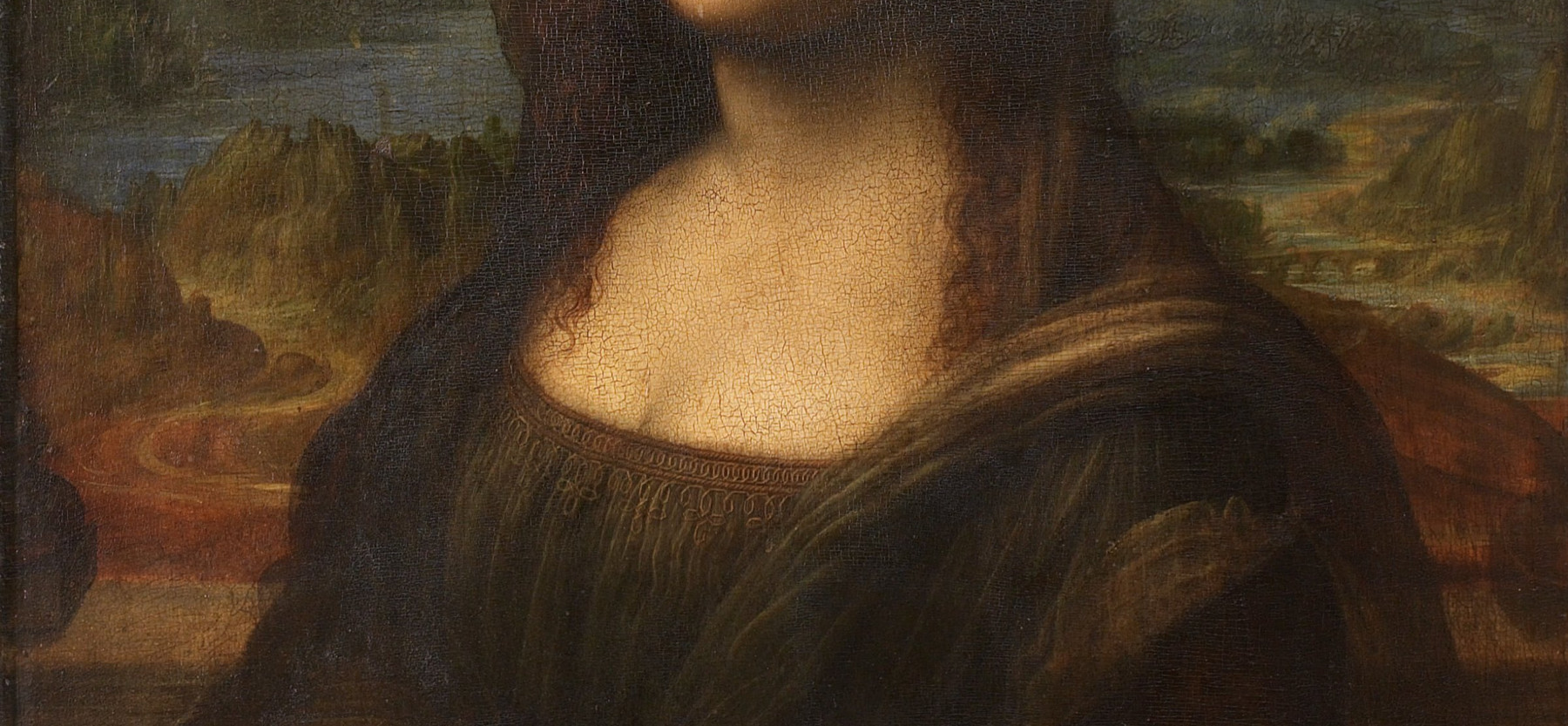
Ever since Giorgio Vasari's word on the identity of La Gioconda, was called into question, thousands of legends and guesses have sprung up about who that mysterious young woman with the unreadable expression really is. The latest, a Chinese slave and the mother of Leonardo da Vinci (1452- 1519) himself.
This surprising idea comes from the Italian historian and novelist Angelo Paratico, who lives in Hong Kong. After two years of research, he has concluded that there are links connecting the Far East with the life and work of the Florentine genius. He'll reveal all the details in the book he's finishing, but he has dropped a few hints.
Apparently, Da Vinci's mother could have been the oriental slave of one of his father's clients. She had the same name as the woman held to be the artist's direct ancestor, thought to be a local peasant, Caterina. And he reaches this claim by deduction. The historian maintains that, during the Renaissance, the slaves who came to countries such as Italy and Spain were mostly from the East.
A place he connects with certain aspects of Leonardo. His handwriting, for instance, or his vegetarian diet. And with China, his artwork. Leaning on the theory Sigmund Freud put forward in 1910, he picks up the idea that La Mona Lisa is the artist's mother. And, in the same way, by deduction, he infers that his mother was of Chinese origin. Which is where he places the landscape in the portrait and the model's features.
But La Gioconda has had more lives. The one taken as good is that of Lisa Gherardini, a Florentine aristocrat and the second wife of Francesco del Giocondo, an influential silk merchant. Hence her name: Gioconda (Lisa del Giocondo) and Mona Lisa (Madonna Lisa). Recovering, then, her past identity. The one given to her in 1550 by the Renaissance biographer Giorgio Vasari. In fact, it was never questioned until 1911, after the canvas was stolen from the Louvre Museum. In the 21st century, this hypothesis was revived by, among others, the professor and researcher Giuseppe Pallanti and a group of German academics from the University of Heidelberg.
There have been other speculations too. One of them sees in the young woman Isabella d'Este. Or Gualanda, the lover of Giuliano de' Medici. It has also been said that the face could be inspired by a pupil of Da Vinci with whom he supposedly had some kind of romantic relationship, Gian Giacomo Caprotti, known as Salai. Word even went round that it was a self-portrait of Leonardo dressed as a woman.
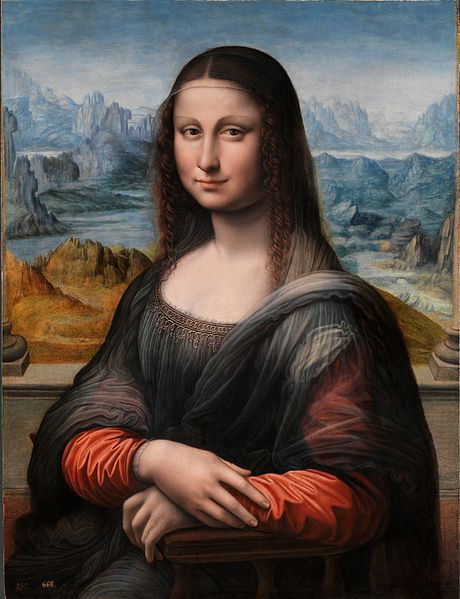
Curiosity has only grown over time, since no conclusive proof has turned up to settle the doubts. Meanwhile, other striking details have come to light that feed the question even more. Canadian scientists, for example, spotted a transparent veil tied to the neckline of La Gioconda's blouse, the kind worn by pregnant women or new mothers. And then there's the discovery of a twin sister at the Prado Museum. A portrait painted alongside it by one of his pupils.
Who really inspired her face? Why did Da Vinci never part with the painting? Beyond her smile and her artistic qualities, it seems La Gioconda will always be an enigma.
Comments (0)
Log in to leave your comment. Log in