
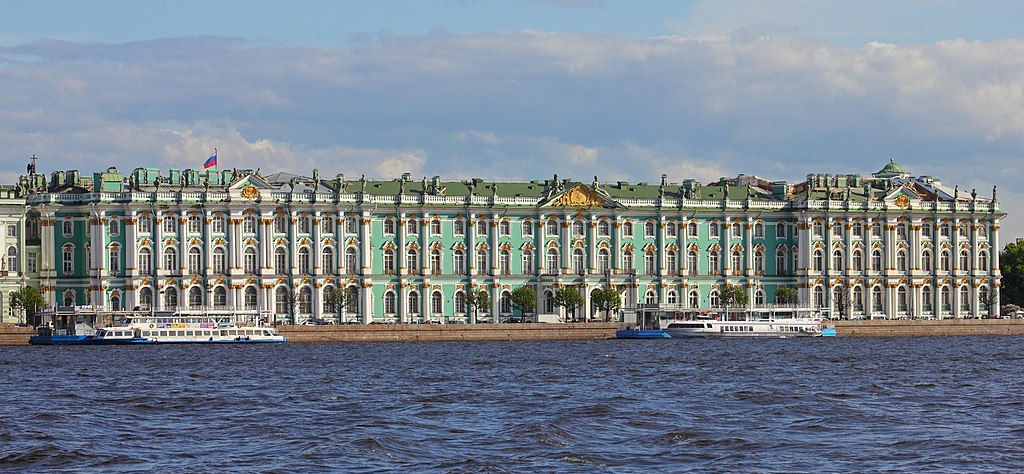
A titanic 18th century building is home to what is considered the largest art gallery in Russia. The Hermitage Museum has witnessed the fall of the Russian tsars, the arrival of the 1917 Revolution and every war, conflict and government that has come along since then, by that point as a national museum. The genius of Dostoevsky walked around it looking for inspiration for one of his novels, and today its six buildings leave nobody indifferent. We'll talk about the building, its history and its collection. Plus a few curious facts that make it a must-see on your trip to Russia. Here we go!

The collection of the Hermitage Museum
Prehistoric art: the objects from the Scythian culture stand out.
Ancient Greece and Rome: worth a mention are the Greek vessels, gold jewellery, gems and busts.
Western sculpture: the sculpture by Michelangelo and Rodin stands out, but the collection is one of the most important in Europe.
Western painting: mainly Italian art from the 13th and 14th centuries. Also some Spanish painters such as Zurbarán or José de Ribera. And Flemish and Impressionist painting too. It even has more than 30 paintings by Picasso.
Along with all this you'll find an arsenal running from the Middle Ages to the 20th century, decorative arts, oriental art, cats and numismatics. If you want to know more about Russian culture, it also has its own collection, with more than 350,000 pieces in total.
Curious facts about the largest gallery in Russia
- El complejo del Museo Ermitage abarca el palacio de invierno, el teatro del Hermitage, el Nuevo Hermitage, el palacio Menshikov y el edificio del estado Mayor. Se puede decir que es la gran visita obligada si se viaja a San Petersburgo y, de hecho, su galería te llevará un par de días si quieres conocerla medianamente bien.
- A lo largo de sus pasillos encontrarás 3 millones de obras de arte.
- La impulsora para crear el museo fue Catalina La Grande.
- Los gatos tienen su propia colección debido a que ellos han sido quienes han defendido los sótanos y almacenes donde estaban los cuadros...de los roedores, por supuesto.
Although the most colourful oddity is without a doubt linked to a sculpture of the Egyptian goddess Sekhmet. Historically she was extremely bloodthirsty and her ultimate aim was to wipe out the human species. Well, according to the security guards, on full moon nights a reddish puddle, like blood, appears on her knees.
Practical information
On Wednesdays and Fridays it opens from 10:30 to 21:00. The rest of the week (except Monday, when it's closed) it opens from 10:30 to 18:00. The first Thursday of every month admission is free.
Tickets for the whole complex cost 600 to 700 rubles (about €10 in high season) depending on the time of year.
Although it is possible to eat inside the museum, you can't bring food or drink into it.
Practically any backpack or bag you're carrying has to be left in the cloakroom. Photographs are allowed but always without flash.
Comments (0)
Log in to leave your comment. Log in