
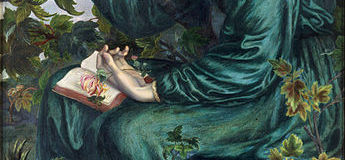
In the straitlaced Victorian art world of the mid 19th century, realism stood as the only path open to artists. In this context, three young students at the Royal Academy, Hunt, Millais and Rossetti, rebelled against it and gave rise to what has been considered the first artistic avant-garde: the Pre-Raphaelite Brotherhood.
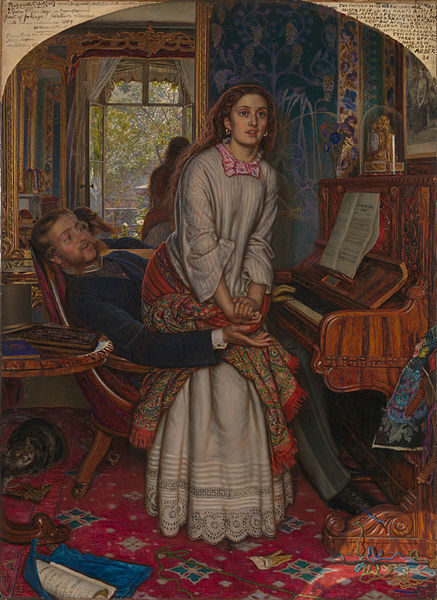
A movement, then, born of rebellion and of the urge to create a new painting of reflection based on colour, on detail and on the transcendental spirit of the Middle Ages. The idea was to break with contemporary conventions from within a realist technique and to build a poetic setting that gave the compositions a magical touch. Beauty, nature and moral and literary references were the pillars on which they built this symbolic universe. Very present in their paintings is the work of authors such as Keats, Tennyson and Shakespeare, and also an attention to social issues.
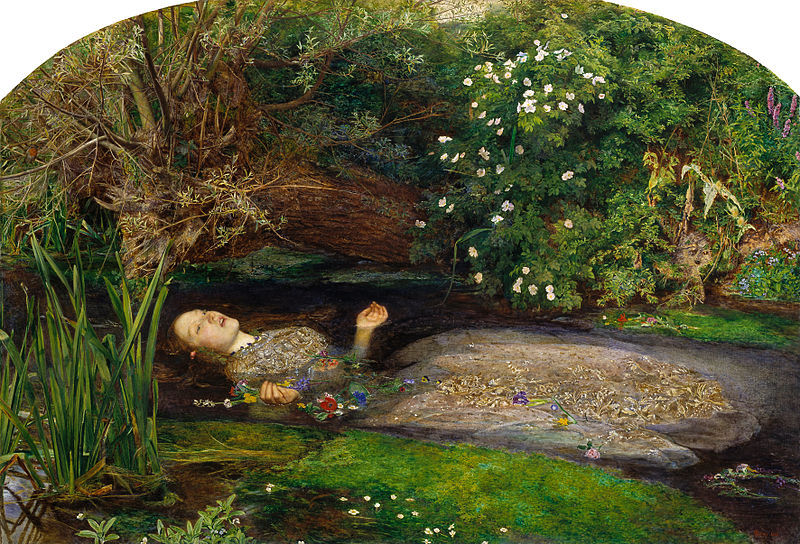
The Pre-Raphaelite group was born in London in 1848, with the twenty-somethings William Holman Hunt (London, 1827-1910), John Everett Millais (London, 1829-1896) and Dante Gabriel Rossetti (London, 1828-1882) as its leading figures. As for the name, it refers to the group's criticism of a painting by Raphael, La Transfiguración (1516-1520), in which they pointed out a lack of simplicity and a barely spiritual tone. Their aim was to return to a pure art, free of academic rules, and they drew their inspiration in particular from that of the Italian primitives.
The first pieces they exhibited were well received by the critics. Yet the real success of its members and the recognition of the group's ideas came after it broke up, around 1854. For almost fifty years, the Pre-Raphaelite conception of art went on feeding the English avant-garde, with a second generation led by Edward Burne-Jones (Birmingham, 1833 - London, 1898) and William Morris (London, 1834-1896), who applied these principles to decoration, furniture and book illustration. Burne-Jones, despite not being one of the founding members, ended up becoming one of the group's most prominent figures.
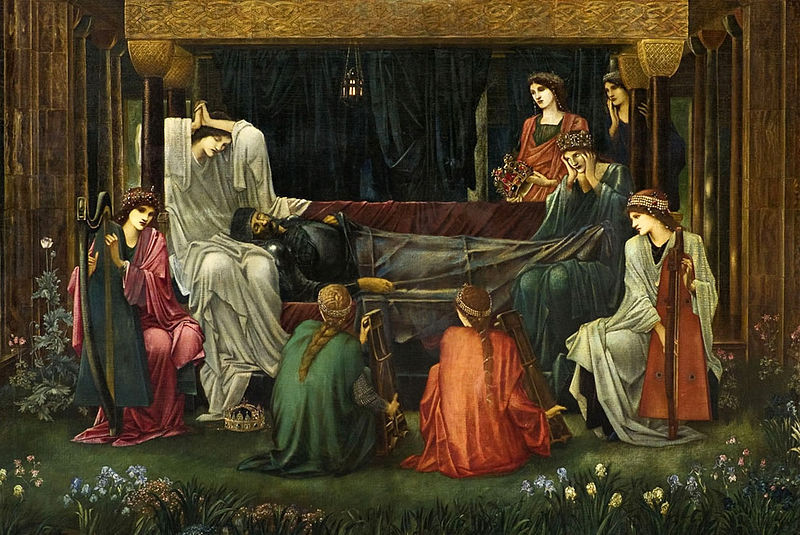
Although it was an exclusively British movement, the ideas of the Pre-Raphaelites crossed the borders of England and had a strong impact on later tendencies, such as the Symbolist current that emerged in France, or Art Nouveau.

Comments (1)
Margarita Oviedo U.
July 3, 2015Log in to leave your comment. Log in