
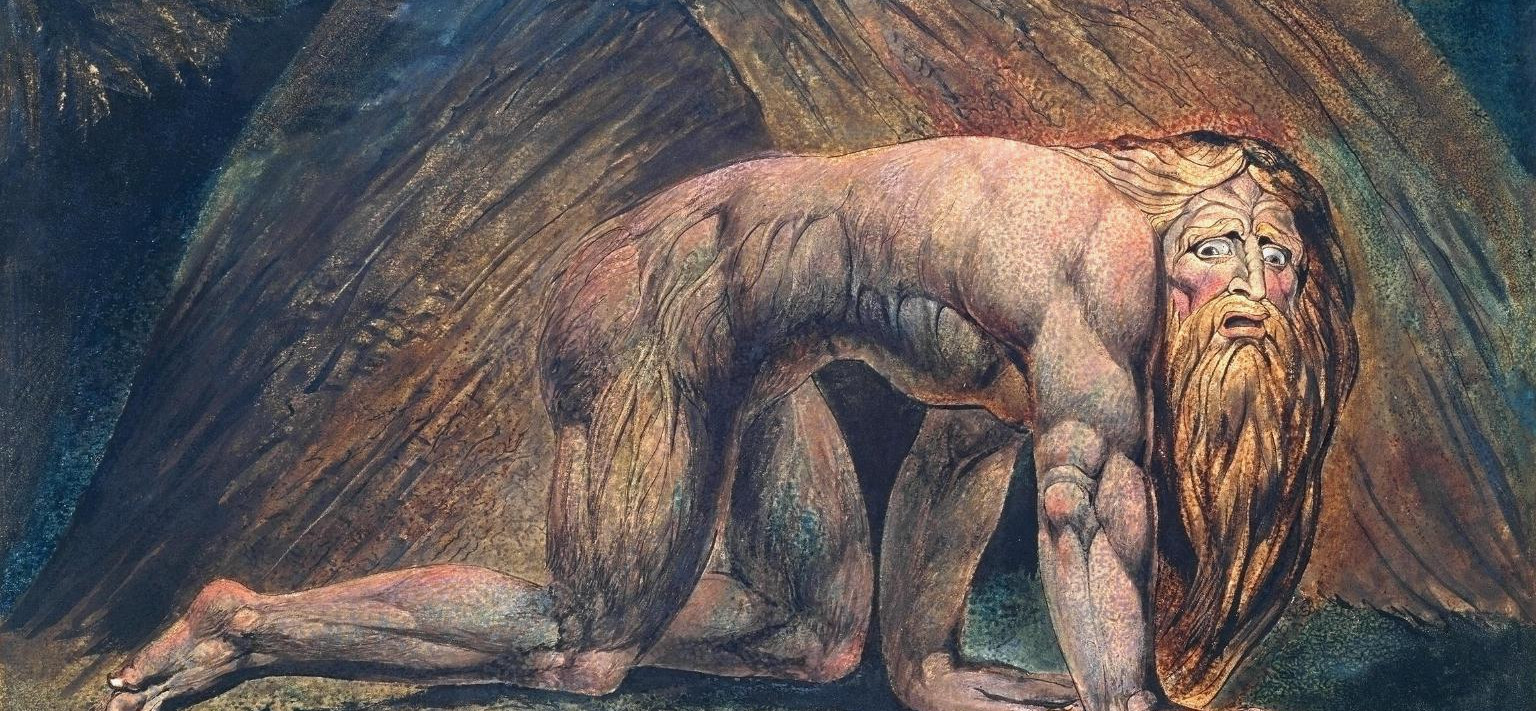
"El que se alimenta de deseos reprimidos, finalmente se pudre".- William Blake.
I met you not so long ago, at an exhibition running at Caixa Forum Madrid. Until that moment, all I knew was that you had written poetry a couple of centuries back and, sadly, I wasn't even aware of that because I'd read anything of yours but rather because a musician from Zaragoza had put you into one of his songs and, as a teenager, I'd got interested in that band and, by extension, in you. It was in one of those rooms that I looked at a visionary who had laid his hands on the flames of Dante's inferno to give us some of the most harrowing and strangely 19th-century sketches, engravings and watercolours I had ever seen. Not until I found out that Blake had been born in the mid 18th century did I realise just how far his painted legacy was as remarkable as his contribution to poetry, if not more. Now it's your turn to discover one of the pioneers of 19th-century art.
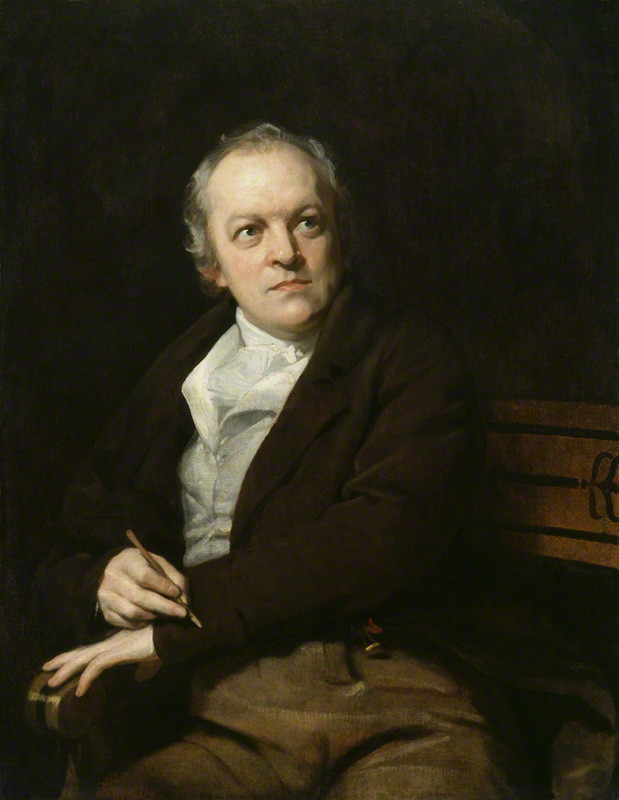
The pupil of Dürer, Michelangelo and Raphael
It's almost impossible for 18th-century painting to have nothing to do with religion and, of course, in the case of William Blake (1757 - 1827) there'll be no exception. Or will there? To a world of his own, already amply evident in his poetry, he adds a taste for giving an image of Christianity quite far from the virginal stance of his predecessors. Blake explores religion through symbolism with a use of light and colour that has nothing to envy in the painters who came after him.
His painting starts out from Mannerism and moves into new subterfuges, and we can dare to say that the degree of symbolism reaches heights nobody suspected, heights that would only be seen again from the late 19th century onwards. In a way, 20th-century illustration is a revisiting of the creations of great authors like Blake. Nor is it hard to understand Picasso's early periods, or Dalí's for that matter, after seeing a full exhibition of this many-sided artist.
William Blake in a few brushstrokes
He illustrated other people's publications but never his own
He never took the plunge with his "Illuminated" and "Non-Illuminated" poetry books. He was, however, the illustrator of Mary Wollstonecraft, Edward Young and John Milton.
A large part of his painted work has to do with an unfinished promise
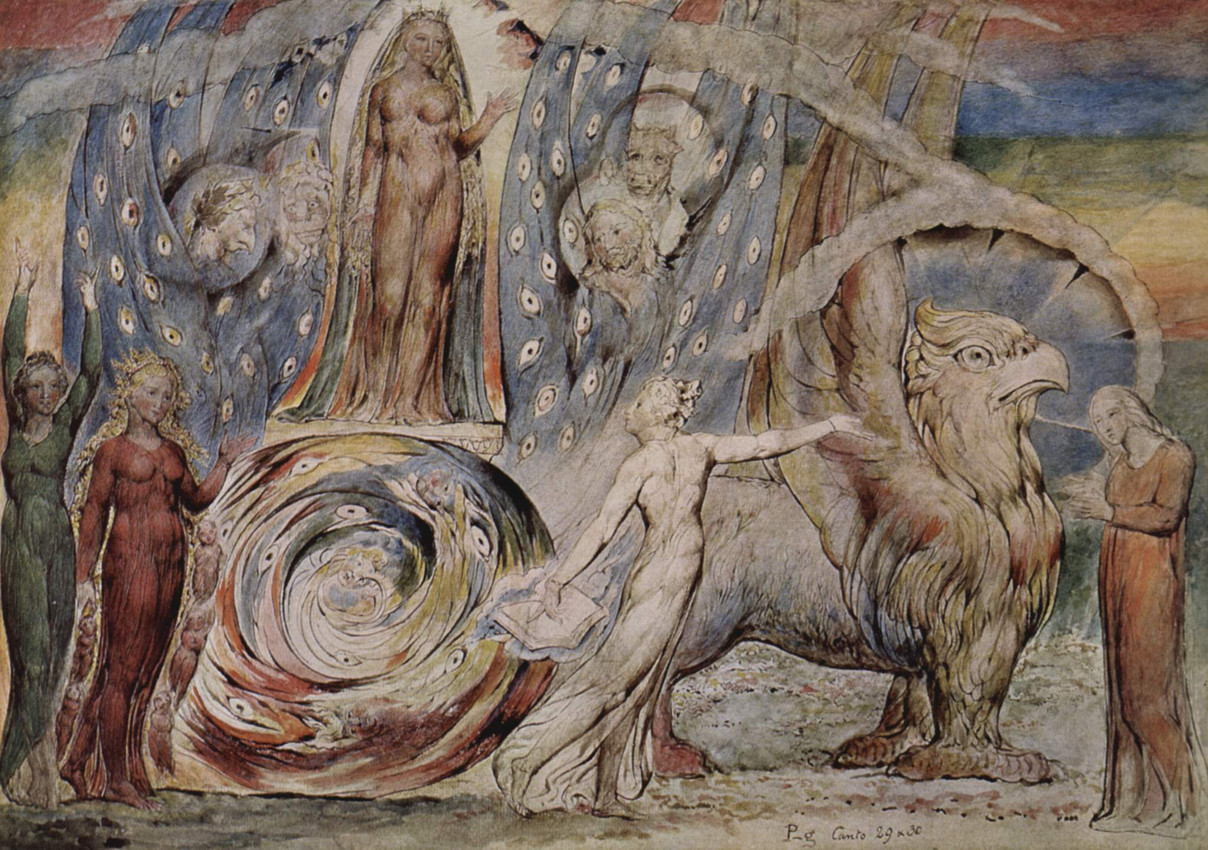
More than a promise, it was Blake's dream. It was about illustrating an edition of Dante's "The Divine Comedy". He never managed to finish it because he died in 1827, two years after starting the task. From that unfinished work we still have a spectacular collection of engravings. We'll talk about some of them below.
The line that sums up Blake's existence would be...
"Imagination is not a State: it is the Human Existence itself". Hundreds of years later, this quote would become a famous part of his poetry and, of course, a straight declaration of principles. For Blake the dreamlike is the only imperishable thing, the immortal, the infinite. Or isn't that what the artist is after? Blake found it in imagination.
William Blake, an aesthetic and social visionary
We're left with plenty of written references to the sexually and racially egalitarian ideology he would defend all his life. Let's bear in mind that this artist was born in the 18th century, when neither women nor any ethnic group other than the Caucasian one were taken into account.
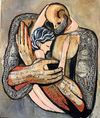
Los abrazos son fusiones de pies a cabeza y no un pomposo Sumo Sacerdote que entra en un Lugar Secreto.
It was in the last part of his life that the need to write about doing away with inequality became Blake's great crusade, as he never quite understood why the oppression of the church or of the oligarchic state was still the norm in English society.
William Blake, the man who supported feminism before Virginia Woolf
Allow me the licence of dating the start of modern feminism to the birth of this writer and publisher. Maybe I do it because, like Blake, she was born in London and, just as the poet was, she would be considered a pioneer in all sorts of ways. But let's talk about Blake. Let's talk about the hero on the ropes, about the hypersensitivity in this artist that would lead him to defend women's rights tooth and nail.
Mientras William Blake le enseñaba a leer a escribir, Catherine le ayudó a crear sus grabados.
Perhaps he did it because he met Catherine and fell in love with her. Or perhaps because her curiosity led them both down the only road that should exist in love between two human beings: exchange and personal growth. So, while Blake taught her to read and write, Catherine was his companion in the making of his famous engravings.
William Blake's engravings belonged to Cathy and to Will in equal parts. In fact, there's been a lot of speculation about it. What is clear is that his defence of women led him into all kinds of scenes, like the time, so they say, when he stepped in between a woman and the husband who was abusing her.
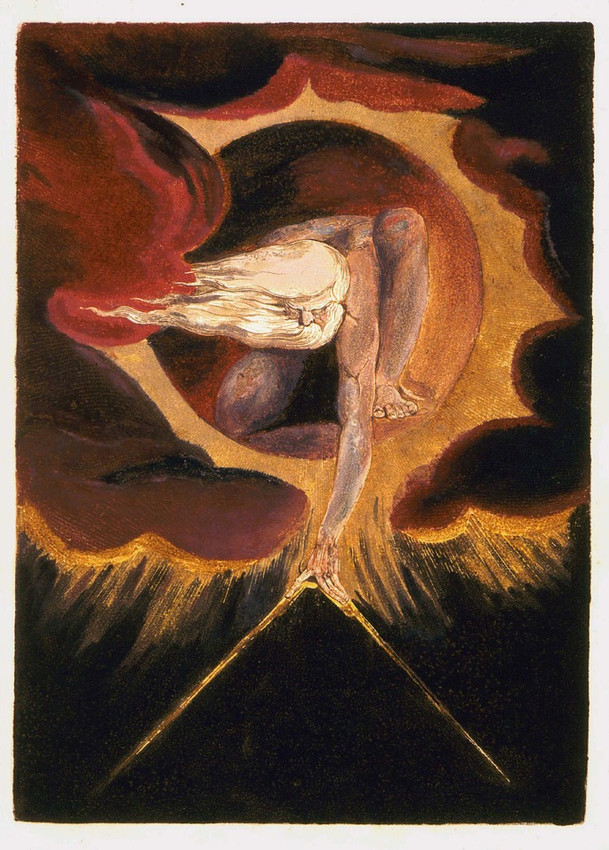
He was likewise a fierce defender of sexual freedom and, in fact, "he wanted to free people from the guilt so often tied to sexual pleasure" (William Blake: scourge of tyrants by Judy Cox). What is clear is that all this experience shows through in works such as El anciano de los Días (1794) or El infierno de Dante.

Comments (1)
Luis MP
March 24, 2023Log in to leave your comment. Log in