
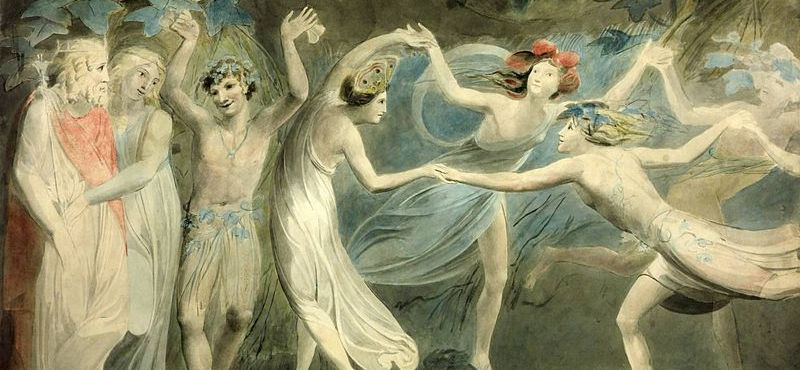
William Blake was barely ten years old when he claimed to have seen a host of angels in a tree that gave off its own light. This was the first of the many visions that stayed with him throughout his life and fed his painting and his writing. Who are we talking about? Painter, illustrator and poet, Blake (London, 1757-1827) is one of the most extraordinary figures in English art.
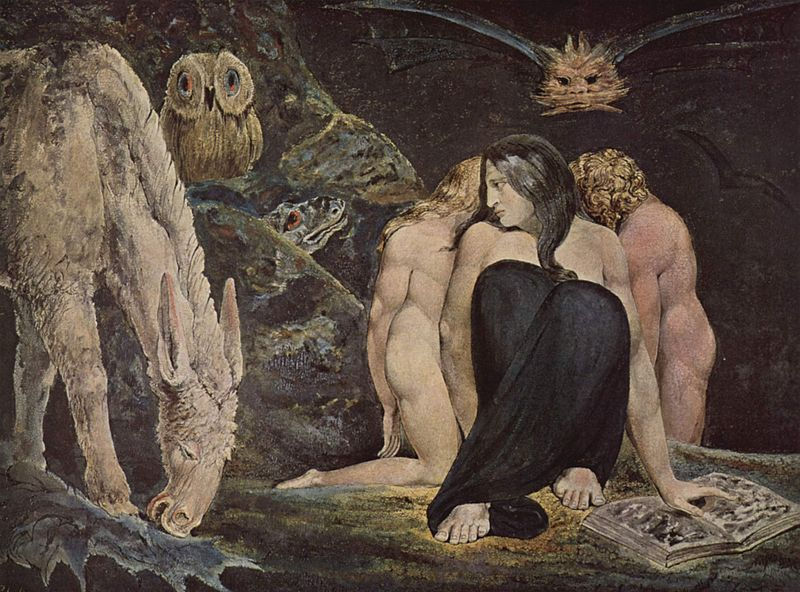
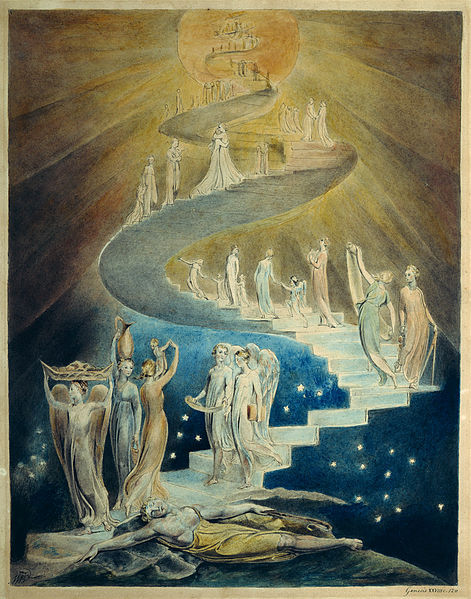
He used engraving and watercolour to set out, brimming with colour, that imaginative, fantastical world that underpinned his mystical philosophy. Encouraged at home, Blake soon gave free rein to this spiritual reality and created an astonishing body of artworks in which he laid bare his inner world, composing genuine visual poems. And most of his pieces deal with myths and deliriums. Religion also has an important part in his work, fed by scenes from the Bible, such as Jacob's Ladder (1805).
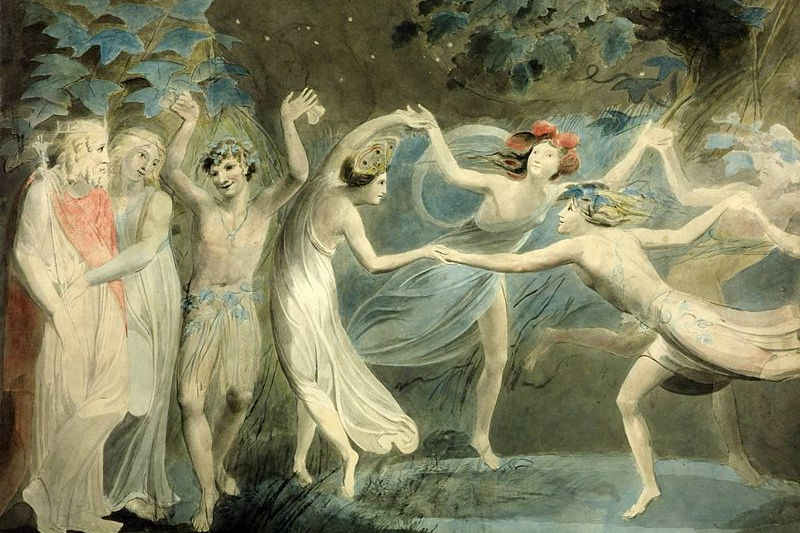
A nonconformist and a romantic, Blake steered clear of natural models. His approach ran through the Gothic and through the line of the Italian Renaissance masters, such as Raphael and Michelangelo, or the German Dürer. He also absorbed an influence, lasting across all his work, from the Englishmen John Hamilton Mortimer and Thomas Stothard and, above all, from the Swiss Heinrich Füssli, with whom he shared a passion for Shakespeare. Dante's Divine Comedy and his own poetry are other subjects that take the lead in his art.
He also tackled social themes. He was able to interpret the great events of his day: wars, revolutions and even equality between the sexes, through the human figure. One sign of this innovative drive can be seen in his illustration for the frontispiece of Visions of the Daughters of Albion (1793), where he gives shape to the idea of sexual freedom and of equality between men and women dealt with in the text.
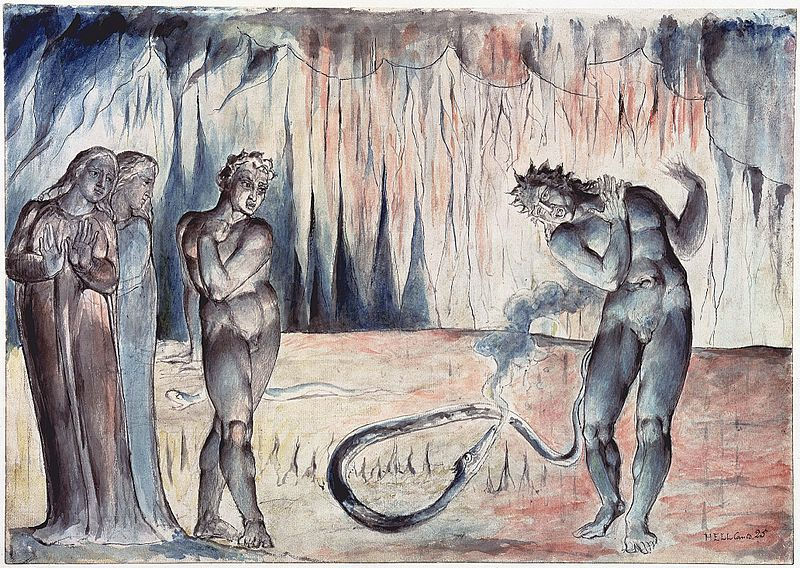
To his rebelliousness and to the incomprehension stirred up by his complex creative mind you can add a strong character and a few eccentric habits, such as reading Milton's Paradise Lost under a vine with his wife, both of them naked, which did nothing to help his already battered image. His contemporaries took him for a lunatic, though time has ended up considering him a true prophet, a genius centuries ahead of his own age. Because he foresaw the dangers of rationalism and materialism, warning that they would bring the devastation of nature and the alienation of man. He died getting by on the little money he was paid for his religious watercolours and on the help of the few friends who believed in his art.
And yet Blake is today one of the artists the English love most and one of the essential authors of modernity. His work was a deep inspiration for the Pre-Raphaelites, the Symbolists and the English Neo-Romantics of the 20th century. His influence on Aldous Huxley or Jim Morrison also shows the enormous weight his figure has carried across all sorts of artistic strands.
Comments (0)
Log in to leave your comment. Log in