
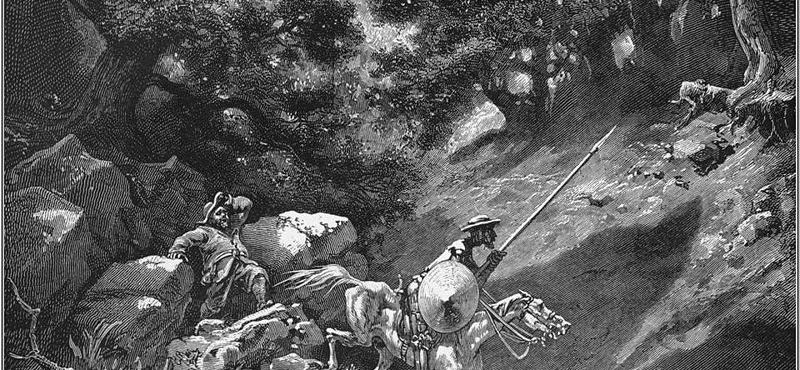
The value and artistic quality of the woodcuts of French engraver and illustrator Gustave Doré (Strasbourg, 1832 - Paris, 1883) make him one of the most prolific and influential draughtsmen of the second half of the 20th century.
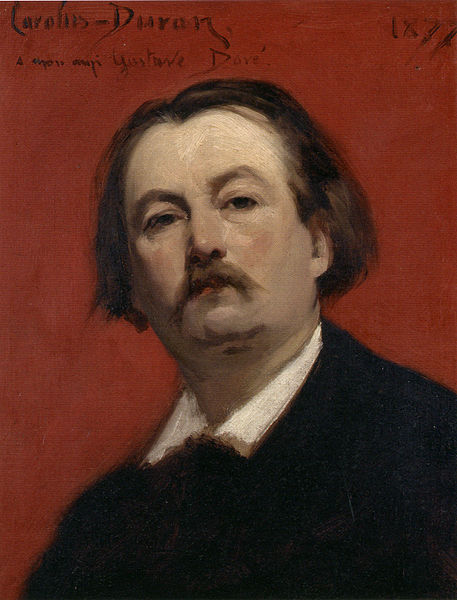
Born in Strasbourg, the capital of the middle Rhine valley, Doré became a precocious illustrator from the age of fifteen, a trade he practised with skill and enormous productivity until, at 51, a sudden bout of angina brought his days to an end. In between, he found time to illustrate some of the finest and best known literary works of all time. His more than ninety illustrated books, averaging over 300 drawings each, are proof enough of how devoted the artist was to his work as an engraver.
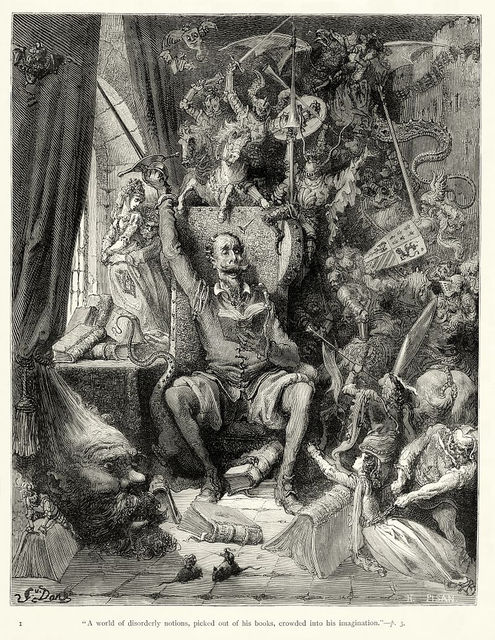
Among his main illustrated works are the Works of Rabelais, Balzac's Droll Stories, Dante's Inferno, as well as literary works by Poe and Shakespeare, and even illustrations for passages of the Bible. Gustave Doré's exuberant imagery would make him a major influence on many Romantic painters. Some of the most important of them drew inspiration from the illustrator, and openly said so, when it came to giving shape to their dream worlds.
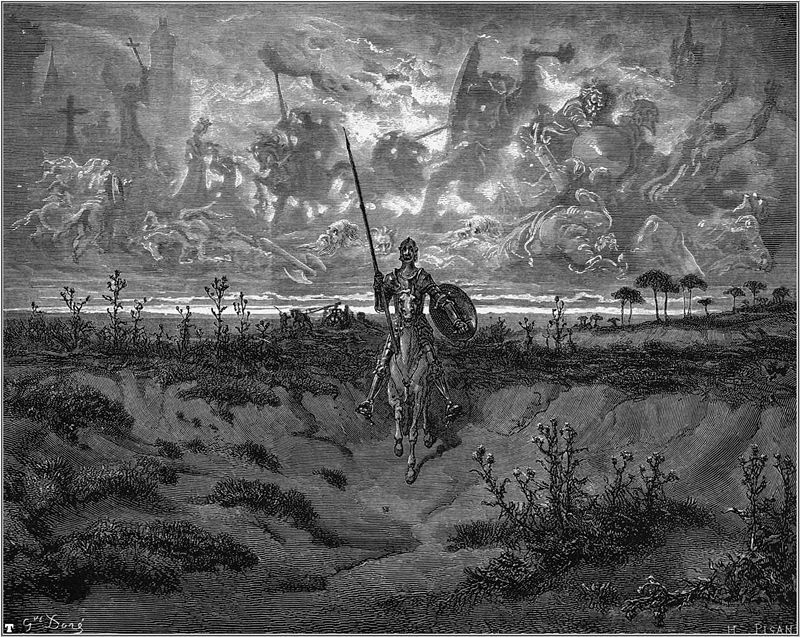
The originality of his drawings led the London publication Art Journal, one of the leading art magazines of the Victorian era, to call him "a fantasist rather than an illustrator". The influence of his technical innovations in drawing and of the strongly illusory, cruel and compassionate character of his images at one and the same time reaches all the way to our own day, in comics or in contemporary film directors such as Terry Guilliam.
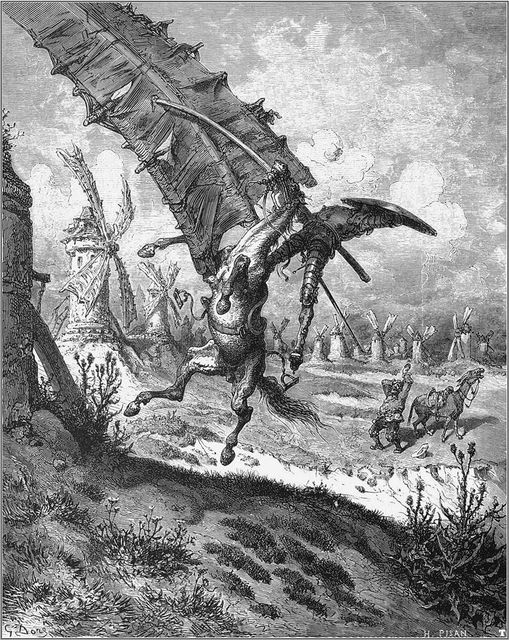
Among Gustave Doré's drawings, those devoted to illustrating the crowning work of literature in Spanish, El Quijote, deserve a special mention. In the 1860s, after travelling around the Iberian peninsula, Doré illustrated a French edition of our most universal book. The publication is made up of 370 drawings, most of them large format, and stands as one of the most valuable translations of Cervantes' novel into images. Doré knows, as few do, how to tangle fantasy up with everyday life in the purest quixotic style, and so capture the soul of this immortal piece of literature.
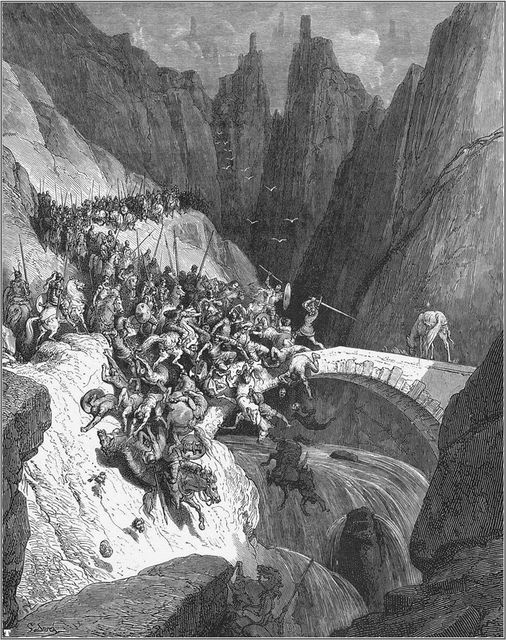
The illustrator shows a particular interest in the beauty of the landscapes he evokes, with beguiling moons and skies, full of chiaroscuro that wraps life in a halo of mystery. Let's remember that Gustave Doré is considered one of the great masters of burin engraving, or intaglio. In it the drawing is made on a metal plate by digging out lines with the help of, as the name suggests, a burin or a kind of stylus that carves the reversed image, which is then printed as a positive. The artist's skill in this respect is palpable in the subtlety of the lines and contours of his drawings.
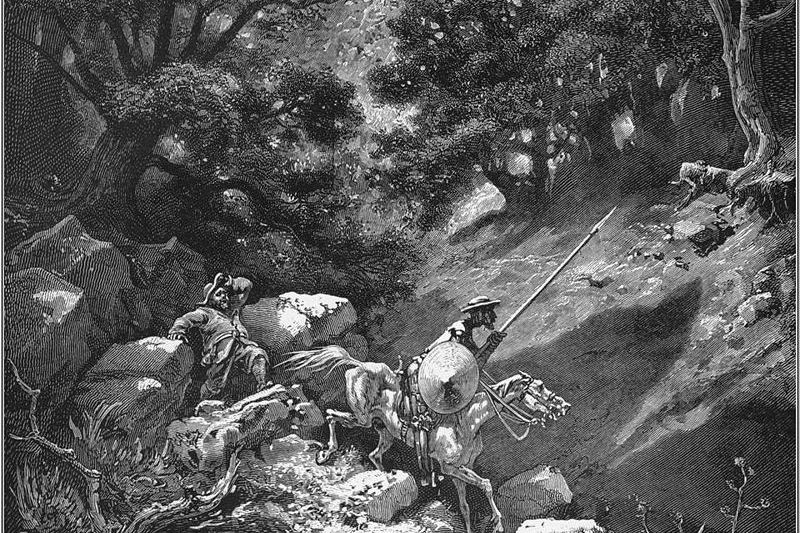
As we say, Doré's illustrations for El Quijote, which reflect the artist's idealism, allow him to take certain liberties. Remember that the windmills he depicts don't have the shape typical of La Mancha's mills but look rather more French or English. And even so the story told by his images doesn't stray an inch from the melancholically demented essence of the book.
There's no doubt that the artist's decision to concentrate his efforts on giving graphic form to universally known works has helped preserve them and, as a result, has meant we can go on enjoying them. Doré's drawings fit the essence of El Quijote so faithfully that together they make an artistic pairing of admirable value, worth spreading and worth knowing.

Comments (0)
Log in to leave your comment. Log in