
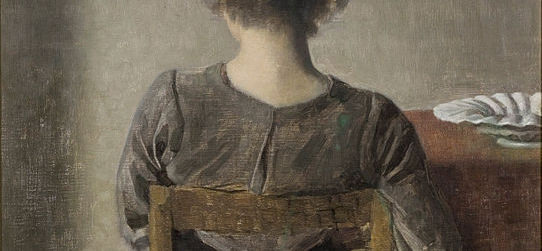
Architecture, geometry and light. These are the keys to understanding the unsettling work of the Dane Hammershoi. A painter who is perhaps little known, but who holds a prominent place in the history of art as Vermeer's heir and Hopper's forerunner.
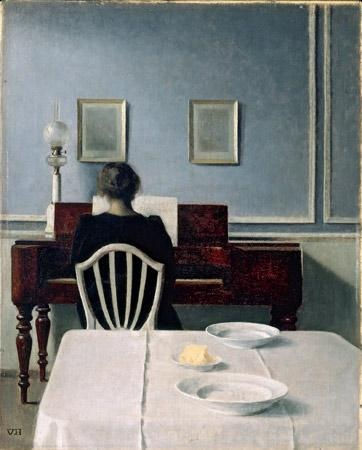
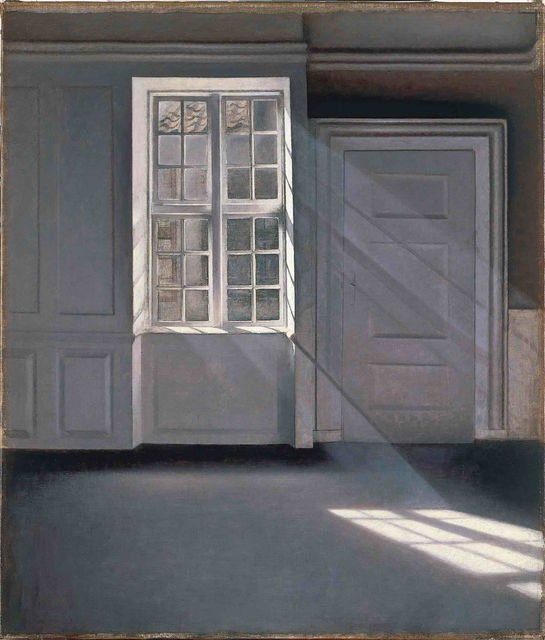
For a viewer of our own time, the minimalist intimism of Vilhelm Hammershoi (Copenhagen, 1864-1916) probably radiates an intense feeling of calm. Nothing like what the austerity and stillness of his paintings stirred in most of his contemporaries. And in fact, if you look closely, his canvases can become truly disquieting, because we find doors with no handles, table legs with impossible shadows or black masses in the middle of a room full of light.
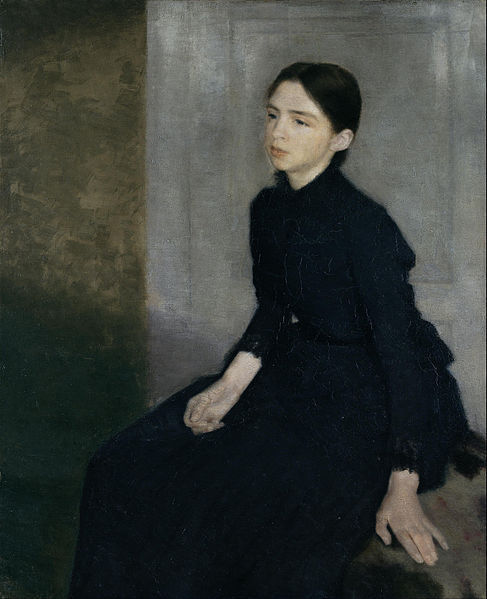
The portrait he painted of his sister Anna when he was twenty-one, his first large-scale artwork, already hinted at many of the features of his painting: the white door, the dark dress, the use of a sombre, highly refined range of greys and ambers, the sobriety and the introspection of the sitter. Hammershoi repeated these preferences over and over in his work, along with his taste for portraits from behind and for interiors. He went on to produce more than 60 images of the apartment where he lived with his wife Ida in Copenhagen. A flat crammed with furniture and paintings that the Dane removed or rearranged to build his compositions. Why?
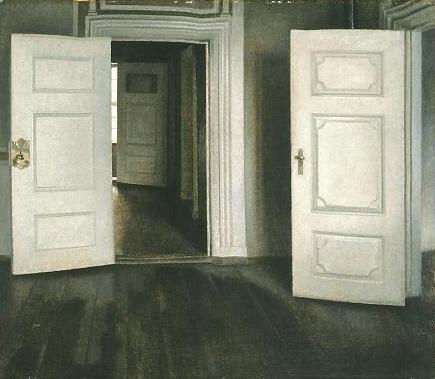
Like his predecessors of the Golden Age, Hammershoi studied at the Royal Danish Academy. He left the institution in 1883 and eventually developed a style of his own that took in the influence of artists such as the American Whistler and the Dutchmen Vermeer and Pieter de Hooch. That influence can be seen in the visual game he sets up in settings with open doors and windows at the back. Although he did not use this device to connect inside with outside or to reveal anything, except a band of light. Or, quite simply, the reflection of sunlight coming through the window and lighting up the dust in the air.
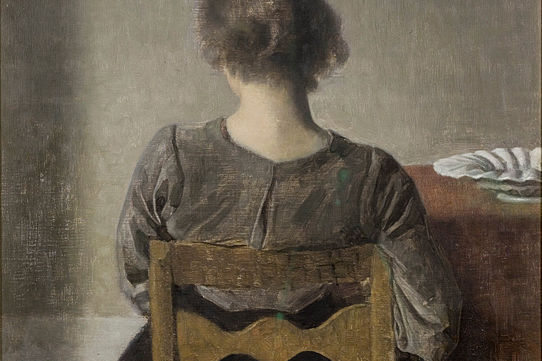
In other paintings, such as Descanso (1905), he introduces a new sensuality through the figure of the woman, offsetting the cold geometry. The young women, seen from behind, wear their hair pinned up with a few loose strands. The neck, bare, catches the light. The gesture recalls Friedrich's canvas Mujer en la ventana (1822), where the light also strikes the back of the girl's nape. The Dane also adds the unbuttoned blouse that hints at the whiteness of her back, in counterpoint to the flower-shaped glass sitting on the cabinet.
The truth is that Hammershoi looked for beauty in the lines and the architectural content of the images, especially in empty rooms. And he found it in their balance, bringing out or doing away with certain details with the ultimate aim of holding on to the harmony of his compositions.

Comments (1)
abel
March 27, 2015Me gusta la pintura, tengo unos cuadros hechos por mi,marinas y paisajes,soy un pintor autodidacta, vivo en Venezuela podría vender mis obras en su pagina y como haría díganme que tengo que hacer,reciban un saludo muy cordial
Log in to leave your comment. Log in