
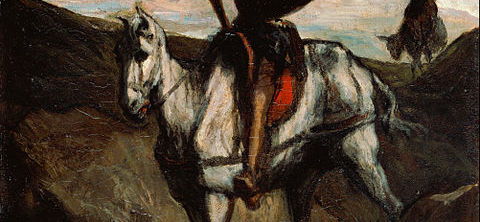
The Frenchman Honoré Daumier turned his wit into art, leaving behind fascinating drawings and canvases full of savage satire and social criticism. Through his incredible talent as a caricaturist, draughtsman and realist painter, he exposed the failings and the corruption of the monarchy and the judicial system.
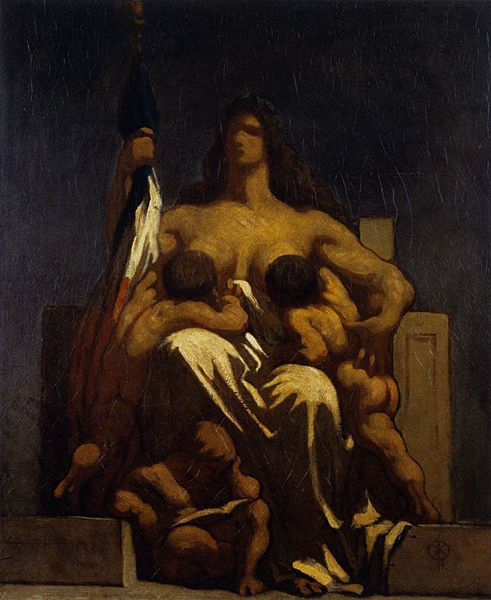
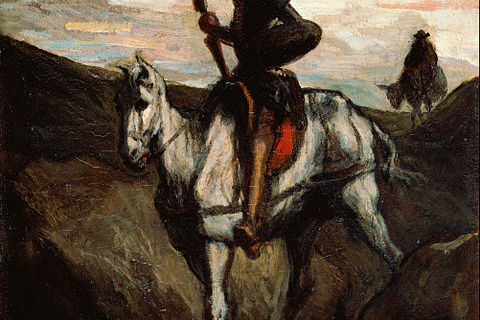
His favourite subjects were the vices of man, France's rulers, judges and lawyers. The first he laid bare without mercy, the second he tended to turn into pear-shaped faces, comparing them with madmen and puppets, and the third and fourth he liked to draw as clowns, full of arrogance. His artworks also showed his republican spirit, with allegories of nationalism and military action, of liberty, and depictions of Don Quixote, a character he always felt fondness for.
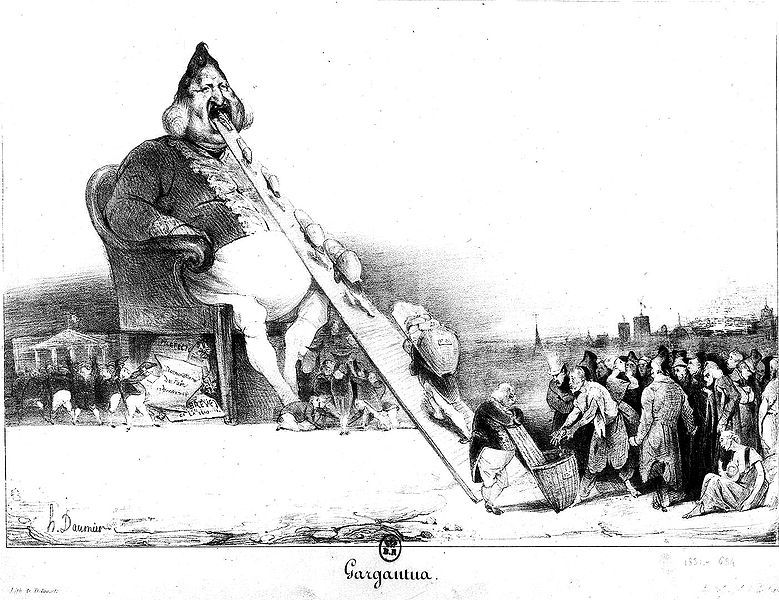
He picked up on any economic, political or social situation that in his judgement deserved to be weighed up and, in most cases, attacked. These caricatures usually appeared in the two satirical publications of the day, La Caricature and Le Charivari. The latter was hit more than once by censorship because of the harshness of its attacks on the government of Louis Philippe I of Orléans. In fact, in 1832 Honoré Daumier himself (Marseille, 1808 - Valmondois, 1879) spent six months in prison, sentenced for portraying him as the gluttonous ogre Gargantua.
And although he became hugely famous as a draughtsman, dubbed by his colleagues “the Michelangelo of caricature”, the Frenchman created paintings of extraordinary value that were also steeped in satire. His canvases captured everyday scenes with a background of deep social criticism. He was especially interested in showing the vulnerability of the individual and social marginality, as in one of his best known paintings, Vagón de tercera (1862-1864), a witness to class difference. His satires always leaned in favour of the worst off and the man in the street, and tended to ridicule the powerful.
As for his style, what stands out is the precision of his line, which let him represent the features of the politicians or figures he took on with his acid brushwork in a way that was exaggerated and faithful at once, with no need to attach their names for them to be identified. Considered one of the greatest figures of French realism, his style influenced contemporaries such as Delacroix and Corot and helped lay the groundwork for later movements, such as impressionism. He also left his mark on masters like Van Gogh and Picasso thanks to his great expressive and symbolic force. He made some sculptures in bronze and plaster too, which helped him design the characters who would later appear in his prints.
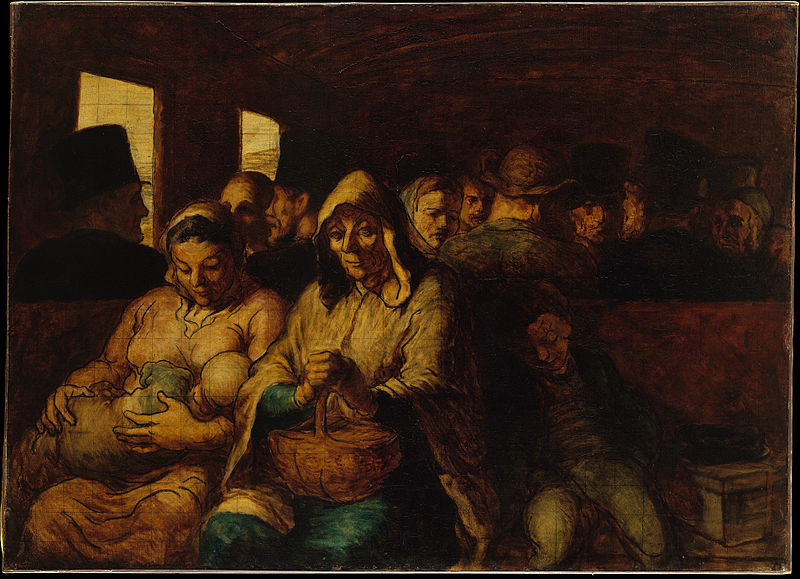
Forced to leave school to work at the age of twelve, he always lived far from money and the elites, refusing any favourable treatment. Only at the end of his life, when he was blind and ruined, did he accept Corot's offer to live in a small house the painter owned in Valmondois, where he died in 1879.
Comments (2)
Manuel
July 15, 2015Manuel Gio
July 23, 2015Log in to leave your comment. Log in