
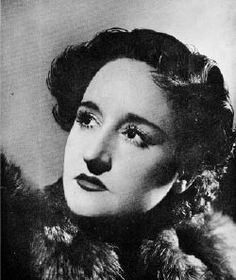
History had forgotten her, but more than a hundred years later she has been brought back by the initiative carried out at the Ánxel Casal Public Library in Santiago de Compostela. Thanks to that, you're reading these lines today, because after a bit of digging you reach the conclusion that this magnificent artist was one from the first moment of her life to the last (without the recognition she deserved). Born in Lugo in 1902, she has been recognised as the painter of the Generation of '27 par excellence, an artist who was an inspiration to poets and was inspired by poets. No wonder her way of painting is as lyrical as her thrilling artwork was. We take a closer look at her most representative canvases and at the person behind the art.
The artwork of Maruxa Mallo: from Lugo to the Reina Sofía
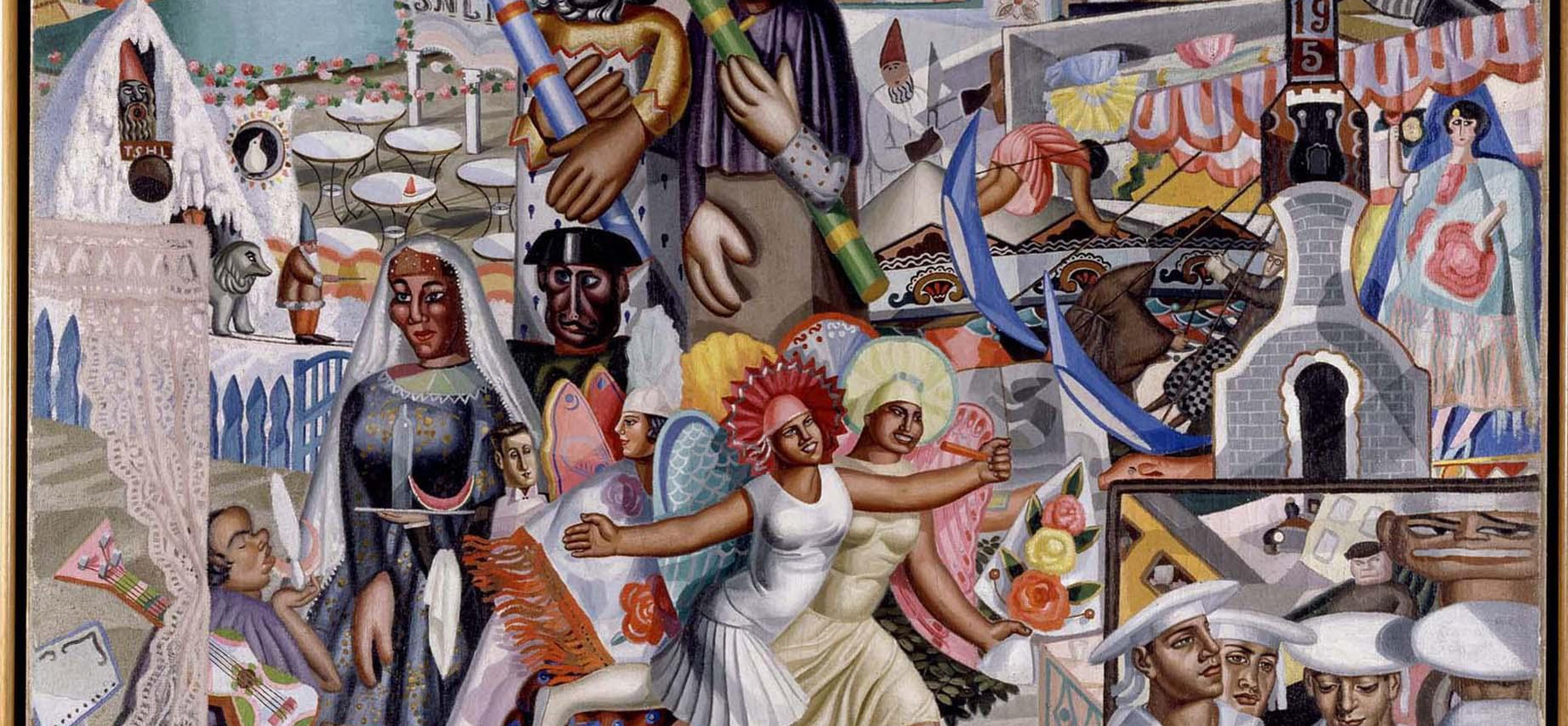
Surrealismo, cubismo y expresionismo confluyeron en una de las artistas que están obteniendo más reconocimiento ahora del que lograron en toda su vida y, por supuesto, del que consigueron después de su muerte. En su obra se denota la ideología de la artista, sus preocupaciones y aversiones. Es el caso de la religión o la militarización, el rol de la mujer, la sociedad, la ideología política y la pobreza. Todo ello queda plasmado en obras como La Verbena (1927). En este óleo sobre lienzo muestra su devoción por el surrealismo y la sátira. Una curiosidad con respecto a esta pintura es que la muestra de la autora fue organizada por Ortega y Gasset.
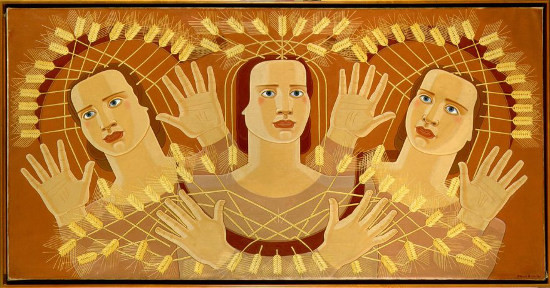
Two years later, in exile in Argentina, she would look upon what for her would be the artwork that perfectly defined what the art of the people is. It's her oil painting Canto de Espigas (1929). That would be only the first of all the artworks she would create in the South American country, since her exile would last a quarter of a century. Out of that flight came artworks such as Cloacas y campanarios (1932), a markedly surrealist piece that shows the artist's most macabre side. It will also be the darkest one, the postwar period.
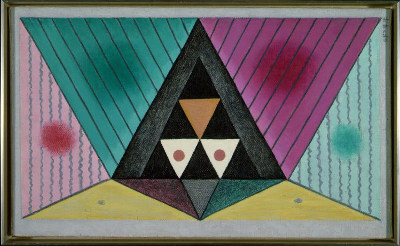
Her evolution from artworks like the ones just mentioned to Airagu (1979) or Máscara tres-veinte (1979) is brutal, to the point that her markedly surrealist style, first, or tenebrist, later, turns into groundbreaking, figurative and symbolic work. From a starting point with influences from artists like Picasso or Dalí, an inimitable phoenix rises and designs a geometric, colourful miscellany, a concoction very far from the baroque style that saw her born as a painter. Many have called her evolution transgressive but it certainly goes beyond transgression. It's a war cry, the active manifesto of an avant-garde woman who spent half her life fighting from her native country and the other half in her adopted one.
The free artist in the society of chains
El siglo XX trajo consigo una generación de mujeres artistas que, liberadas durante unos años de República, se negarían a volver a estar encadenadas nuevamente pasada la Guerra Civil. Algunas como Montserrat Gudiol nacieron en el seno de una familia más o menos privilegiada que les brindaría la oportunidad de vivir en una burbuja social, alejadas de una realidad que se negaba a aceptar a la mujer artista. Fue el caso de Maruxa Mallo. Esta mujer que fue conocida en el círculo de Bellas Artes por renegar de su propio estatus que, por supuesto, era el de hija de pudientes ya que por aquel entonces ser descendiente de obreros, mujer y artista era imposible. No obstante, se dedicó a desafiar y boicotear su propio origen durante gran parte de su existencia.They say she liked to wear rough trousers, except when she went into churches or monasteries, where she wore skirts (in monastic spaces they were forbidden back then). Admired by Salvador Dalí, they say she borrowed his jacket to ride a bicycle around the inside of a church while mass was being said.
Her friends in maturity were the already mentioned Ortega y Gasset and Salvador Dalí, the surrealist writer André Bretón and Pablo Neruda. For them she was always one of the great figures of surrealism (even though she wouldn't be for the art historians in charge of erasing every trace of her from the specialist art textbooks).
The forgetting of the greatest figure of 20th-century surrealism
Formaba parte del círculo de Dalí o de Bretón, sí, pero era mujer y su ideología se encuadraba en el bando perdedor, como suele suceder cuando se forma parte de la mitad de la humanidad que no ostenta el poder y que busca la igualdad. El único delito de Maruxa Mallo fue ser mujer y eso le costaría 25 años en el exilio. ¿Solo mujer?¿No republicana? Era imposible ser como Maruxa, una mujer libre, y ser otra cosa que no fuera republicana por una sencilla razón; era el único bando que le iba a permitir ser lo que quisiera ser, el único que no solo la veía como una máquina de procrear. Ese fue el motivo por el que se marchó: para continuar siendo libre.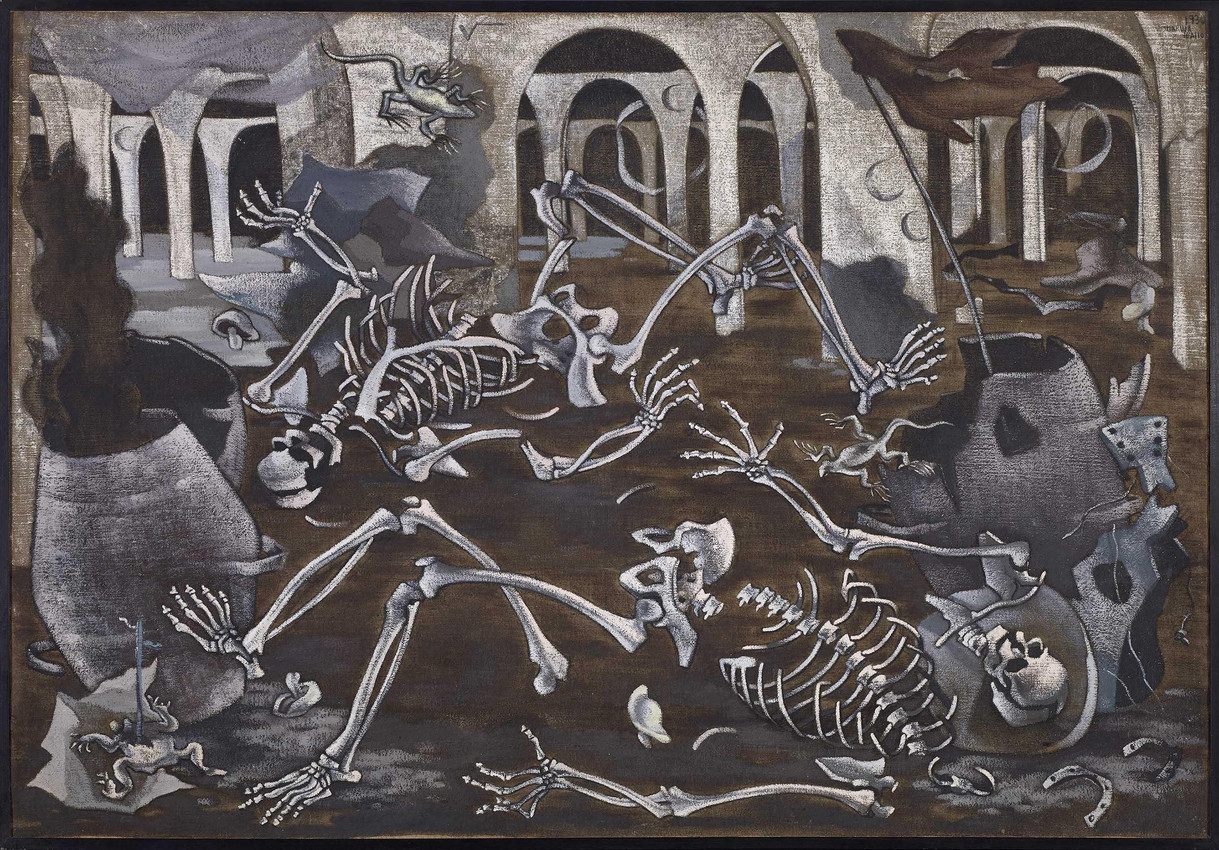
And she would be. She would be, until her return to Madrid, as cold and heartless as the most absolute emptiness, the one handed to her by a Spain that had watched her grow up, reminded her that nothing had changed. Another 25 years have had to pass since her return for her artworks to be talked about internationally and for her memory to be recovered. Today you can see some of her paintings (almost all of them acquired at the end of the 80s) at the Museo Reina Sofía.

Comments (0)
Log in to leave your comment. Log in