
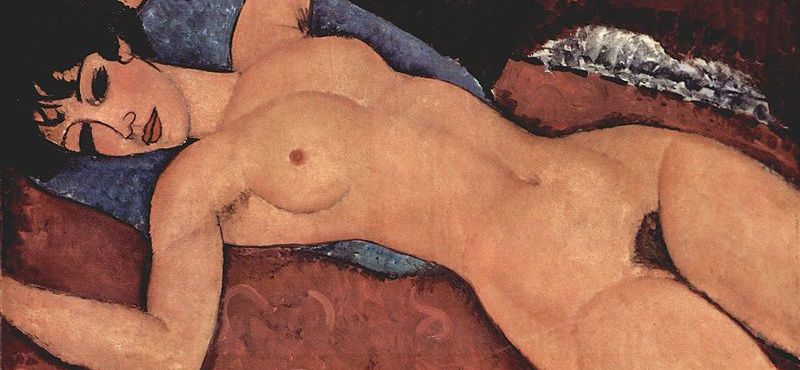
Modigliani had a complicated, short life. A life full of hardship, chaos and excess that fed his reputation as a doomed painter. But if we set aside the labels and the myths surrounding his private life, we discover the most interesting thing about him, namely that he was one of the most singular artists of the 20th century.
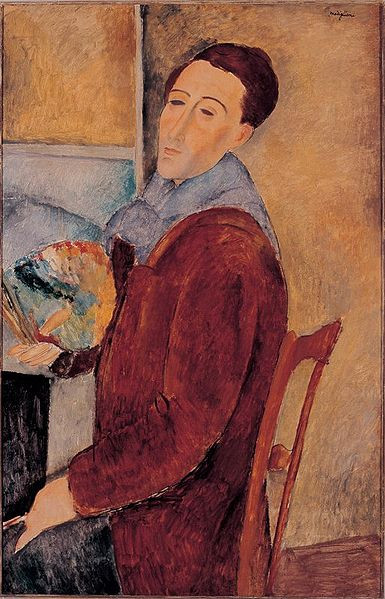
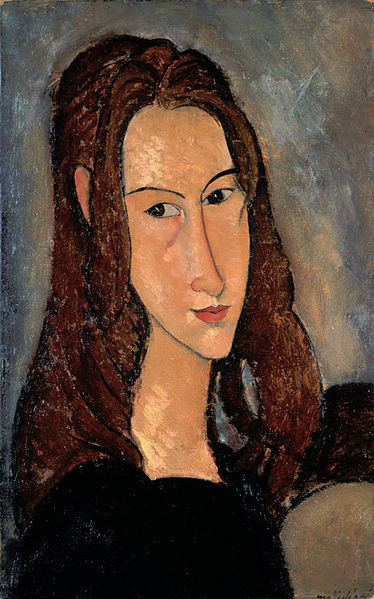
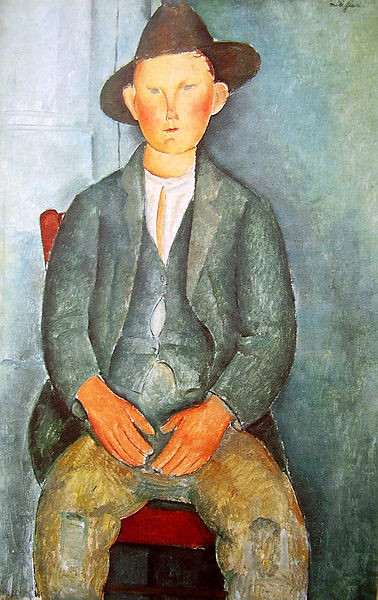
Amedeo Modigliani (Livorno, 1884- Paris, 1920) invented a language of his own: a melodic expressionism based on his refined aestheticism and on whatever he let out of his fierce inner passion. Portraits and nudes filled his work and, in them, he built up the elements that characterise his unmistakable style. Tapering figures, oval faces, elongated necks, small mouths and almond eyes, dark or bluish, with which he drew and coloured the mood of those who sat for him.
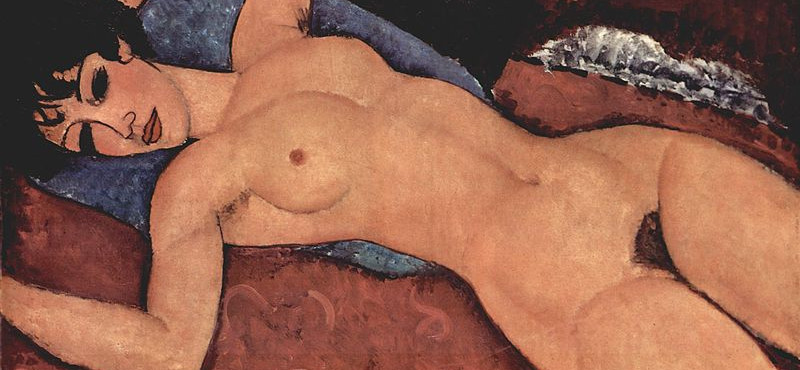
In the nudes he also achieved a very seductive balance through lines that shift to seek out the voluptuousness of the form. This measured distortion, which he turns into an elegant sensuality, recalls what we see in Titian and Botticelli.
In the fullest years of his life, from 1915 to 1918, he gave the best of himself. In that period he moved to La Ruche, a building given over to artists' studios in the Paris neighbourhood of Montparnasse. And from there he created a true gallery of portraits. Of friends, painters, poets, dealers,... and of the women who lived with them. In short, of the people of that world, poor in many of its corners, but the place where the artistic and intellectual essence of Paris was born.
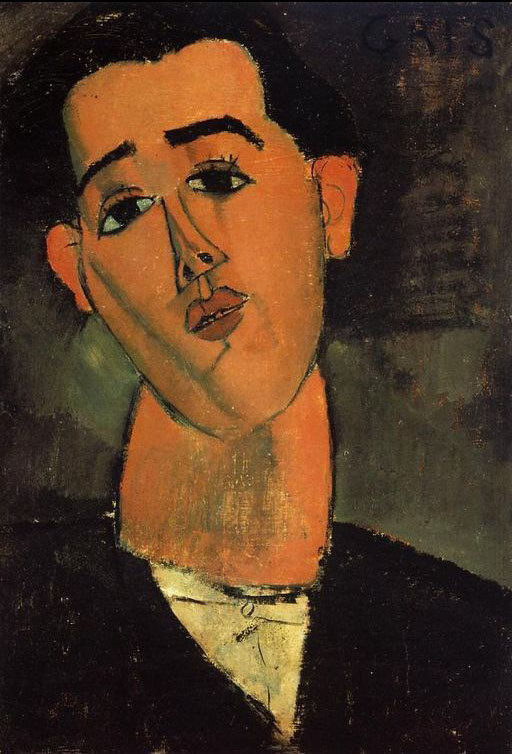
And that is exactly what Modigliani's work gives off: an intense scent of the Paris of the early 20th century. Although he formed strong ties with artists from the main movements of the time, he felt no need to join any of them, working off to one side instead. Even so, the Italian painter absorbed a good part of the artistic proposals of that moment. From Cézanne, without a doubt his greatest influence in matters of composition as much as in his colour palette, to Toulouse- Lautrec, by way of primitivism, the Picasso of the "blue period" and the "rose period", Art Nouveau and cubism.
Although he made his name, after his death, that is, as a painter, when he arrived in Paris at twenty-two his dream was another one: to be a sculptor. Modigliani had to give it up because of his health problems. Still, from 1910 to 1912 he devoted himself almost exclusively to sculpture, making hieratic, stylised effigies that gave shape to his fascination with African art. In 1912 he even exhibited eight pieces at the Salon d'Automne in Paris.
Comments (0)
Log in to leave your comment. Log in