Money back guarantee

Home > Magazine > Great Artist list > B > Hieronymus Bosch

Hieronymus Bosch

- +
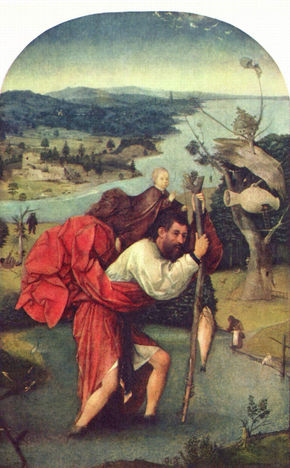
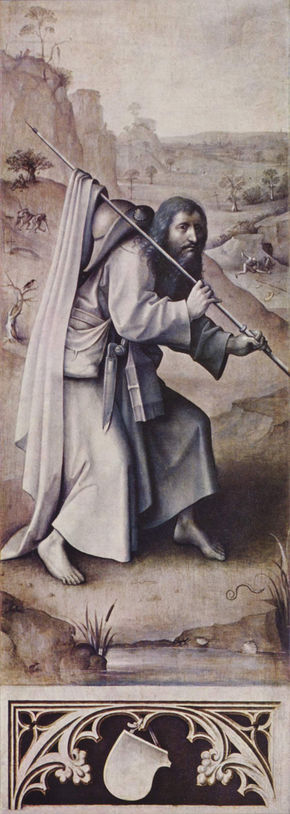
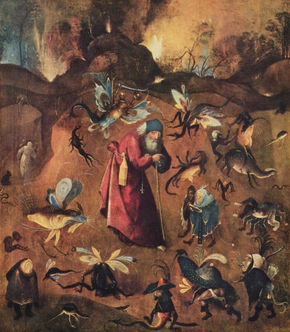
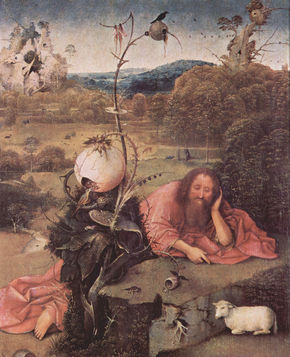
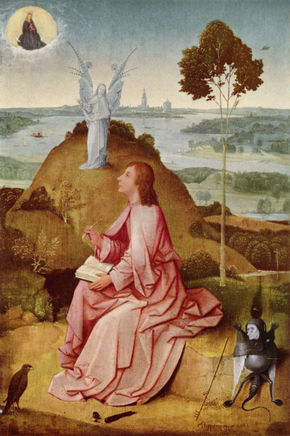
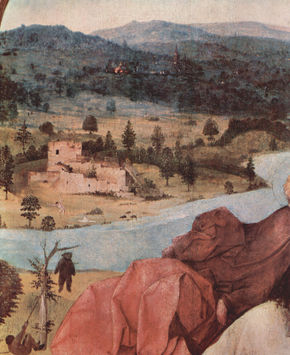
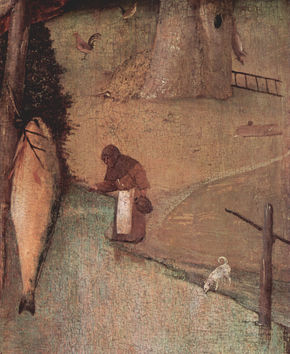
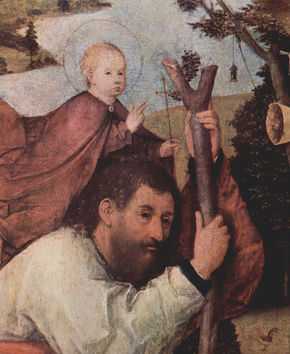
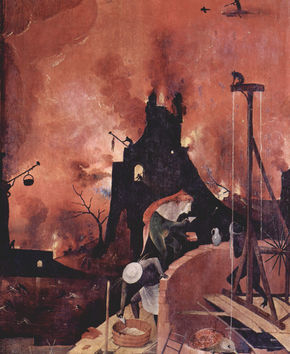
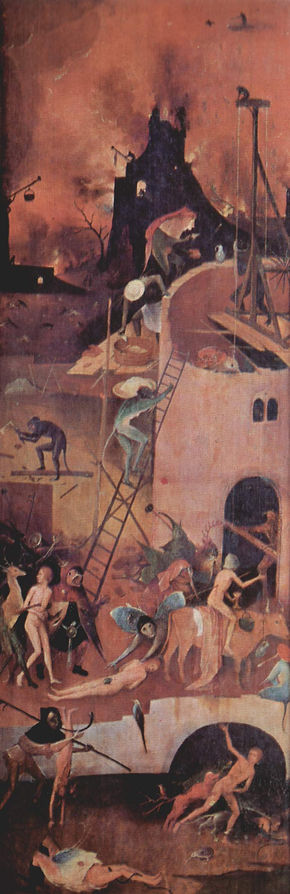
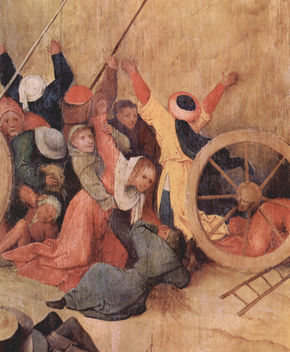
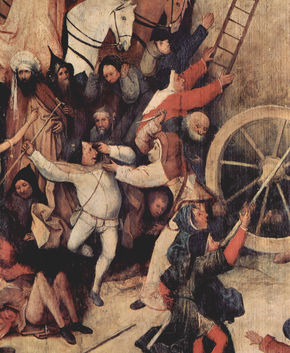
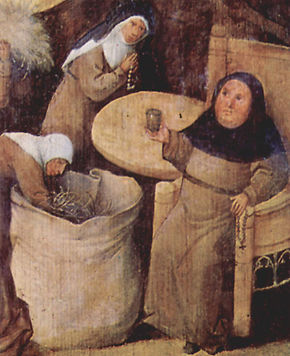
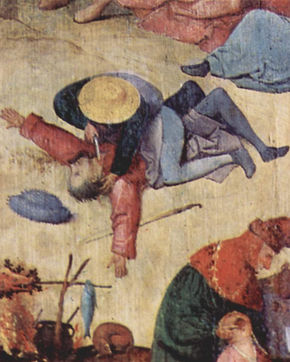
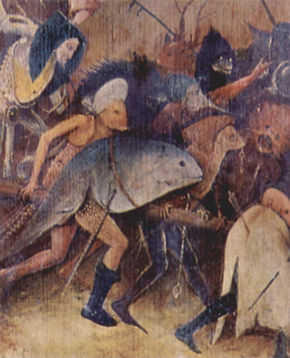
 Hieronymus Bosch-Altar de Antonius, tríptico cerrado, panel izquierdo  Hieronymus Bosch-Altar de Antonius, tríptico cerrado, panel derecho  Hieronymus Bosch-Altar de Antonius, tríptico, panel central  Hieronymus Bosch-Altar de Antonius, tríptico, panel central  Hieronymus Bosch-Altar de Antonius, tríptico, panel central  Hieronymus Bosch-Altar de Antonius, tríptico, panel central  Hieronymus Bosch-Altar de Antonius, tríptico, panel central
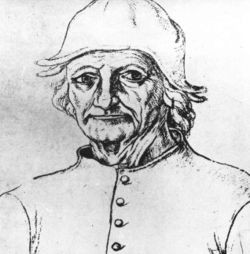
Autorretrato de Jeroen Anthoniszoon van Aken.

(‘S Hertogenbosch 1450 – 1516)

Jeroen Anthoniszoon van Aken, also known as Hieronymus Bosch or Jeroen Bosch, was a Dutch painter and engraver.

It is not known much about his life. His father Anthonius was also a painter. Hieronymus Bosch married Alead Van Meervenne in 1477 and apparently he never left his home city whose name, ‘S Hertogenbosch, his surname is derived from. He became very famous during his life and he painted The Last Judgement for Philip II of Spain (1504).

Only 40 original artworks by Hieronymus Bosch are preserved, but several lost compositions are known from copies and imitations which were realized in the sixteenth century. He introduced in his religious and profane paintings a whole world of beings both normal and monstrous that were presented in expressive attitudes. The complexity of the symbols he uses makes more difficult the worthy and upright understanding of his works.


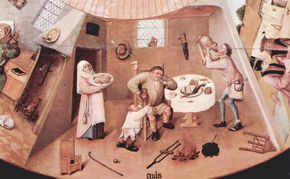
Bosch’s universe of runaway imagination, which is full of fantastic figurines that seem to arise from an infernal nightmare (The Temptation of St. Anthony, in Lisbon and The Last Judgement, at the Academie für Bildenden Künste in Vienna), promotes the Bruegel’s spirit. Even the religious subjects (Christ crowned with thorns, Museum El Prado in Madrid and Ecce Homo in Philadelphia) are distorted by a cruel frenzy of gesticulations. Nevertheless, Bosch was a meticulous observer of reality and he was a very talented drawer. His unrealism was related to the sarcastic spirit of the “fabliaux” poems, which ridiculed the vices (The Extraction of the Stone of Madness, The Haywain, The Garden of Earthly Delights, El Prado).

In his work The Wayfarer (Museum Boijmans Van Beuningen, Rotterdam, Netherlands), which is probably one of his last artworks, it seems that Bosch wanted to represent the subjects of the free will and the man’s solitude. His burlesque fantasy captivated lots of enthusiasts, above all in Spain, where he was really appreciated. Felipe de Guevara and the father Sigüenza wrote the first known critical reviews on Bosch.

Philip II of Spain collected a big number of artworks by Bosch, and it explains the present abundance of this Great Master’s artworks in Spain. Several Bosch’s drawings have the same vivacity of annotation than his paintings; and in addition, the drawings let reveal even more his sharp sense of nature’s observation (The Owl’s Nest, Museum Boijmans in Rotterdam, Netherlands). Bosch’s art has had an influence on the twentieth century artists and especially on the surrealists.

Money back guarantee.

You can return the artwork if, for any reason, you don’t like it.


Art is something visual.


Our senses are involved in its appreciation and purchasing art without having seen it or touched it…is difficult. We know that and Artelista wants to change this. You won’t have doubts when buying art online anymore because, if you don’t want or like the artwork, you can return it.


Artelista’s Money back guarantee: after receiving the artwork, you can return it within the following 7 days for free (we cover up to 60€ of shipping costs). Once we receive the returned artwork, Artelista would proceed with the refund.


Enjoy purchasing art on Artelista! It’s the best and easiest option to buy art online.