
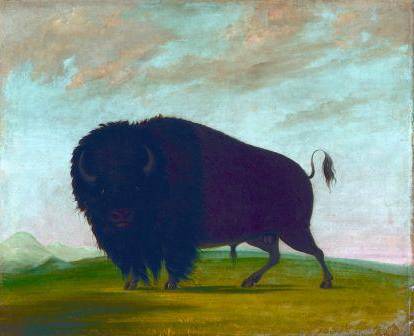
The Great American Hall of Wonders is the name of the exhibition hosted by the Smithsonian American Art Museum until 8 January, which examines the 19th-century American belief that the people of the United States shared a special genius for innovation. It explores this belief through works of art, mechanical inventions and scientific discoveries, and captures the excitement of citizens who defined their nation as a “Great Experiment”.
The exhibition features 161 objects, including paintings and drawings by pre-eminent artists, including John James Audubon, Albert Bierstadt, George Catlin, Winslow Homer, Thomas Eakins, and Charles Willson Peale, as well as sculptures, prints, survey photographs, zoological and botanical illustrations, patent models and engineering diagrams.
The exhibition explores six subjects that helped shape America during the period—the buffalo, giant sequoia and Niagara Falls represent American beliefs about abundant natural resources for fueling the nation’s progress, while inventions such as the clock, the gun and the railroad link improvements in technology with the purposeful use of time.
Date: from July 15, 2011 to January 8, 2012.
Location: Smithsonian American Art Museum. 8th and F Streets, N.W. Washington, D.C. 20004.
Hours: Open daily 11.30am to 7pm.

CAC de Málaga hosts the largest exhibition of Vik Muniz' work ever held in Europe
through December 2

Van Gogh to Kandinsky: Symbolist Landscape in Europe 1880-1910
from July 14 to October 14.



