
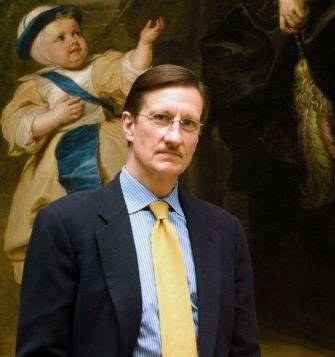
The Metropolitan Museum of Art (New York) holds the most important collection of paintings in America by the celebrated Dutch artist Frans Hals (1582/83-1666). The exhibition is organized by Walter Liedtke, curator of the European paintings department, who describes to us the organizing process and selection of works.
How was the Frans Hals exhibition born? What was the catalyst?
The truth is that chairman Keith Christiansen suggested a Hals bulletin because we have often in the Met done bulletins on significant parts of our collections, e.g. my Van Dyck of 1984 and many from other depts. I suggested why not install as a small show and emphasize to the public what we have, thinking that it’s a corrective to the public focusing on big shows and not so much on what’s always here. This falls in the tradition of “Goya in the Met,” “Rembrandt/Not” etc, and the recent Velazquez focus on one painting
How would you describe the organization of the exhibit itself?
On exhibition organization, the main point is simply to stress what we have the 2nd best Hals collection in the world. So 2 rooms of our 11 pictures plus 2 complementary Hals loans, then one room of “context”.
Frans Hals is one of the most familiar and accessible of the Old Master painters from the Golden Age of Dutch art. As Curator in the Department of European Paintings, which schools do you prefer in Old Masters?
Obviously I’m in Dutch because I like it the most, then Flemish, Italian, Spanish in that order.
You have been responsible for the museum’s approximately 228 Dutch paintings and 100 Flemish paintings. Who are the artists in your mind that you feel the museum needs to address?
Artists we must address are the top ones we have: Rembrandt, Hals, Vermeer, Ruisdael, Rubens and Van Dyck.
Over the next few years you plan to catalogue the collection’s Spanish pictures of the 16th-19th centuries . Have you already started? How does this catalogue process work?
On the Spanish, I’m mainly reading the literature now and focusing on our web entries.I will begin writing with El Greco and have done some entries on him. The process begins with a complete survey of the literature on each picture, with short synopses to be published in the catalogue; also exhibition records and provenance. By the time one is done with all that, you really have a sense of what should be said in the catalogue entry, which should mainly represent the present state of scholarship not your own opinions. Each painting dictates the important points to make: the main issue could be authorship, condition, subject, relation to another artist, etc.
You have written about fifty articles and several books. Are you planning to publish anything in near future?
I do some 3 or 4 articles a year on Dutch and Flemish art, usually quite specialized. But I want to slow down on that and focus on the Spanish catalogue, getting it done in about 2 years.

CAC de Málaga hosts the largest exhibition of Vik Muniz' work ever held in Europe
through December 2

Van Gogh to Kandinsky: Symbolist Landscape in Europe 1880-1910
from July 14 to October 14.



